

Men's dermis runs thicker and oilier, so Oligio X settings shift. Here's what changes.
Published -
Updated -

Author
Wi Young-jin · Chief director
Seoul National University College of Medicine · Seoul National University Hospital Specialist
→
If you've had a skin-tightening session and walked out thinking your jawline didn't sharpen the way your partner's did after the exact same treatment, you're not alone. It's one of the most common things men bring up at a follow-up.
There's usually a second complaint riding along with it. Two or three days later, the bearded part of the face feels raw — stinging, red, more reactive than anywhere else. Both of these trace back to the same root. Male facial skin isn't built quite like female skin, and a protocol that suits one doesn't automatically suit the other.
In this article, we'll cover what the research says about male skin thickness, how Oligio X gets heat to the layer that matters, why the beard line deserves its own plan, what recovery looks like, and what treatment costs in Seoul. Read on.
Is Men's Skin Really Thicker?
The short answer? Yes — and it's been measured.
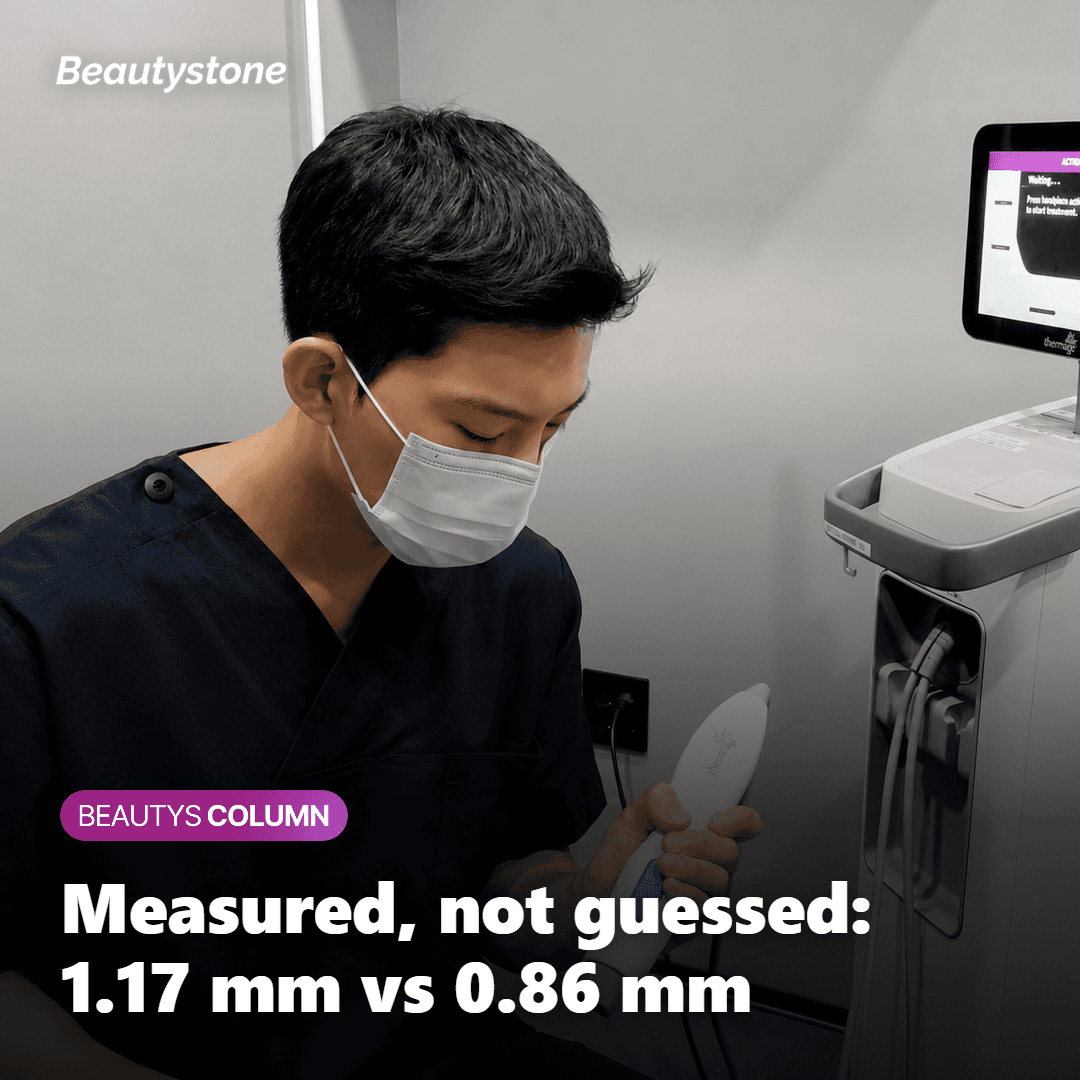
One study used high-frequency ultrasound to map facial skin in 118 healthy adults. Dermal thickness at the forehead came in at 1.17 mm in men versus 0.86 mm in women, and at the temple 1.06 mm versus 0.80 mm. Across most of the sites measured, men were significantly thicker (facial skin thickness measured by ultrasound in men and women).
Site | Men | Women |
|---|---|---|
Forehead dermis | 1.17 mm | 0.86 mm |
Temple dermis | 1.06 mm | 0.80 mm |
Thickness isn't the only gap. A dermatology review comparing male and female skin reports that hydration, transepidermal water loss, sebum output, capillary blood flow, pigment and thickness all tend to run higher in men (review of sex-based differences in skin physiology). In the treatment room that shows up as a slicker surface: the handpiece can lose steady contact, so your provider wipes the skin down more often and re-plans the path across the face.
How Oligio X Works and Why Depth Matters
Oligio X is a Korean-made monopolar radiofrequency device. It pushes energy through the surface to warm the dermis* — the layer where the collagen scaffolding lives — until the body reads the change as something worth repairing, and repair here means building fresh collagen.
*dermis: the layer sitting just beneath the outermost skin. It holds collagen and elastic fibers, and it's the layer radiofrequency treatments are actually aiming for.
Think of a favorite T-shirt that's gone slack at the collar. Give those fibers a controlled amount of heat and they draw back together a little. The point was never raw power — it's getting the target layer into the right temperature window while the surface stays protected.
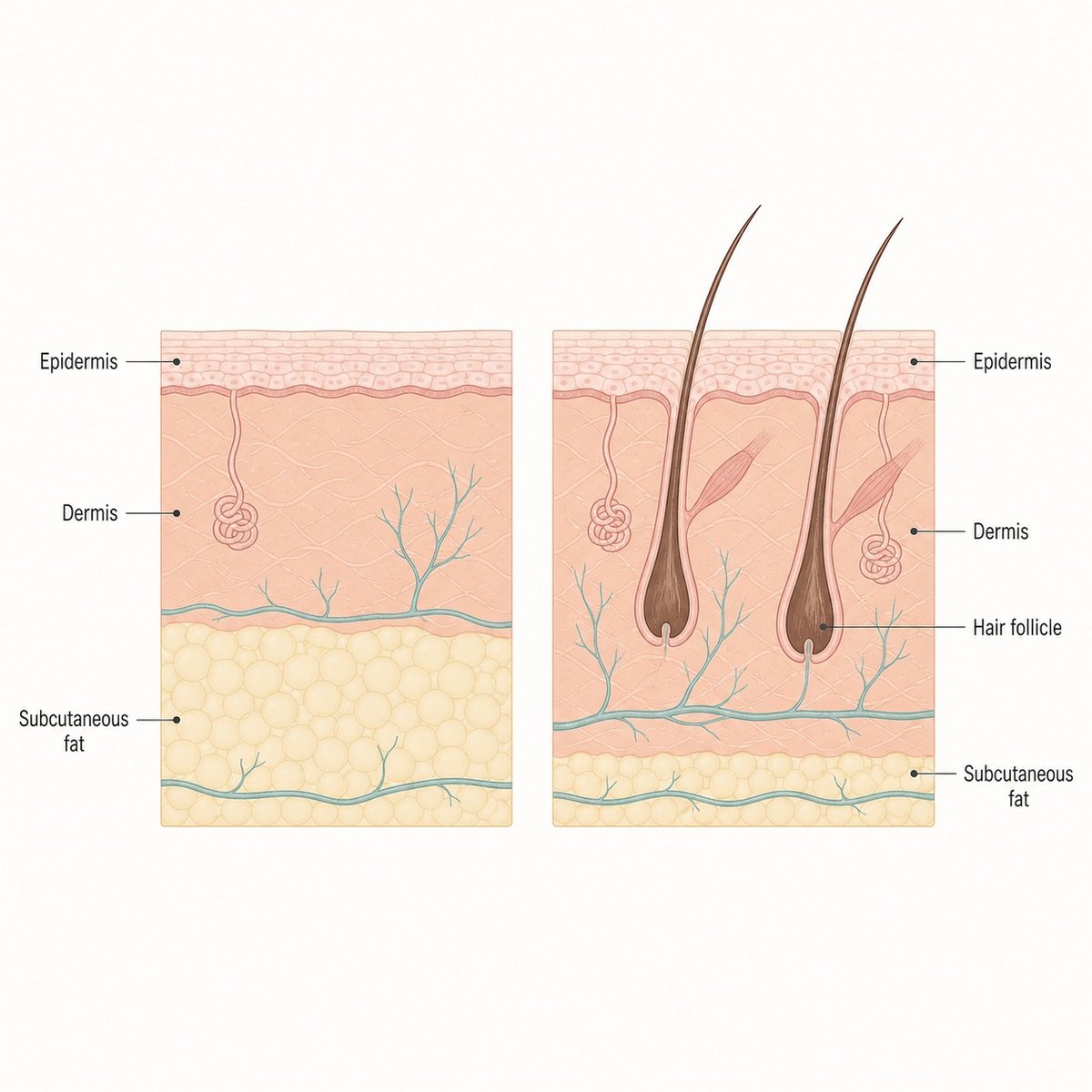
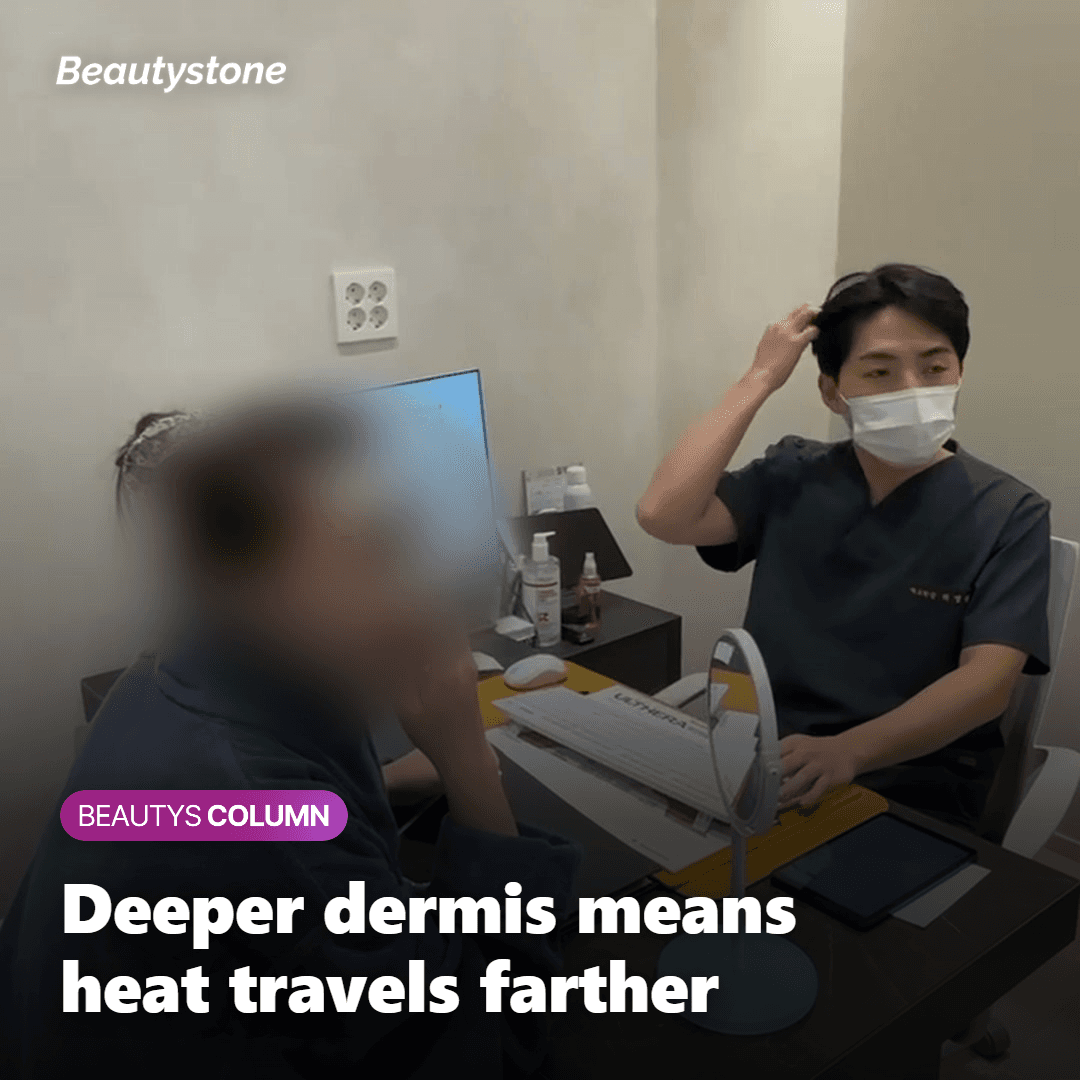
Here's where thickness comes back around. A thicker dermis means heat has farther to travel before it reaches the layer you care about, while the ceiling for what the surface can tolerate hasn't moved at all.
A study applying non-invasive monopolar radiofrequency to porcine skin recorded dermal temperatures of about 50 °C on a low setting, 60 °C on a mid setting and roughly 70 °C on a high setting. At the 30-day mark, collagen thickness and density had increased, no thermal damage was seen in the dermis or epidermis, and surface temperature was held below the 42–45 °C safety threshold (tissue temperature and collagen response to monopolar radiofrequency).
So the job isn't cranking the dial. For men it's a balancing act: you want the deep layer to reach its window, but the surface tolerance hasn't changed with sex. In practice that usually means more passes and level adjustments zone by zone rather than one higher setting across the whole face. Individual results vary, and your provider decides shot count and session spacing case by case.
Why the Beard Zone Needs Its Own Plan
The bearded area carries hair follicles* packed more densely and rooted more deeply than the rest of the face. It's also the one region that's already been disturbed on a near-daily basis long before you walk into a clinic.
*hair follicle: the small pouch-like structure under the skin that a hair grows out of. Along the beard line these sit closer together and deeper than elsewhere.
In a study of 24 patients with pseudofolliculitis barbae — razor bumps along the beard — 18 of them, or 75%, had curly hair. The authors flagged two risk factors: stretching the skin taut while shaving, and letting hair grow long enough to curve back toward the surface. Dermoscopy also picked up fibrosis and buried hairs (dermoscopic findings in pseudofolliculitis barbae). Translation: low-grade inflammation and scar tissue may already be sitting in that zone before any heat is added.
Situation | Why it matters | What we usually discuss |
|---|---|---|
Shaved this morning | Micro-abrasions on the surface | Push the appointment out a couple of days |
Visible ingrown hairs | Inflammation is already running | Settle those spots first |
Naturally curly hair | Hairs curve back under the skin easily | Plan the post-treatment shaving window together |
Jawline is the main goal | That target overlaps the beard line | Split the energy level by zone |
That's why a single setting swept across the whole face rarely suits male skin. The thicker zones want more passes; the beard line wants more caution.
Side Effects, Downtime and Who Should Wait
Most people leave with some redness, a warm feeling and mild tenderness that settles on its own within a day or two. Going back to work the same day is typical.
If you notice spreading redness, swelling that's getting worse instead of better, or pain that climbs after the first day, seek medical care right away.
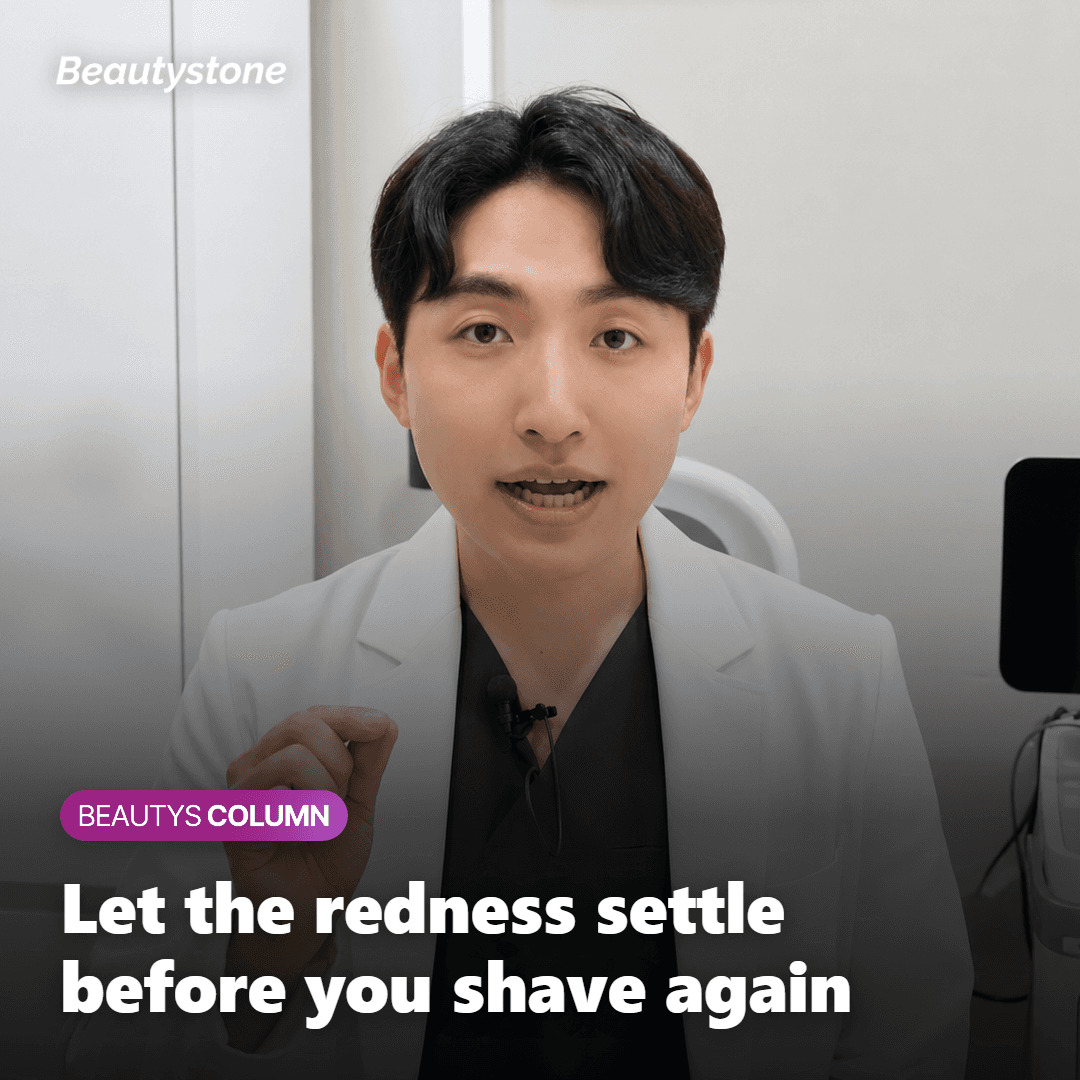
For the beard line specifically, leave the razor alone until the redness calms down. Running a blade over skin that's still reactive stacks irritation on irritation, and that's often where an ingrown hair starts. Skip saunas and long hot soaks while the area still feels warm, and give gritty facial scrubs a few extra days.
Hold off or talk it through first if any of these apply:
Pregnancy or breastfeeding: not a time to add elective heat-based treatment.
Implanted electronics: a pacemaker or similar device rules out radiofrequency.
Active infection: a cold sore or inflamed breakout in the treatment area.
Keloid tendency: skin that scars thickly after minor injury.
Beard-line flare: visible ingrown hairs or inflammation right now.
Not sure whether something in your history counts? Bring it up at the consultation. The detail you assume is irrelevant is often the one that shapes the settings.
How Much Does Oligio X Cost in Seoul?
Pricing tracks shot count. A basic full-face package starts around 429,000 won for 100 shots, and the per-shot rate improves as the count climbs — a 600-shot package runs 1,749,000 won, for example. These are Seoul clinic prices and they're subject to change; the current list lives on our pricing page, and anything running right now is on the promotions page.
Worth asking before you book:
Zoning: Will the beard area get its own level, or is the whole face treated the same?
Assessment: How is dermal thickness evaluated on the day?
Passes vs. power: Can pass count go up instead of the dial?
Shaving window: How many days before and after should the razor stay in the drawer?
Mention your shaving routine and any history of razor bumps, even if it feels beside the point. It usually changes the plan.
The Bottom Line
Male facial skin has a measurably thicker dermis and more oil, so identical settings don't land identically.
The beard line carries dense follicles and often a baseline of low-grade irritation, which is why it wants its own level.
More passes with zone-by-zone adjustment tends to be the steadier route compared with simply turning the power up.
Results build as new collagen forms over several weeks rather than showing up the day you leave, and individual results vary — skin thickness and beard condition differ from person to person. Ultimately, the choice depends on your goals, and the best way to know where you stand is an in-person assessment with a board-certified dermatologist.
If your last tightening session didn't land the way you'd hoped, or your beard line flares every time, our doctors at Beautystone Clinic in Hapjeong, Seoul are happy to take a look. Consultations are free.
Frequently asked questions
Q. Do men always need a higher energy setting?
A. Not necessarily. A thicker dermis does mean the heat has to reach deeper, but the surface tolerance ceiling doesn't shift with sex. In most cases providers split the treatment into more passes and adjust level by zone instead of jumping the dial. The actual settings get decided from how your skin looks that day.
Q. Should the beard area be skipped entirely?
A. Usually not. The more common approach is to drop the energy level there and work more carefully. That said, if there are visible ingrown hairs or inflammation on the day, it's better to settle those first and rebook. Aim for the calmest point in your shaving cycle.
Q. When should I shave, before and after?
A. Freshly shaved skin often has micro-abrasions, so leaving a couple of days is more comfortable. Afterward, wait until the redness has calmed before picking the razor back up. If you use an electric shaver, mention it — the friction pattern is different from a blade.
Q. How soon do results show, and how long do they last?
A. Radiofrequency works through new collagen production, so changes tend to build over several weeks rather than appearing overnight. How long they hold depends on your skin and your habits, and it varies from person to person. Photos taken in the same lighting make the change much easier to judge.
Content




skin
Why Does Fractional CO2 Take Longer to Heal?

Contouring & Volume
How Many cc Does Forehead Filler Need?

skin
Why Is My Skin Oily but Tight in the Fall?

Hair Removal
Underarm Laser Hair Removal Cost: Do the Math

Tattoo removal
Laser Before a Cover-Up: How Many Sessions?

skin
큐어젯 다운타임, 다음 날 출근과 화장은 언제부터 될까요?