Thermage FLX: Why Dermis Temperature Beats Price
Thermage stimulates dermal collagen via RF for lifting. Energy depth, not device, decides results.

Thermage, don’t believe the claim that
the machine alone is enough
Beauty's Doctor
I’m Director Wi Young-jin of Beauty Stone Clinic in Hongdae.
Please check this before reading
Q. Is a clinic that uses the latest-generation Thermage machine
always better?
A. More than the generation difference, what matters is how deeply the energy
reaches into the dermis.
Results are determined by that.
Energy settings and
the practitioner’s experience matter far more than the machine.
Q. Is one Thermage session enough?
A. It usually takes
about 3 to 6 months for collagen regeneration to complete, and for maintenance,
repeat treatment every 1 to 2 years is often recommended.
Key points of this article
Thermage is a proven non-invasive lifting procedure that
regenerates dermal collagen with
radiofrequency heat energy.
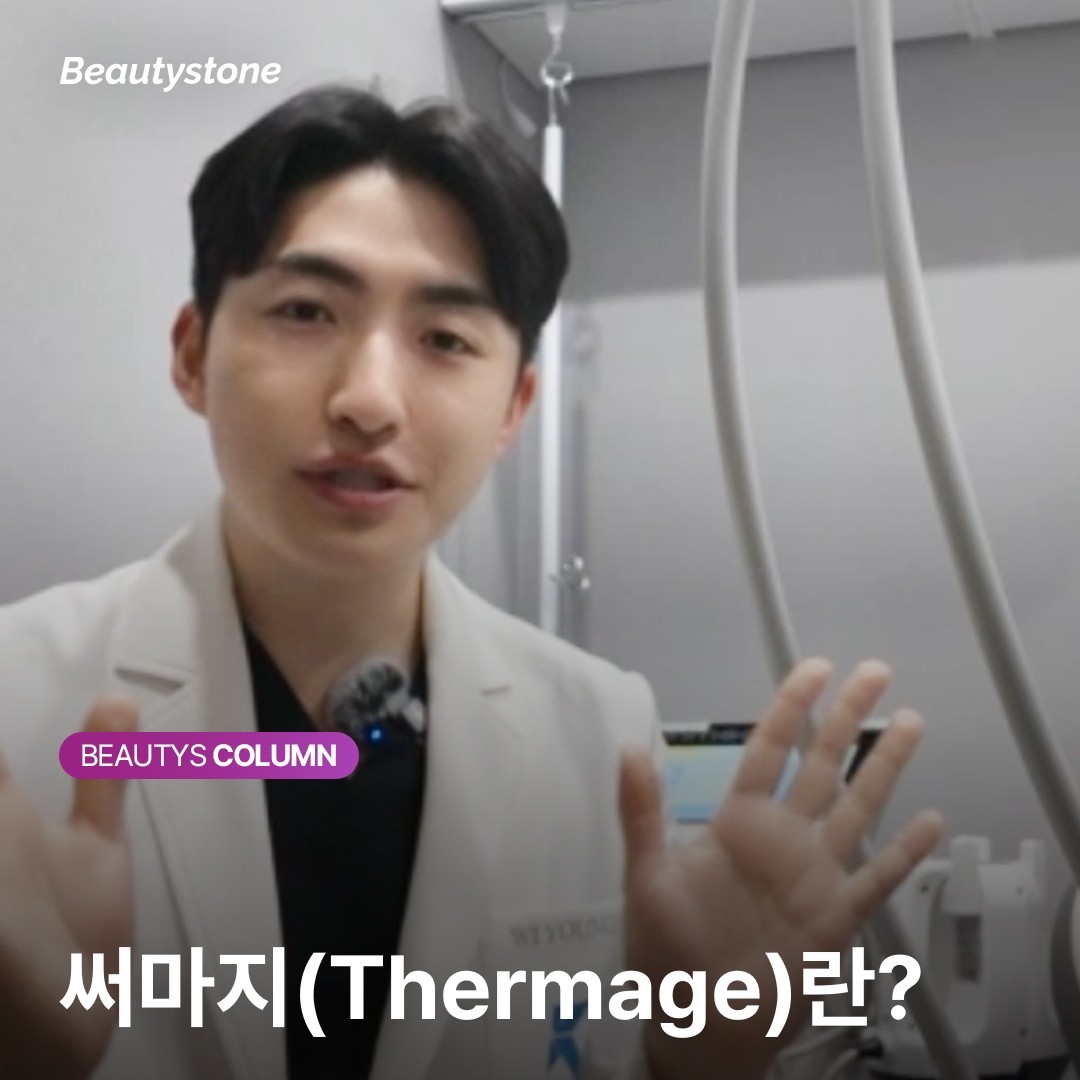
What is Thermage (Thermage)?
Thermage (Thermage FLX)
delivers radiofrequency (RF, Radio Frequency) heat energy
deep into the dermis
to induce collagen contraction and regeneration,
making it a non-invasive lifting device.
If Ulthera uses ultrasound
to directly stimulate the SMAS layer (fascial layer),
Thermage targets
the collagen structure in the middle and lower dermis with radiofrequency heat energy.
The depth of action and the target tissue are different.

'Radiofrequency heat energy',
don’t just brush it off
Honestly, when you first encounter the sentence 'collagen is stimulated by radiofrequency',
most people just pass it by.
But there’s something important here.
Thermage does not transfer heat by
'simply heating the surface'.
When the radiofrequency current passes through the skin tissue,
the water molecules in the tissue vibrate,
generating frictional heat.
This heat is generated not in the epidermis,
but in the deep layers of the dermis.
What makes this tricky is that while protecting the epidermis with a cooling tip,
only the dermis must be heated to the exact temperature
(around 65~70°C).
Why is this temperature range important?
Because collagen fibers contract immediately in this range,
and that stimulus acts as a signal that
induces new collagen production.
If the energy is too low,
it won’t even reach the temperature at which collagen contracts,
and if it’s too high, tissue damage occurs.
Handling this boundary properly is
the practitioner’s role.
During the first consultation,
I check skin thickness and the distribution of subcutaneous fat,
then adjust the energy level and number of passes accordingly.
Because even with the same machine, different energy settings
can lead to different results.
Director Wi Young-jin’s key summary
Thermage works on the principle that radiofrequency heat energy
is generated directly in the dermis.
It’s not the machine generation that determines the result,
but how accurately energy is delivered to the dermis
at the right temperature that matters.
Remember that this control depends on the practitioner’s experience
and judgment.
Ulthera vs. Thermage
— Which choice is right for you?
Category | Thermage FLX | Ulthera |
Energy type | Radiofrequency (RF) | Focused ultrasound (HIFU) |
Main target | Middle and lower dermal collagen | SMAS layer (fascial layer) |
Main effect | Improved skin elasticity and texture | Sagging correction and contour lifting |
Pain level | Relatively low | Relatively high |
Best suited for | Loss of elasticity / enlarged pores | Cheek sagging / nasolabial fold concerns |
Thermage is a good fit for people who
have reduced skin elasticity, enlarged-looking pores, or
are bothered by fine lines.
On the other hand, if the cheeks have noticeably sagged or
the facial contour itself has changed, then rather than Thermage alone,
you should consider combining it with Ulthera
or exploring another approach.
However, because it works by naturally changing the tissue,
it can take 3 to 6 months for collagen regeneration,
so it’s best to take your time and watch the results.
Frequently asked questions
Q1. What’s the difference between Thermage, InMode, and Potenza?
They all use radiofrequency, but the delivery method differs.
InMode acts even on the subcutaneous fat layer,
and Potenza uses needles to deliver energy directly at a specific depth.
Thermage uses a surface-contact method
to deliver energy evenly across a wide area.
Q2. How much does it cost,
and how many sessions are needed?
The cost varies greatly depending on the tip type and the treatment area.
Thermage is often maintained with one treatment per year,
and if you didn’t see any effect after one session,
it’s a good idea to check the energy level settings.
Q3. What side effects or
precautions are there after the procedure?
Being non-invasive doesn’t mean
there are no side effects at all.
Temporary redness or swelling may occur, so
it’s important to apply the energy appropriately.
For 1 to 2 days after the procedure, avoid strong UV exposure
and keep the skin well moisturized.
That’s all from Wi Young-jin.
Read more
▶The truth about Ulthera pain: 'Lifting doesn’t work just because you endure it'
▶Shrink vs. Ulthera Prime, lifting criteria that will help you save your money
▶'Thermage has no effect?' A candid lifting story from the clinic - Hongdae Thermage
▶Thermage 600-shot price: 3 reasons custom design matters more than a cheap place

Thermage, don’t believe the claim that
the machine alone is enough
Beauty's Doctor
I’m Director Wi Young-jin of Beauty Stone Clinic in Hongdae.
Please check this before reading
Q. Is a clinic that uses the latest-generation Thermage machine
always better?
A. More than the generation difference, what matters is how deeply the energy
reaches into the dermis.
Results are determined by that.
Energy settings and
the practitioner’s experience matter far more than the machine.
Q. Is one Thermage session enough?
A. It usually takes
about 3 to 6 months for collagen regeneration to complete, and for maintenance,
repeat treatment every 1 to 2 years is often recommended.
Key points of this article
Thermage is a proven non-invasive lifting procedure that
regenerates dermal collagen with
radiofrequency heat energy.

What is Thermage (Thermage)?
Thermage (Thermage FLX)
delivers radiofrequency (RF, Radio Frequency) heat energy
deep into the dermis
to induce collagen contraction and regeneration,
making it a non-invasive lifting device.
If Ulthera uses ultrasound
to directly stimulate the SMAS layer (fascial layer),
Thermage targets
the collagen structure in the middle and lower dermis with radiofrequency heat energy.
The depth of action and the target tissue are different.

'Radiofrequency heat energy',
don’t just brush it off
Honestly, when you first encounter the sentence 'collagen is stimulated by radiofrequency',
most people just pass it by.
But there’s something important here.
Thermage does not transfer heat by
'simply heating the surface'.
When the radiofrequency current passes through the skin tissue,
the water molecules in the tissue vibrate,
generating frictional heat.
This heat is generated not in the epidermis,
but in the deep layers of the dermis.
What makes this tricky is that while protecting the epidermis with a cooling tip,
only the dermis must be heated to the exact temperature
(around 65~70°C).
Why is this temperature range important?
Because collagen fibers contract immediately in this range,
and that stimulus acts as a signal that
induces new collagen production.
If the energy is too low,
it won’t even reach the temperature at which collagen contracts,
and if it’s too high, tissue damage occurs.
Handling this boundary properly is
the practitioner’s role.
During the first consultation,
I check skin thickness and the distribution of subcutaneous fat,
then adjust the energy level and number of passes accordingly.
Because even with the same machine, different energy settings
can lead to different results.
Director Wi Young-jin’s key summary
Thermage works on the principle that radiofrequency heat energy
is generated directly in the dermis.
It’s not the machine generation that determines the result,
but how accurately energy is delivered to the dermis
at the right temperature that matters.
Remember that this control depends on the practitioner’s experience
and judgment.
Ulthera vs. Thermage
— Which choice is right for you?
Category | Thermage FLX | Ulthera |
Energy type | Radiofrequency (RF) | Focused ultrasound (HIFU) |
Main target | Middle and lower dermal collagen | SMAS layer (fascial layer) |
Main effect | Improved skin elasticity and texture | Sagging correction and contour lifting |
Pain level | Relatively low | Relatively high |
Best suited for | Loss of elasticity / enlarged pores | Cheek sagging / nasolabial fold concerns |
Thermage is a good fit for people who
have reduced skin elasticity, enlarged-looking pores, or
are bothered by fine lines.
On the other hand, if the cheeks have noticeably sagged or
the facial contour itself has changed, then rather than Thermage alone,
you should consider combining it with Ulthera
or exploring another approach.
However, because it works by naturally changing the tissue,
it can take 3 to 6 months for collagen regeneration,
so it’s best to take your time and watch the results.
Frequently asked questions
Q1. What’s the difference between Thermage, InMode, and Potenza?
They all use radiofrequency, but the delivery method differs.
InMode acts even on the subcutaneous fat layer,
and Potenza uses needles to deliver energy directly at a specific depth.
Thermage uses a surface-contact method
to deliver energy evenly across a wide area.
Q2. How much does it cost,
and how many sessions are needed?
The cost varies greatly depending on the tip type and the treatment area.
Thermage is often maintained with one treatment per year,
and if you didn’t see any effect after one session,
it’s a good idea to check the energy level settings.
Q3. What side effects or
precautions are there after the procedure?
Being non-invasive doesn’t mean
there are no side effects at all.
Temporary redness or swelling may occur, so
it’s important to apply the energy appropriately.
For 1 to 2 days after the procedure, avoid strong UV exposure
and keep the skin well moisturized.
That’s all from Wi Young-jin.
Read more
▶The truth about Ulthera pain: 'Lifting doesn’t work just because you endure it'
▶Shrink vs. Ulthera Prime, lifting criteria that will help you save your money
▶'Thermage has no effect?' A candid lifting story from the clinic - Hongdae Thermage
▶Thermage 600-shot price: 3 reasons custom design matters more than a cheap place
Recommended post
Recommended post
Latest post
Latest post

Lifting
서울에서 시술 받을 때 홍대와 강남 어디가 좋을까 — 외국인 방문객을 위한 가이드
가격과 접근성 모두 중요 하지만, 가장 필요한건 원장님이 진료를 봐주시는지가 더 중요 할 것 같습니다. 특히 외국인을 보는 곳으로 가야, 해부학적인 다른 점도 체크가 가능해요.

Lifting
울쎄라 부작용, 솔직히 저도 5년 전엔 몰랐던 것
울쎄라 부작용, 멍·붓기보다 입꼬리 비대칭이 더 무섭습니다. 4.5mm 깊이가 신경 분지 근처를 지나거든요.

skin
레이저로 안 되던 모공, 포텐자 RF는 뭐가 다를까?
레이저와 마이크로니들 RF는 모공에 작용하는 방식이 달라요. 표면이냐 진피냐, 어디에 에너지를 전달하는지 정리했어요.

skin
홍대 피부과 고를 때 나는 "원장이 직접 진료하는 곳"부터 봐요
홍대 피부과가 너무 많아 고르기 어려우셨나요. 원장이 직접 진료하는 클리닉을 우선 보는 이유와 확인 방법을 정리했어요.

Lifting
마포에서 피부과 고를 때 써마지 잘 받으려면 뭘 봐야 할까
마포에서 피부과를 고를 때 위치보다 먼저 따져야 할 기준이 있어요. 써마지를 후회 없이 받기 위한 체크리스트를 정리했어요.

Contouring & Volume
쥬베룩이랑 필러는 뭐가 다른 거예요?
쥬베룩, 스컬트라, PRP, 필러… 다 비슷해 보이지만 작동 방식이 달라요. 콜라겐 부스터와 필러의 차이를 풀었어요.
1:1 Custom Approach
💬 Eng Available 1:1 consultations available via Whatsapp
🌸 Beautystone Clinic attends the Meditox Bangkok Cadaver Workshop 🌸
1:1 Custom Approach


![[Beauty Stone] How to Avoid Failing at Dark Circle Filler? "The Precision of 0.3cc Changes the Results"](https://framerusercontent.com/images/F4Q84TUWgjbZJV6MNheLnWHnaw.jpg?width=1080&height=1080)