

Cellulite comes from fibrous septae pulling skin down. What Onda heats, and what it cannot fix.
Published -
Updated -

Author
Wi Young-jin · Chief director
Seoul National University College of Medicine · Seoul National University Hospital Specialist
→
Read about Onda lifting and the words firmness and fat come up constantly, but whether it does anything for cellulite is left vague. Here is the part that gets skipped: cellulite is not really a fat problem. It usually starts with the structure of the connective tissue tethering your skin from underneath. Which makes if I lose the fat, will the dimpling go a question with only half a right answer.
Onda uses microwave energy to heat deep fat and the fibrous tissue running through it, so the layer it reaches overlaps with where cellulite actually originates. This article covers why cellulite forms, which layer an energy device like Onda is aimed at, and how a lifting result differs from a cellulite result.
This article is general information from Beautystone, a skin clinic in Hapjeong, Seoul.
What you will learn
Why cellulite has more to do with connective tissue structure than with fat
Which layer Onda microwave energy heats
How a lifting result and a cellulite result differ
Where Onda fits well, and where its limits are
Cellulite is a connective tissue problem more than a fat problem
Cellulite is popularly filed under clumped fat, but the structure that actually matters is the fibrous septae* running vertically and tethering the skin from below. Fat lobules enlarge and push upward while those fibrous bands hold the skin down, and the result at the surface is a dimpled, uneven texture. Reviews describe cellulite as arising from the persistent traction of fibrous septae anchoring subcutaneous fat to the dermis, and note that in women these septae are arranged perpendicular to the skin, which makes fat protrude upward more readily. That makes it clear this is not simply a question of how much fat is present.
Fibrous septae*: tough bands of connective tissue running vertically between the dermis and the fascia beneath. When they shorten or pull tight, the skin surface reads as dimpled.
Which is why dieting the fat down can leave the dimpling exactly where it was. What creates the depressions is the arrangement and traction of the septae holding that fat, not the fat volume by itself. Any real attempt at improvement has to address both the fat and that connective tissue.
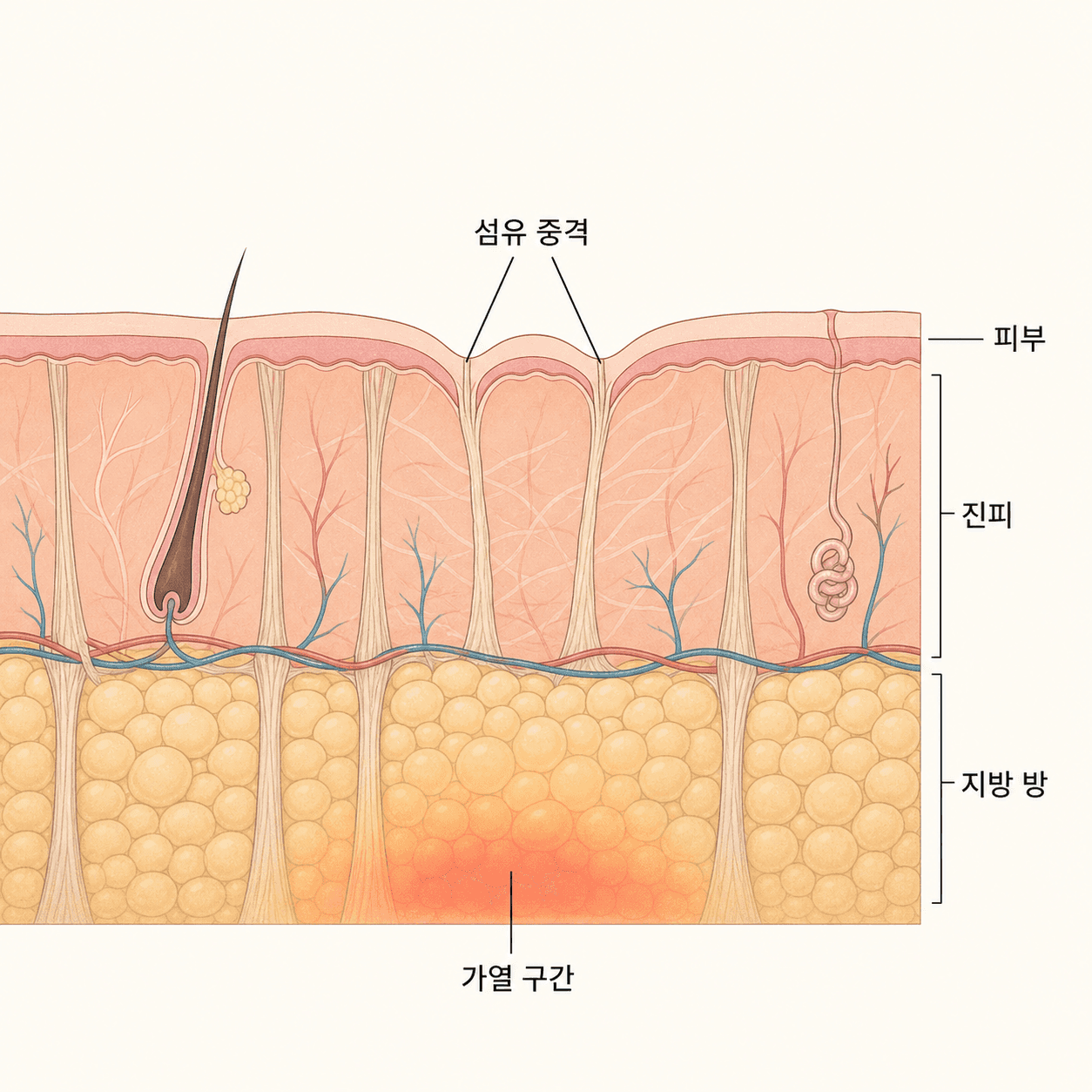

Onda heats the deep fat and the fibrous tissue with it
Onda delivers microwave energy past the skin surface into the deep fat layer, raising the temperature of the fat and the surrounding connective tissue. When heat reaches tissue, collagen contracts and new collagen forms in the repair that follows, and that sequence shows up as a tightening effect working from the inside. Reviews note that raising tissue temperature induces collagen denaturation, remodelling and new collagen formation, and that energy-based approaches of this kind target the connective tissue septae responsible for cellulite, which links the mechanism of heating tissue to remodel connective tissue with the way cellulite is approached. In the US, Onda is an FDA-cleared device, and clearance in this category covers temporarily reducing the appearance of cellulite rather than eliminating it.
The point is that the layer Onda reaches overlaps with where cellulite originates. Unlike surface treatments, it heats deep fat and the fibrous tissue running through it together, so tightening the volume and reorganising the connective tissue can both be in play. That said, this is a description of the mechanism. How much any individual responds depends on the state of their tissue, and individual results vary.
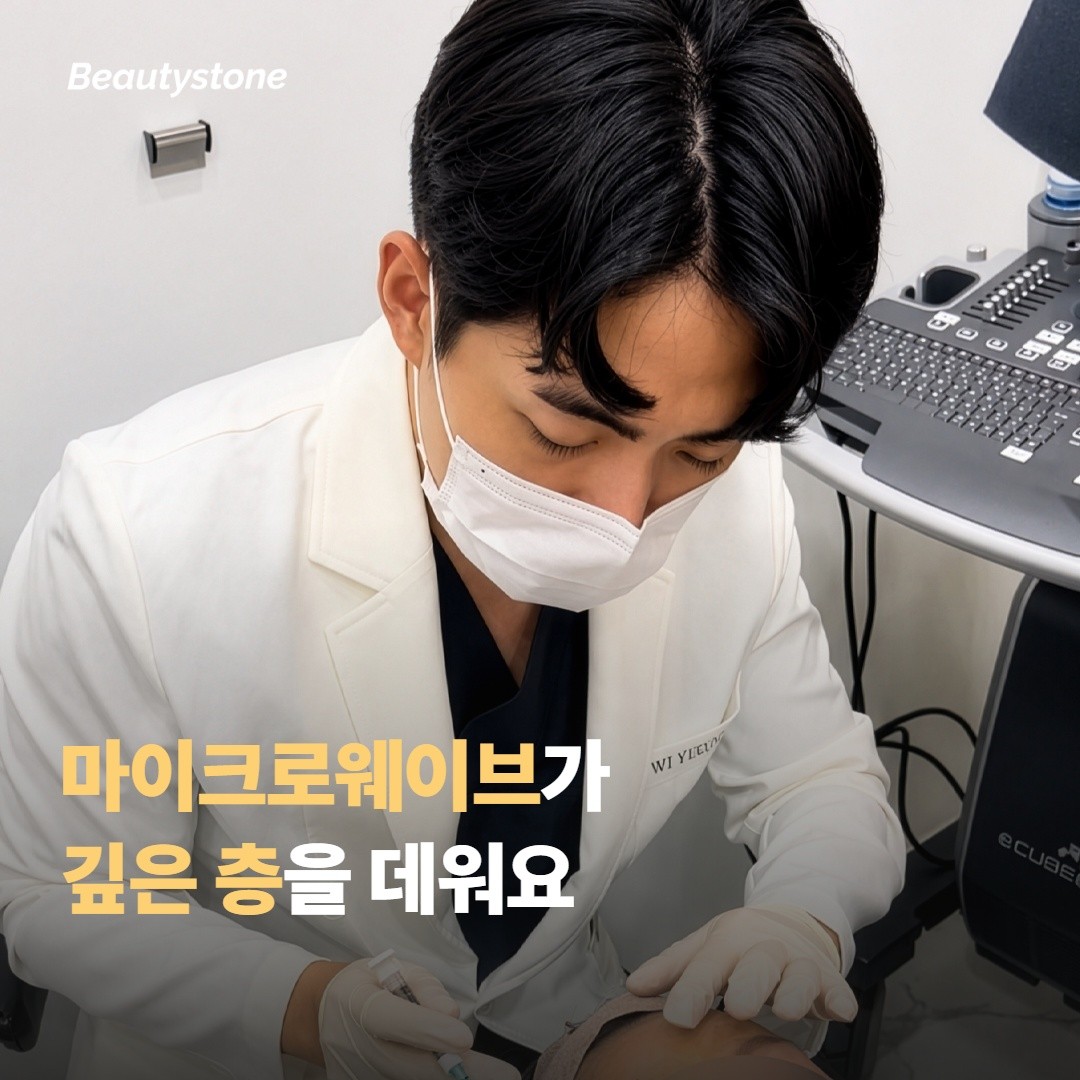
Lifting and cellulite work aim at different layers
Even with the same Onda session, firmness lifting and cellulite dimpling work have slightly different focal points. Lifting is about heating collagen so the skin pulls smooth. Cellulite work is closer to easing the traction of the septae holding the skin down. They are not mutually exclusive and both happen together, but the balance between them shifts with the area and the goal.
Focus | Layer mainly targeted | What changes | Tendency |
|---|---|---|---|
Firmness lifting | Collagen in the dermis to shallow fat | Surface tightens and smooths | Noticed relatively early |
Cellulite improvement | Deep fat and fibrous septae | Dimpling eases | Gradual and incremental |
Volume refinement | Deep fat layer | Thickness looks tidier | Varies by area |
Below is a relative comparison of which goals Onda engages with most. These are not absolute values, only a way of showing where the weight falls.
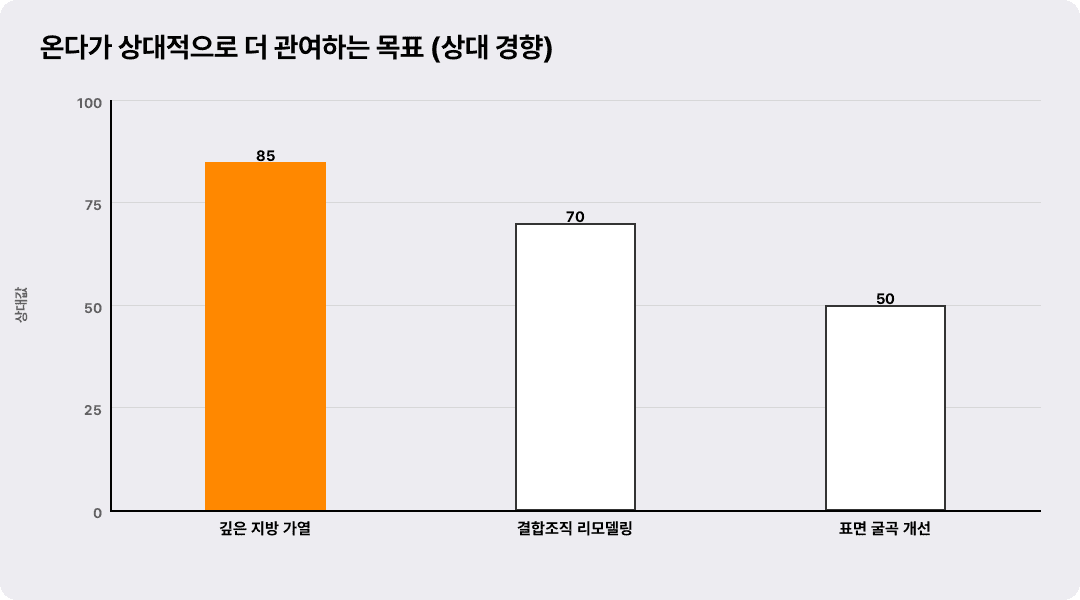
So pronounced dimpling is generally approached gradually over a course of sessions, while firmness-led goals have the session count adjusted according to how the tissue responds. Deciding the goal first and setting the parameters to match is what makes the outcome predictable.
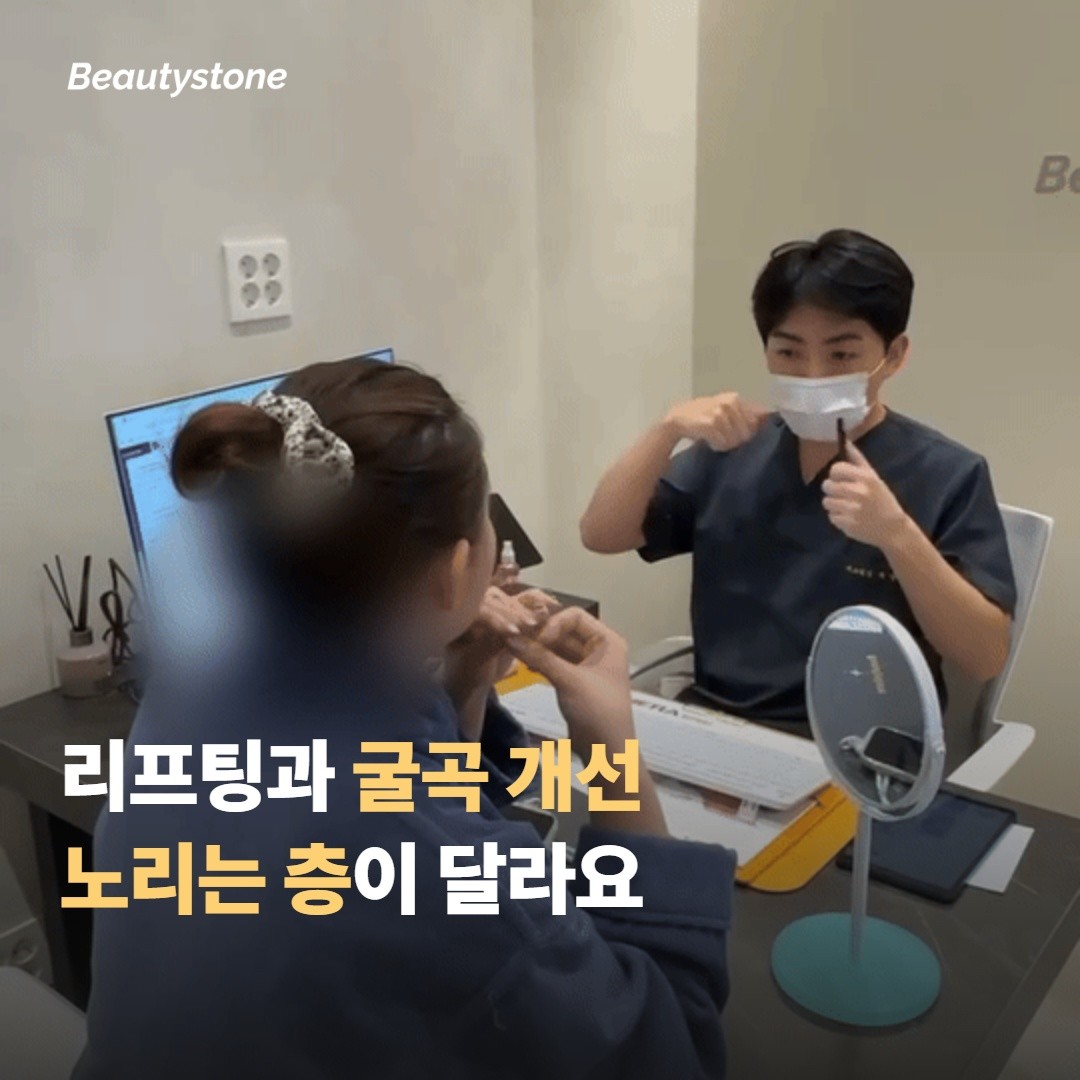
Where Onda fits well, and where it does not
Because Onda reaches deep layers without surgery, the recovery burden is modest. But not every kind of cellulite responds the same way. Splitting out where it fits and where it runs into limits makes the decision easier.
Generally a good fit — dimpling where fat and connective tissue are both involved, and areas that have lost firmness
Needs a gradual approach — long-standing, deeply set dimpling takes several sessions
Runs into limits — significantly loose skin or structural sagging may be better served by a different approach
Managed alongside — weight changes and daily habits affect how the result holds
So the accurate framing is not that Onda is categorically good for cellulite, but that it is a way of reaching the fat and connective tissue layers that produce it. What you can reasonably expect depends on which type your own dimpling resembles, so having someone look at it is the safer route.

Why the provider you choose still matters
The habit worth looking for is a clinic that asks whether you are after firmness or after tidier dimpling before it sets any parameters. The same device gets different session counts and output levels depending on the layer being targeted, so identifying the type of dimpling and the state of the skin has to come before the plan. At Beautystone, a small clinic a short walk from Hapjeong Station in Seoul, the approach is matched to your area and tissue rather than run off a template. If you are travelling for treatment, note this is a multi-session treatment and any follow-up after you fly home will need a provider where you live.

Normal reactions versus signs worth a second look
After an Onda session, mild reactions in the treated area are common. Most settle on their own without any intervention.
Mild warmth and redness — usually easing within a few hours to a day
Slight swelling or a heavy ache — the tissue is responding, and this can last a few days
Temporary tenderness — the area can feel sensitive to touch
These signs, on the other hand, are worth raising with the clinician who treated you.
Blistering, or pain that feels like a burn — contact your provider promptly or seek urgent care
Severe swelling or pain that does not settle with time
Skin discolouration or any weeping from the area — these can signal infection, so seek urgent care
Because Onda works deep layers, matching the parameters to the type of dimpling and to the goal is what governs both the result and the safety margin. This is general educational information rather than medical advice, so the right approach for your own cellulite is a decision to make with the clinician who has examined you.
Frequently asked questions
Q. Will Onda clear my cellulite completely?
A. It is better understood as easing the dimpling than as clearing it. Cellulite is produced by fat and connective tissue structure together, so rather than disappearing in one session it tends to tidy up gradually across several. How much you notice depends on the degree and the type of dimpling, and individual results vary.
Q. If I lose weight, will the cellulite go with it?
A. Reducing fat volume can help, but the traction of the fibrous septae tethering the skin often remains exactly as it was. That is why weight management is sometimes paired with an approach that reaches the connective tissue layer. The cause was never fat alone.
Q. How many Onda sessions do I need?
A. It varies with the goal and the degree of dimpling, so there is no fixed number. Firmness-led goals have the session count adjusted according to how you respond, while long-standing dimpling is generally approached over more sessions. For a plan that fits your situation, confirm it in consultation.
Q. Does an Onda session hurt?
A. Most people describe it mainly as a warming sensation rather than pain. That said, how it feels shifts with the area, the output setting and your own sensitivity. If it becomes too hot or difficult to tolerate, say so during the session rather than waiting it out.
Content




skin
Why Does Fractional CO2 Take Longer to Heal?

Contouring & Volume
How Many cc Does Forehead Filler Need?

skin
Why Is My Skin Oily but Tight in the Fall?

Hair Removal
Underarm Laser Hair Removal Cost: Do the Math

Tattoo removal
Laser Before a Cover-Up: How Many Sessions?

skin
큐어젯 다운타임, 다음 날 출근과 화장은 언제부터 될까요?