

How Titanium Lifting's deepest wavelength reaches cheek fat and vessels, and what to expect.
Published -
Updated -

Author
Wi Young-jin · Chief director
Seoul National University College of Medicine · Seoul National University Hospital Specialist
→
When people come in to talk about lifting, most of them say some version of "I just want the sagging pulled up." Then, a few weeks after a Titanium Lifting session, the same people often add something else: their jawline looks sharper, or the redness across their cheeks has settled down. It's a lifting device, so it's fair to wonder why face shape and redness keep coming up in the same conversation.
The short answer is that Titanium Lifting doesn't use a single kind of light. It fires three wavelengths at the same time. Each one travels to a different depth and locks onto a different target, so the treatment doesn't only stimulate firmness — the deeper fat layer and the vessels behind facial redness end up inside its range too.
That said, if you read this as "the fat melts away" or "the redness disappears," you're setting yourself up for disappointment. In this article we'll walk through what each wavelength actually does, and where the realistic ceiling sits.
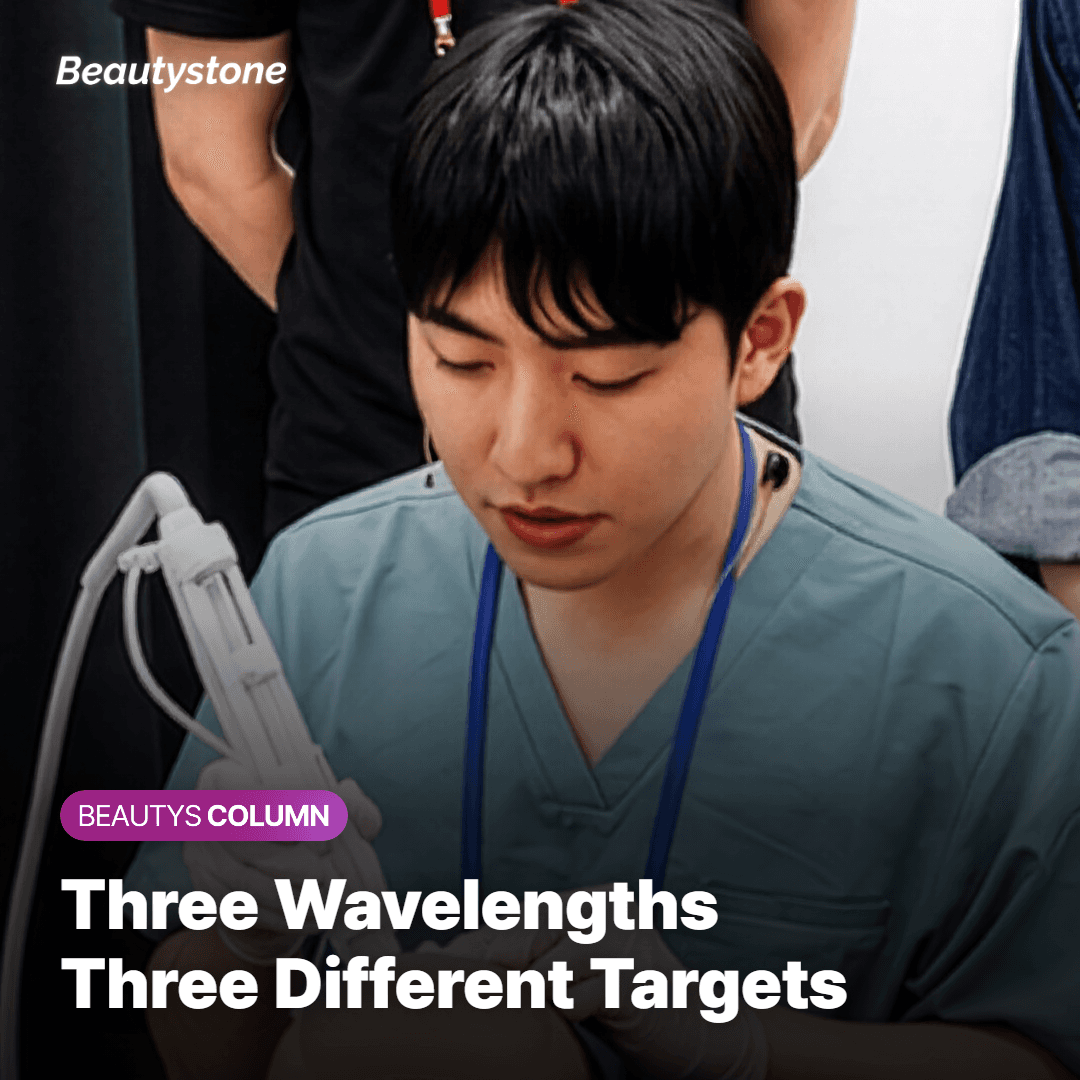
Three Wavelengths, Three Different Targets
Titanium Lifting delivers 755 nm, 810 nm, and 1064 nm simultaneously through a diode laser. The longer the wavelength, the deeper it travels into the skin. That property is the whole point of stacking three of them: a single pass can address the shallow layers and the deep ones at once, instead of forcing you to pick.
The shortest wavelength stays closer to the surface, where texture and fine lines live. The middle one settles into the dermis, where collagen sits. And the longest — 1064 nm — does double duty. It carries heat into the deep layers, and it also latches onto pigment in the blood. That second job is the reason a device marketed for firmness starts producing comments about contour and color.
It's worth being clear about what this isn't. There's nothing inserted, nothing left behind, and no incision. The energy does its work and the tissue responds over the following weeks.
How the Deepest Wavelength Reaches Cheek Fat
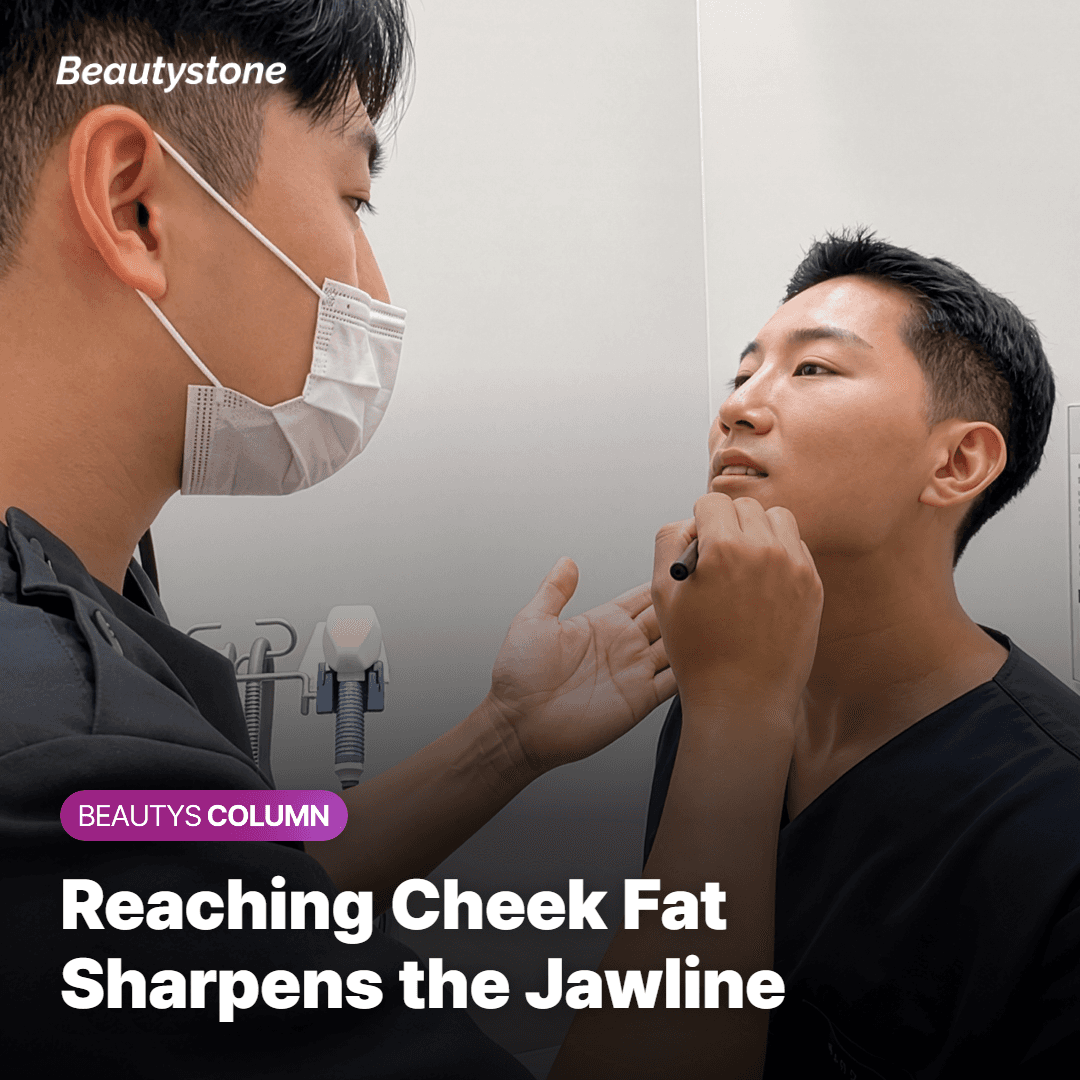
The 1064 nm wavelength is absorbed only lightly by the epidermis, which means more of its energy makes it further down. One report notes that 1064 nm has minimal absorption in the epidermis, so it can be used across skin types, and that it penetrates into the subcutaneous fat layers to deliver the bulk heating needed there. That's the mechanical reason this wavelength keeps getting discussed alongside fat rather than firmness alone.
There's also work that applied this specific combination to the face. A case series used a triple-wavelength device running 755, 810, and 1064 nm to address facial fat that had redistributed with age. Participants had up to three sessions spaced three weeks apart and were followed for six months afterward. The authors flagged the absence of downtime and the low level of discomfort as the practical advantages of going about it this way.
Here's the misconception worth clearing up. This isn't a procedure that removes fat. It's closer to tidying up the position of cheek fat that has drifted downward, and the sharper jawline is a consequence of that repositioning. If your cheeks were already on the hollow side to begin with, chasing a contour result here isn't the right move — you'd be treating the wrong problem. The direction fits when sagging has blurred a jawline that used to be defined.
Why Redness Fades Too: Targeting Blood Vessels
Most facial redness traces back to dilated capillaries sitting under the skin. Hemoglobin absorbs 1064 nm readily, so the energy can heat those widened vessels while leaving the surrounding tissue comparatively alone. A published series describes how preferential absorption at specific wavelengths allows selective destruction of oxygenated and deoxygenated hemoglobin with only minimal damage to nearby tissue, and reports that 125 of 130 patients with facial telangiectasia showed marked improvement or clearance.
Set your expectations against the detail rather than the headline, though. In that same series, clearance rates for leg vessels came in noticeably lower than facial ones, which tells you the location and character of the redness change what you'll actually feel. Distinct, visible threadlike vessels tend to respond in a way you can see. A diffuse flush spread evenly across the whole face moves more slowly, and it's reasonable to expect a gradual shift rather than a dramatic one.
If redness is your main reason for booking, the more useful first step is figuring out whether vessels are actually the cause, or whether something else is driving it. That's a diagnostic question, not a device question.
Why Choose Beautystone in Hapjeong?
Before recommending Titanium Lifting, we ask you to separate out what's actually bothering you right now — the sagging, the jawline, or the redness. It matters, because the same device gets configured differently depending on where the weight goes. Energy levels and treatment mapping shift, and so does the range of change you can reasonably expect. When all three are present in small amounts, we'll work out the order together rather than trying to chase everything in one pass. We're a small clinic within walking distance of Hapjeong Station, which means we can look at how your skin responded each round and adjust the next one accordingly.

Side Effects, Downtime, and Signs to Watch
The facial fat series mentioned above ran sessions three weeks apart, and the vascular work uses a four-week interval as its baseline. So plan on roughly one session every three to four weeks, built up over several rounds. This isn't a one-and-done treatment, and anyone telling you otherwise is overselling it.
Right after a session, these reactions are common:
Mild redness and a warm feeling — usually settles within a day or two
Slight swelling — most people see it go down within a few days
A tight, dry feeling — keeping up with moisturizer helps
There's an irony worth naming: this is a treatment that addresses redness, and yet you'll probably look redder right afterward. That's a normal response. What matters more is sun protection during this window, because skin that's just absorbed heat can hold onto pigment if UV exposure stacks on top of it.
Get in touch with the clinic that treated you if you notice any of the following:
Redness or burning that keeps intensifying instead of settling
Blistering
Swelling and pain that haven't eased after several days

The Bottom Line
Contour and redness come up alongside firmness because the longest of the three wavelengths reaches both the deep fat layer and the vessels underneath. But it repositions fat rather than removing it, and the redness response varies by location and vessel type. This article covers general information — whether the treatment suits your skin, and at what energy level and how many rounds, is something to settle with the clinician who examines you.
Frequently asked questions
Q. Will Titanium Lifting slim down my cheeks?
A. Not in the way you might be picturing. It isn't a fat-removal treatment. It works closer to repositioning cheek fat that has drifted downward, and a cleaner jawline follows from that. If your cheeks are already on the hollow or under-volumized side, this direction may work against you. Worth checking first whether the fat has descended or is genuinely lacking.
Q. I have facial redness. How much improvement can I expect?
A. Distinct, visible vessels tend to respond noticeably. A diffuse flush across the whole face shifts more gradually. Published work shows clearance rates differ by location, so the honest answer depends on what kind of redness you have. If redness is the main concern, the first step is confirming whether vessels are the cause or something else is.
Q. How many sessions do I need, and how far apart?
A. Generally three to four weeks apart, spread over several rounds. The facial fat case series ran up to three sessions three weeks apart, while vascular work typically uses a four-week interval. The number you'll need depends on how much sagging there is and what's driving the redness, so it's decided as your response comes in.
Q. Can I wear makeup right after?
A. Usually yes — washing your face and applying light makeup the same day is fine for most people, since there's essentially no downtime. If you still feel heat or see redness, ease off on anything irritating for a day. Don't skip sunscreen.


skin
Ellanse Cost: Duration Beats Price Per Visit

Lifting
Alltite RF: Two Effects, Two Timelines

Contouring & Volume
Why Juvelook Volume Quotes Vary by Clinic

men's
Nose Pore Treatment: Aftercare Timing Guide

skin
How Many Sessions Does Eyeliner Removal Take?

Hair Removal
Laser Hair Removal While Pregnant or Nursing