

The joule count on an Onda lifting price is the total heat used in one session. See how the area and fat thickness point to 60,000 or 80,000 J.
Published
Updated

Author
Wi Young-jin · Chief director
Seoul National University College of Medicine · Seoul National University Hospital Specialist
→
The joule count on an Onda lifting price is the amount of heat energy delivered in one session. The gap between 60,000 and 80,000 joules isn't a grade of result; it's a difference in dose matched to how much area is treated and how thick the fat is. So the right count comes from looking at which parts of your face need heating and how much fat sits under the skin there.
A higher number on the price list can look like a stronger lift, but that's not how the dose works. In this article, we'll cover what a joule count means, how to choose between 60,000 and 80,000, whether more energy brings more change, which reactions are normal and how sessions shape the total cost.
Quick summary
Joules are the total energy delivered, so a wider area and thicker fat take more, while sagging with little fat takes less.
Price list: Onda at 80,000 J starts at ₩770,000 per session (VAT excluded, as of September 8, 2026).
Higher energy also raises the risk of side effects, so treatment starts low and goes up as your skin responds.
Timing: in a double chin study, fat and sagging scores had dropped 12 weeks after 6 sessions spaced 2 weeks apart.
What Does the Joule Count Mean in an Onda Lifting Price?
A joule (J) is a unit of energy. A 60,000 J session sends 60,000 joules under the skin, and an 80,000 J session sends 80,000. On the same face, a bigger dose means a higher price, so the price follows the joule count.
Item | Price per session | Basis |
|---|---|---|
Onda 80,000 J | Starting at ₩770,000 | Price list, VAT excluded, September 8, 2026 |
Seoul clinic pricing, subject to change. Facial Onda is also offered in 10,000, 60,000, 80,000 and 110,000 J tiers on our promotion page, which runs from September 1 to November 30, 2026. You can check the price of each tier on the price page.
Before you compare those numbers, it helps to settle how many joules your face actually needs. Two quotes are only comparable once you know what each dose is meant to cover.
60,000 or 80,000 Joules: Which Fits Your Face?
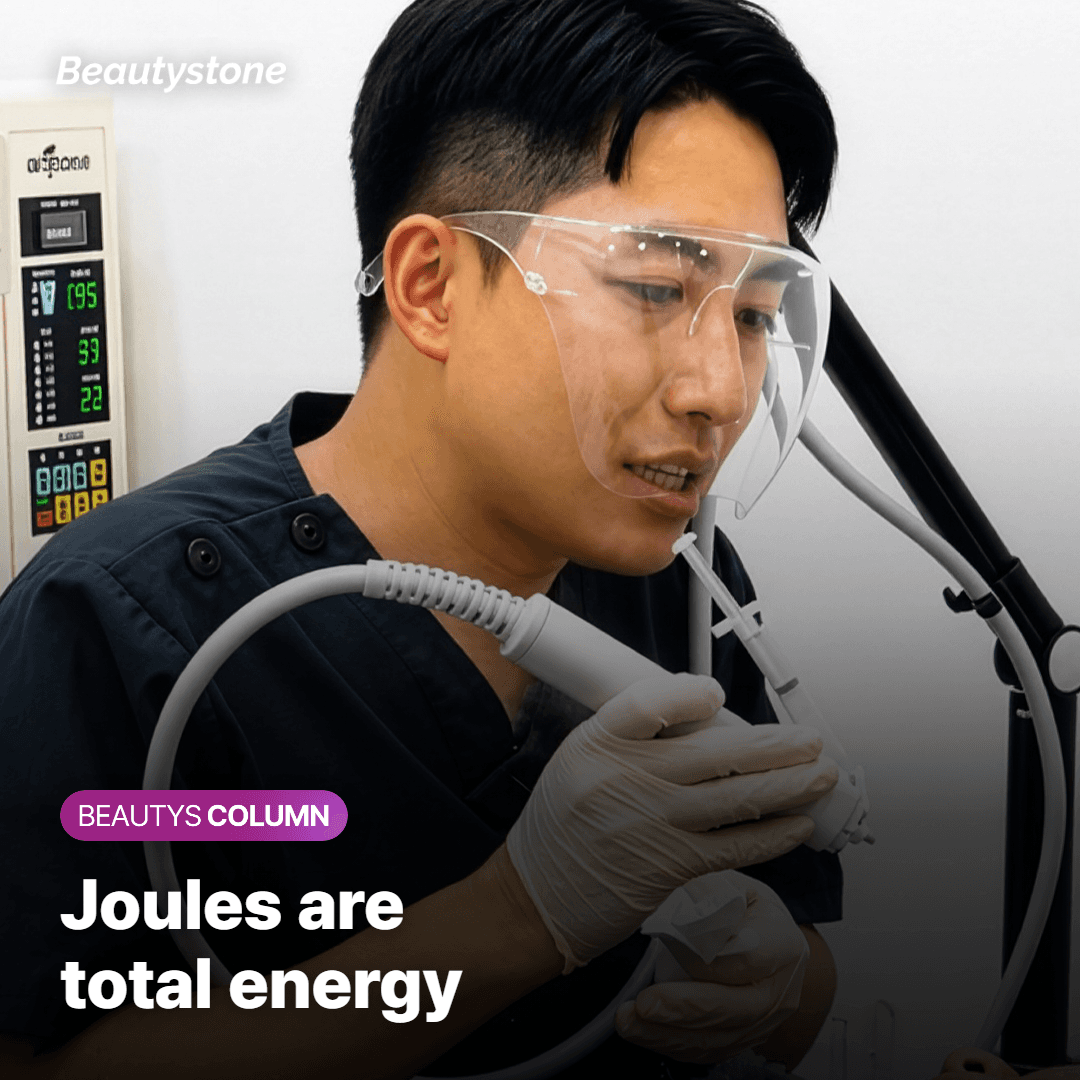
The size of the area being heated and the thickness of the fat under the skin decide the joule count. Onda uses 2.45 GHz microwaves to warm the fat layer under the skin, while a cooling plate at the tip of the handpiece keeps the surface cool. Thicker fat needs more energy to warm, and when the fat is thin and sagging is the main concern, lower values are used.
A group of doctors with long experience using Onda puts the body dose at 110,000 to 150,000 J for each square of about 15 cm (6 inches) on a side. The face is smaller, and it's usually divided into zones such as the cheeks, the jawline and the area under the chin. Your session's joule count is the sum of those zones. If the fat under your chin is fuller, more of the total goes there.
At the consultation, the skin under the chin and below the cheeks is pinched to check its thickness, and the sagging line is checked while you're sitting up. The balance of the whole face and any difference between the left and right sides come first. After that, the dose for each zone is set, and the zones add up to your joule count.
Do More Joules Mean Better Onda Lifting Results?
Nope. Adding joules doesn't make the change grow in step. Raising the energy also raises the risk of side effects, which is why the same expert group recommends starting at a low value and increasing it as your skin responds.
The change people see tends to come from a series of sessions rather than one big dose. In a study of 48 people who had 6 sessions under the chin spaced 2 weeks apart, the fat score fell from 3.4 to 1.7 and the sagging score from 3.7 to 2.4, measured 12 weeks after the last session. Of the 47 who answered, 70.2% said they were satisfied. That study had no comparison group and came from a single clinic, so it supports a series of sessions more than it supports any one joule count. Individual results vary.
How many sessions to plan and how far apart is covered in Onda lifting sessions and spacing.

Onda Lifting Side Effects: What's Normal and When to Call
A prickling, warm feeling during treatment and brief redness afterward come from the heat going in. Skip hot water until the redness settles, and keep the treated area out of direct sun for 2 days.
The signs below can mean too much heat has built up. Contact the clinic right away if you notice:
Blisters on the treated skin
Redness that deepens, with a burning feeling that doesn't ease
A deep, aching pain under the skin that keeps going
In these cases, it's better to put treatment off:
You're pregnant, or breastfeeding within 10 months of giving birth
You have a pacemaker or another implanted electronic device
You're being treated for cancer now, or had cancer treatment in the past 5 years
The area has filler, fat grafting or a metal plate in it
If you take a blood thinner, mention it before treatment, because redness can last longer. Don't stop the medicine on your own; that's a decision for the doctor who prescribed it.

How Many Onda Sessions Should Your Total Cost Include?
Your total is the price of one session multiplied by the number of sessions, so the session count matters as much as the joules. For the body, the expert group describes a course of 4 sessions, one every 4 weeks, and the same area isn't heated again within 15 days. On the face, too, splitting the work across a few sessions tends to make more sense for the money than pushing one session's joules much higher.
In a separate study of 19 people treated on the belly, 3 sessions spaced 4 weeks apart reduced waist size by an average of 3.80 cm at 3 months. That's a body result, but it shows the same pattern: change was measured after a series, not after one visit.
When you get a quote, check that it lists the joules per session, how they're split by zone, and the recommended number of sessions with the spacing between them.
Fitting Onda Lifting Into Your Travel Itinerary
Apart from a day when you've had sedation (sleep anesthesia), there's no reason to postpone your flight home because of an Onda lifting session.
It also helps to know what one visit can do. Some treatments, like fillers, change your shape on the same day. Most others, Onda included, don't transform your face in one go; they bring you gradually closer to how you used to look. One visit also doesn't stand in for a planned course of sessions.
Because the same area waits at least 15 days before it's treated again, a multi-session plan usually means more than one trip. Bring your travel dates to the first quote so the joules and sessions can be planned around them.
Once you're home, you can send photos through the consultation button on this page if you have questions about how things are going. If a reaction looks serious, see a local doctor first rather than waiting on a reply.
The Bottom Line: Ask How Your Joules Are Split
Before you decide between tiers, ask one question: how many joules go to my chin and how many to my cheeks? That answer tells you what the total is meant to cover, and it makes two quotes easy to compare. Like any procedure, it comes with trade-offs, and the right dose depends on your fat, your skin and your goals.
If you're considering Onda lifting, a consultation is where you can find out what fits you. Beautystone is a clinic in Seoul's Hapjeong area, and you can reach us through the consultation button on this page. In your first message, include front and side photos, the area that bothers you most, and any spot where you've had filler or fat grafting.
Sources


Hair Removal
Laser Hair Removal Dark Spots: Will They Fade?

skin
Blackhead Removal: Extraction, Peel, or Laser?

Tattoo removal
Tattoo Removal Cost: Why 3 to 20 Sessions?

Lifting
Onda Lifting Price: 60,000 or 80,000 Joules?

Hair Removal
Laser Hair Removal Pain: Easier by Session 3?

Tattoo removal
Tattoo Removal Scars: Old Scar or a New One?