

ONDA sessions depend on skin thickness, sagging, and age: decide by your starting point.
Published
Updated

Author
Wi Young-jin · Chief director
Seoul National University College of Medicine · Seoul National University Hospital Specialist
→
When exploring lifting treatments, you will often hear conflicting advice: "With ONDA, one session is enough," alongside "You need at least three sessions to see real, firm results." Since it is the same treatment and the same device, it can be confusing to hear such different recommendations, making it difficult to gauge which path is right for you.
To put it simply, while ONDA lifting does deliver cumulative benefits even from a single session, the recommended number of treatments varies depending on your skin thickness, underlying laxity, age, and previous aesthetic history. Choosing "1 session vs. 3 sessions" is not about comparing prices; it is a question of understanding your unique starting point.
This article is an informative guide compiled from the treatment records of Beautystone.
ONDA uses microwave energy, not RF
ONDA lifting utilizes 2.45GHz microwaves concentrated down to the dermis*: the second layer of skin right below the epidermis, where collagen and elastin reside. The thermal energy generated causes collagen fibers to contract and stimulates the production of fresh collagen. It is easily confused with HIFU or RF treatments, which fall under the same "lifting" category, but the type of energy used is entirely different.
A key feature of ONDA is its ability to target subcutaneous fat and soft tissue simultaneously while minimizing superficial skin damage. Clinical studies have shown that 12 weeks after a single treatment, the average submental laxity (under-chin sagging) score decreased from 3.6 to 2.3, with no significant adverse side effects reported during or after the procedure. However, it is important to note that this particular study assessed the results after two sessions combined with a 12-week follow-up, rather than just one.

Characteristics of those who see great results from a single session
In their early to mid-30s · First time receiving a lifting treatment
Above-average skin thickness with relatively dense natural collagen
Mild underlying sagging with a relatively well-defined jawline
Able to wait patiently for 1 to 2 months to see the gradual results
Have not received a similar lifting treatment (HIFU/RF) within the past year
For this group, a single session paired with their natural collagen regeneration capacity is often enough to maintain skin firmness for about 6 to 9 months. It is highly natural for these individuals to observe the results of their first session before scheduling their next visit.

Characteristics of those who benefit more from a 3-session package
In their 40s or older · Thinner skin texture than average
Noticeable sagging around the jowls, cheeks, and corners of the mouth
Experience sagging following significant weight fluctuations or dieting
Weakened natural collagen recovery (e.g., past treatments felt short-lived)
Want to progressively build up and restore skin elasticity step-by-step
A 3-session package is typically spaced 4 to 6 weeks apart to build and accumulate collagen renewal. Clinical reports indicate that cumulative treatments maintain laxity improvement scores far more stably than a single session, and medical societies generally recommend evaluating non-surgical tightening results over a 2 to 6-month period.
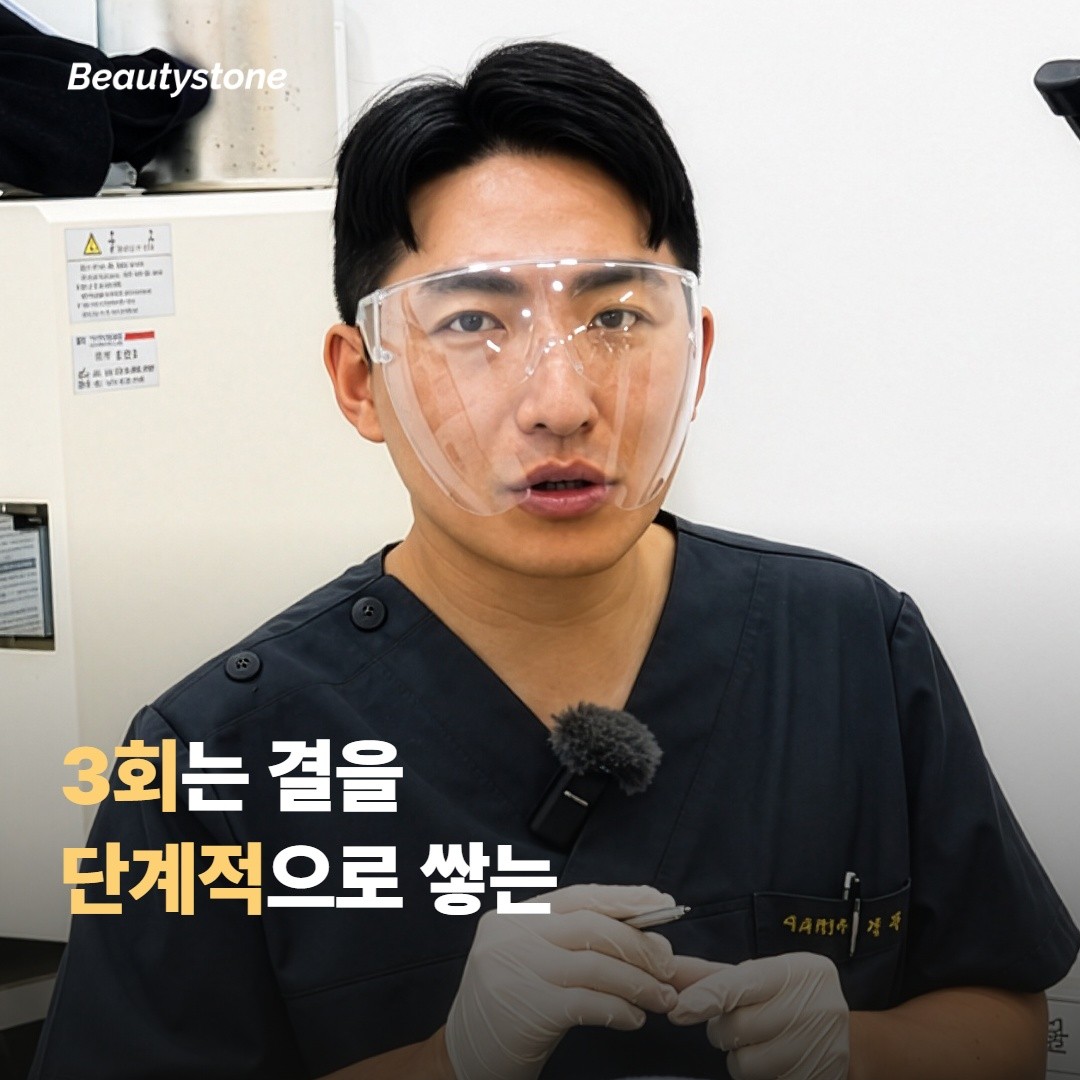
Spacing sessions too closely can actually hinder your results
Treatment Pattern | Recommended Interval | Notes |
|---|---|---|
1 session | — | Evaluate results at 6-12 months + consider maintenance |
2 sessions | 4 to 6 weeks | Allows sufficient time for collagen production between sessions |
3 sessions | 4 to 6 weeks apart | Stabilizes cumulative lifting and tightening effects |
4 or more sessions | 6 to 8 weeks apart | Requires adequate skin recovery time; consult with your provider |
Some clients request treatments spaced just 1 to 2 weeks apart in hopes of seeing dramatic, rapid changes. However, because skin remodeling and collagen regeneration occur on a 4-to-8-week cycle, overly frequent sessions can overlap treatment thermal signals and weaken skin matrix stability. Giving your skin ample time to heal is key to achieving stable, beautiful results.

When to consult your doctor before deciding on treatment sessions
If you are pregnant or breastfeeding
Active inflammation, acne breakouts, or herpes simplex lesions in the treatment area
History of keloid scarring (past wounds that became raised/bumpy)
Other laser, dermal filler, or HIFU treatments received within the past week
Currently taking photosensitizing medications
As mentioned, while ONDA's effects build up with each session, your ideal treatment plan depends heavily on your starting point. Rather than deciding based on package prices alone, it is far more effective to get a professional assessment of your skin thickness, baseline laxity, and age during your initial consultation to choose the best pathway for your skin.
Frequently Asked Questions
Q. I had one treatment but don't see a major change yet. Did it fail?
A. Because ONDA relies on microwaves to stimulate your natural collagen, the results are not instantaneous. Improvement typically builds up gradually over 4 to 8 weeks, with the most stable results visible around 12 weeks. Even if the immediate change seems subtle, comparing your 12-week progress photos will show a real difference.
Q. Do I have to repeat the treatment every year after a 3-session package?
A. This varies individually, but we generally re-evaluate your skin firmness 6 to 12 months after completing a package. Because natural collagen depletion is a continuous process, some clients prefer a gentle, single-session touch-up after a year, while others choose to repeat a package every 2 years. It is best to decide after checking your skin's ongoing response.
Q. Can I get ONDA alongside HIFU or RF treatments?
A. We do not typically recommend receiving both procedures at the exact same time. It is generally safer and more effective to complete one treatment cycle, wait 2 to 3 months, and then introduce a different category of treatment as a booster. We recommend discussing a customized combination treatment plan with your practitioner.


Hair Removal
Laser Hair Removal Dark Spots: Will They Fade?

skin
Blackhead Removal: Extraction, Peel, or Laser?

Tattoo removal
Tattoo Removal Cost: Why 3 to 20 Sessions?

Lifting
Onda Lifting Price: 60,000 or 80,000 Joules?

Hair Removal
Laser Hair Removal Pain: Easier by Session 3?

Tattoo removal
Tattoo Removal Scars: Old Scar or a New One?