

Moles, tattoos and scars change how a hair removal laser is set. Here’s what gets covered, what gets skipped, what waits — and the reason each one differs.
Published
Updated

Author
Wi Young-jin · Chief director
Seoul National University College of Medicine · Seoul National University Hospital Specialist
→
Sometimes the spot gets skipped. Sometimes it gets covered and the laser works around it. Sometimes that patch waits while everything else goes ahead. Which one applies to you comes down to a single question: does that piece of skin have extra pigment crowded into it, or has it lost pigment instead?
That question matters because a hair removal laser isn’t a device that burns hair off. It’s a device that goes looking for pigment. Once you know that, it gets much easier to see why a mole, an old tattoo and a healed scar each get handled differently at Beautystone in Hapjeong, Seoul — and why "can I still get it done?" is rarely a clean yes or no.
In this article, we’ll cover the three things a clinic can actually do with a marked spot, what light does when it runs into pigment, how moles, tattoos and scars each behave, the side effects worth understanding first, and what you can sort out at home before your consultation.
Skip It, Cover It, or Wait: The Three Options
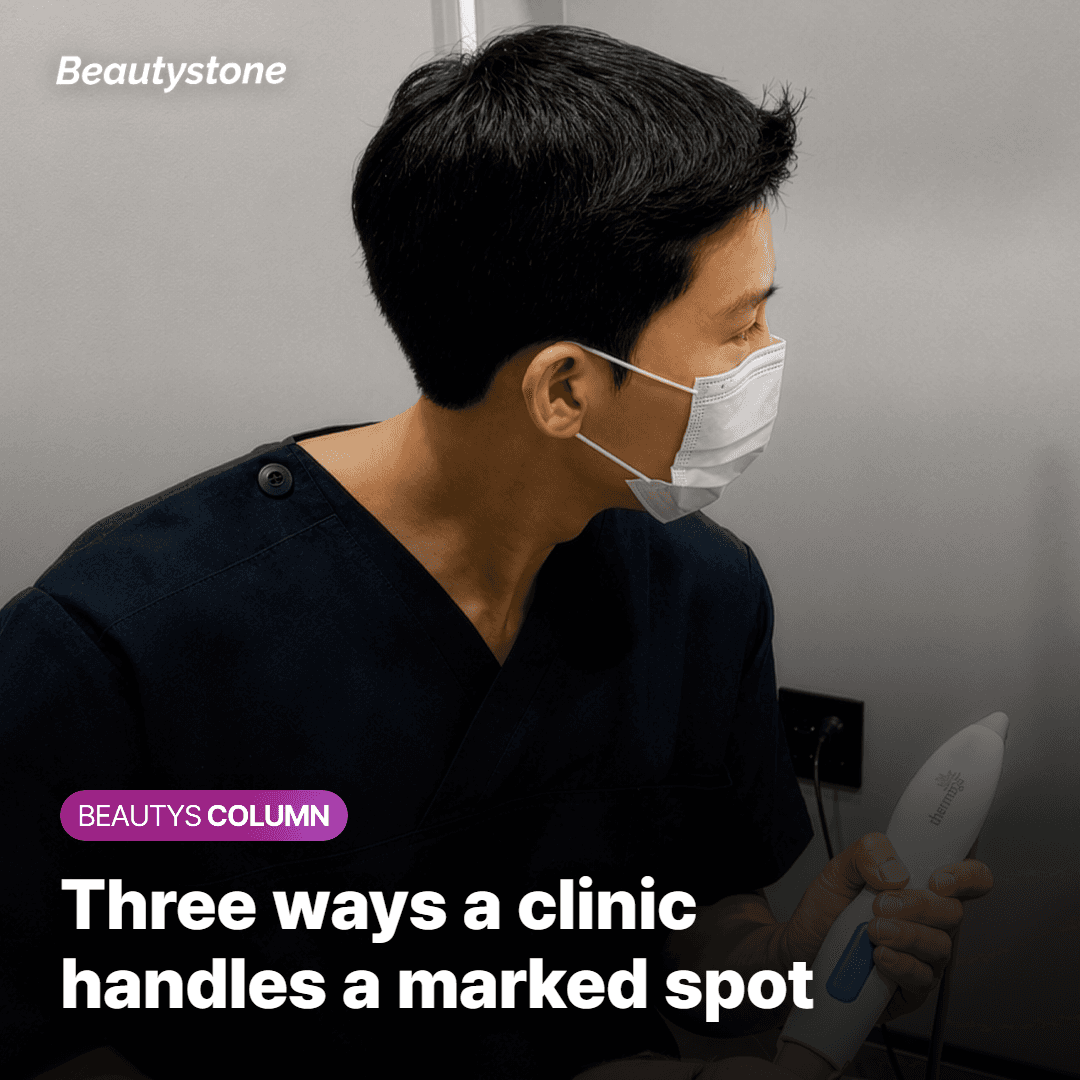
Skipping the spot is the common answer, and most of the time it’s the right one. But "skipping" covers two different techniques. In one, the area is outlined with a white pencil and the handpiece simply never travels over that outline. In the other, the spot is physically covered — a sticker or a small shield — and the skin around it gets treated as usual.
The third option is time. If the skin there is still settling, the sensible move is to treat the rest of the area and come back to that patch later rather than force it into this session.
Where this gets interesting is when the mole or tattoo sits in the middle of a wide field, like an underarm or a calf. Leave a generous margin around it and the hair everywhere else thins out while the middle stays exactly as it was. Session after session, that untouched island starts to read as a visible edge rather than a small spot. So the real decision isn’t "skip or don’t" — it’s how much margin to leave, or whether to drop the settings and pass over the area more cautiously. That gets decided area by area, not by a blanket rule.
Your Laser Is Aiming at Pigment, Not Hair
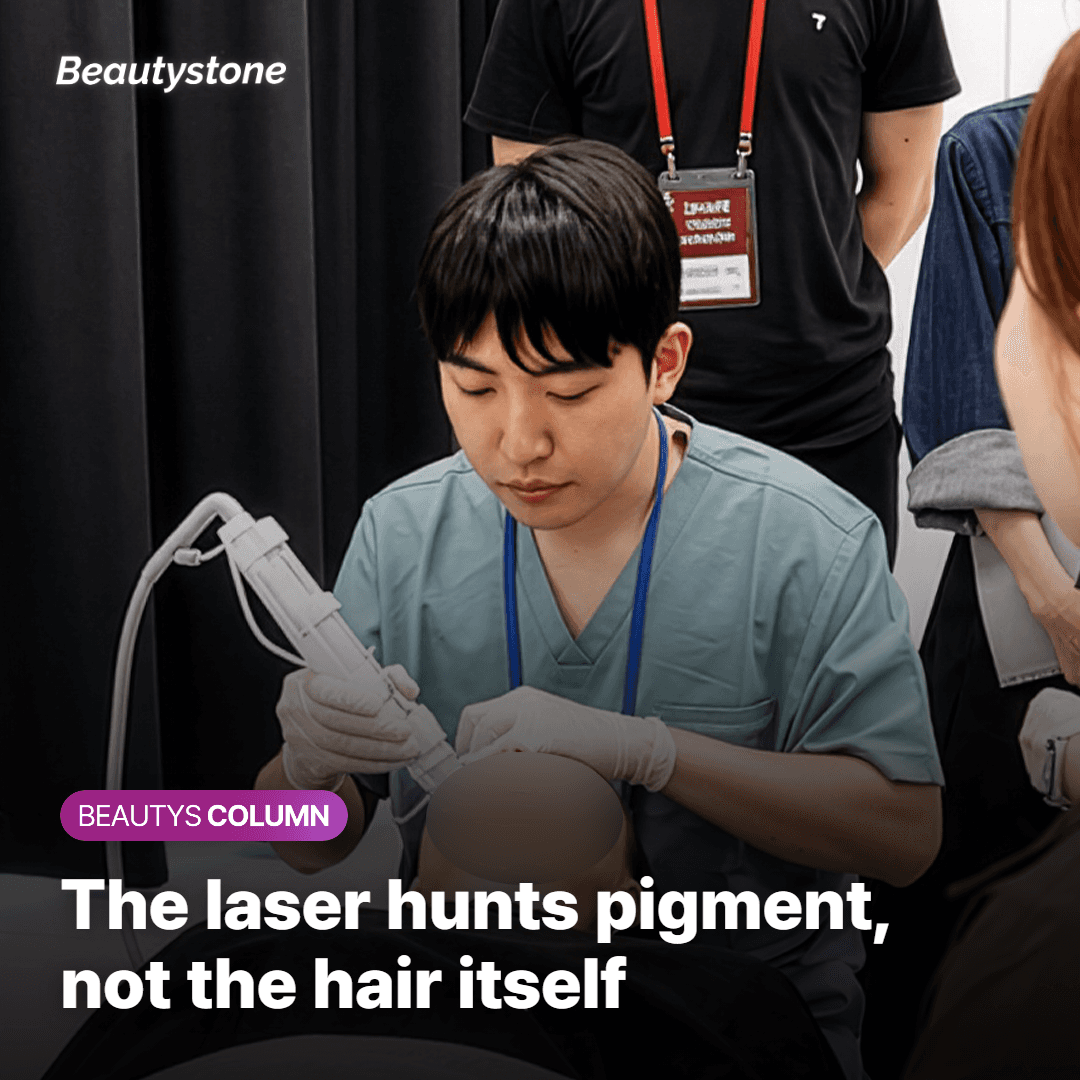
The principle behind hair removal lasers is selective photothermolysis: certain pigments absorb light far better than the tissue around them, so you can heat the pigment inside a hair follicle while leaving the neighborhood comparatively cool. A case series on multi-wavelength diode laser treatment in Asian patients describes this family of treatments as relying on melanin absorption to selectively heat the follicle, and adds that shorter wavelengths such as 755 nm and 810 nm absorb melanin strongly, which leaves safety questions open in darker skin.
Here’s the part that surprises people: light doesn’t recognize its target and travel to it. Whatever pigment sits in the path absorbs first. A review of laser tattoo removal makes the same point from the other direction — melanin is the main pigment competing with tattoo ink for that light, and because the ink granules sit in the mid dermis with the epidermis above them, part of the beam is taken up by epidermal melanin on the way down.
A mole is that competition concentrated into a few millimeters. Pigment is packed far more densely there than in normal epidermis, so the same setting that feels unremarkable across the rest of a leg puts noticeably more heat into that one spot.
Moles, Tattoos and Scars Aren't the Same Problem
All three involve pigment, but not at the same depth and not at the same density — and one of them has too little rather than too much. Wavelength is part of the answer here. The longer the wavelength, the less melanin absorbs it and the deeper it reaches, which is exactly why the case series above leans toward longer wavelengths in darker skin. Adjusting wavelength and energy is the lever available when pigment is in the way.
Spot | What the pigment is doing | What usually happens |
|---|---|---|
Mole | Pigment crowded into the epidermis | Covered or worked around, and looked at by a doctor first |
Tattoo | Ink sitting down in the dermis | That patch is covered and the skin around it is treated |
Scar | Pigment is missing rather than excess | Settings come down and the pass gets slower |
Keloid | A site that reacts strongly to any insult | Timing gets pushed back after the skin is assessed |
For tattoos, the evidence is already on record. A 2013 report in Photodermatology, Photoimmunology & Photomedicine documented second-degree burns after IPL hair removal over a tattoo. Covering the inked area instead of treating straight through it comes out of cases like that one.
Moles call for a different kind of caution. DermNet’s page on melanocytic naevi notes that a naevus suspected of melanoma is excised for biopsy, and that partial biopsy isn’t recommended. Heat that fades or darkens a mole takes away information somebody may need to read later. So a mole that has changed shape, size or color belongs in front of a dermatologist before it belongs in a hair removal plan.
Scars run the opposite way. Where pigment is depleted, the light has less to grab, so hair growing in that patch tends to respond weakly. And skin that healed recently is touchy about heat, which makes post-inflammatory hyperpigmentation — color that settles in darker once an irritation has passed — more likely.

Side Effects and Safety Around Pigmented Spots
The American Academy of Dermatology’s laser hair removal guidance is blunt about this: burns, lasting color changes and scarring are uncommon, but they do happen. Those odds don’t sit evenly across a treatment area either. They cluster exactly where pigment is concentrated.
The tattoo removal review mentioned earlier records how large blisters can get after treatment, and notes that lightening or darkening around four to six weeks afterward is close to routine. Read that alongside the IPL burn case and the reasoning behind covering ink stops looking cautious and starts looking obvious.
Two more things shift the plan. A history of keloids changes both the settings and which areas are worth treating at all, so it belongs in the conversation early rather than after a reaction. And every one of these responses varies from person to person — none of it is a fixed outcome, and none of it is a reason to write off hair removal in an area that happens to have a few moles in it.

What to Sort Out Before Your Consultation
Count the moles in the treatment area. Knowing there are three rather than "a few" makes the appointment shorter.
Think about whether any of them have changed. A mole that has grown or shifted color is the one to flag out loud.
Check when the tattoo was done. Recent work is still settling into the skin.
Note roughly when the scar formed. If it healed recently, the timing may move.
Take a photo in consistent lighting. It gives you something to compare against session by session.
Mention any keloid history. It changes settings and area selection.
At Beautystone, that first appointment is a look before it’s a treatment. A dermatologist goes over the area, sorts the spots into cover, avoid and lower-the-settings, and writes it down so the next session starts from the same map instead of a fresh guess. Whether a mole has changed recently, when the tattoo was inked, how long the scar has had to settle — those come up in the same conversation. It’s a small clinic in Hapjeong, so dropping in between sessions to have an edge re-checked isn’t a production.

The Bottom Line
A mole, a tattoo or a scar inside the treatment area doesn’t close the door on laser hair removal. It changes the map. Pigment that’s crowded gets covered or avoided, pigment that’s missing gets gentler settings, and skin that’s still healing gets more time. What you don’t want is for any of it to be discovered mid-session with the handpiece already moving.
If you’re weighing this up for your own underarms, legs or beard line, bring the mole count, the tattoo date and the scar history with you and let the plan be drawn around them. Book a consultation at Beautystone in Hapjeong and we’ll map the area with you before anything gets switched on.


Contouring & Volume
Hip Dip Filler Before and After: 4 Checks

Body
Potenza Treatment Interval: Why 4 Weeks?

Lifting
Ultherapy Before and After: Why Wait 90 Days?

Contouring & Volume
Belotero Revive Cost: 2cc Price vs. 3 Sessions

skin
Lip Hyperpigmentation Laser: Does It Work?

Contouring & Volume
Men's Forehead Filler: Hollow or Just Lines?