

Should you wash your face right after a workout, or wait to cool down first? Here's what the research says about timing, water temperature, and technique.
Published
Updated

Author
Wi Young-jin · Chief director
Seoul National University College of Medicine · Seoul National University Hospital Specialist
→
One of the most common questions we hear at the clinic is this: Should I wash my face right after I work out, or wait until I've cooled down? It sounds simple, but the answer turns out to depend less on the minute hand and more on what temperature water you reach for — and whether your skin is still flaring red.
In this article, we'll cover why sweat itself isn't the villain, how a flushed, heat-dilated face reacts to different cleansing temperatures, what the research says about sebum production during and after exercise, and a practical step-by-step routine you can follow. Read on.
What Does Sweat Actually Do to Your Skin?
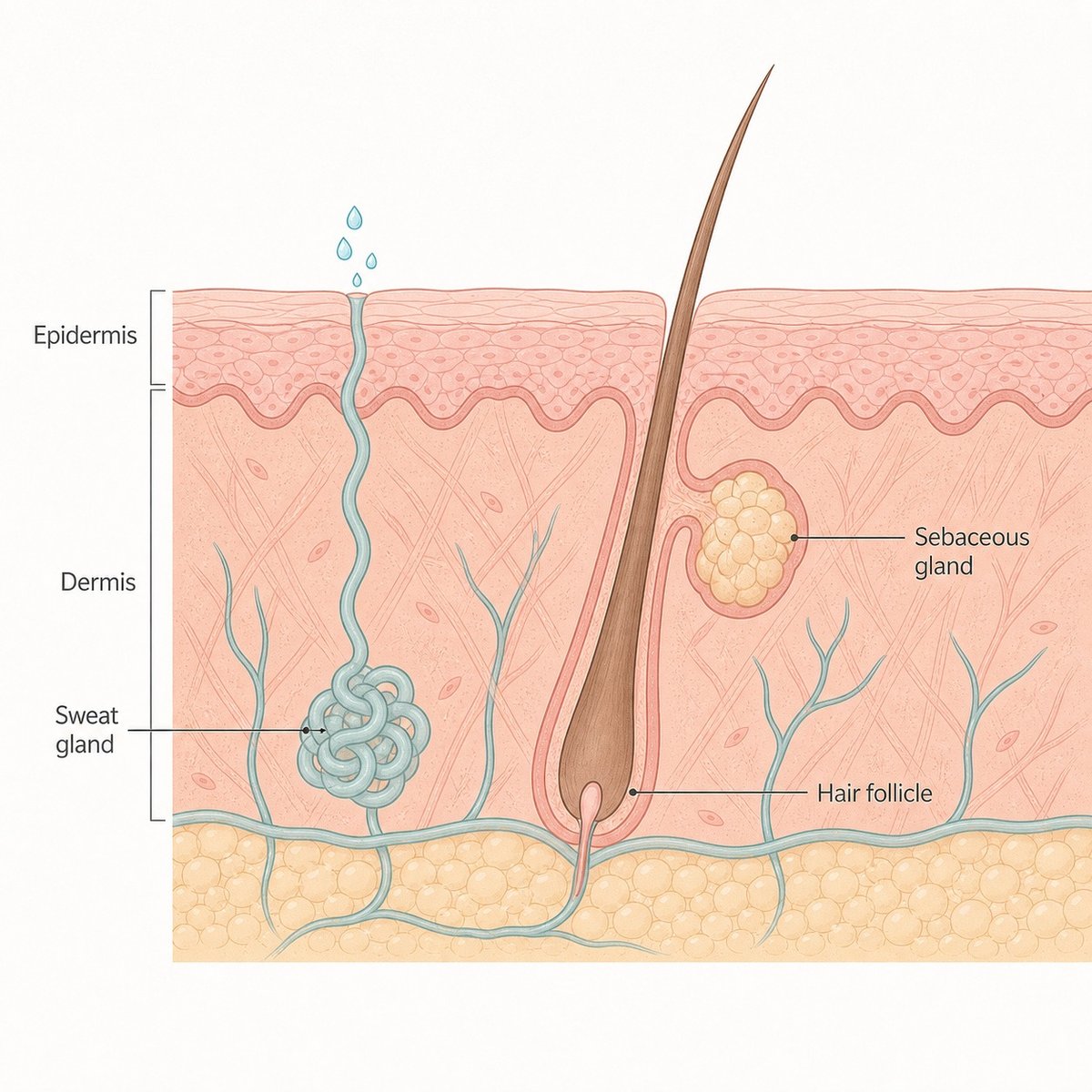
Sweat is mostly water — roughly 99% — with small amounts of salt, urea, and trace minerals. On its own, fresh sweat isn't inherently harmful to most skin types. The problem starts when it sits on the surface. As moisture evaporates, it concentrates residual salts and any oil-and-debris mixture already sitting in your pores, which can drive irritation, clogged follicles, and — for acne-prone skin — a friendlier environment for Cutibacterium acnes.
Research on sweat composition and skin barrier function suggests that prolonged sweat exposure can transiently disrupt the acid mantle, the slightly acidic film your skin relies on to resist bacteria and retain moisture. That's one reason dermatologists recommend not letting sweat dry and cake on your face for extended periods.

Is It Better to Wash Right Away or Wait?
Here's what the evidence actually supports: washing sooner rather than later is generally preferable for acne-prone or oily skin — but only if you can do so with lukewarm water. The timing matters far less than the temperature you choose.
When you're still mid-flush — skin visibly red, capillaries dilated from exertion — hot water amplifies the problem. Applying hot water to already-vasodilated skin can worsen redness and temporarily weaken your skin barrier. Studies on skin barrier response to thermal stress indicate that heat-induced transepidermal water loss (TEWL) rises significantly when skin is exposed to water temperatures above roughly 40°C, particularly in individuals with a compromised baseline barrier.
The practical upshot: if your face is still bright red, give yourself 5 to 10 minutes of light cool-down first — not so you can delay cleansing indefinitely, but so your skin temperature drops enough that lukewarm water doesn't tip into irritating territory. If you're already relatively cooled down, go ahead and cleanse right away.
How Exercise Changes Your Skin's Oil Balance
Exercise increases cortisol transiently, and cortisol has a well-established link to sebum production. For people with oily or combination skin, this means pores are more active during and immediately after a workout. Mixing that extra sebum with sweat, makeup residue, and environmental particulates creates the classic post-gym pore-clogging cocktail.
Research published in the journal of cutaneous biology examining sebum output and exercise found that aerobic activity lasting 30 minutes or more measurably increases sebaceous gland output in the hours following the session. That's the window — not just the sweaty moment itself — when cleansing is most protective.
For dry or sensitive skin, the calculus shifts slightly. Sebum acts as a natural emollient, and stripping it with harsh cleansers or very frequent washing can overshoot into dryness. A gentle, sulfate-free cleanser applied once post-workout is usually enough, even for skin that doesn't skew oily.
Side Effects of Getting the Routine Wrong
Washing your face incorrectly after exercise — whether it's the water temperature, the product, or the technique — can create a short loop of damage and compensatory oil production. Here's what to watch for:
Increased redness or flushing: Hot water on a post-workout flush can prolong visible redness for hours, and over time may contribute to chronically sensitized skin.
Barrier disruption: Scrubbing aggressively on skin that's already heat-stressed strips the protective lipid layer faster than it can rebuild. Stick to gentle circular pressure.
Breakouts from incomplete cleansing: If you're wearing sunscreen or makeup to the gym, a single rinse with plain water won't remove it adequately. Use a cleanser with mild surfactants every time.
Dry patches from over-cleansing: Washing twice in quick succession — once at the gym and again immediately at home — can overshoot for dry skin types. One thorough post-workout cleanse is enough.
If you notice spreading redness, unusual warmth, or any signs of a skin reaction that worsen rather than settle within a few hours, contact your provider right away. These are uncommon but worth flagging, particularly for anyone with rosacea or a compromised skin barrier.
Your Step-by-Step Post-Workout Face Wash Routine
Individual results vary, and every skin type responds a little differently. That said, the following framework works well for most people and can be adjusted based on skin type.
Step 1 — Cool down first (if still flushed). If your face is visibly red and hot to the touch, take 5 to 10 minutes. Drink cold water, use a small fan, or simply sit in a cooler environment. You don't need to wait for full color resolution — just enough that the skin temperature drops from "hot" to "warm."
Step 2 — Use lukewarm water, not hot. Lukewarm is roughly 35–37°C — about the temperature of a comfortable handshake. Hot water dilates already-taxed blood vessels and worsens the inflammatory signal. Cold water, by contrast, doesn't effectively rinse oily residue, so lukewarm is the sweet spot.
Step 3 — Pick a gentle, non-stripping cleanser. A pH-balanced cleanser (ideally around pH 4.5–5.5 to respect your skin's acid mantle) applied with clean hands for 30–45 seconds is sufficient. Avoid loofahs, washcloths, or exfoliating tools on freshly exercised skin.
Step 4 — Pat, don't rub. A soft, clean towel patted gently — not scrubbed — is all you need. Rubbing generates friction on still-sensitized skin.
Step 5 — Follow with a lightweight moisturizer. Cleansing, even gentle cleansing, removes some moisture. A lightweight, non-comedogenic moisturizer applied while skin is still slightly damp helps restore the barrier without clogging pores. If you're heading outside afterward, sunscreen goes on top.

The Bottom Line
If you've been agonizing over the exact minute to step into the bathroom after your workout, you can let that go. Here's what actually matters:
Sweat itself is mostly water and only becomes problematic when it sits on your skin for extended periods and concentrates salts and oil.
Timing is less critical than temperature — lukewarm water is consistently better than hot for post-workout cleansing, especially while your face is still flushed.
Oily and acne-prone skin benefits from washing sooner; dry and sensitive skin benefits from a gentler approach regardless of timing.
A brief cool-down period (5–10 minutes) is worthwhile if your skin is still bright red, but it's not a reason to skip cleansing altogether.
Like any skincare habit, there are trade-offs. What works for your gym buddy won't necessarily work for your skin type. Everyone's skin is different, and finding the right routine is often a matter of small adjustments over time.
If you're struggling with persistent post-workout breakouts, unexpected dryness, or redness that won't settle, a consultation with a board-certified dermatologist is the most reliable next step. Beautystone is a dermatology clinic in Seoul's Hapjeong area — if you're curious about skin health or any in-clinic treatments that might complement your routine, you can see current offers at /en/promotion.
Frequently asked questions
Q. Is it bad to let sweat dry on your face after a workout?
A. It's not ideal. Fresh sweat is mostly water, but as it evaporates it concentrates salts and mixes with oil and debris on your skin's surface. Letting that sit for a long time can clog pores and disrupt your skin's acid mantle. Aim to cleanse within 30 to 60 minutes of finishing your workout.
Q. Should I wash my face with cold water after exercising?
A. Cold water feels refreshing but doesn't rinse oily residue as effectively as lukewarm water. Lukewarm — roughly 35–37°C — is the better choice. It's warm enough to cut through sebum and sweat without adding heat to skin that's already vasodilated from exercise.
Q. Can working out make my skin break out?
A. It can contribute to breakouts if sweat, oil, and friction aren't managed well. Exercise raises cortisol, which temporarily increases sebum production. If that excess oil mixes with sweat and isn't removed promptly, it creates an environment where acne-causing bacteria can thrive. A consistent, gentle post-workout cleanse is usually enough to keep this in check.
Q. What's the best face wash to use after going to the gym?
A. A pH-balanced, sulfate-free cleanser is generally the best choice for most skin types. For oily or acne-prone skin, something with salicylic acid can help manage sebum. For dry or sensitive skin, a creamy or gel-based formula without active exfoliants is gentler. Whatever you choose, apply it with clean hands rather than a washcloth to avoid extra friction on post-workout skin.



![[Wi Young-jin Column] Retinol Adjustment vs Barrier Damage](https://framerusercontent.com/images/ytrEiREJ8Dzp0ifIefbteOXATU.jpg?width=1080&height=1080)


Contouring & Volume
Hip Dip Filler Before and After: 4 Checks

Body
Potenza Treatment Interval: Why 4 Weeks?

Lifting
Ultherapy Before and After: Why Wait 90 Days?

Contouring & Volume
Belotero Revive Cost: 2cc Price vs. 3 Sessions

skin
Lip Hyperpigmentation Laser: Does It Work?

Contouring & Volume
Men's Forehead Filler: Hollow or Just Lines?