

Why Onda isn't one-and-done—recommended sessions, intervals, and care in between.
Published -
Updated -

Author
Wi Young-jin · Chief director
Seoul National University College of Medicine · Seoul National University Hospital Specialist
→
The usual plan is around 3 to 4 sessions spaced 3 to 4 weeks apart, then a maintenance session every 3 to 6 months. Do the arithmetic before you book: those are average starting points, the first course runs across a stretch of months rather than a single visit, and the gaps are doing the work rather than padding the schedule. Where your own count lands depends mainly on two things: the area being treated — thin skin such as the neck is treated with milder intensity and longer intervals, while cheeks show collagen changes relatively well — and your skin condition, meaning your age, your baseline elasticity, and how much collagen you have already lost. Both are broken out in the sections below.
If what you actually want to know is how long it lasts, the answer here is a rhythm rather than an expiry date. Many people feel the difference from the 2nd or 3rd session, the changes keep building while the course runs, and once it is finished the plan becomes a top-up every 3 to 6 months — collagen decreases naturally over time, so the schedule continues rather than ending. That 3-to-6-month return is the figure to gauge your own case against at consultation; the section below explains why the heat has to be repeated at all.
This content compiles treatment information from Beautystone Hapjeong.
What you will learn from this article:
Why Onda lifting doesn't just end with a single session — and how long it holds afterwards
The average standard for how many sessions are recommended and at what intervals
How the number of sessions varies depending on the treatment area and skin condition
What kind of aftercare is helpful between sessions
First, let's look at why Onda lifting is not a one-time treatment
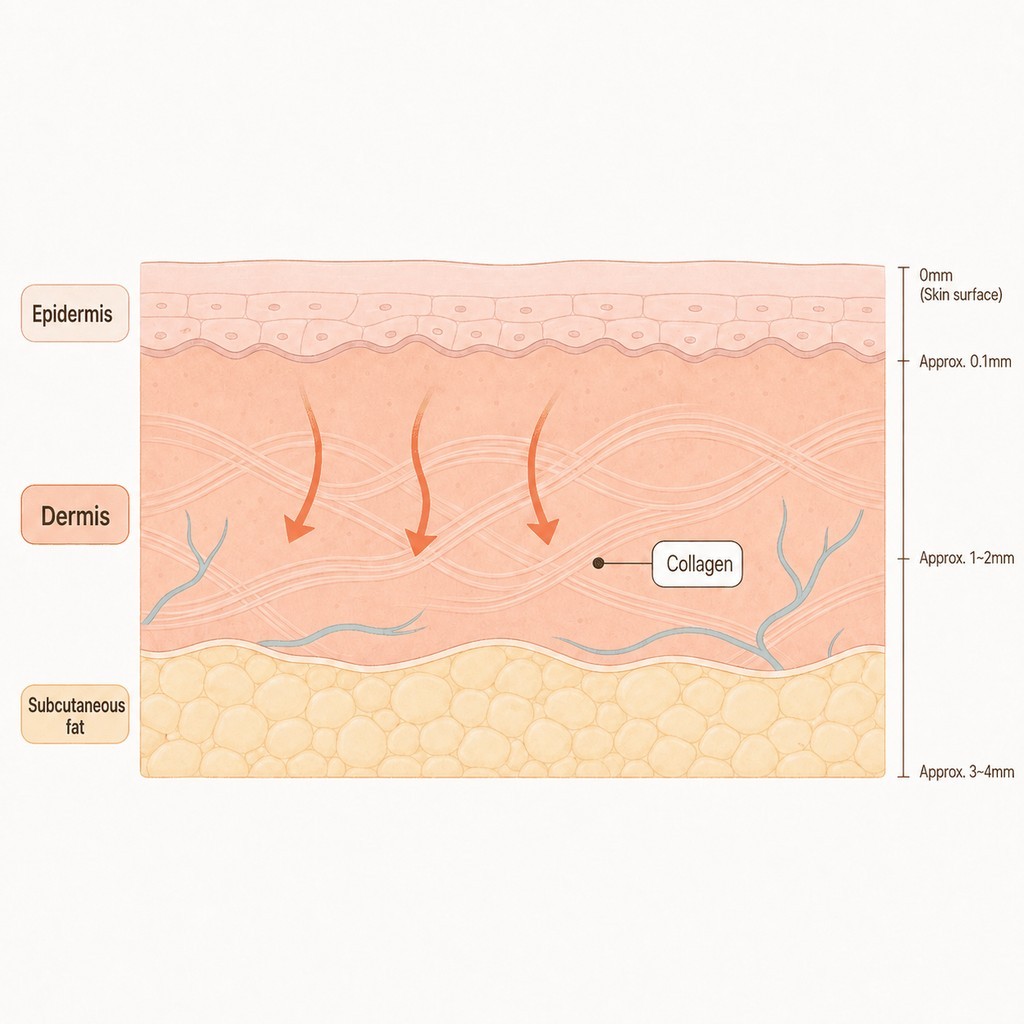
Onda is a treatment that delivers radiofrequency (RF)* energy to the dermal layer to generate heat. This heat contracts the existing collagen and stimulates the process of new collagen rebuilding over the next few weeks. That is why the gradual improvements that appear over time are often more significant than the immediate tightness felt right after the procedure.
Radiofrequency (RF)*: Electromagnetic waves that deliver heat energy deep into the skin. Designed to raise the temperature of the dermal layer to stimulate collagen while minimizing irritation to the epidermis.
The mechanism explaining how RF heat contracts dermal collagen and subsequently induces new collagen production makes it clear why cumulative stimulation over several sessions is much more effective for improving elasticity than a single session. Because rebuilding new collagen takes time, it is much more natural to build up the stimulation with a few weeks of spacing rather than stopping after just one treatment.

How many sessions are typically recommended, and at what intervals?
On average, we recommend a series of sessions spaced 3 to 4 weeks apart. Since this interval takes into account the cycle of new collagen regeneration, it is much safer and more stable to allow enough time for recovery and rebuilding rather than scheduling sessions too closely together. Here is a rough guide for those starting out:
Category | Initial Stage | Maintenance Stage |
|---|---|---|
Recommended Sessions | Around 3 to 4 sessions | Additional sessions based on condition |
Interval | 3 to 4 weeks | 3 to 6 months |
Noticeable Changes | From the 2nd or 3rd session | More noticeable as they accumulate |
Treatment Time | Around 20 to 30 minutes | Similar |
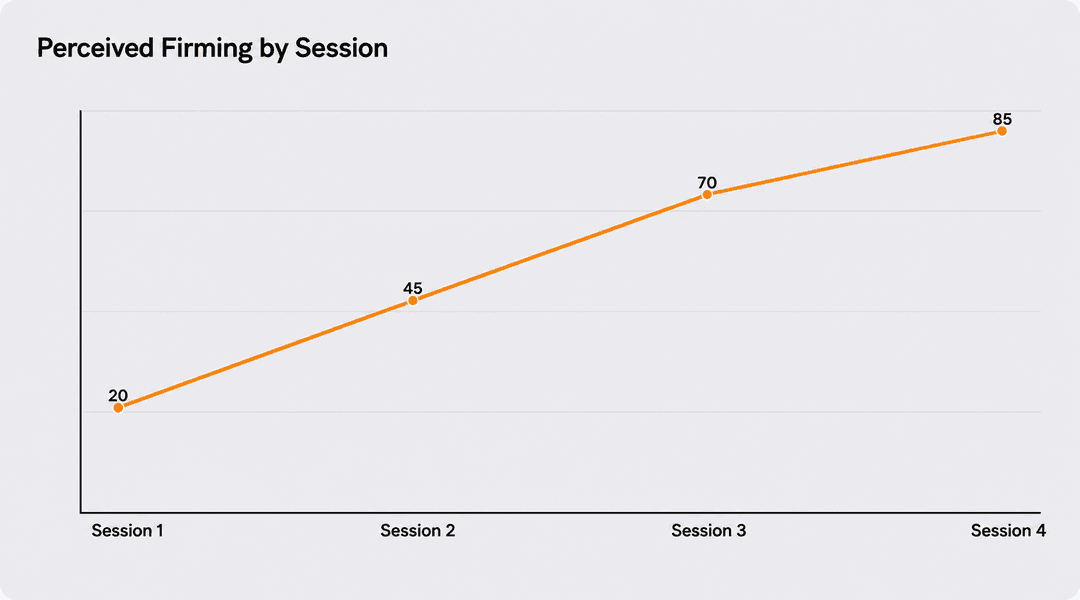
Please keep in mind that the numbers in the table are just an average starting point. It is common practice to build a solid foundation of elasticity with the first few sessions, and then add maintenance treatments every few months depending on your skin's condition. Since this is a treatment where results build up gradually, it is best to complete your planned sessions before assessing the full results rather than judging after only one or two visits.
As the sessions accumulate, the changes occurring deep within the dermis will gradually become more visible. Here is a visual representation of how skin elasticity builds depending on the number of sessions.

How session counts vary by area and skin condition
Even with the same Onda treatment, the recommended number of sessions can vary depending on which area is being treated. Areas with thin skin and more prominent sagging require a more spaced-out, gentle approach for safety, while areas with relatively good resilience may show noticeable changes with fewer sessions. Read the list below as adjustments to the 3-to-4-session average in the table above rather than as counts of their own — it tells you which way your own number is likely to move, where the article says.
Facial Contour & Jawline — Since these are areas prone to sagging, they are commonly treated over multiple sessions.
Cheeks & Midface — These areas display collagen changes relatively well, so improvements are often noticed quickly.
Neck — Because the skin is very thin, it is safer to take a conservative approach with milder intensity and longer intervals.
Body (Abdomen, Arms, etc.) — Since the treatment area is larger, the number of sessions and intervals are adjusted to fit the specific body parts.
Your starting session count also depends on your age, baseline skin elasticity, and the degree of collagen loss. What the stimulation does to the tissue is documented in studies confirming histological changes where collagen bundles thicken in the dermis and SMAS layer after RF stimulation, but how much of that change any one person gets from the same stimulus differs. That is why the number of sessions is not fixed but a plan you adjust with your doctor after seeing how your skin answers the first few visits.

Why Beautystone Hapjeong?
At Beautystone Hapjeong, for cumulative treatments like Onda, we carefully monitor your skin's reaction to the first session before deciding on the next appointment together. Rather than recommending a rigid, pre-set package, we believe it is essential to observe when your unique skin begins to show changes and customize the intervals and intensity accordingly. How your skin answers that first session is the most useful information we have for setting the rest of the plan. As a cozy clinic located just a short walk from Hapjeong Station in Seoul, we offer a relaxed environment where we can thoroughly discuss and plan your next treatment during every visit.

Helpful aftercare tips between sessions
The few weeks between Onda sessions are the key window when new collagen is actively forming, so your skincare routine during this period can impact the final results. Simple, consistent basics are far more helpful than complex routines.
Moisturization — Keep your skin well-hydrated so the dermal layer can recover smoothly.
Sun Protection — UV rays destroy collagen, so be sure to apply sunscreen daily.
Avoid Excessive Heat — Skip saunas, hot baths, and steaming hot showers for a few days after your treatment.
Sufficient Sleep & Hydration — A healthy recovery environment is crucial for collagen synthesis, so maintaining your general physical condition is very important.
Consistent habits like these help the effects of each session last longer and prepare your skin for an even better starting point for the next visit. Because the recovery weeks are when the new collagen is actually forming, these habits carry real weight, and it's best not to let too much time pass between your scheduled sessions.

Onda Lifting treatment details
This month: Onda Lifting Promotion
Frequently Asked Questions
Q. Can I see results from only one Onda treatment?
A. While you may notice temporary firmness after a single session, Onda works by building collagen over time. It is difficult to get your desired, long-lasting results from just one visit. We usually recommend a series of sessions spaced 3 to 4 weeks apart to allow the improvements to accumulate. It is best to adjust the plan after seeing how your skin responds to the first session.
Q. Can I shorten the intervals between treatments?
A. Since your skin needs time to rebuild collagen, scheduling treatments too close together does not necessarily guarantee better results. The 3-to-4-week interval is recommended specifically to give your skin the time it needs to recover and regenerate. If you are on a tight schedule, it is safest to consult with our medical team to customize the plan according to your skin condition.
Q. When will I start noticing a difference?
A. It varies from person to person, but many patients begin to feel improved elasticity after the 2nd or 3rd session. Because the changes appear gradually over several weeks rather than immediately, we recommend following through with your planned sessions to see the full outcome. The speed of the results depends on your age and skin condition.
Q. How should I maintain the results once I finish the recommended sessions?
A. Once you have built a solid foundation with your initial sessions, we typically recommend adding a maintenance treatment every 3 to 6 months depending on your skin's condition. Since collagen gradually decreases naturally over time, it is best to set a comfortable return date based on your skin's changes rather than waiting too long. We can always help you find the perfect maintenance schedule during your check-up.
Read More
Onda lifting*: Signs that help you decide between 1 single session vs. a 3-session package
Can I return to daily life right after an Onda lifting treatment?
Revive treatment cycle*: Why getting it monthly might be wasting your money
They say Shurink is every 3-4 weeks but Ulthera is every 6 months—aren't they both HIFU?


Hair Removal
레이저 제모 1회에도 남는 몫이 있어요 — 밀도를 모자이크로 보는 법

Tattoo removal
Why Extremity Tattoos Are Slower to Remove

Tattoo removal
Tattoo Removal Cost: Why Quotes Vary by Area

Tattoo removal
Unused Tattoo Removal Sessions: What Happens?

Lifting
Forehead Thread Lifting: How Far Can It Go?

skin
Skin Booster Prices: What to Check in a Quote