

Tattoo fading looks stuck mid-course? Here's why it happens and when to re-plan.
Published -
Updated -

Author
Wi Young-jin · Chief director
Seoul National University College of Medicine · Seoul National University Hospital Specialist
→
The first two or three PicoWay sessions are usually the satisfying ones. You line up your photos, the difference jumps out, and you start doing mental math on how few appointments are left. Then somewhere around session four or five, the photos start looking like near-copies of each other, and the obvious question arrives: has this stopped working?
Usually it hasn't. What's changed is the ink that's left behind, not the laser's ability to break it up. But a genuine slow phase and a course that's been scheduled or designed badly can look identical from the outside, which is exactly why this stage causes so much second-guessing. In this article, we'll cover what happens to shattered ink after each pass, why color and depth pull the timeline in different directions, how to tell a normal plateau from a spacing problem, and which findings should prompt a change of plan rather than another booking.
Why Does Fading Slow Down Halfway Through?
Short answer: the easy ink goes first.
Tattoo pigment isn't spread evenly through your skin. Particles sit at different depths and come in different sizes, and the ones nearest the surface — the big, brittle, shallow ones — are both the easiest to shatter and the ones doing most of the work of making the tattoo look dark. Clear those out and the visible change is dramatic. What's left after several sessions is the harder half of the job: particles that sit deeper, and fragments that have already been broken once or twice and are now small enough to resist further shattering.
There's a perception problem layered on top of the biology. Color intensity doesn't fall in a straight line with the amount of pigment removed. Once a tattoo has gone from solid black to a soft gray shadow, you can clear a meaningful amount of remaining ink and barely see it in a photo. The clearance keeps happening. Your eyes just stop rewarding it.
That's why the mid-course stretch feels the way it does — not because the treatment quit, but because the same effort now buys a smaller visual payoff. Individual results vary, and some tattoos flatten out sooner than others.
What Actually Happens to the Ink
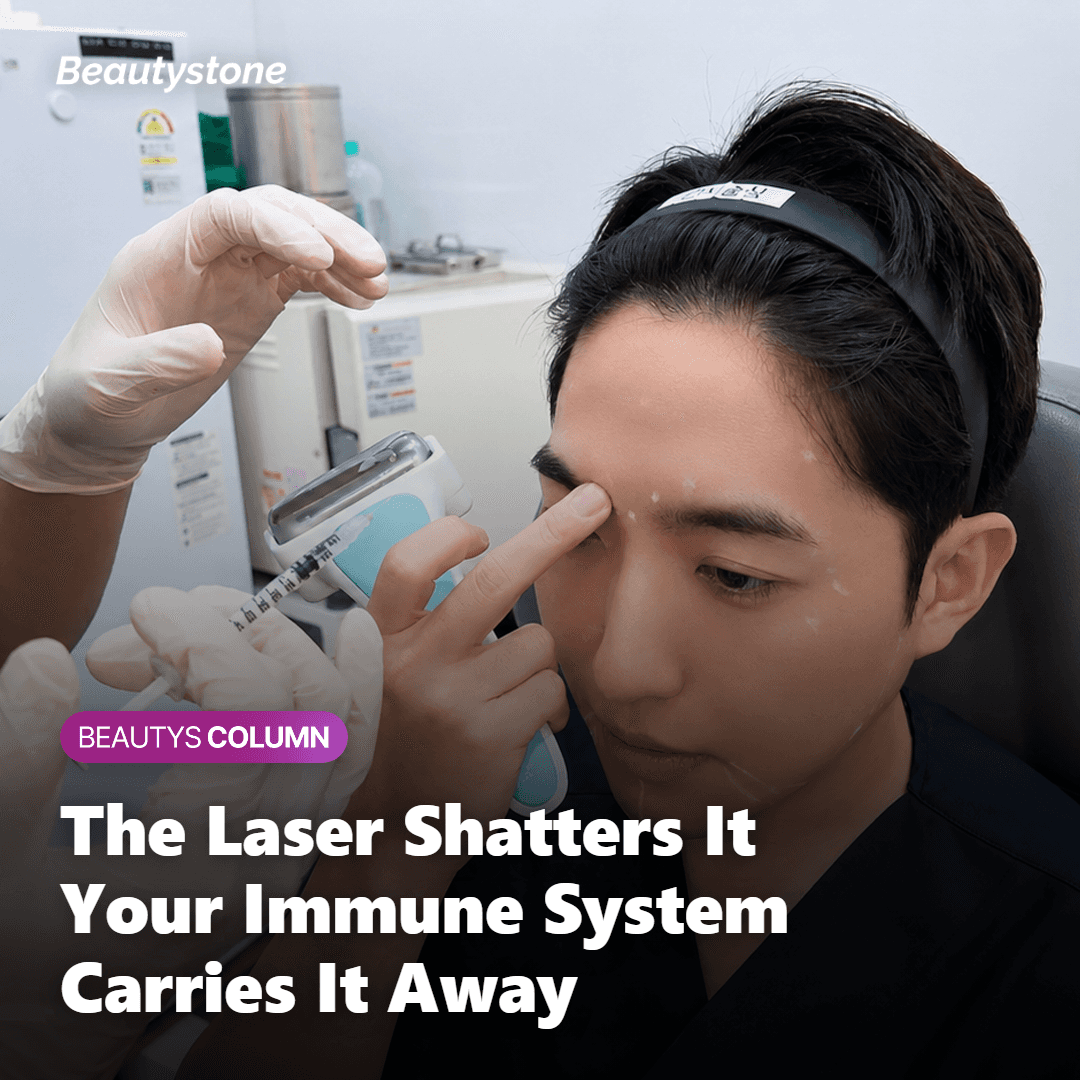
A picosecond laser doesn't burn ink out of your skin. It delivers pulses so short that the energy arrives mostly as a mechanical shock, fracturing pigment particles into fragments rather than heating the surrounding tissue. That distinction matters for your skin, but it also explains why removal takes months: the laser only does half the work.
The other half is your immune system. A review of picosecond lasers in tattoo and pigment treatment describes clearance happening two ways — fragments pushed out through the epidermis, and fragments taken up again by macrophages, the scavenging cells that shuttle debris into the lymphatic system. The same review reports a mean of about 79% clearance across an average of 6.5 treatment sessions, which is a useful reality check for anyone hoping to be done in three.
Two practical consequences follow from that:
Removal is a transport problem, not just a laser problem. Shattering ink you haven't cleared yet doesn't help. The fragments need weeks to move out.
Your biology sets part of the pace. Circulation, lymphatic drainage, smoking status, and the location of the tattoo all influence how efficiently fragments leave. A tattoo on the ankle typically clears more slowly than one on the shoulder.
This is also the reason a session that "didn't do much" isn't automatically wasted. Pigment broken in month three may not read as lighter until month five.

How Color and Depth Change the Math
If part of your tattoo is fading nicely and another part looks frozen, color is the usual explanation. Pigments absorb light selectively, so a wavelength that demolishes one color can pass through another almost unnoticed.
The review above breaks it down: at 1,064 nm, black and violet responded best, while yellow and red cleared best at 532 nm, at roughly 85% and 80% respectively. In other words, no single wavelength handles a multicolored piece evenly, and a course built around one setting will naturally stall on whichever colors that setting doesn't suit.
What's left | Why it feels stuck | Typical approach |
|---|---|---|
Black and dark blue | Most of it clears early, leaving a faint gray shadow | Keep going and reassess with photos |
Green and sky blue | Responds within a narrow band of wavelengths | Review whether a different wavelength is available |
Red and yellow | Absorbs poorly at longer wavelengths | Shorter wavelengths are generally better suited |
Deeply placed ink | Less energy reaches it | Plan for a longer course from the start |
Layered or cover-up work | Colors sit on top of each other and clear at different rates | Treat by zone rather than as one piece |
Depth stacks on top of color. Hand-poked or amateur work tends to sit shallow and unevenly, which is why it often clears faster than people expect. Professional work is placed deeper and more densely, so even solid black can need a long course. We've written separately about how ink depth drives the number of sessions if you want that comparison in detail.
Plateau, or Spacing Problem?
Before assuming the laser is the problem, rule out the boring explanations. Most stalled-looking courses come down to one of five things:
Sessions too close together: if you return before your body has cleared the last round of fragments, you're spending energy on debris that was already on its way out. Six to eight weeks is a common minimum, and longer is often better for deeper or older work.
Photos you can't actually compare: different lighting, angle, or distance will hide real change. Same window, same time of day, same distance, no flash — otherwise you're comparing photographs, not tattoos.
Judging the whole tattoo at once: when black outlines clear and green infill doesn't, the piece reads as unchanged even though most of the pigment volume is gone. Assess color by color.
A weaker skin response than usual: if the frosting, scabbing, and redness after your recent sessions have been noticeably milder than early on, that's worth raising — settings may need revisiting.
Sun exposure in between: tanning over the area both darkens the surrounding skin and forces more conservative settings, which slows the whole course down.
Work through that list before you conclude anything. In practice, spacing and photo technique account for a surprising share of the "it stopped working" conversations clinics have.

Side Effects and Downtime Between Sessions
Redness, swelling, pinpoint bleeding, and scabbing over the treated area are expected, and they generally settle within several days to a couple of weeks depending on the size of the piece. If pain intensifies rather than fades, if the area weeps for longer than expected, or if you develop spreading redness or a fever, contact a provider and seek medical care right away rather than waiting for your next appointment.
The two complications that matter most for a stalled course are the ones that change what your provider can safely do next:
Post-inflammatory hyperpigmentation: darkening of the treated skin, more common in deeper skin tones and after sun exposure. It usually fades over months, but while it's there it obscures how much ink is left and pushes settings down.
Textural change and scarring: uncommon, and most often linked to picking scabs, treating too aggressively, or stacking sessions too tightly. Never pick at scabs — let them come off on their own.
Sunscreen on the area is non-negotiable between sessions, and clothing coverage beats sunscreen when you can manage it. The practical case for it isn't just safety: protected skin lets your provider read the remaining ink accurately and treat at appropriate settings, which is exactly what a stalled course needs.
When It's Time to Re-Plan the Course
Adding sessions to a plan that isn't working is the most common mistake at this stage. If two or three consecutive appointments produce no readable change in well-matched photos, the plan deserves a review rather than a repeat. A useful re-planning conversation covers five things:
Which colors have stopped moving, assessed separately rather than as a whole tattoo.
Whether a different wavelength is available for those specific colors, and whether that's worth switching to.
Whether the interval should be longer, particularly for older, denser, or lower-limb tattoos.
Whether the piece should be split into zones and treated with different settings in each.
What the finish line actually is — bare skin, or faded enough to cover with new work.
That last point deserves more attention than it usually gets. Layered pieces, cover-ups, and areas already scarred by an earlier removal attempt may not return to untouched-looking skin, and deciding early whether you're aiming for full clearance or for a good base for a cover-up changes how many sessions make sense. It's a much easier conversation to have at session five than at session twelve.
The Bottom Line
A mid-course slowdown is usually a normal chapter in tattoo removal, not a failure of it. Quick recap:
Shallow, large particles clear first, so early sessions deliver the biggest visible change.
Clearance depends on your immune system carrying fragments away, which takes weeks — spacing sessions too tightly works against you.
Color matters: black and violet respond best at 1,064 nm, while red and yellow do better at 532 nm.
Compare photos under identical conditions and assess color by color before concluding anything has stalled.
If two or three consecutive sessions show no readable change, revisit wavelength, interval, zoning, and your target — don't just book more of the same.
Like any laser course, this one comes with trade-offs, and pushing harder or faster tends to cost more in pigment changes and skin texture than it buys in speed. Ultimately the right next step depends on your ink, your skin, and what you want the finished result to look like. If you're partway through a course and unsure whether to continue or rethink it, bring your dated photos to a consultation — Beautystone is a dermatology clinic in Seoul's Hapjeong area, and current offers are listed at /en/promotion.
Frequently asked questions
Q. How many PicoWay sessions does tattoo removal usually take?
A. It depends heavily on ink color, depth, density, and where the tattoo sits on your body, so no one can give you a reliable number on day one. As a reference point, a published review of picosecond lasers reported a mean of about 79% clearance across an average of 6.5 sessions. Multicolored, layered, or professionally applied work often needs more than that, and individual results vary. A realistic plan builds in a review point partway through rather than committing to a fixed session count up front.
Q. Should I book sessions closer together to finish faster?
A. No — it usually backfires. After each pass, your immune system needs weeks to transport shattered pigment out through the lymphatic system. Returning before that's done means treating fragments that were already leaving, so you get less return per session while your skin absorbs more cumulative stress. Six to eight weeks is a common minimum, and older or deeper tattoos often do better with longer gaps. Your provider will set the interval based on how your skin recovers.
Q. Can the tattoo be fading even when the photos look identical?
A. Yes, and it happens more often than people expect. Once a tattoo has faded to a soft gray, a meaningful amount of pigment can clear without producing much visible difference, because color intensity doesn't drop in a straight line with pigment volume. Compare shots taken in the same light, at the same distance, without flash, and look at each color separately. If two or three sessions in a row show nothing under those conditions, that's worth raising with your provider.
Q. What can I do between sessions to help?
A. Leave scabs alone until they fall off on their own, keep the area out of the sun, and cover it with clothing or sunscreen whenever it's exposed. Tanning over the site darkens surrounding skin, obscures how much ink is left, and forces more conservative settings on your next visit. Staying hydrated and active supports circulation, which is part of how fragments clear. Contact your provider if blistering, spreading redness, or prolonged weeping develops.
When progress slows, it helps to compare where you are against the range set at the start. Beautystone uses the Kirby–Desai assessment in consultation, reviewing skin type, location, ink amount, layering, scarring and colour, to estimate an expected number of sessions. Because it is an estimate rather than a fixed count, it can be reviewed mid-course and the plan adjusted.



skin
Fraxel CO2: Why Prices Vary & What to Check

skin
How to Choose an Acne Dermatologist: 5 Signs

Contouring & Volume
Nasolabial Folds: When Lifting Isn't Enough

skin
Sculptra Cost: Why Sessions and Vials Matter

Lifting
After Shurink Universe: Wash, Work Out & Drink

skin
Sofwave Before a Wedding: Timing Guide