

Freckles and age spots sit shallow, nevus of Ota sits deep. Depth decides which laser fits.
Published -
Updated -

Author
Wi Young-jin · Chief director
Seoul National University College of Medicine · Seoul National University Hospital Specialist
→
You spot something new on your face and the first thought is usually simple enough: one laser session should sort that out. Then you go for a consultation and one spot gets toning, another gets a picosecond device, and a third comes with a warning that it will take several visits. You leave more confused than when you arrived.
The reason is straightforward. Melanin does not sit at the same depth in every kind of pigment. A spot floating in the epidermis and a spot settled deep in the dermis need different wavelengths reaching different distances, so no single laser clears them all. Which means the useful question is not which laser is best, but which layer is my pigment in. This article sorts four common pigment types by depth and explains what each depth calls for.
This article is general information from Beautystone, a skin clinic in Hapjeong, Seoul.
What you will learn
Why epidermal and dermal pigment are treated as different problems
Which layer melasma, freckles, age spots and nevus of Ota sit in
Why shallow and deep pigment need different wavelengths
What to expect for your own pigment before you walk into a consultation
Pigment sits at two very different depths
To make sense of pigment, start with where the melanin is sitting. Skin divides broadly into the outer epidermis and the dermis* beneath it, and colour and edge definition change depending on which of the two the pigment has settled into.
When melanin concentrates in the epidermis, spots usually read as a distinct brown with fairly crisp borders. When it settles deeper in the dermis, the shade drifts toward pale brown or a blue-grey cast and the edges blur. Dermatology references separate epidermal pigment, where melanin sits within keratinocytes, from pigment deposited in the dermis, and note that the same condition behaves differently depending on the layer. That difference in depth is what drives every laser decision further down this page.
Dermis*: the layer sitting beneath the epidermis. Pigment that has settled here needs longer wavelengths that travel further to be reached at all.
Melanin*: the pigment that determines skin colour. UV exposure or hormonal triggers can push melanocytes into overproducing it, and that surplus is what shows up as a visible spot.
Epidermis*: the outermost layer of skin. Shallow pigment mostly lives here, which is why light reaches it comparatively easily.
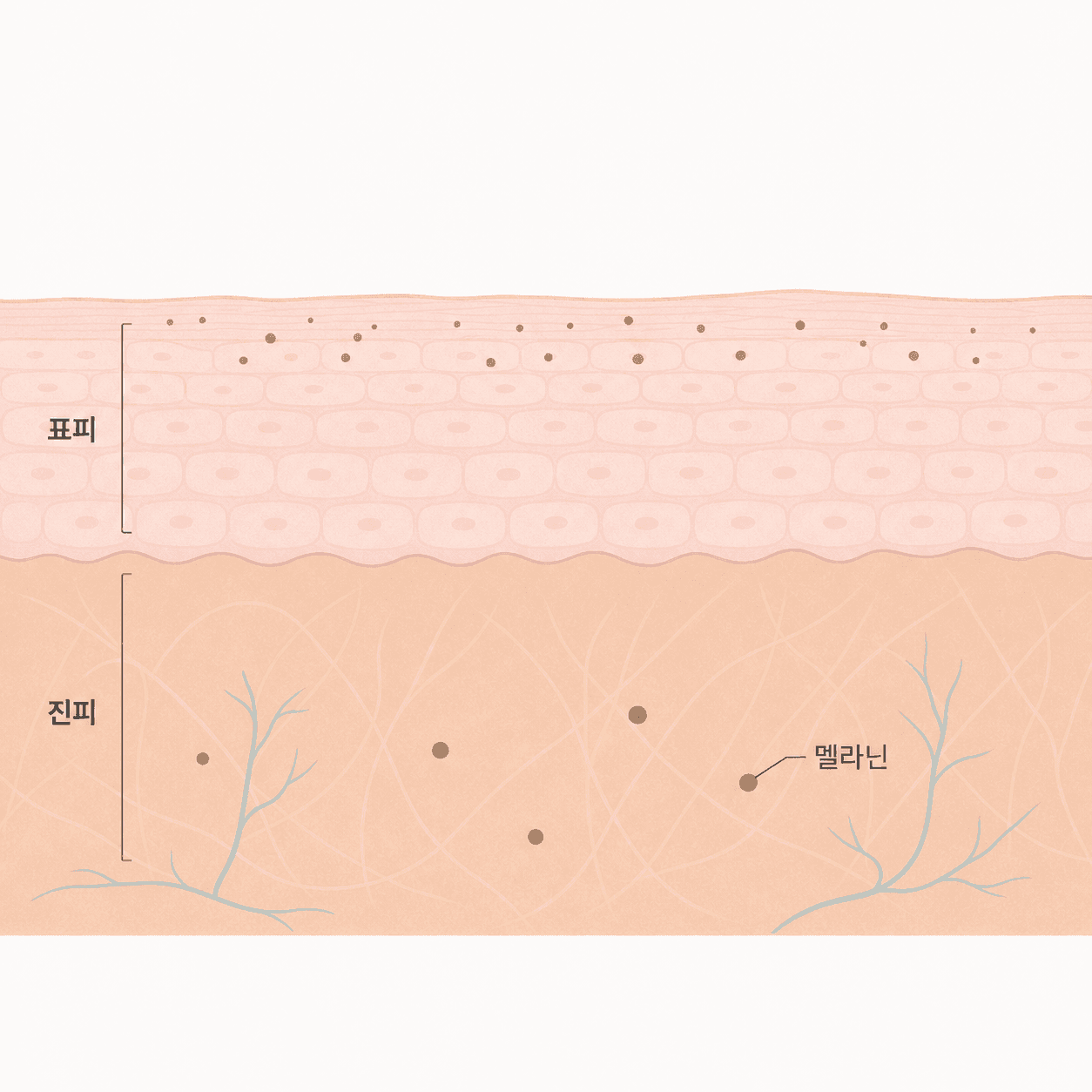
Where each of the four pigment types lives
Everything gets filed under pigment, but the layer varies by type. Sorted by depth, four common ones break down like this.
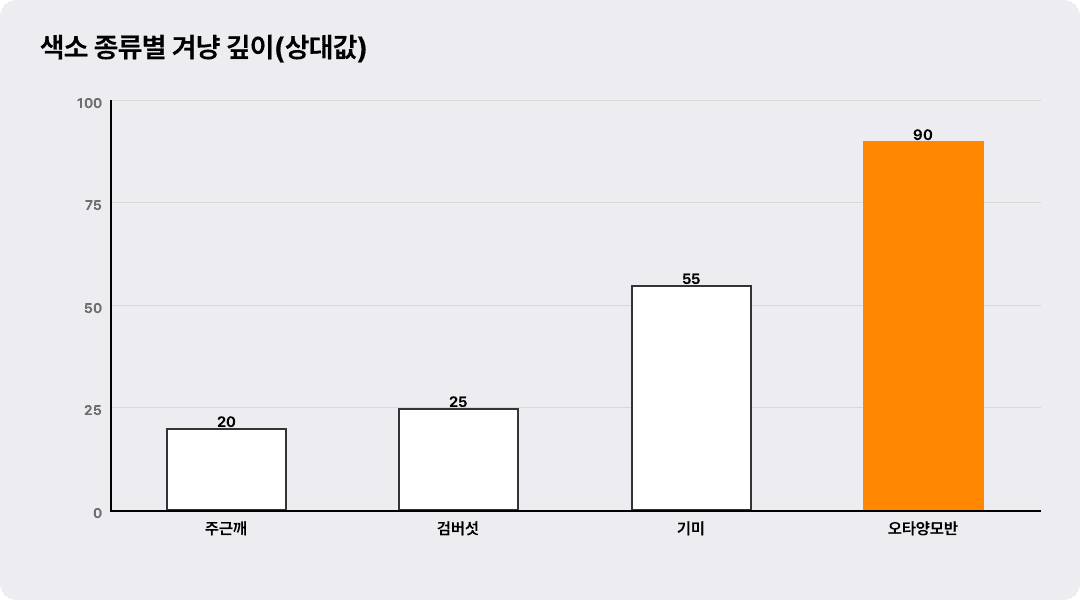
Freckles and general sun-induced blemishes are mostly shallow, epidermal pigment. They darken with sun exposure and hold reasonably crisp edges, which makes them relatively accessible to light. Age spots fall into the epidermal group too. Dermatology references describe solar lentigines as arising from pigment deposition in the basal layer together with keratinocyte proliferation, which is to say an epidermal-level change.
Melasma is messier. Sometimes it stays epidermal, sometimes it reaches the dermis, and often it is a mix of both. That is precisely why two people with melasma can be given two different plans. Nevus of Ota* sits at the other end of the range and is the classic dermal pigment. The melanocytes themselves are deep in the dermis, which produces the blue-grey cast and means light has to travel considerably further than it does for epidermal spots.
Nevus of Ota*: pigment where melanocytes sit deep in the dermis. It typically appears blue-grey around the eye area or cheek, and is approached with longer wavelengths that reach deep layers, spread across multiple sessions.
Pigment type | Usual layer | Colour and edges | Approach |
|---|---|---|---|
Freckles and sunspots | Epidermis | Deep brown, crisp | Targets shallow layers |
Age spots | Epidermis | Brown, crisp | Targets shallow layers |
Melasma | Epidermis to dermis, mixed | Brown to pale brown, blurred | Tuned to the layer |
Nevus of Ota | Dermis | Blue-grey, blurred | Reaches deep layers |
Why wavelength changes with depth
This is where wavelength enters the conversation. How far a laser penetrates depends on its wavelength. Shorter wavelengths respond well to shallow epidermal pigment, longer wavelengths reach into the dermis. Matching wavelength to depth is what makes a session efficient rather than merely eventful. In the US, the lasers and light-based systems used for pigment are FDA-cleared devices, and clearance is granted for specific uses rather than for pigment in general.
Shallow pigment such as freckles and age spots pairs with the shorter-wavelength end. A 532nm wavelength or a broadband approach like IPL* is commonly used for surface-level spots. The idea is to lift a darker spot in one pass so it crusts and flakes away, which brings a few days of crust management with it.
IPL*: a light-based approach that delivers several wavelengths at once. It is used broadly for shallow blemishes and redness, covering an area rather than concentrating hard on one point the way a laser does.
Nevus of Ota, being dermal, requires the longer end. A 1064nm Q-switched approach or a picosecond laser that reaches depth is used across several sessions. Deep pigment does not clear in one go, so the realistic picture is gradual lightening over a course of treatments.
Melasma, mixing epidermal and dermal pigment, is more often handled with laser toning*, which uses low energy repeated over many sessions rather than one aggressive pass. Caution matters here more than anywhere else: dermatology guidance warns that lasers used incorrectly on melasma can make it recur or bring the pigment back, which is why settings and preparation carry unusual weight with this one.
Laser toning*: repeated low-energy passes that lighten pigment incrementally. It is a common choice for melasma, which does not respond well to being lifted aggressively in a single session.
Comparing the rough depth each pigment type is aimed at gives you the shape of it.

Why two people with the same spot get different plans
By now it might look as though naming the pigment settles the laser question. There is one more step. Melasma at the epidermal, dermal or mixed level calls for different energy levels, and if your skin tone is on the deeper side, rebound pigmentation becomes a more likely reaction to plan around.
So rather than eyeballing a spot and going in hard, the safer sequence is to estimate which layer holds how much, start low, and read the response. Melasma in particular can darken or return if it is hit with aggressive energy early, which is why spacing sessions out and checking the skin in between has become the standard way to handle it. Individual results and recovery vary, and the number of sessions varies with them.

Why the provider you choose still matters
The habit worth looking for is a clinic that works out whether pigment is epidermal or dermal before reaching for a device. The same melasma behaves differently depending on layer and skin tone, so starting at low energy, watching the response, and setting the next session from what actually happened beats committing to a protocol on day one. At Beautystone, a small clinic a short walk from Hapjeong Station in Seoul, that pace is the default. If you are travelling for treatment, plan for the fact that pigment work runs across multiple visits and that any follow-up after you fly home will need a provider where you live.

Frequently asked questions
Q. Can one laser clear melasma and freckles in the same session?
A. They sit at different depths, so the approach differs. Freckles are shallow epidermal pigment and can be targeted fairly precisely with shorter wavelengths, while melasma often reaches the dermis and does better with low energy spread over repeated sessions. Even when both are treated on the same day, the energy settings are normally adjusted separately for each.
Q. Do age spots clear in a single session?
A. Age spots are epidermal, so a darker spot can sometimes be lifted in one pass, but that is followed by several days where a crust forms and flakes off. Depending on size and thickness, one session may be enough or a second pass may be needed, so the session count is best set after someone has looked at the spot.
Q. Why does nevus of Ota take so many sessions?
A. The melanin sits deep in the dermis, so it does not clear the way shallow pigment does. Longer wavelengths that reach deep layers are used across a course of sessions, and the pigment lightens gradually rather than suddenly. Depth varies between people, so the number of sessions varies too.
Q. Will frequent toning sessions clear melasma faster?
A. It can work the other way. Raising the energy or crowding sessions too closely together can trigger rebound pigmentation or darkening, so melasma is safer handled at low energy with proper spacing and a check on how the skin responded. Set the session count and interval with your clinician based on that response rather than on a fixed schedule.
Content






skin
Why Does Fractional CO2 Take Longer to Heal?

Contouring & Volume
How Many cc Does Forehead Filler Need?

skin
Why Is My Skin Oily but Tight in the Fall?

Hair Removal
Underarm Laser Hair Removal Cost: Do the Math

Tattoo removal
Laser Before a Cover-Up: How Many Sessions?

skin
큐어젯 다운타임, 다음 날 출근과 화장은 언제부터 될까요?