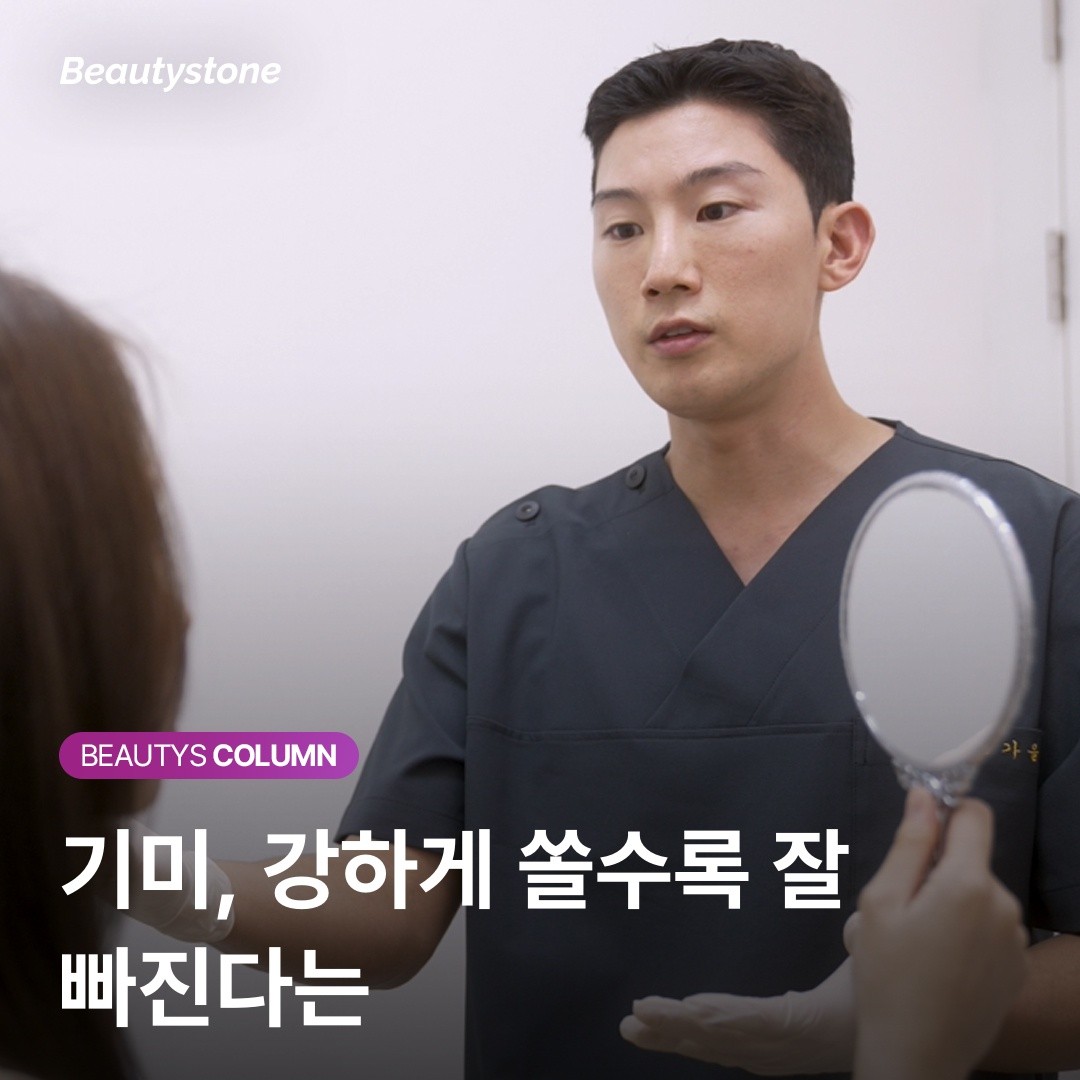
Dr. Wi Young-jin and Dr. Kim Ga-eul, Directors of Hongdae Beautystone Clinic
Hongdae Beauty Doctor Beauty Stone Clinic

Melasma laser: HIGHER energy “it makes darker.”

Melasma laser: HIGHER energy “it makes darker.”

Melasma laser: HIGHER energy “it makes darker.”

Melasma treatment isn't about strong lasers. Learn why deep melasma needs gentle, repeated toning.

레이저 토닝 후 기미가 더 짙어졌다면? 전문의가 말하는 치료의 핵심


Don’t believe the claim that the stronger you treat

melasma, the better it fades

away.


I’m Director Wi Youngjin

of Hongdae Beauty Stone Clinic.


💡 Before reading

please check first


Q. Doesn’t melasma disappear faster

the stronger the laser is applied?

A. It’s actually the opposite.

Strong energy can stimulate melasma and trigger a response

(rebound hyperpigmentation) that makes it darker.


Q. Then why does melasma treatment take so long?

A. Because melasma has deep roots

and is a pigment disorder with a strong tendency to recur,

the standard approach is to

gradually clear it with low energy.


💡 Director Wi Youngjin’s

key insight

Melasma with deep roots

can actually get darker if treated too strongly at once,

so toning it repeatedly with low energy,

as if erasing stains little by little, is the standard approach.



기미는 '지우개'처럼 지워야 합니다! 강한 에너지보다 중요한 토닝의 정석


Why a "strong single shot"

can make melasma darker

Are apples green or red?

The answer depends on the variety.


Melasma is the same.


The method hidden behind the claim that it "removes melasma well"

is not always the same.


If you search for melasma treatments,

you’ll see phrases like "definitely with high-power laser"

and "clean in one session".


But there’s something important here.


Unlike ordinary blemishes,

melasma is a pigment condition that reacts very sensitively to stimulation.


When the cells that produce melanin in the skin,

melanocytes,

receive strong energy, they instead


detect it as a "threat"

and end up producing more melanin.


Medically, this is called

'post-inflammatory hyperpigmentation'

,

but simply put, it’s when laser treatment actually makes melasma

darker.


To be honest, this is one of the most common

mistakes in melasma treatment.


There are quite a lot of people who come in saying

their melasma got darker after laser treatment elsewhere,

more than you’d expect.


So what should you do?


The answer is to approach it "like erasing a stain."


When erasing pencil marks with an eraser,

if you rub too hard at once, the paper tears.


You need to erase it several times, little by little, and evenly.

That is exactly the principle behind melasma toning.


By repeatedly applying a low-energy laser

without stimulating the melanocytes,

while gradually breaking down the melanin,

that is the essence of laser toning.


The deeper the melasma roots, the more important this principle becomes.

Deep pigment responds more effectively to steady low-level stimulation

than to a single strong one.


👨‍⚕️ Director Wi Youngjin’s key summary

Melasma is a pigment disorder that can

actually become darker in response to stimulation.


That’s why the standard approach is not one strong blast of energy, but repeated

low-energy toning that gradually erases it.

The reason is right here.

Direction matters before speed.



기미 치료, 왜 레이저 장비보다 '에너지 조절'이 중요할까?


Then for my melasma,

what approach is right?

The tricky part is that melasma also has different types.


It’s broadly divided into epidermal and dermal types,

as well as mixed type,

and epidermal melasma is in the shallow layers of the skin,

so it responds relatively well to toning.


Dermal melasma has pigment that goes deeper,

so treatment takes longer and the approach must be different.


This is a point many people misunderstand,

but in melasma treatment, how you adjust the energy

is much more important than the type of laser machine.


Even with the same machine,

the results can be completely different depending on the settings.


It varies by case, but

this is usually how I do it.


At the first visit, I check the depth and extent of the melasma,

and start with low-energy toning.


After observing 3 to 5 sessions, I check the skin’s response,

and if it fades steadily without rebound hyperpigmentation,

we continue the sessions.


There were cases where people who had undergone treatment elsewhere multiple times

and saw no improvement

showed noticeable fading after 4 to 6 sessions with us,

but


in most cases, the energy had

been applied too strongly before.


But this isn’t all good news.

Toning is slow.


For those expecting fast results,

it can feel frustrating.


However, because melasma is more likely to worsen the faster you approach it,

it is still a good choice for those willing to take the long view.


Also, laser alone

cannot completely eliminate melasma.


If UV protection and brightening ingredients are not managed together,

the treatment effect quickly returns to square one.

We explain this from the beginning and start together.


Frequently asked questions

Q1. During melasma treatment, sunscreen,

do I really need to apply it every day?

A. Yes, this is non-negotiable.

UV rays are the

strongest external factor that stimulates melanocytes.


No matter how well you get treated,

if you neglect sunscreen,

melasma darkens again.


A product with SPF 50 or higher should be applied every morning

regardless of whether you’re going outdoors.


Especially right after treatment, the skin is more sensitive,

so you need to pay extra attention to protection.


Q2. I’m not sure if it’s melasma or blemishes.

Can I just get treated anyway?

A. This is something we must confirm before starting.

Melasma and blemishes

(sun spots, acquired bilateral nevus of Ota-like macules, etc.)

may look similar on the surface, but the treatment methods are different.


A high-power approach that works for blemishes

can actually backfire on melasma.

It’s important to distinguish them during the consultation and start accordingly.


KakaoTalk consultations are available before your visit.

This has been Wi Youngjin.


Read more

Hongdae Mulgwang Injection, 5 things you must know before the procedure

Rejuran vs Juvelook: which one is right for my skin?

Ulthera vs Sofwave: "Expensive doesn’t mean better — the depth is different"

Jeomin vs Coretox: both are botulinum toxins with low resistance, but do you know how they differ?


Removing eyebrow tattoo redness: 3 causes and solutions

레이저 토닝 후 기미가 더 짙어졌다면? 전문의가 말하는 치료의 핵심


Don’t believe the claim that the stronger you treat

melasma, the better it fades

away.


I’m Director Wi Youngjin

of Hongdae Beauty Stone Clinic.


💡 Before reading

please check first


Q. Doesn’t melasma disappear faster

the stronger the laser is applied?

A. It’s actually the opposite.

Strong energy can stimulate melasma and trigger a response

(rebound hyperpigmentation) that makes it darker.


Q. Then why does melasma treatment take so long?

A. Because melasma has deep roots

and is a pigment disorder with a strong tendency to recur,

the standard approach is to

gradually clear it with low energy.


💡 Director Wi Youngjin’s

key insight

Melasma with deep roots

can actually get darker if treated too strongly at once,

so toning it repeatedly with low energy,

as if erasing stains little by little, is the standard approach.


기미는 '지우개'처럼 지워야 합니다! 강한 에너지보다 중요한 토닝의 정석


Why a "strong single shot"

can make melasma darker

Are apples green or red?

The answer depends on the variety.


Melasma is the same.


The method hidden behind the claim that it "removes melasma well"

is not always the same.


If you search for melasma treatments,

you’ll see phrases like "definitely with high-power laser"

and "clean in one session".


But there’s something important here.


Unlike ordinary blemishes,

melasma is a pigment condition that reacts very sensitively to stimulation.


When the cells that produce melanin in the skin,

melanocytes,

receive strong energy, they instead


detect it as a "threat"

and end up producing more melanin.


Medically, this is called

'post-inflammatory hyperpigmentation'

,

but simply put, it’s when laser treatment actually makes melasma

darker.


To be honest, this is one of the most common

mistakes in melasma treatment.


There are quite a lot of people who come in saying

their melasma got darker after laser treatment elsewhere,

more than you’d expect.


So what should you do?


The answer is to approach it "like erasing a stain."


When erasing pencil marks with an eraser,

if you rub too hard at once, the paper tears.


You need to erase it several times, little by little, and evenly.

That is exactly the principle behind melasma toning.


By repeatedly applying a low-energy laser

without stimulating the melanocytes,

while gradually breaking down the melanin,

that is the essence of laser toning.


The deeper the melasma roots, the more important this principle becomes.

Deep pigment responds more effectively to steady low-level stimulation

than to a single strong one.


👨‍⚕️ Director Wi Youngjin’s key summary

Melasma is a pigment disorder that can

actually become darker in response to stimulation.


That’s why the standard approach is not one strong blast of energy, but repeated

low-energy toning that gradually erases it.

The reason is right here.

Direction matters before speed.


기미 치료, 왜 레이저 장비보다 '에너지 조절'이 중요할까?


Then for my melasma,

what approach is right?

The tricky part is that melasma also has different types.


It’s broadly divided into epidermal and dermal types,

as well as mixed type,

and epidermal melasma is in the shallow layers of the skin,

so it responds relatively well to toning.


Dermal melasma has pigment that goes deeper,

so treatment takes longer and the approach must be different.


This is a point many people misunderstand,

but in melasma treatment, how you adjust the energy

is much more important than the type of laser machine.


Even with the same machine,

the results can be completely different depending on the settings.


It varies by case, but

this is usually how I do it.


At the first visit, I check the depth and extent of the melasma,

and start with low-energy toning.


After observing 3 to 5 sessions, I check the skin’s response,

and if it fades steadily without rebound hyperpigmentation,

we continue the sessions.


There were cases where people who had undergone treatment elsewhere multiple times

and saw no improvement

showed noticeable fading after 4 to 6 sessions with us,

but


in most cases, the energy had

been applied too strongly before.


But this isn’t all good news.

Toning is slow.


For those expecting fast results,

it can feel frustrating.


However, because melasma is more likely to worsen the faster you approach it,

it is still a good choice for those willing to take the long view.


Also, laser alone

cannot completely eliminate melasma.


If UV protection and brightening ingredients are not managed together,

the treatment effect quickly returns to square one.

We explain this from the beginning and start together.


Frequently asked questions

Q1. During melasma treatment, sunscreen,

do I really need to apply it every day?

A. Yes, this is non-negotiable.

UV rays are the

strongest external factor that stimulates melanocytes.


No matter how well you get treated,

if you neglect sunscreen,

melasma darkens again.


A product with SPF 50 or higher should be applied every morning

regardless of whether you’re going outdoors.


Especially right after treatment, the skin is more sensitive,

so you need to pay extra attention to protection.


Q2. I’m not sure if it’s melasma or blemishes.

Can I just get treated anyway?

A. This is something we must confirm before starting.

Melasma and blemishes

(sun spots, acquired bilateral nevus of Ota-like macules, etc.)

may look similar on the surface, but the treatment methods are different.


A high-power approach that works for blemishes

can actually backfire on melasma.

It’s important to distinguish them during the consultation and start accordingly.


KakaoTalk consultations are available before your visit.

This has been Wi Youngjin.


Read more

Hongdae Mulgwang Injection, 5 things you must know before the procedure

Rejuran vs Juvelook: which one is right for my skin?

Ulthera vs Sofwave: "Expensive doesn’t mean better — the depth is different"

Jeomin vs Coretox: both are botulinum toxins with low resistance, but do you know how they differ?

Removing eyebrow tattoo redness: 3 causes and solutions

Beauty Doctor Hongdae Beauty Stone Clinic

Recommended post

Recommended post

Latest post

Latest post

서울에서 시술 받을 때 홍대와 강남 어디가 좋을까 — 외국인 방문객을 위한 가이드

Lifting

서울에서 시술 받을 때 홍대와 강남 어디가 좋을까 — 외국인 방문객을 위한 가이드

가격과 접근성 모두 중요 하지만, 가장 필요한건 원장님이 진료를 봐주시는지가 더 중요 할 것 같습니다. 특히 외국인을 보는 곳으로 가야, 해부학적인 다른 점도 체크가 가능해요.

울쎄라 부작용, "입꼬리가 안 올라가요" — 신경 자극을 피하는 시술자의 노하우

Lifting

울쎄라 부작용, 솔직히 저도 5년 전엔 몰랐던 것

울쎄라 부작용, 멍·붓기보다 입꼬리 비대칭이 더 무섭습니다. 4.5mm 깊이가 신경 분지 근처를 지나거든요.

레이저로 안 되던 모공, '포텐자 RF'가 풀어낸 진피층 구조의 비밀

skin

레이저로 안 되던 모공, 포텐자 RF는 뭐가 다를까?

레이저와 마이크로니들 RF는 모공에 작용하는 방식이 달라요. 표면이냐 진피냐, 어디에 에너지를 전달하는지 정리했어요.

홍대 피부과 고를 때 나는 "원장이 직접 진료하는 곳"부터 봐요

skin

홍대 피부과 고를 때 나는 "원장이 직접 진료하는 곳"부터 봐요

홍대 피부과가 너무 많아 고르기 어려우셨나요. 원장이 직접 진료하는 클리닉을 우선 보는 이유와 확인 방법을 정리했어요.

마포에서 피부과 고를 때 써마지 잘 받으려면 뭘 봐야 할까

Lifting

마포에서 피부과 고를 때 써마지 잘 받으려면 뭘 봐야 할까

마포에서 피부과를 고를 때 위치보다 먼저 따져야 할 기준이 있어요. 써마지를 후회 없이 받기 위한 체크리스트를 정리했어요.

Contouring & Volume

쥬베룩이랑 필러는 뭐가 다른 거예요?

쥬베룩, 스컬트라, PRP, 필러… 다 비슷해 보이지만 작동 방식이 달라요. 콜라겐 부스터와 필러의 차이를 풀었어요.

1:1 Custom Approach

💬 Eng Available 1:1 consultations available via Whatsapp

🌸 Beautystone Clinic attends the Meditox Bangkok Cadaver Workshop 🌸

1:1 Custom Approach