

That deep tight feeling after HIFU or RF lifting? Here's why it happens and when it eases.
Published -
Updated -

Author
Wi Young-jin · Chief director
Seoul National University College of Medicine · Seoul National University Hospital Specialist
→
You've just had a lifting treatment like Ultherapy or Thermage, and now your face feels oddly tight — not on the surface, but deep down inside. When you smile, talk, or move your jaw, there's a pulling or drawing sensation that wasn't there before. If you've noticed this, you're not alone. It's one of the most common questions we hear after energy-based lifting treatments, and it can feel unsettling when you don't know what's normal.
Here's the good news: in most cases, that deep tight feeling is a sign your skin is doing exactly what the treatment intended. In this article, we'll cover why your face feels tight after lifting, roughly when the sensation eases, how to care for your skin in the meantime, and the warning signs that mean it's time to check in with your provider.
What Is That Inner Tight Feeling?
The short answer? It's usually your deeper tissue responding to the treatment. Energy-based lifting devices like Ultherapy (which uses focused ultrasound) and Thermage (which uses radiofrequency, or RF) don't work on the surface of your skin. Instead, they deliver heat down into the dermis and the deeper SMAS layer — the same connective tissue layer a surgical facelift addresses.
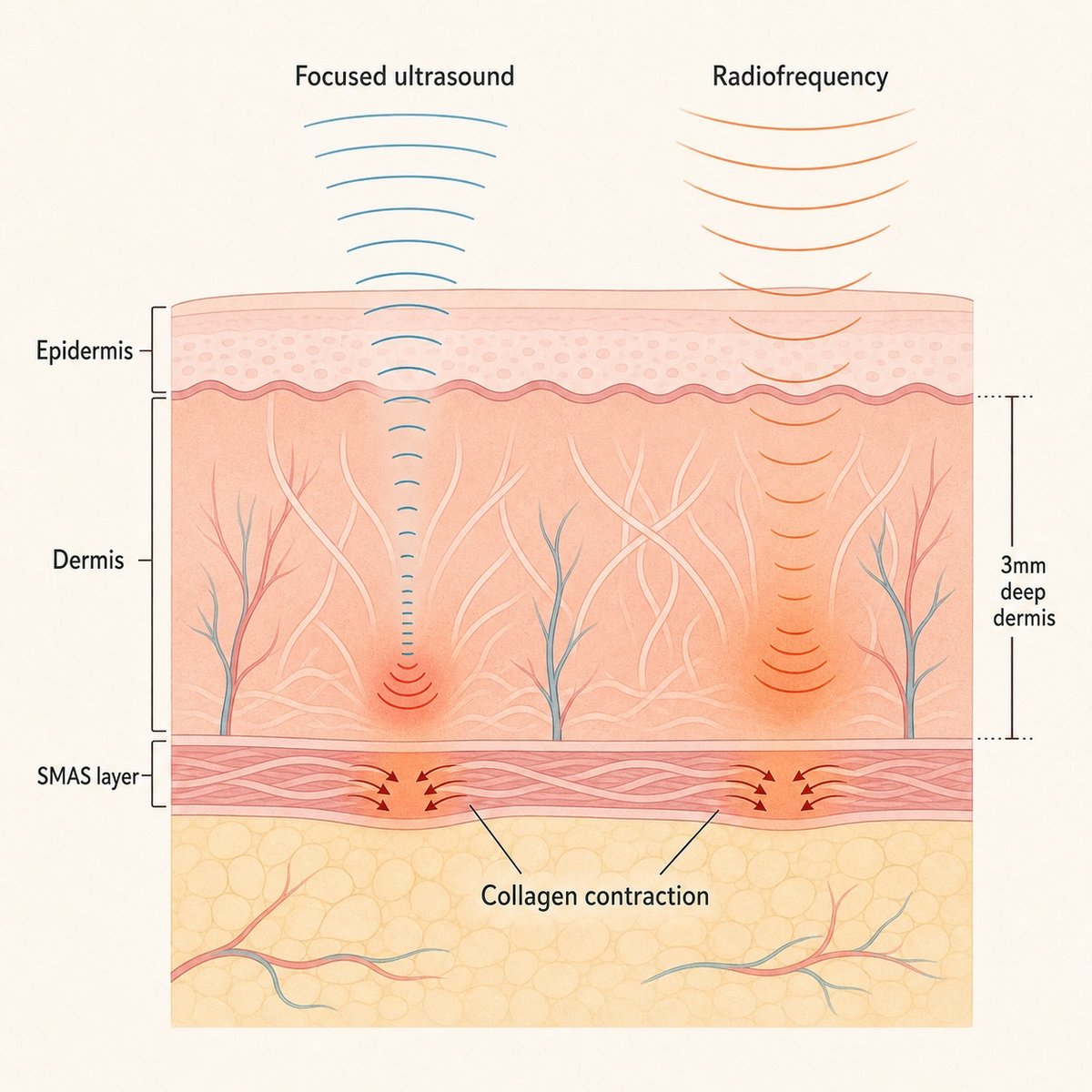
When that heat reaches the deeper layers, it causes existing collagen to contract, and it kicks off a slower process where your body builds new collagen over the following weeks and months. That immediate contraction is what you're feeling. Because the heat is delivered below the surface — while the outer skin stays intact — the sensation shows up as a deep pull rather than surface soreness. Most people describe it as a "drawing" or "stiff" feeling deep in the cheeks or jawline, more than actual pain.
How Long Does the Tightness Last?
Individual results vary, but there's a rough timeline most people follow. How strong the tightness feels — and how long it sticks around — depends on which device was used, how much energy was delivered, and your own skin. Here's a general guide to what you can expect.
Timeframe | What the tightness usually feels like |
|---|---|
Day of to a few days | Most noticeable — deep pulling or stiffness |
1 to 2 weeks | Gradually eases for most people |
1 to 3 months | Tends to fade as it settles |
In most cases, the tight feeling peaks in the first few days after treatment, then softens from there. Because collagen contraction and new collagen production happen gradually, it can take anywhere from a few weeks to a couple of months for the sensation to fully settle. That's completely normal, and it doesn't mean anything went wrong. The best approach is patience — give your skin time and check in with how it feels week to week, rather than day to day.
Keep in mind that a longer settling period isn't a bad sign on its own. For some people, the deeper the treatment worked, the longer that snug feeling lingers before it fades. Individual results vary, so try not to compare your timeline too closely with someone else's.
How to Care for Your Skin While It Settles
While your skin feels tight, the deeper layers are still delicate, so a gentle routine goes a long way. The goal is simple: keep your skin hydrated and avoid anything that adds extra stress. A few practical tips:
Moisturize often: Keeping your skin hydrated helps it feel more comfortable while it recovers.
Sunscreen is non-negotiable: Use a broad-spectrum sunscreen every day, especially while your skin is healing.
Skip the aggressive massage: Don't rub, press, or try to stretch out the tightness — it can add unnecessary irritation.
Take a break from heat: Hot showers, saunas, and long soaks are worth avoiding for a few days.
It's tempting to knead or pull at the area when it feels tight, but that can backfire and irritate skin that's still settling. Instead, gently layer on a hydrating moisturizer and let it be. Normal facial movement — smiling, talking, eating — is generally fine and won't undo your results. Just avoid forcing big movements if they're genuinely uncomfortable, and let the sensation guide you.
Side Effects and When to Seek Care
For most people, the inner tightness is a normal part of the process. Mild redness, slight swelling, or a bit of tenderness can happen too, and these usually settle within a few days to a week or two. Like any procedure, though, it's worth knowing what falls outside the typical range so you can act if something feels off.
Contact your provider if you notice a few specific things: pain that keeps getting worse rather than better, swelling that doesn't go down, areas of skin that dent inward or bulge outward, or numbness that lingers well beyond the first week or two. These aren't part of the usual recovery. If you notice spreading redness, fever, or worsening pain, seek medical care right away. And if the tightness simply lasts far longer than you expected and it's causing you worry, don't sit on it — reach out to the clinic where you had the treatment. Everyone's skin is different, so when in doubt, it's always better to ask.
The Bottom Line
That deep, pulling tightness after a lifting treatment is, in most cases, a good sign — it means the collagen in your deeper layers is contracting and starting to firm up. Here's the quick recap:
Why it happens: Heat from HIFU or RF reaches the dermis and SMAS, contracting collagen deep below the surface.
When it eases: The tightness usually peaks in the first few days, then fades over several weeks to a few months.
How to help: Hydrate, wear sunscreen, skip aggressive massage and heat, and be patient.
When to check in: Worsening pain, lasting swelling, denting, or numbness deserve a call to your provider.
There's no need to panic over a snug, tight feeling in the first few weeks — it's a normal response for most people. Individual results vary, and the choice to treat is always yours to make with your skin and goals in mind. If you're considering a lifting treatment or have questions about your recovery, a consultation is the best way to get answers tailored to you. Beautystone is a dermatology clinic in Seoul's Hapjeong area — see current offers at /en/promotion.
Frequently asked questions
Q. Is it normal for my face to feel tight after a lifting treatment?
A. Yes, in most cases. That deep pulling or stiff feeling usually means the collagen in your deeper skin layers is contracting after the heat-based treatment. It's a common response, though individual results vary. If the tightness comes with worsening pain or swelling, check in with your provider.
Q. How long does the tight feeling last after HIFU or RF lifting?
A. It typically peaks in the first few days, then eases over the next one to two weeks. Because collagen builds gradually, some people notice a snug feeling for a few weeks to a couple of months. Individual results vary based on the device, energy used, and your skin.
Q. Can I massage my face if it feels tight?
A. It's best not to knead or pull at the area to relieve the tightness — that can irritate skin that's still settling. Gentle moisturizing and normal facial movement are fine. If the tightness really bothers you, talk to your provider before trying anything more aggressive.
Q. When should I see a doctor about tightness after lifting?
A. Reach out if you have pain that keeps worsening, swelling that won't go down, skin that dents or bulges, or numbness that lingers past the first week or two. And if you notice spreading redness or fever, seek medical care right away.


Contouring & Volume
InMode Cost: Why One Area, Three Line Items

Hair Removal
수염 레이저 제모 가격, 회당 금액이 같은데 총액이 갈리는 이유는?

skin
Fraxel Results: Why 3 Months Is the Real Test

Lifting
이중턱·턱선리프팅, 다섯 층 중 어디가 문제인지 아세요?

Contouring & Volume
Juvederm Lip Filler: Volbella vs. Ultra

skin
How Long Does Potenza Take to Show Results?