

After Potenza RF, here's when it's safe to cleanse, apply sunscreen, and wear makeup again.
Published -
Updated -

Author
Wi Young-jin · Chief director
Seoul National University College of Medicine · Seoul National University Hospital Specialist
→
One of the most common questions we hear after a Potenza session is some version of: "Can I wash my face tonight?" or "How soon can I put on foundation?" You're definitely not alone in asking.
Here's the short answer: after Potenza microneedle RF, your skin has thousands of microscopic needle channels that need a little time to close. Cleansing too aggressively or layering on makeup before those channels seal can slow your recovery — or worse, introduce bacteria into open skin. That said, you won't be hiding from the world for a week. Recovery is generally quick, and we'll break down exactly what to expect day by day. In this guide, we'll cover what Potenza does to your skin barrier, a realistic timeline for washing and makeup, what to skip during recovery, and when to call your provider.
What Is Potenza, and Why Does It Affect Aftercare?
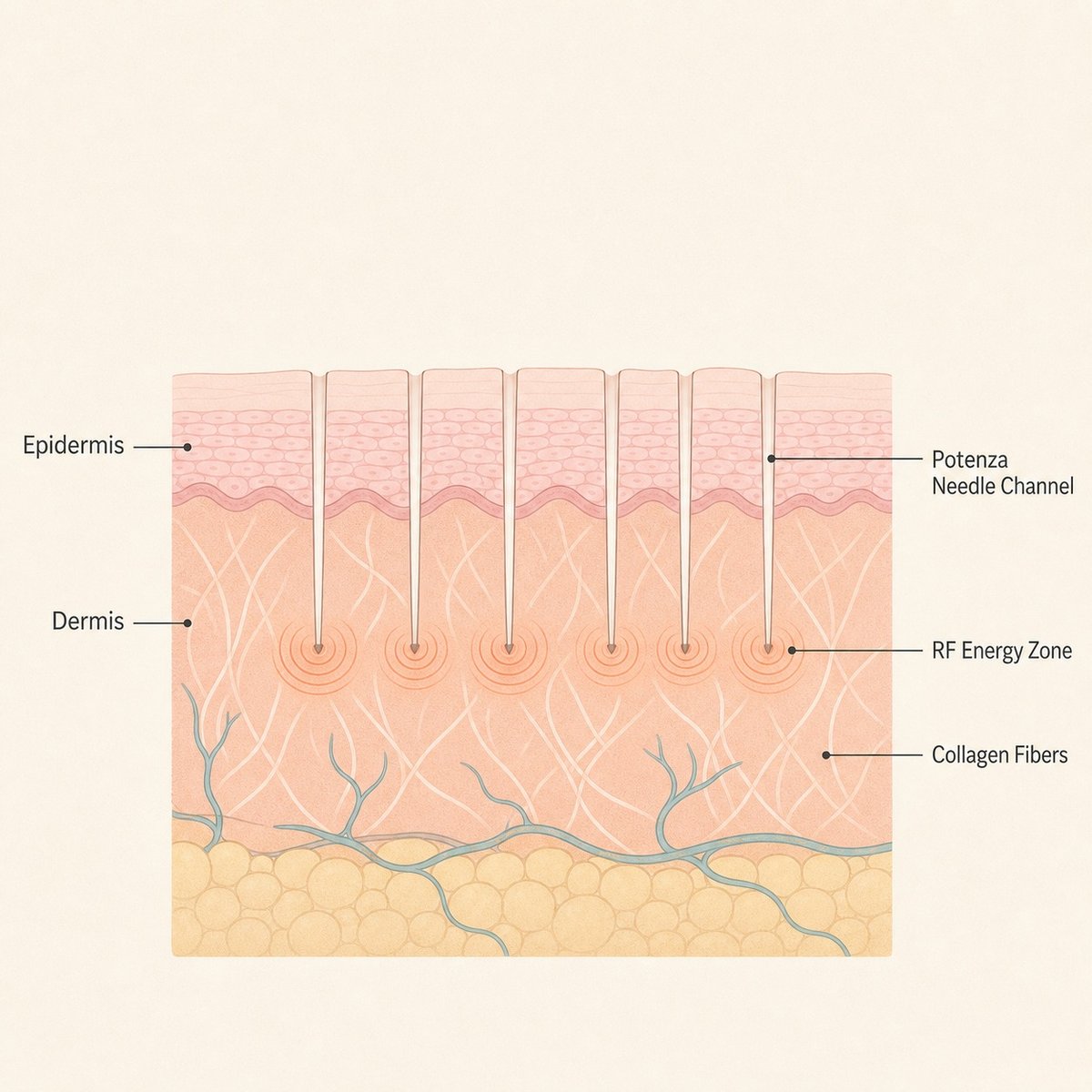
Potenza is an FDA-cleared radiofrequency (RF) microneedling device. It uses a grid of ultra-fine needles to create controlled micro-injuries in the dermis, then delivers RF energy directly through the needle tips — bypassing the epidermis and concentrating heat where collagen remodeling happens.
What makes aftercare uniquely important here is that Potenza leaves behind real, if microscopic, puncture channels — typically 0.5 mm to 3.5 mm deep depending on the tip and setting. Research published in PMC (NCBI) confirms that RF microneedling triggers a wound-healing cascade: the inflammatory phase begins immediately, and the channels begin closing within hours — but full epidermal re-sealing studies suggest takes closer to 24 hours for most patients.
Until those channels close, your skin barrier is temporarily compromised. That's not a problem if you follow the right aftercare steps — it's actually part of what makes the treatment effective, since growth factors and serums applied during this window can penetrate more deeply. But it also means you need to be thoughtful about what goes on your skin and when.
When Can You Wash Your Face After Potenza?
Most providers recommend waiting until the morning after your treatment — roughly 8 to 12 hours — before washing your face. That means if you have your session in the afternoon, skip the evening cleanse and rinse gently the next morning instead.
Here's what a safe cleansing routine looks like in the first few days:
Day of treatment: No washing. Your provider will likely apply a calming serum or barrier cream at the end of the session — don't rinse it off. If your face feels warm or tight, a cool damp cloth (patted gently, not rubbed) is fine for comfort.
Day 1 (next morning): You can start washing. Use lukewarm water — not hot — and a fragrance-free, low-pH gentle cleanser. Apply with your fingertips using light circular motions. No washcloths, no sonic cleansing brushes, no scrubbing.
Days 2–4: Continue with the same gentle approach. Your skin may look slightly pink or show tiny dotting (pinpoint bleeding marks that fade fast). Stick to gentle cleansers until redness resolves completely.
Day 5+: Once the skin has settled — no active redness, no flaking, no sensitivity — you can typically return to your normal cleanser. Check with your provider before reintroducing anything with active ingredients.
One more thing: hot showers can dilate blood vessels and worsen redness. Keep water lukewarm for at least the first three to four days, and avoid steam rooms, saunas, or hot baths during that window.

When Can You Wear Makeup After Potenza?
Most people can apply mineral makeup starting the day after treatment — but full-coverage foundation and liquid products typically need to wait a bit longer. Here's why that distinction matters.
Mineral powder-based makeup (with ingredients like zinc oxide and titanium dioxide) is generally considered low-risk on healing skin because it doesn't contain preservatives, alcohols, or fragrances that could irritate open channels. Liquid foundations, concealers, and tinted moisturizers with longer ingredient lists carry more risk of causing contact irritation or blocking the channels from closing properly.
A general timeline:
Day of treatment: No makeup — full stop. Your skin is actively in its inflammatory phase, channels are open, and even "clean" cosmetics can introduce unwanted particles.
Day 1: Mineral sunscreen is fine (and recommended — more on that below). Avoid color cosmetics.
Day 2–3: Many providers give the green light for lightweight mineral powder if skin is no longer actively pink. Spot-conceal only if absolutely needed for social reasons.
Day 4–7: Full makeup is typically okay once visible redness and flaking have resolved. Err on the cautious side — there's no penalty for waiting an extra day.
Individual results vary based on treatment depth and your skin's baseline sensitivity. Always follow your specific provider's instructions over general guidelines — they know your skin and your session parameters.
Sunscreen After Potenza: The One Thing You Can't Skip
Sunscreen isn't optional after RF microneedling. It's non-negotiable.
After Potenza, your skin is more vulnerable to UV-induced inflammation and post-inflammatory hyperpigmentation (PIH) — darkening that can occur when healing skin is exposed to UV without protection. You can apply a mineral sunscreen (SPF 30 or higher, broad-spectrum) starting the morning after your treatment, even before you reintroduce other skincare steps.
A few things to look for in a post-Potenza sunscreen:
Mineral (physical) filters: zinc oxide, titanium dioxide. These sit on the skin rather than being absorbed, which is gentler on fresh channels.
No fragrance, alcohol, or harsh preservatives in the first week.
SPF 50+ is a smart choice for the first two weeks post-treatment, especially if you're outdoors.
Chemical sunscreens aren't categorically off-limits after healing is complete, but in the first week, mineral is the safer bet. Reapply every two hours if you're spending time outside.
What to Avoid During Potenza Recovery
Recovery after Potenza is generally smooth — but a few common habits can set it back. Here's what to hold off on:
Retinol and retinoids: Wait at least one to two weeks before reintroducing vitamin A derivatives. They accelerate cell turnover, which is great normally but too aggressive on healing skin.
Exfoliating acids (AHA, BHA, PHA): Same window — one to two weeks minimum. Glycolic, lactic, and salicylic acids can sting severely on skin with open channels and may prolong redness.
Scrubs and physical exfoliants: No washcloths, konjac sponges, or exfoliating pads. Physical friction is a real risk for micro-scarring when channels are fresh.
Intense exercise and heavy sweating: Skip the gym for 24 to 48 hours. Sweat is actually mildly acidic and can irritate needle channels; heat also extends redness.
Alcohol and spicy food: In the first 24 to 48 hours, these can dilate blood vessels and worsen post-treatment flushing.
Other skin treatments: No chemical peels, laser sessions, or injectables within two weeks unless your provider specifically approves it.
On the positive side, your skin is primed to absorb hydrating ingredients right after treatment. Hyaluronic acid serums and ceramide-rich moisturizers applied (gently) in the first 24 hours can actually help support healing — just make sure anything you use is fragrance-free and formulation-simple.
Side Effects, Downtime, and Red Flags
Let's be straightforward about what recovery actually looks like. Potenza is considered a low-to-moderate downtime procedure, but "low downtime" doesn't mean "zero reaction."
What's normal:
Redness and warmth: Common immediately after and for 12 to 48 hours. Looks like a sunburn, feels similar too.
Pinpoint bleeding: Tiny specks of blood from needle channels are normal and typically resolve within hours.
Mild swelling: Particularly around the eyes and cheeks. Usually peaks at 24 hours and resolves by day two or three.
Skin tightness and dryness: The skin may feel tight or show fine flaking around days three to five. This is part of the normal remodeling process — don't pick or peel it.
Bronzing or temporary darkening: Some patients notice a slightly darker tone for a few days before skin sheds. Normal.
What's not normal — and when to contact your provider:
Redness or swelling that spreads beyond the treated area or worsens after day two
Pus, crusting, or open sores that weren't there immediately post-treatment
Fever, chills, or signs of systemic infection
If you notice spreading redness, fever, or worsening pain after the first 48 hours, seek medical care right away. These can be signs of infection, which is rare but real when the skin barrier is disrupted. Individual results and recovery experiences vary significantly depending on treatment depth, skin type, and general health.
The Bottom Line
Potenza microneedle RF is an effective treatment for texture, pore size, and skin laxity — but its effectiveness depends partly on how well you protect your skin while it heals.
Skip washing on treatment day; start gentle cleansing the morning after with lukewarm water and a fragrance-free cleanser.
Mineral sunscreen goes on starting day one post-treatment. UV protection during recovery isn't optional.
Hold off on full makeup for two to three days minimum; liquid foundation can wait until visible redness clears.
Retinoids, exfoliating acids, and heavy sweating are off the table for one to two weeks.
Like any procedure, Potenza comes with trade-offs — a few days of looking a little flushed in exchange for results that studies suggest can include improved skin texture and pore appearance. Individual results vary, and the right timing for aftercare steps may differ based on the depth and energy settings used in your session.
Ultimately, the best aftercare plan is the one your provider gives you — tailored to how your treatment went. If you're considering Potenza or want to understand what your specific skin needs post-treatment, a consultation is the best starting point. Beautystone is a dermatology clinic in Seoul's Hapjeong area — see current offers at /en/promotion.
Acne scar treatment treatment details
This month: CureJet Scars & Acne
Frequently asked questions
Q. When can I wash my face after Potenza?
A. Most providers recommend waiting until the morning after your treatment — roughly 8 to 12 hours. On day one, use lukewarm water and a gentle, fragrance-free cleanser applied with your fingertips. Avoid washcloths, hot water, and scrubbing until redness fully resolves, usually by day four or five.
Q. How long is the downtime after Potenza RF microneedling?
A. Potenza is considered a low-to-moderate downtime procedure. Most people experience redness and warmth for 24 to 48 hours, with mild swelling peaking around day one and resolving by day two or three. Fine flaking or skin tightness can appear around days three to five. Most people feel comfortable in public by day three to four. Individual results vary depending on treatment depth.
Q. Can I wear sunscreen after Potenza?
A. Yes — and you should. Mineral sunscreen (SPF 30 or higher) can be applied starting the morning after treatment. After RF microneedling, your skin is more vulnerable to UV-induced post-inflammatory hyperpigmentation, so daily sun protection is especially important for the first two to four weeks. Choose a fragrance-free mineral formula in the first week.
Q. What skincare ingredients should I avoid after Potenza?
A. Avoid retinol, retinoids, AHA, BHA, and physical exfoliants for at least one to two weeks post-treatment. These ingredients accelerate cell turnover or cause direct irritation on skin with open needle channels. Stick to gentle cleansers, barrier-supportive moisturizers (ceramides, hyaluronic acid), and mineral sunscreen until your skin has fully settled. Always follow your provider's specific instructions.


skin
Ellanse Cost: Duration Beats Price Per Visit

Lifting
Alltite RF: Two Effects, Two Timelines

Contouring & Volume
Why Juvelook Volume Quotes Vary by Clinic

men's
Nose Pore Treatment: Aftercare Timing Guide

skin
How Many Sessions Does Eyeliner Removal Take?

Hair Removal
Laser Hair Removal While Pregnant or Nursing