

Pigment lasers ask for the longest hold, and heat can bring back swelling that was already settling. Where each treatment lands, and what to do meanwhile.
Published -
Updated -

Author
Wi Young-jin · Chief director
Seoul National University College of Medicine · Seoul National University Hospital Specialist
→
After undergoing a skin treatment, one question always comes to mind: "When can I go to the sauna?" Especially for those who enjoy Korean jin jil bangs (bathhouses) or half-baths, not knowing how long to put their favorite habits on hold can be quite frustrating.
To answer briefly, the recommended timing varies slightly depending on the type of treatment, but as a general rule, it is safest to minimize heat exposure for the first few days immediately following a procedure. Heat rapidly increases blood flow, which can add swelling, bruising, and irritation to skin that has just begun to heal.
This content compiles treatment-related information from Beautystone Hapjeong.
In This Article
Why you need to be mindful of saunas after a treatment
A general timeline of when you can return by treatment type
How thermal stimulation affects your skin's recovery
Tips on how to care for your skin during the first few post-treatment days
Why Saunas Require Care After a Treatment
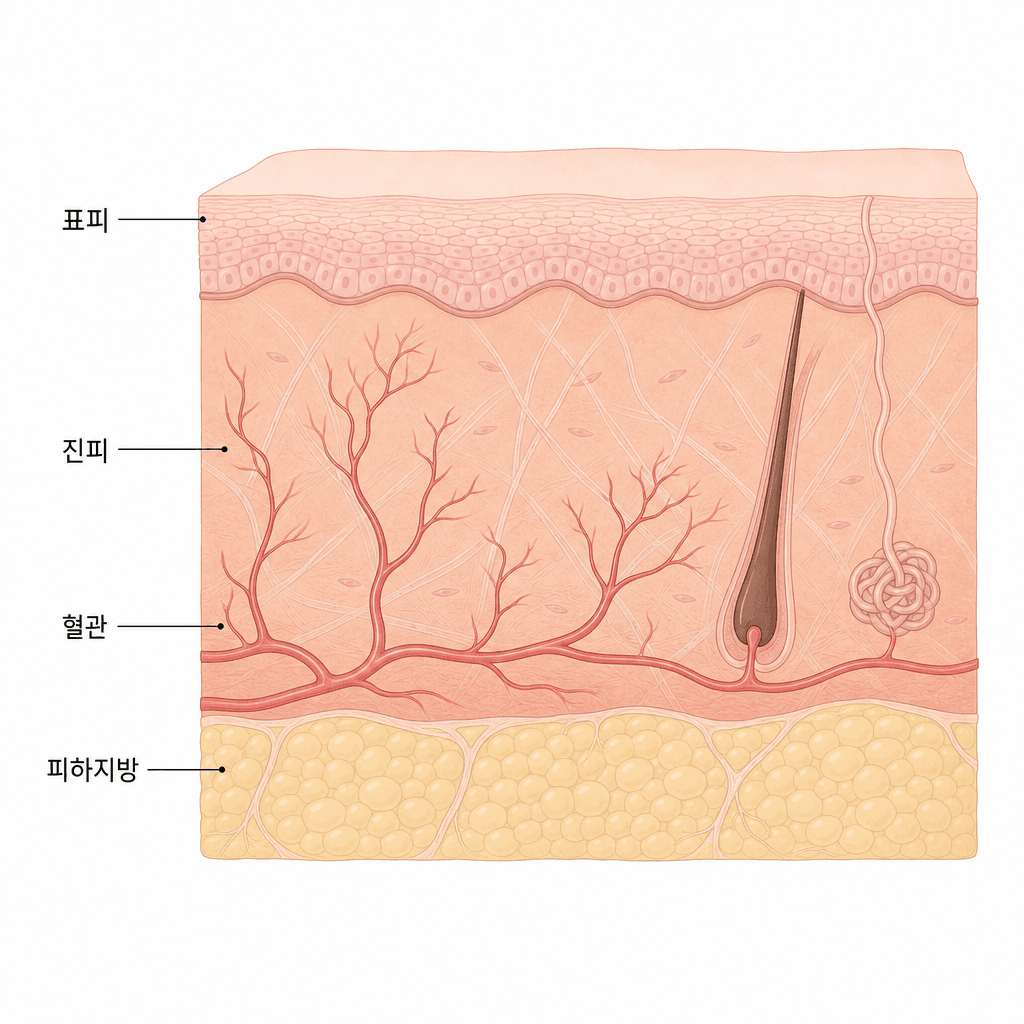
For most skin treatments, the first few days immediately following the procedure are a critical window where the skin begins its recovery. During this period, entering a high-heat environment like a sauna or jin jil bang causes blood flow* to increase rapidly. This can make swelling and bruising more prominent or trigger extra irritation.
Blood flow*: The volume and speed of blood flowing through your vessels. Exposure to heat dilates blood vessels and increases blood flow, which can directly affect swelling and bruising.
For example, for treatments that stimulate the dermis using microneedles, it is highly recommended to avoid irritating environments for about a week during the recovery phase. This means it is best to reduce strong heat stimulation while your skin is settling down. While you do not need to avoid the sauna forever, adjusting "when to go back" according to your specific treatment type ensures a much smoother recovery and more stable results.

When Is It Safe to Return to the Sauna? (By Treatment Type)
Because every treatment has a different healing timeline, the ideal time to return to the sauna varies. Here is a general guideline to help you plan.
Treatment Type | Recommended Wait | Why |
|---|---|---|
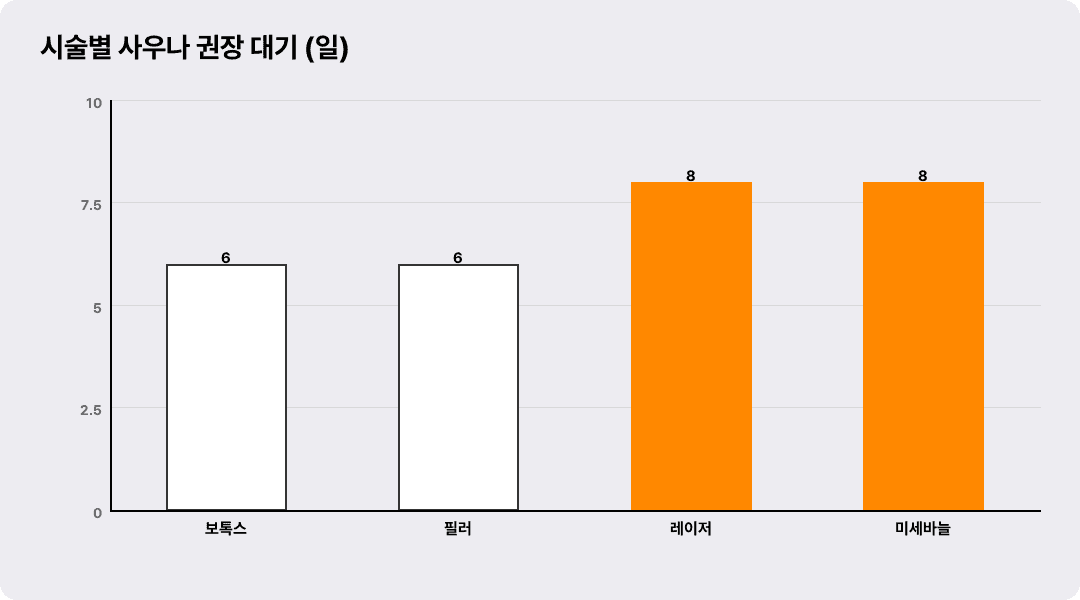
Botox | 5–7 days | Heat and blood flow can affect how the product settles. |
Filler | 5–7 days | May worsen swelling and bruising. |
Pigment & Toning Lasers | 7+ days | Risk of pigment stimulation and prolonged redness. |
RF Lifting | 5–7 days | Too much accumulated thermal stimulation can strain the skin. |
Microneedling / Microneedle RF | 7+ days | The dermis needs time to heal. |
Please note that the timeline above is a general standard. Depending on your treatment's intensity and your personal skin reaction, it may be wiser to allow a bit more time. Consulting with your treating doctor is always the safest way to determine your exact timeline. In the same vein, we recommend keeping your half-baths and hot baths lukewarm for the first few days.
How Heat Affects Your Recovery
Heat affects skin recovery primarily through blood circulation and swelling. Here is how it works under the surface:
Increased Blood Flow — Dilates blood vessels, which can worsen swelling and bruising in areas that are trying to heal.
Prolonged Swelling — Repeated exposure to heat can cause swelling that was otherwise subsiding to flare up again.
Pigment Stimulation — After laser therapy, the skin becomes remarkably sensitive to heat and UV rays.
Dryness & Sensitivity — Rapid temperature swings after leaving a hot sauna can irritate newly treated skin.
Regarding swelling, it is normal for minor swelling from procedural stimulation to subside within a few days. By simply keeping heat stimulation to a minimum during this initial period, you can make your recovery remarkably smooth. Once the skin is sufficiently healed, enjoying a sauna poses very little risk to your results.

Why Choose Beautystone Hapjeong?
At Beautystone Hapjeong, we focus on guideposts like "how and when to safely resume your routine," rather than simply telling you what you cannot do. Because the ideal timing to return to the sauna varies based on your treatment intensity and skin's reaction, we tailor our guidance to your personal habits and recovery speed. As a cozy clinic located just steps from Hapjeong Station, we pride ourselves on monitoring each guest's recovery journey and helping you target the perfect time to return to your daily life.

Key Tips for Post-Treatment Golden Days
While you are putting saunas on hold, you can continue with almost all of your regular daily activities. However, keeping things gentle and low-heat for just a few days will make your recovery much more stable. Here are the essentials:
Showers — Keep showers brief and lukewarm for the first few days, avoiding hot steam or direct hot water on the treated area.
Exercise — Start with light walks. Postpone heavy, sweat-inducing workouts for a few days to let your skin rest.
Sun Protection — This is absolutely vital, especially after laser or pigment treatments. Be diligent with your sunscreen.
Moisturization — Keep your routine simple with mild, irritation-free moisturizers.
If redness or swelling persists longer than expected or seems to worsen, please consult your medical team. Since this article is meant to provide general guidance, the safest path is always to discuss your specific procedure and recovery plan directly with your doctor.
Frequently Asked Questions
Q. Can I shower on the day of my treatment?
A. Yes, for most procedures, a short, lukewarm shower on the same day is perfectly fine. However, please postpone very hot showers or long, hot baths for a few days. Avoid hitting the treated area directly with high water pressure, and gently pat dry instead of rubbing the skin.
Q. What happens if I go to the sauna too early?
A. Exposing skin that has just begun to heal to high heat increases blood flow, which can aggravate swelling or bruising. If you just had laser or pigment treatments, it can trigger redness or post-inflammatory hyperpigmentation. While it rarely leads to severe complications, it can significantly delay your recovery, so we recommend waiting a few days.
Q. Why does the recommended waiting period differ per treatment?
A. This is because every treatment targeting mechanism is different. Treatments where product placement is key, treatments where managing swelling is crucial, and treatments that target pigment all require unique care. Rather than a one-size-fits-all rule, it is much more accurate to base your recovery on the specific procedure and intensity.
Q. Should I also avoid half-baths or foot baths like I do saunas?
A. In the same vein, we recommend avoiding hot half-baths for the first few days. However, mild foot baths using lukewarm water are generally safe since the heat source is far from the treated facial area. If you are unsure, it is always safest to consult with your provider based on your specific treatment.
Recommended Reading
Using Sheet Masks After a Treatment*: When to Start and Which Ingredients to Avoid
Alcohol and Caffeine Before a Treatment*: How Many Days Prior Should I Stop?
Duoderm and Medifoam Hydrocolloid Dressing Guide: How Often Should You Change Them?
Is More Always Better When It Comes to Treatment Dosage? "The Power of a Conservative Approach"


Hair Removal
레이저 제모 1회에도 남는 몫이 있어요 — 밀도를 모자이크로 보는 법

Tattoo removal
Why Extremity Tattoos Are Slower to Remove

Tattoo removal
Tattoo Removal Cost: Why Quotes Vary by Area

Tattoo removal
Unused Tattoo Removal Sessions: What Happens?

Lifting
Forehead Thread Lifting: How Far Can It Go?

skin
Skin Booster Prices: What to Check in a Quote