

Ice for the first 48 hours, warmth from day 3. How to fade a procedure bruise faster.
Published -
Updated -

Author
Wi Young-jin · Chief director
Seoul National University College of Medicine · Seoul National University Hospital Specialist
→
After filler, botulinum toxin or a laser session, it is often the bruise rather than the treatment that occupies the next few days. The colour looks darker every time you pass a mirror, and if you have something in the diary it is hard to guess when it will finally clear.
Short answer: a bruise is a normal consequence of the procedure, and how you spend the first few days makes a real difference to how quickly it goes. Cold at the start, warm a few days later is the whole shape of it. The trouble is that advice like "always use a warm compress on a bruise" circulates with the timing stripped out, so setting out what to do when is worth doing once.
This is general information from Beautystone, a skin clinic in Hapjeong, Seoul.
What you'll learn
Why bruises form after a procedure and why the colour shifts
What to do at each stage to clear one faster
Which day to switch from cold to warm compresses
How to tell an ordinary bruise from a reason to call
Why bruises form, and why the colour shifts
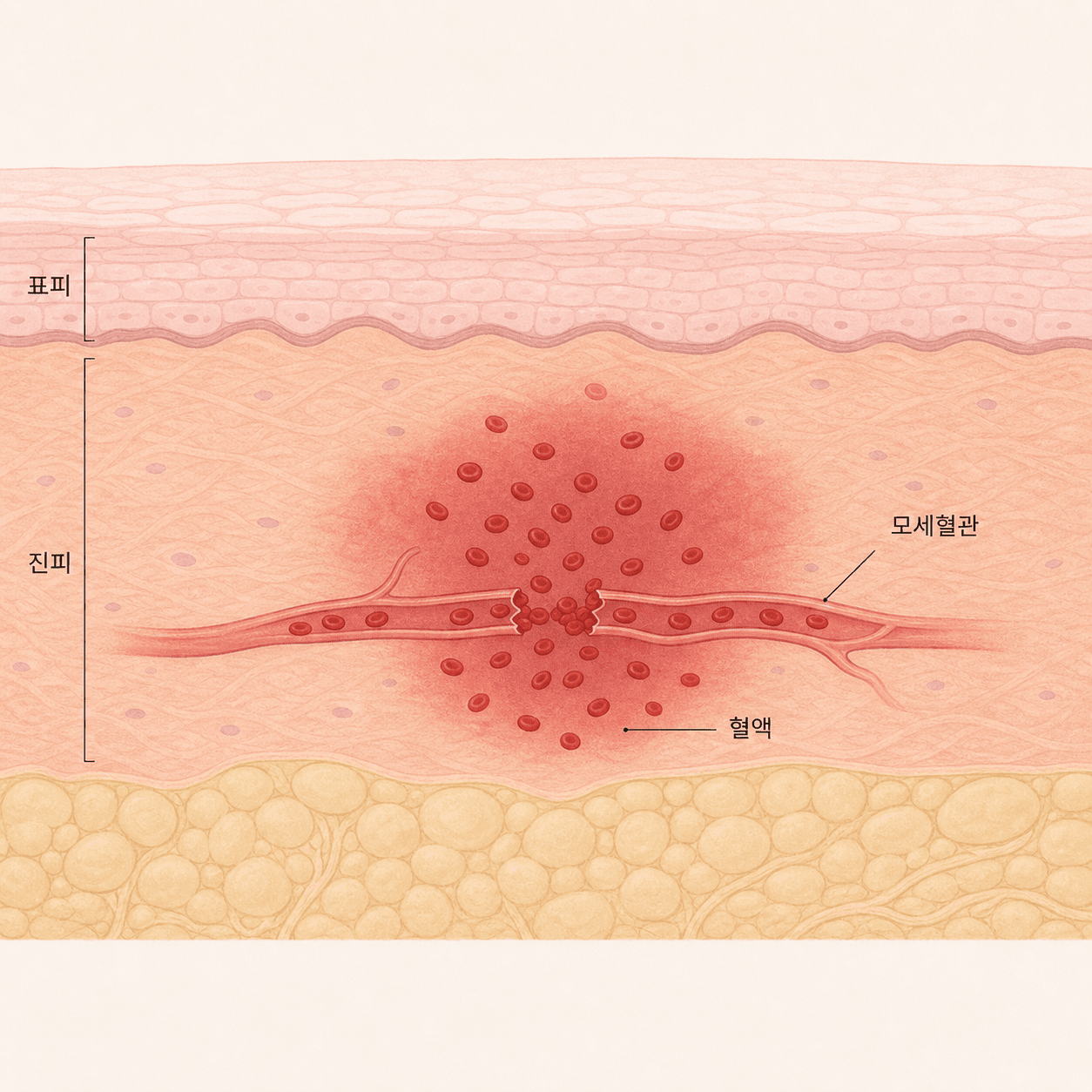
The medical name for a bruise is ecchymosis*. When a needle, a laser or radiofrequency stimulus catches one of the fine capillaries running under the skin, blood seeps out of it into the surrounding tissue and shows through from the outside. The surface itself is intact; the blood has spread underneath, and the body reabsorbs it over time until it disappears.
Ecchymosis*: the bruise that forms when small vessels under the skin break and blood leaks into the surrounding tissue. The skin surface is not broken.
It starts reddish, deepens to blue or purple within a day or two, then lightens to yellow over several days. That sequence is hemoglobin* from the escaped blood breaking down in stages, so a bruise that is changing colour is actually a bruise that is healing.
Hemoglobin*: the red pigment protein inside red blood cells that carries oxygen. Each stage of its breakdown has a different colour, which is what you see as the bruise changes.
An explanation of how small vessels break, blood pools under the skin as a bluish bruise, and the colour lightens to yellow over time draws the arc more clearly. Areas where the skin is thin and vessels sit close to the surface, such as around the eyes and mouth, bruise a little more readily from the same procedure.

What to do at each stage to clear it faster
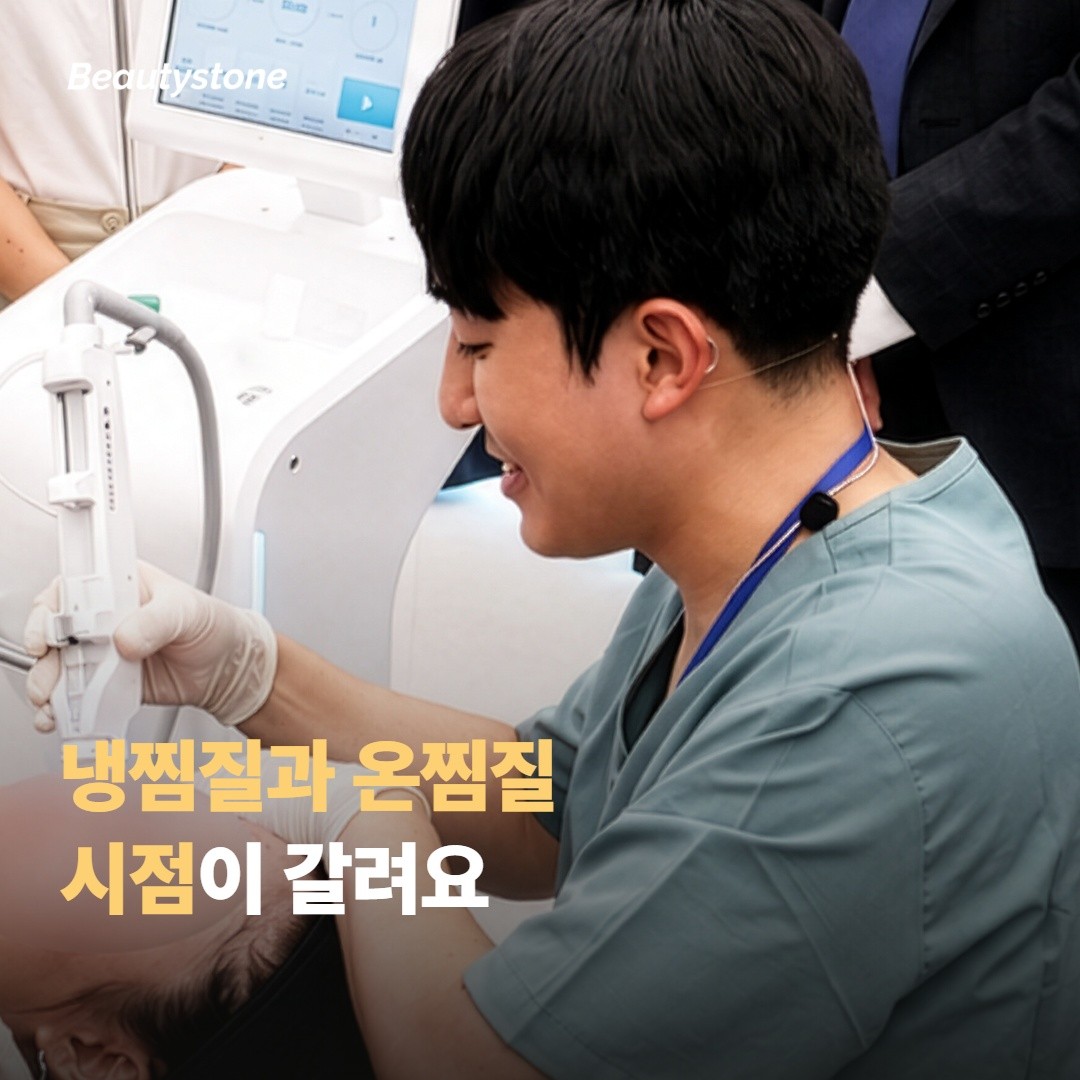
What helps changes as the days pass. The broad rule is cold for the first 48 hours, warm after that. Early on you want the vessels constricted so the bruise does not spread further; a few days later you want blood flow helping to disperse what has already pooled. Stage by stage, here is the plan.
Stage | Worth doing | Worth avoiding |
|---|---|---|
Straight after, and that day | A light cold compress wrapped in thin cloth | Rubbing, pressing, hot showers |
Days 1 to 2 | Keep the cold compress; rest with your head raised | Alcohol, hard exercise, saunas |
Days 3 to 5 | Switch to a warm compress | Massaging the bruise firmly |
Days 5 to 7 | Keep warmth going; ease back into light activity | Rubbing heavy makeup on to cover it |
Alcohol, hard exercise and saunas all raise blood flow quickly enough to make a bruise worse, so they are best set aside for the first few days. Anti-inflammatory painkillers such as aspirin and ibuprofen can also slow clotting and darken a bruise, so if you need something for discomfort, acetaminophen* is generally the safer pick. If you take medication routinely, though, do not stop it on your own; raise it with the clinician who treated you first.
Acetaminophen*: a pain and fever medicine. Because it does little to thin the blood, it is often chosen for discomfort after a procedure.
Some people also find products such as vitamin K cream or arnica ointment helpful for bruising, though whether either suits your treated area is worth checking with your provider before you use it.
How fast a bruise fades, day by day
Most procedure bruises fade on their own somewhere between a week and ten days, with no particular treatment. Once the first few days of deepening colour are behind you, the rest tends to clear comparatively quickly, so there is no need to be in a hurry about it. Plotted out by day, the fading looks roughly like this.
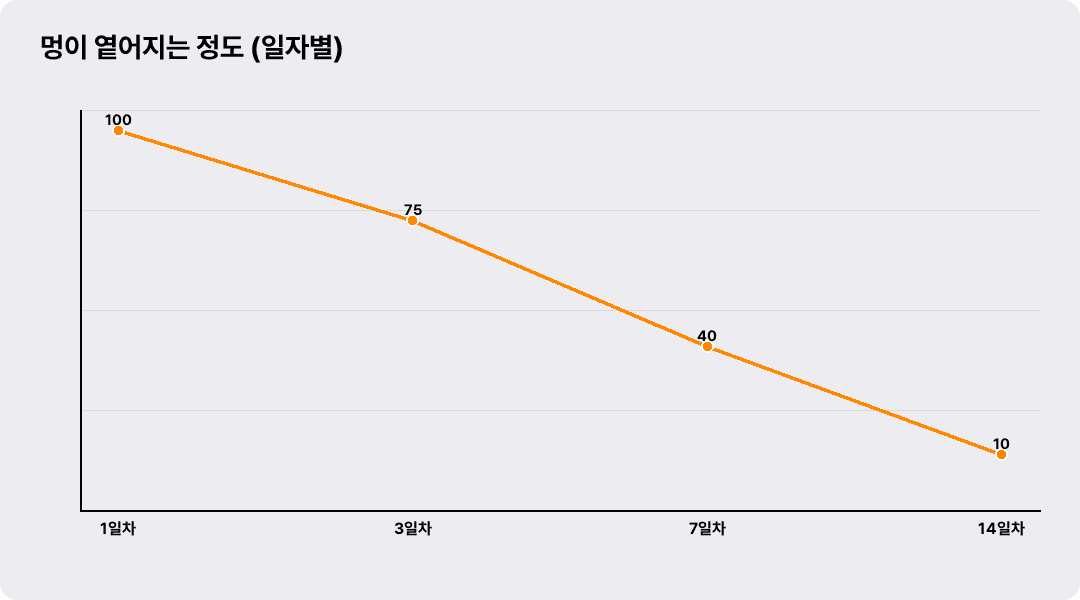
The pace differs by person and by area. Thin skin around the eyes or the vessel-rich lip area can hold on a little longer, and a bruise drifting slightly downwards with gravity is part of it being reabsorbed rather than a problem. Individual results and recovery vary. If you are covering it with makeup, tap the product on lightly rather than rubbing it in.
Why where you have it done still matters
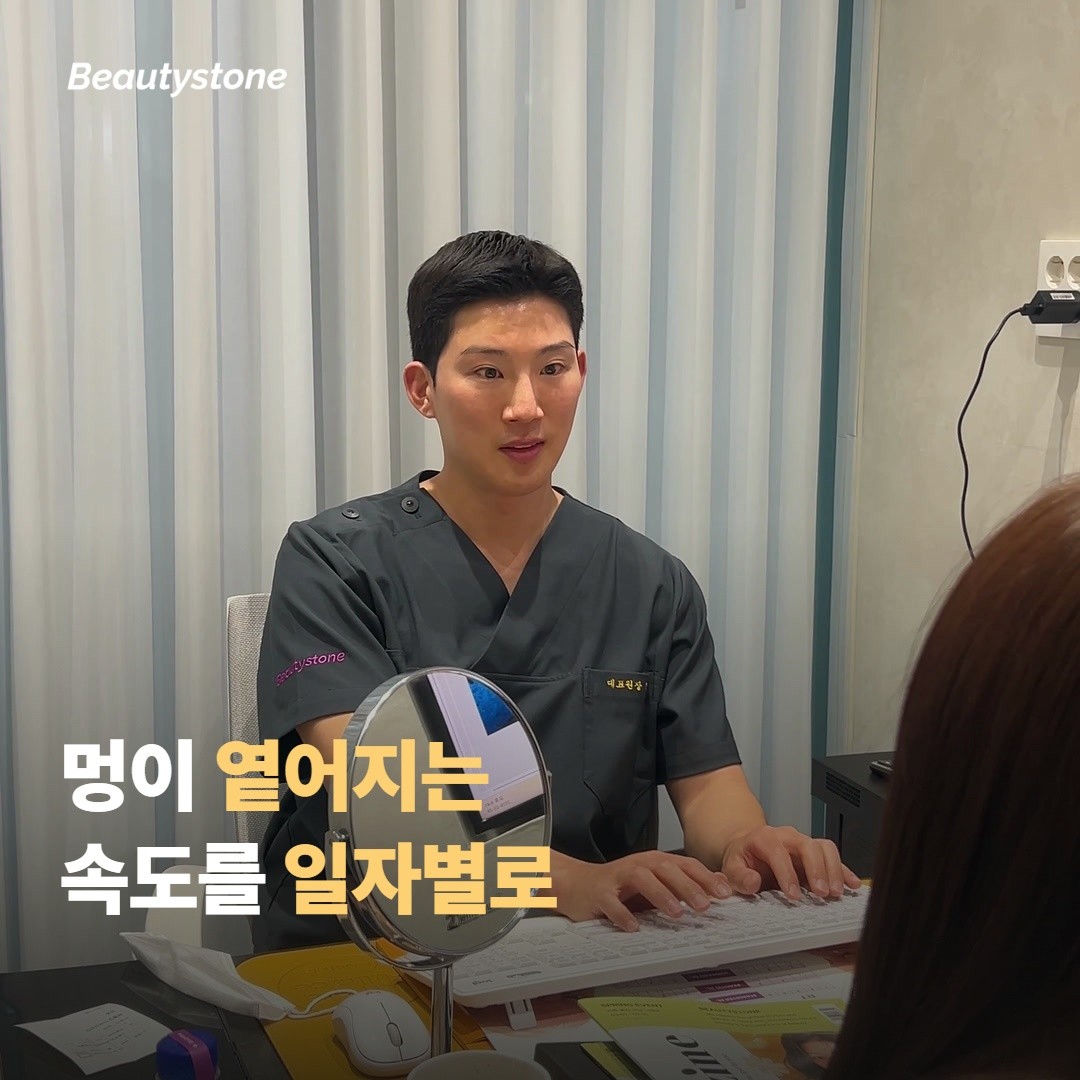
At Beautystone we tend to ask whether you bruise easily and what you take regularly before recommending anything. The same procedure carries a different bruising risk depending on where vessels sit and how thick the skin is, and flagging that beforehand takes the surprise out of it. We are a small clinic within walking distance of Hapjeong Station in Seoul, so there is time to walk each person through which bruises are the expected reaction and which signals mean coming back. If you were treated while travelling, ask how the clinic handles questions after you fly home and keep a provider near you in mind for anything that needs an in-person look.
Normal bruising versus signs that need a call
Most of what shows up in the week after a procedure settles by itself. The following sit comfortably in the ordinary range.
A bruise turning blue and then yellow — changing colour is a sign of repair
Mild swelling or stinging at the treated area — usually settles within a day or two
The bruise drifting slightly downwards — that is the blood being reabsorbed
These, on the other hand, are worth raising with the clinician who treated you.
A bruise that keeps growing or firms into a lump — this may be a hematoma*
Pain that does not settle and instead worsens over time
A hot, burning bruise with redness spreading outwards — this can signal infection, so contact your provider right away or seek urgent care
A bruise that has barely faded after two weeks
Hematoma*: a state in which escaped blood pools in one place and can be felt as a lump. A large one is slower to reabsorb and may need separate treatment.
Bruising is mostly something time resolves, but the arc differs a little depending on the area treated and your own situation. This is general information, so whether your bruise sits in the normal range, and what to do about it, is safest settled with the clinician who examined you.

Frequently asked questions
Q. Can I put a warm compress on a bruise right after the procedure?
A. For the first 48 hours, cold beats warm. Early on the priority is constricting the vessels so the bruise does not spread further. A warm compress helps disperse blood that has already pooled, which makes it more useful from days 3 to 5. Wrap it in thin cloth and hold it gently against the skin.
Q. Does drinking alcohol make a bruise worse?
A. Alcohol raises blood flow quickly and can slow clotting, so a bruise may darken or last longer. Giving it a few days off after a procedure helps recovery. Hard exercise and saunas are worth avoiding early on for the same reason.
Q. Why do I bruise so easily around the eyes?
A. The skin around the eyes is thin and the vessels sit close to the surface, so the same procedure shows more there. Some people also bruise easily by constitution, so telling your provider beforehand helps them adjust technique or intensity. Even when a bruise appears, most fade within about a week.
Q. Do vitamin K cream or arnica actually help?
A. Some people find them helpful, but the effect varies between individuals. Both are commonly used for bruising; whether either suits your treated area and skin is worth checking with the clinician who treated you. More than anything, well-timed cold and warm compresses plus enough rest are the foundation.
Content


skin
Why Does Fractional CO2 Take Longer to Heal?

Contouring & Volume
How Many cc Does Forehead Filler Need?

skin
Why Is My Skin Oily but Tight in the Fall?

Hair Removal
Underarm Laser Hair Removal Cost: Do the Math

Tattoo removal
Laser Before a Cover-Up: How Many Sessions?

skin
큐어젯 다운타임, 다음 날 출근과 화장은 언제부터 될까요?