

Lying flat puts your face level with your heart, so fluid lingers there instead of draining. What a propped pillow changes, and when swelling needs a look.
Published -
Updated -

Author
Wi Young-jin · Chief director
Seoul National University College of Medicine · Seoul National University Hospital Specialist
→
On the night of a skin or injectable procedure, a lot of people feel like their face puffs up the moment they lie down, and end up tossing and turning. "Is it okay to sleep like this?" "If I sleep on my side, won't one side swell more?" The worries pile up fast.
The short answer: it's completely normal for swelling to look more noticeable when you're lying down, and sleeping with your head slightly elevated can help cut down on recovery swelling. That said, position alone won't fix everything, so let's walk through why you swell more lying down, which positions and habits actually help, and when swelling is worth a second look.
This article is content put together from the treatment information of Hapjeong Beautystone.
What you'll learn
Why swelling feels worse when you lie down
Whether sleeping with your head elevated helps with swelling
Sleeping positions and habits that support recovery
The warning signs to watch for when swelling lingers
Why swelling feels worse when you lie down after a procedure
Swelling, or edema*, happens when fluid collects in the spaces between tissues. After a procedure, fluid temporarily pools at the treated area as part of healing. When you're standing upright, gravity helps drain that fluid downward, but once you lie down your head and face sit at about the same level as your heart, so fluid lingers around your face instead. That's why your face tends to look most puffy when you first wake up.
* edema: fluid collecting between tissues and causing puffiness. It shows up temporarily as part of healing after a procedure and usually settles within a few days.
This isn't a sign that something's gone wrong with your recovery, just fluid that has shifted position for a while. So if you adjust your height so less fluid settles around your face, you can ease morning swelling to some degree. In fact, a systematic review of ways to reduce swelling and bruising after rhinoplasty noted that multiple studies agree elevating the head after a procedure helps reduce both swelling and bruising.
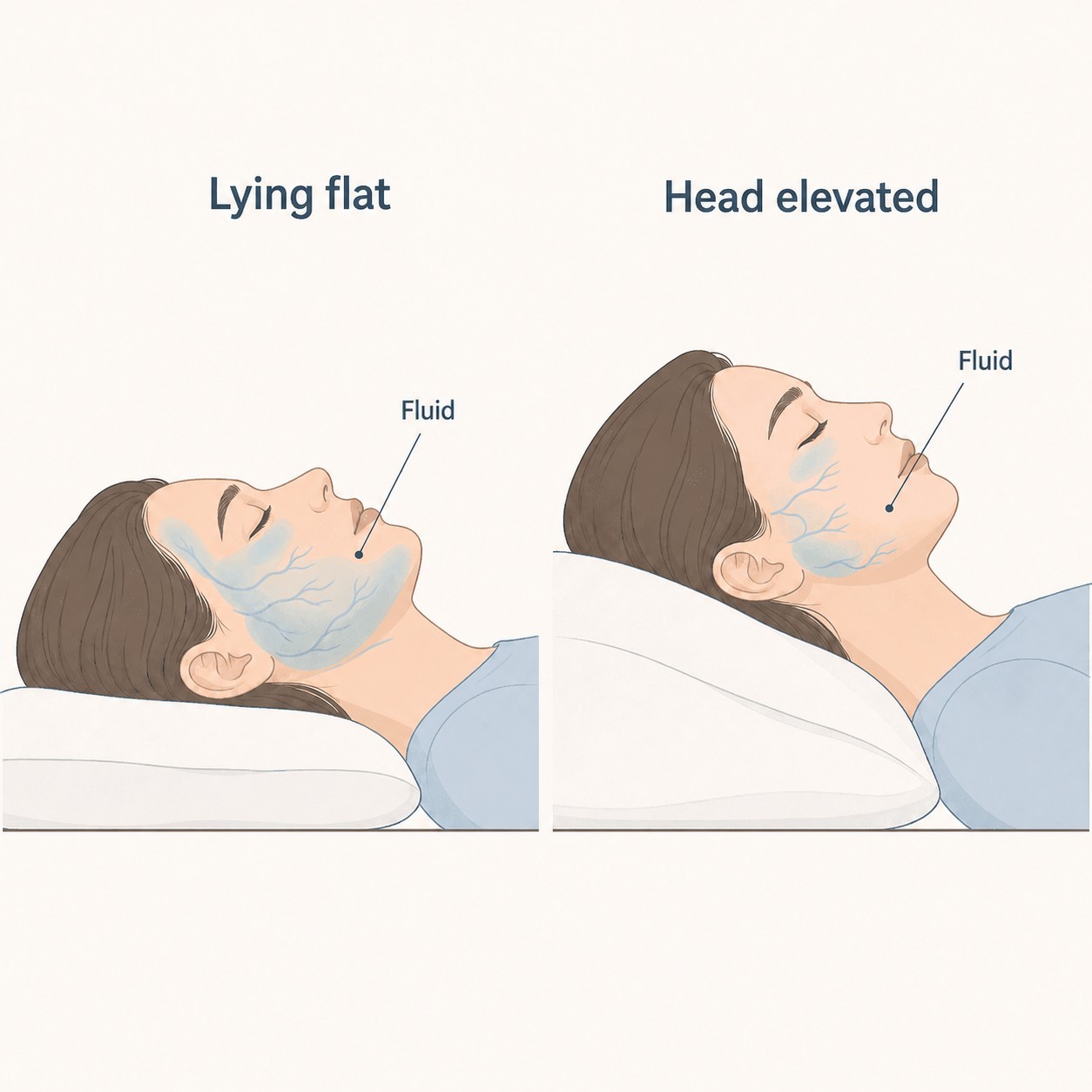

Does sleeping with your head elevated help with swelling?
The simplest move that actually helps is sleeping with your head slightly raised. Propping up an extra pillow or angling your upper body up a little keeps fluid from pooling toward your face, so morning swelling is noticeably milder.
In fact, medical guidance on recovery after a deep plane facelift also recommends sleeping with your head elevated for about the first week. In other words, raising the head is a standard part of managing recovery swelling across facial procedures in general. Just don't prop yourself up so high that your neck bends sharply, since that's uncomfortable, raise yourself at an angle where your neck and back stay in a natural line. Recommended positions can vary by area, so following the guidance from where you had your procedure adds peace of mind.
Sleeping positions and habits that support recovery
Beyond position, pairing in a few habits makes swelling much easier to manage. Here's how it breaks down by position.
Position / habit | Recommended? | Why |
|---|---|---|
Sleeping on your back with head elevated | Recommended | Less fluid pools around your face |
Sleeping pressed against the treated area | Avoid | Pressure increases swelling and irritation |
Excess fluids or salt before bed | Avoid | Fluid retention adds to swelling |
Heat exposure right after the procedure | Avoid | More blood flow makes swelling worse |
As the table shows, it helps to avoid pressing directly on the treated area and to cut back on salty food and excess fluids before bed. For the first day or two, gently applying a cold compress wrapped in a towel for short stretches can help calm swelling, and after that you can ease back into your usual routine without overdoing it.
Why Hapjeong Beautystone?
At Hapjeong Beautystone, we tend to walk you through the recovery flow from that first night through the next few days before we even get into the procedure itself. Even with the same procedure, recovery looks different depending on the area, your constitution, and whether you tend to swell easily, so we lay out ahead of time which kinds of swelling are common reactions and where the line is for taking another look. As a small clinic within walking distance of Hapjeong Station, we can watch each person's recovery pace and decide the next steps together.
Warning signs to watch for when swelling lingers
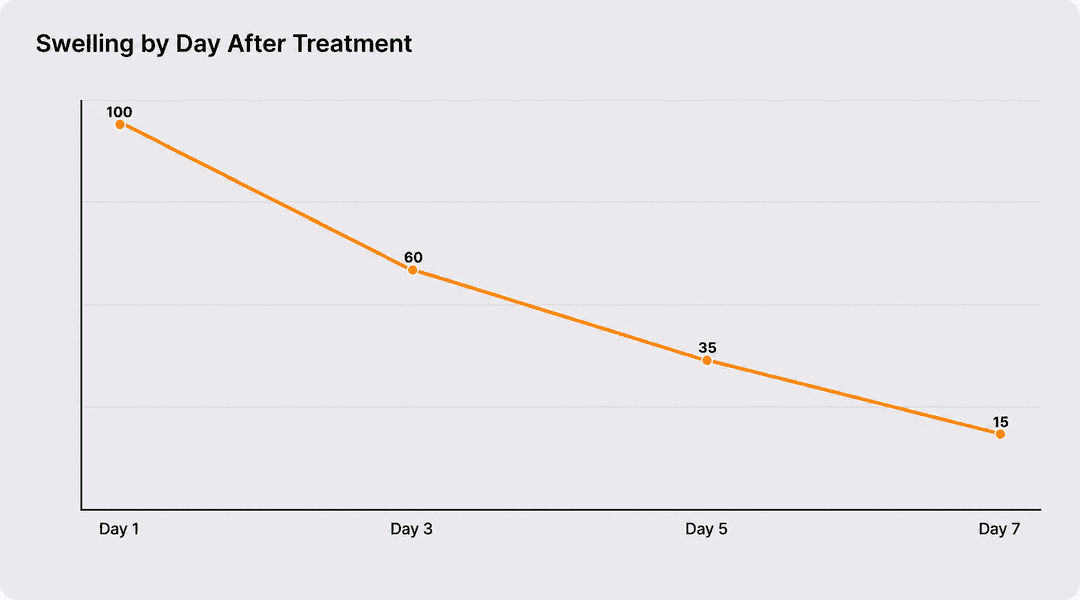
Most swelling settles within a few days. Here's how recovery swelling typically eases over time.
One side suddenly swells severely, along with pain
Swelling comes with warmth, redness, or a high fever — a sign that points to possible infection
It keeps getting worse over time instead of settling down
The swelling is barely changed even after two weeks
If you notice signs like these, it's safest to check in with the medical team who did your procedure. How fast swelling goes down varies from person to person depending on the type of procedure, the area, and your constitution, so rather than comparing yourself to others, it's better to gauge it against your own recovery flow. This article is general information, so for decisions about your own recovery and how to respond, it's safest to consult the medical team who treated you directly.

Frequently asked questions
Q. Is it bad to sleep on my side?
A. As long as you're not pressing directly on the treated area, sleeping on your side is often fine. But if your procedure was on one side, it's best to avoid sleeping pressed against that side. When you can, sleeping on your back with your head slightly raised does more to reduce facial swelling. Check with where you had your procedure for the recommended position for your specific area.
Q. How high should I prop my pillow?
A. You don't need to raise it so high that your neck bends. Propping up an extra pillow or angling your upper body slightly so your head sits a bit higher than your heart is plenty. Too high and your neck and shoulders get uncomfortable, which can actually disrupt your sleep, so adjust it so your neck and back stay in a natural line.
Q. Does a cold compress help with swelling?
A. For the first day or two after a procedure, a gentle cold compress can help calm swelling. Just don't put ice directly on your skin, wrap it in a towel and apply it briefly. It's best to avoid pressing down hard. Some procedures aren't suited to cold compresses, so check the guidance from where you had your procedure first.
Q. How many days does swelling usually take to go down?
A. It depends on the type of procedure and the area, but mild swelling usually drops noticeably within a few days. Injectable procedures tend to clear faster, while procedures covering a larger area can take a bit longer. If it keeps shrinking over time, that's within the usual range. If it's unchanged after two weeks or keeps getting worse, check in with your medical team.


skin
Fraxel CO2: Why Prices Vary & What to Check

skin
How to Choose an Acne Dermatologist: 5 Signs

Contouring & Volume
Nasolabial Folds: When Lifting Isn't Enough

skin
Sculptra Cost: Why Sessions and Vials Matter

Lifting
After Shurink Universe: Wash, Work Out & Drink

skin
Sofwave Before a Wedding: Timing Guide