

Radiesse adds volume with a gel on day one and prompts collagen over months. A Seoul doctor explains what it's made of and what to expect on a short trip.
Published
Updated

Author
Wi Young-jin · Chief director
Seoul National University College of Medicine · Seoul National University Hospital Specialist
→
Radiesse does both: the gel it's mixed in adds volume on the day, and its calcium-based particles prompt your skin to build its own collagen over the following months. So it's fair to call it a collagen-stimulating filler, but what you'll see in the mirror before your flight is mostly the gel, and the collagen part is something you'll judge at home.
Visitors often ask me some version of this after reading that Radiesse is a “collagen booster.” They want to know whether they're paying for something their skin will keep building on, or for volume that simply wears off. It's a fair question, because the answer changes how you plan the trip and how you judge the result afterward. In this article, we'll cover what Radiesse is made of, why its volume and its collagen work on two different timelines, when it's used as a skin booster, the risks that matter most when you can't easily come back, and how to fit it into a stay in Seoul.
What Is Radiesse Made Of?
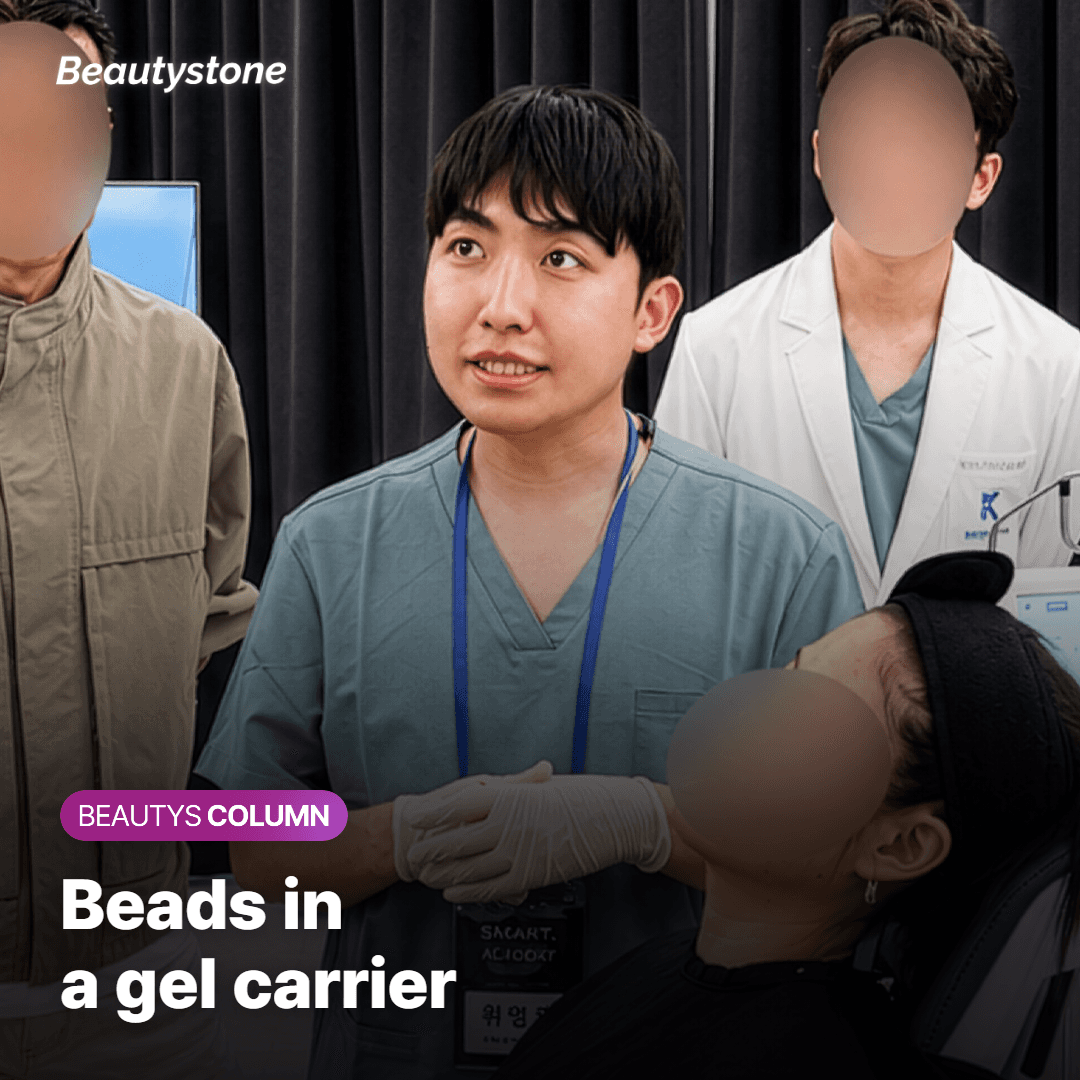
Radiesse is two things in one syringe: tiny calcium-based beads and the gel that carries them.
A narrative review describes Radiesse as “composed of calcium hydroxylapatite microspheres suspended in a carboxymethylcellulose gel” (Aesthetic Surgery Journal, PMC).
In plain words, calcium hydroxylapatite (CaHA) is a mineral similar to the one in your bones and teeth. Carboxymethylcellulose (CMC) is a water-soluble gel made from cellulose, the material that gives plants their structure.
The same review states that the CMC gel “makes up 70% w/v” of the product (same review).
It describes the CaHA as “manufactured as homogeneous microspheres (20-45 µm in diameter)” (same review).
So most of what goes in on the day is gel, and the part that does the long-term work is the bead. Keep that split in mind, because it explains almost everything about what you'll see and when.
It also isn't a hyaluronic acid (HA) filler: HA can usually be broken down with an enzyme called hyaluronidase, but Radiesse can't, as covered in our Radiesse guide.
Does Radiesse Stimulate Collagen or Mainly Add Volume?
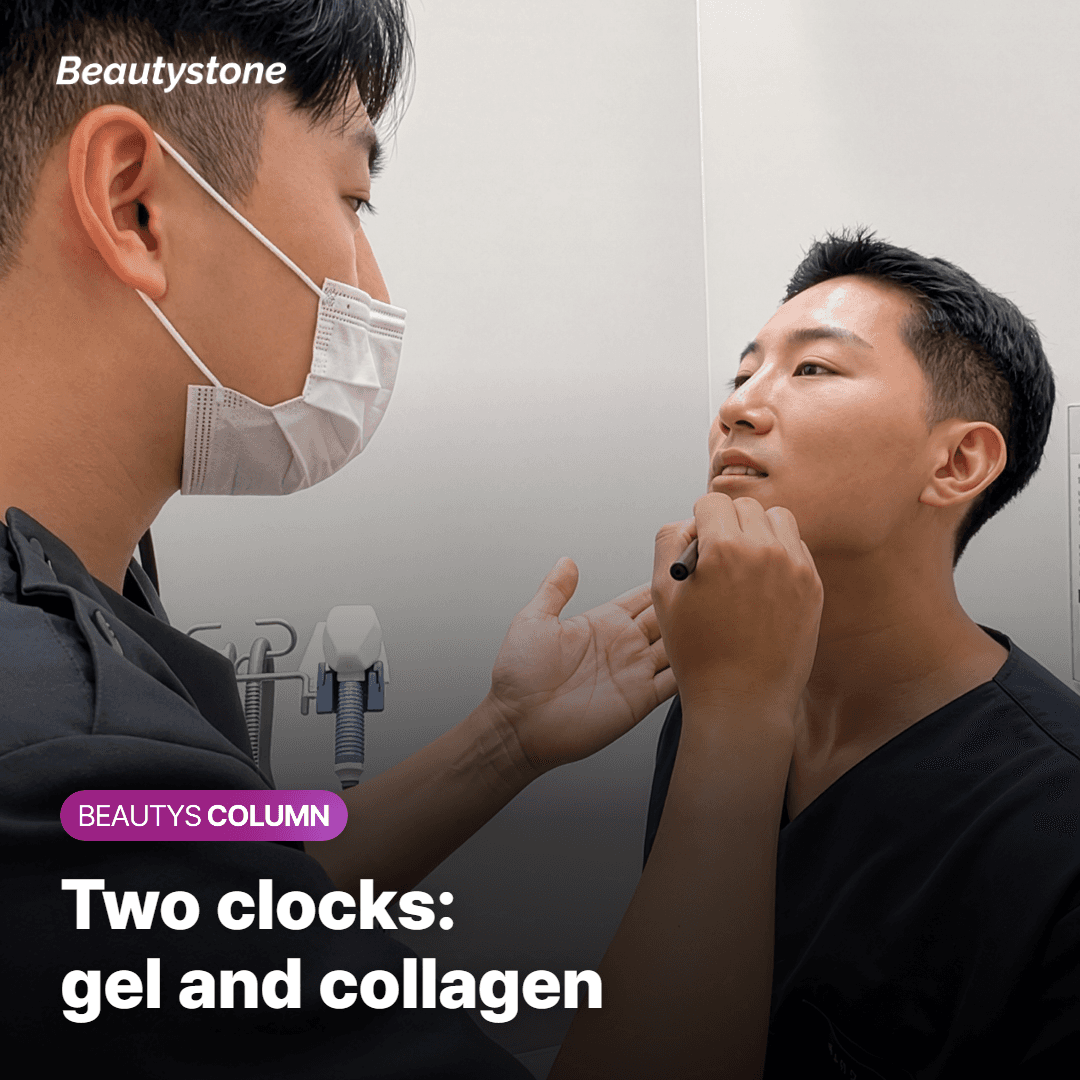
It does both, but on two different clocks, and that's the part most product descriptions skip.
An expert consensus paper says Radiesse “provides both volume replacement and collagen biostimulation as a primary mechanism of action” (Plastic and Reconstructive Surgery Global Open, PMC).
The same paper explains that the initial lift “is afforded by the presence of the carrier carboxymethylcellulose gel” and that “after approximately 9–12 months, the CaHA particles are degraded into calcium and phosphate” (same consensus).
For Radiesse used undiluted or slightly diluted, it describes “immediate correction that is gradually followed by new tissue formation through neocollagenesis” (same consensus).
Neocollagenesis simply means your body laying down new collagen. So the fast clock is the gel filling space today, and the slow clock is your own tissue responding to the beads over the months that follow.
How slow is slow? Summarizing a study of diluted Radiesse in the neck and upper chest, the consensus reports more type 1 collagen and elastin “7 months after injection” (same consensus).
A single-patient case report followed cheek injections with MRI and found that 2.5 years later “no CaHA was visible but tissue volume remained increased, indicating a collagen-stimulating effect” (Clinical, Cosmetic and Investigational Dermatology, PMC).
That's one person, so it isn't a forecast for your face. What it does show is what “collagen-stimulating” means in practice: the product itself is eventually broken down, while some of the tissue it prompted can remain.
Here's how I'd read your situation. If you're in Seoul for about a week and what bothers you is a flat cheek or a soft jawline, Radiesse placed for structure gives a change you can see on the day, and the collagen part is a slower addition you'll notice at home. If what you really want is firmer skin with no new volume, you'd be paying only for the slow clock, and you won't be able to judge it before you fly. In that case, I'd talk through whether it's worth starting on this trip at all.
There's a third option I often put on the table. If the volume you want is in a spot where you might change your mind, an HA filler may suit that area better, simply because it can usually be dissolved. Plenty of faces end up with a mix rather than one product. Individual results vary with age, skin thickness, the amount used and where it's placed.
Can Radiesse Work as a Skin Booster?
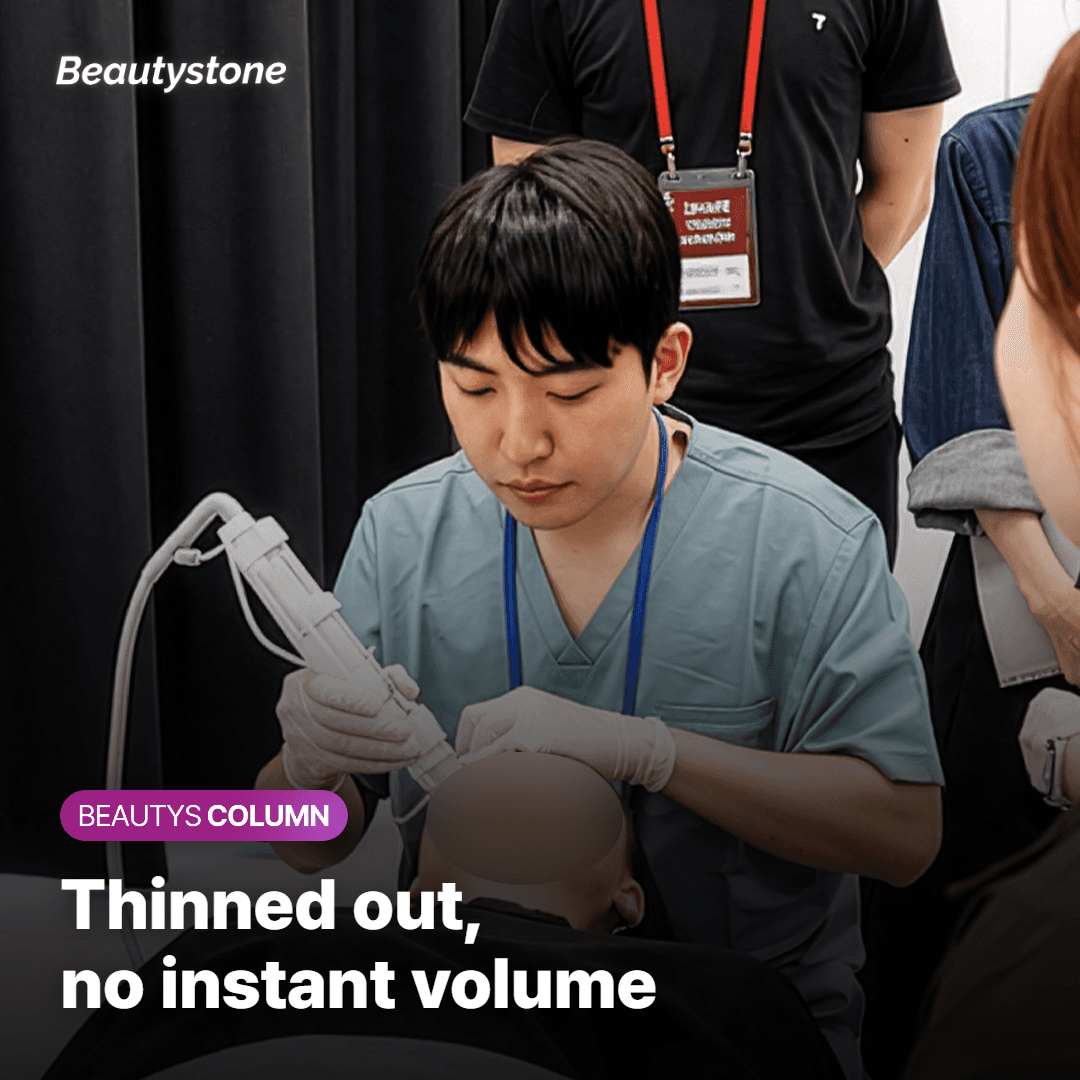
Yes, when it's thinned out and spread just under the skin, but then you're buying the collagen part only, not visible volume.
The consensus paper describes the hyperdiluted form as “generating only long-term tissue remodeling by the CaHA microspheres and allowing its injection more superficially for dermal rejuvenation and the treatment of larger areas” (same consensus).
That's the version people usually mean when they search for a Radiesse skin booster. It's aimed at skin quality, such as firmness and texture over a wider area like the neck, rather than at changing a contour.
In the neck and upper chest study mentioned above, the consensus reports improved laxity “after 2 sessions with a 4-month interval” (same consensus).
That's one study in one area, so it doesn't set a session count for your face. It does mean the skin-quality version deserves a plan, not a one-off decision in the chair: ask the doctor how many sessions they'd expect for your goal and what you should be able to judge after the first.
Where I'm more careful: delicate areas with a lot of movement, such as the lips or the skin around the eyes. Radiesse isn't my first choice there, and I usually consider other fillers first.
Side Effects and Risks: Lumps and Blood Vessels
Most side effects are short-lived; the ones worth planning around are lumps and, rarely, a blocked blood vessel.
Swelling, tenderness and bruising where the needle went in are the usual short-term effects. If they get worse instead of settling, contact the clinic that treated you.
A review on CaHA lumps notes that noninflammatory nodules are “usually evident within several weeks following treatment” (Aesthetic Surgery Journal, PMC).
The same review lists “improper needle placement, overfilling, or superficial injection” as parts of the poor injection technique it considers a significant contributor to these lumps (same review).
Its stepwise approach begins with no intervention, “relying on natural degradation for asymptomatic nodules,” and moves on to massage and dispersion before anything more invasive (same review).
Each of those steps takes time, which is harder to arrange from another country. That's why I'd rather spend the time on depth and amount before injecting than on fixes afterward.
The rare risk is the serious one. An expert consensus on complications states that vascular compromise and occlusion “may occur with any dermal filler following inadvertent intra-arterial injection” (Journal of Cosmetic Dermatology, PMC).
Any change in vision, or severe pain with skin that turns pale or dusky, is an emergency: tell the injector at once or go to an emergency department. In the days afterward, fever, redness that keeps spreading, or pus also need prompt medical care.

Within Your Travel Itinerary: Flight, One Visit, Back Home
Flying: Apart from a day when sedation (sleep anesthesia) is used, there's no reason to postpone Radiesse because of your flight home. Sightseeing and photos are a separate question. How much swelling or bruising shows depends on the area and the amount, so ask the doctor at the consultation rather than assuming.
One visit: A single visit can be worthwhile. Used for structure, Radiesse changes shape on the same day, while the collagen part moves the skin gradually back toward how it used to look rather than changing it overnight.
Your baseline photos: Before the injection, take front and side photos in daylight, by a window, without makeup. The gel explains what you see this week. The comparison that tells you anything about collagen happens at home, months later, in the same light and at the same angle. Without a baseline, the slow clock is almost impossible to judge.
Back home: If something looks wrong after you've flown home, you can message the clinic on WhatsApp with photos of the area. If the signs are serious, such as fever, pus, spreading redness or any change in vision, see a doctor where you are first.

The Bottom Line: Two Clocks, One Plan
Radiesse is CaHA beads in a CMC gel, not hyaluronic acid.
The gel gives the volume you see on the day; the beads prompt collagen over months.
Thinned out, it works as a skin booster, which means no visible change before your flight.
It can't be dissolved, so the plan matters more than with HA filler.
Like any procedure, Radiesse comes with trade-offs. Ultimately, the choice depends on your face, your goals, and how long you're in Seoul.
Whichever clinic you're weighing, look for two things in the plan before you agree to it: what the doctor expects you to see this week from the gel, and when, in months rather than days, you should compare your baseline photos for the collagen part. If the plan only promises “collagen,” ask which clock it's talking about.
If you're planning a trip, you can message Beautystone in Hapjeong, one stop from Hongdae Station on Line 2, on WhatsApp before you book. A first message can be as simple as: “I'm in Seoul from [date] to [date] and I'm considering Radiesse for [area]. I've attached front and side photos in daylight. Which part of the result would I see before my flight?”




Contouring & Volume
Hip Dip Filler Before and After: 4 Checks

Body
Potenza Treatment Interval: Why 4 Weeks?

Lifting
Ultherapy Before and After: Why Wait 90 Days?

Contouring & Volume
Belotero Revive Cost: 2cc Price vs. 3 Sessions

skin
Lip Hyperpigmentation Laser: Does It Work?

Contouring & Volume
Men's Forehead Filler: Hollow or Just Lines?