

Why retinol irritates at first, and how to ease in by adjusting strength and frequency.
Published -
Updated -

Author
Wi Young-jin · Chief director
Seoul National University College of Medicine · Seoul National University Hospital Specialist
→
When starting retinol for the first time, many people stop using it after just a few days because of stinging or peeling skin, wondering, "Does this not suit me?" It is easy to hesitate to continue using it when you are welcomed with irritation instead of the great results you expected.
In short, initial retinol irritation is a very common reaction that occurs during the skin’s adaptation process. You can easily start by introducing it slowly, gradually increasing the concentration and frequency. Rather than applying a high concentration every day from the beginning, the key is to start with a low concentration at spaced intervals and increase it as your skin gets used to it. Understanding why irritation occurs and tips on how to reduce it will help you stick with it without giving up halfway.
This content is a helpful summary of treatment information from Beautystone Hapjeong.
In This Article
Why retinol irritation happens
Tips to minimize irritation when using it for the first time
Warning signs that mean you should visit a dermatologist
Benefits and tips for long-term, consistent use
Why Does Retinol Irritation Occur?
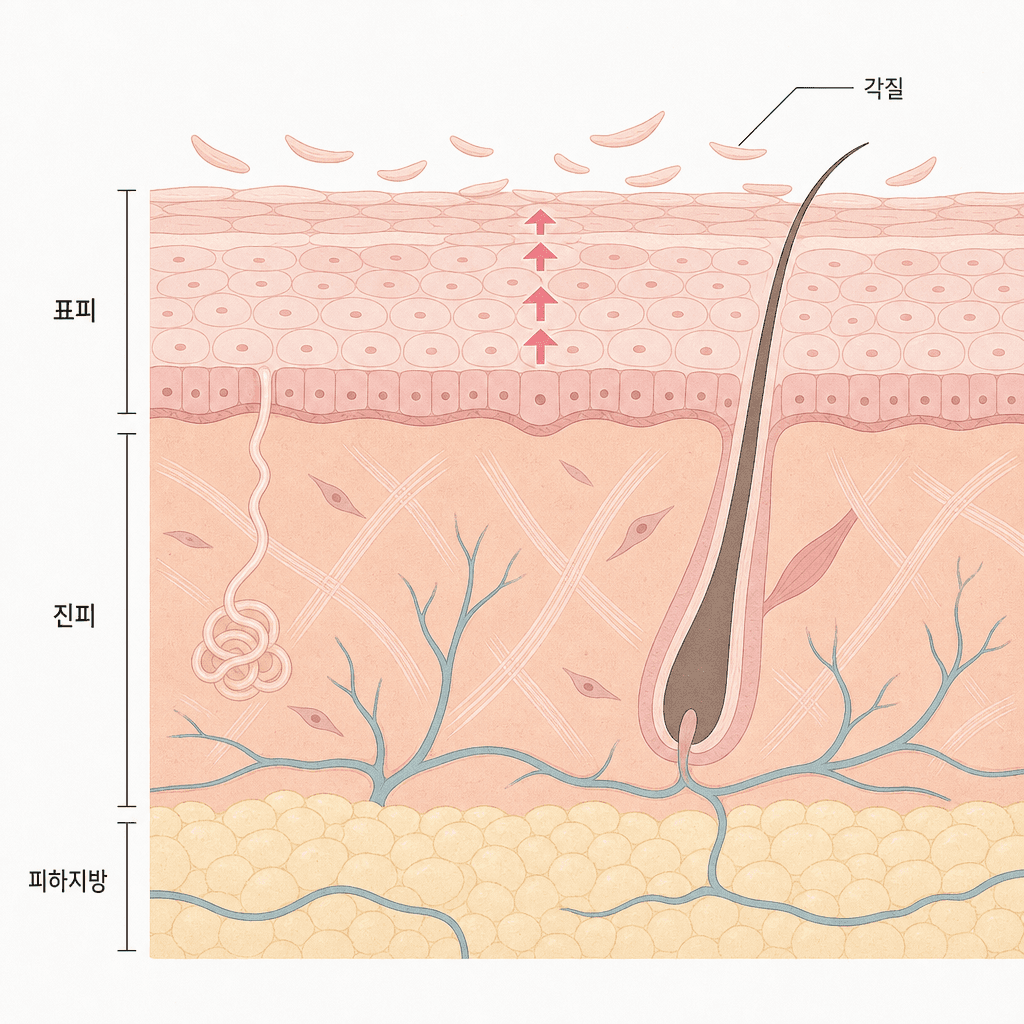
Retinol is a derivative of the retinoid* family, which works by accelerating cell turnover deep within the skin. As old, dead skin cells shed faster than usual and fresh new skin surfaces, you may experience temporary stinging, redness, or peeling. This is commonly referred to as the adaptation period, and it usually subsides once your skin adjusts.
Retinoid*: A class of chemical compounds derived from Vitamin A. Retinol belongs to this family, and it is used to improve skin texture and tone by increasing cell turnover.
The fact that these initial reactions are common is well-documented. According to dermatological data showing that topical retinoid commonly causes irritation such as stinging, dryness, peeling, and redness during the early stages of use, but can be alleviated by lowering the concentration and reducing the frequency, while noting a temporary increase in UV sensitivity, it becomes even clearer why a slow start is essential. Therefore, rather than giving up immediately at the first sign of irritation, it is highly recommended to adjust the frequency and concentration to continue the journey.
Tips to Minimize Irritation for Beginners
The level of irritation from retinol depends heavily on physical approach. The key is to build tolerance gradually rather than going strong from day one. Here is a helpful guide for each stage of your routine.
Stage | Frequency | Notes |
|---|---|---|
Weeks 1–2 | Twice a week, low concentration | Monitor your skin's reaction closely to start. |
Weeks 3–4 | About 3 times a week | Gradually increase frequency as stinging subsides. |
After 1 month | Every other day to daily | Increase frequency further once fully adjusted. |
Highly irritated days | Take a day off | Give your skin time to recover without overworking it. |
In addition to this, applying just a pea-sized amount and pairing it with a generous amount of moisturizer can significantly reduce irritation. Furthermore, retinol makes your skin more sensitive to sunlight, so it is best applied at night, and always remember to wear sunscreen during the day. Even if you experience some skin sensitizing in the first few days, it is often a normal adjustment process, so try lowering the frequency and keeping up the routine at a gentle pace.

When to See a Dermatologist
While most initial irritation subsides over time, some symptoms are different from the simple adaptation phase and require professional assessment. If you experience any of the following, it is better to stop use and seek advice from a dermatologist rather than pushing through.
Swelling or oozing — This could be a sign of a reaction other than simple peeling
Severe redness that does not subside after a few days off — This may be a reaction beyond normal irritation
Itchy, bumpy rashes that spread — This can indicate an allergic reaction to the ingredient
Pain that progressively worsens — A signal that is key different from normal adaptation
If the irritation is too severe or if you experience unusual reactions, it is much safer to visit a clinic to find a customized path for your skin rather than trying to adjust the concentration or usage on your own.

Why Beautystone Hapjeong?
At Beautystone Hapjeong, when we guide you on home-care ingredients like retinol, we never simply advise you to use it aggressively. Instead, we carefully evaluate your skin condition to suggest a personalized starting frequency and concentration. Because everyone's skin barrier behaves differently, the adaptation speed varies. We make sure to educate you beforehand on what is a normal adjustment reaction and when it is time to consult a professional. As a cozy, accessible clinic located just a short walk from Hapjeong Station, we are able to monitor each individual's skin response and determine the perfect skincare path together.

The Benefits of Consistent Long-Term Use
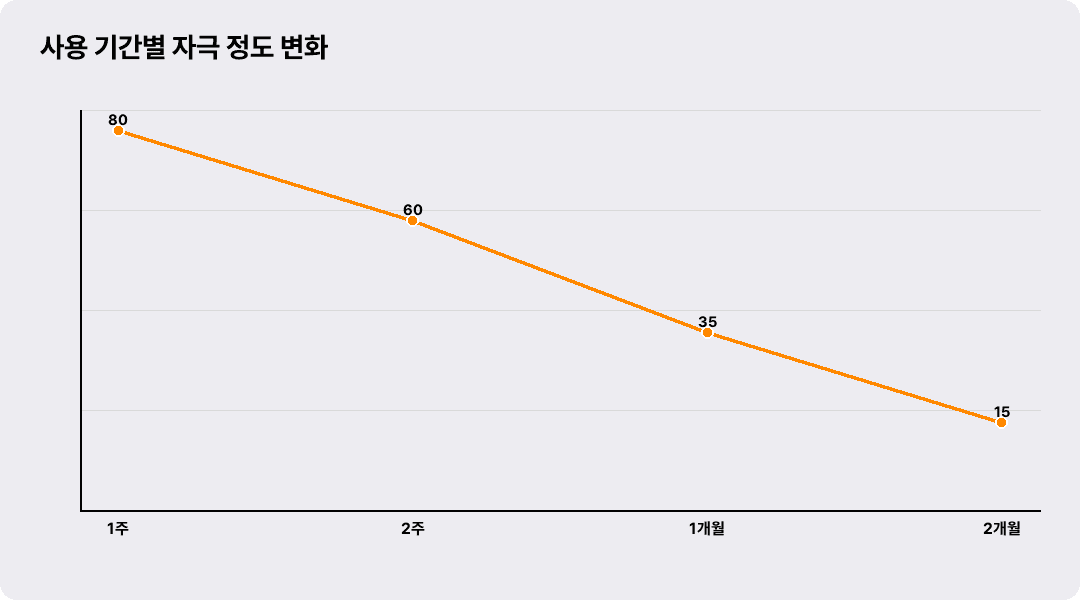
Retinol is not a quick-fix ingredient; it requires a steady journey as your skin learns to adapt. If we were to map out how the initial irritation subsides over the adjustment period, it would look like this curve.
Here are some key tips to keep in mind for consistent use:
Ample Hydration — Your skin barrier needs to be strong and stable to minimize irritation and yield stable results.
Apply at night, protect by day — Retinol increases photosensitivity, making daily sunscreen non-negotiable.
A comfortable pace — Take a rest on highly sensitive days and proceed at your skin's own pace.
Avoid layering other irritating ingredients — Using it alongside exfoliators like acids all at once can double the irritation.
If you stay patient and proceed slowly without getting discouraged by early irritation, you can look forward to seeing your skin barrier adapt, resulting in improved texture and a brighter tone. Since this article is meant for general informational purposes, it is always safest to consult with a medical professional to tailor your routine and respond correctly to your skin's reactions.

Frequently Asked Questions
Q. My skin is peeling after starting retinol. Can I keep using it?
A. Mild peeling or stinging in the beginning is very common as your skin adapts. It usually calms down if you reduce the frequency and focus on intense hydration. However, if you experience different symptoms such as swelling or weeping skin, we recommend having it checked at a dermatology clinic.
Q. Do I have to use it every day to see results?
A. Instead of using it daily from the start, we recommend beginning with a low concentration about twice a week, and increasing the frequency as your skin gets used to it. Rushing into daily use can lead to severe irritation. A slow, steady approach while monitoring your skin's feedback is the safest way.
Q. Can I apply it during the day?
A. Since retinol makes the skin chemically sensitive to sunlight, we highly recommend using it only in your night routine. Be sure to apply sunscreen diligently the following day. Failing to protect your skin from UV rays can trigger irritation or pigment issues.
Q. Can I use it with other skincare products?
A. Layering it with other active ingredients like acids (AHA/BHA) can cause severe irritation. It is best to start simple with a moisturizer-focused routine, and then introduce other steps progressively after your skin has adapted. If your skin is sensitive, it is safest to consult with our medical professionals to create a suitable combination.
Content
![[Wi Young-jin Column] Retinol Adjustment vs Barrier Damage](https://framerusercontent.com/images/ytrEiREJ8Dzp0ifIefbteOXATU.jpg?width=1080&height=1080)
![[Wi Young-jin Column] Retinol vs. Tretinoin: Vitamin A](https://framerusercontent.com/images/IoRtBJSn4w4oVmE5H0IInpAc78.jpg?width=1080&height=1080)

![[Wi Young-jin Column] The Truth About When to Stop Retinol: Why Seasonal Transitions Are More Dangerous Than Summer](https://framerusercontent.com/images/Rc8L4jmhYEus7eorgsR70Nsk0U.jpg?width=1080&height=1080)


skin
Why Does Fractional CO2 Take Longer to Heal?

Contouring & Volume
How Many cc Does Forehead Filler Need?

skin
Why Is My Skin Oily but Tight in the Fall?

Hair Removal
Underarm Laser Hair Removal Cost: Do the Math

Tattoo removal
Laser Before a Cover-Up: How Many Sessions?

skin
큐어젯 다운타임, 다음 날 출근과 화장은 언제부터 될까요?