

Redness or tiny bumps after a skin booster? See what's normal, how long it lasts & red flags.
Published -
Updated -

Author
Wi Young-jin · Chief director
Seoul National University College of Medicine · Seoul National University Hospital Specialist
→
You glance in the mirror after a skin booster and your skin looks flushed, with a small bump at every injection spot. "Did something go wrong?" The treatment itself was quick, but it's the reaction afterward that keeps you worrying.
The short answer: the redness and tiny bumps right after treatment are, in most cases, a common reaction from the injection process, and they usually settle on their own within a few days. That said, if they keep getting worse over several days or come with pain or heat, that can be a sign worth a second look. Knowing how to tell an ordinary reaction from one that isn't makes the wait a lot easier.
This article gathers treatment information from Beautystone in Hapjeong.
What you'll learn
Why redness and bumps show up after a skin booster
Which reactions are common and how many days they last
How to spot the signals worth a second look
What's worth keeping an eye on during recovery
Why does a skin booster cause this kind of reaction?
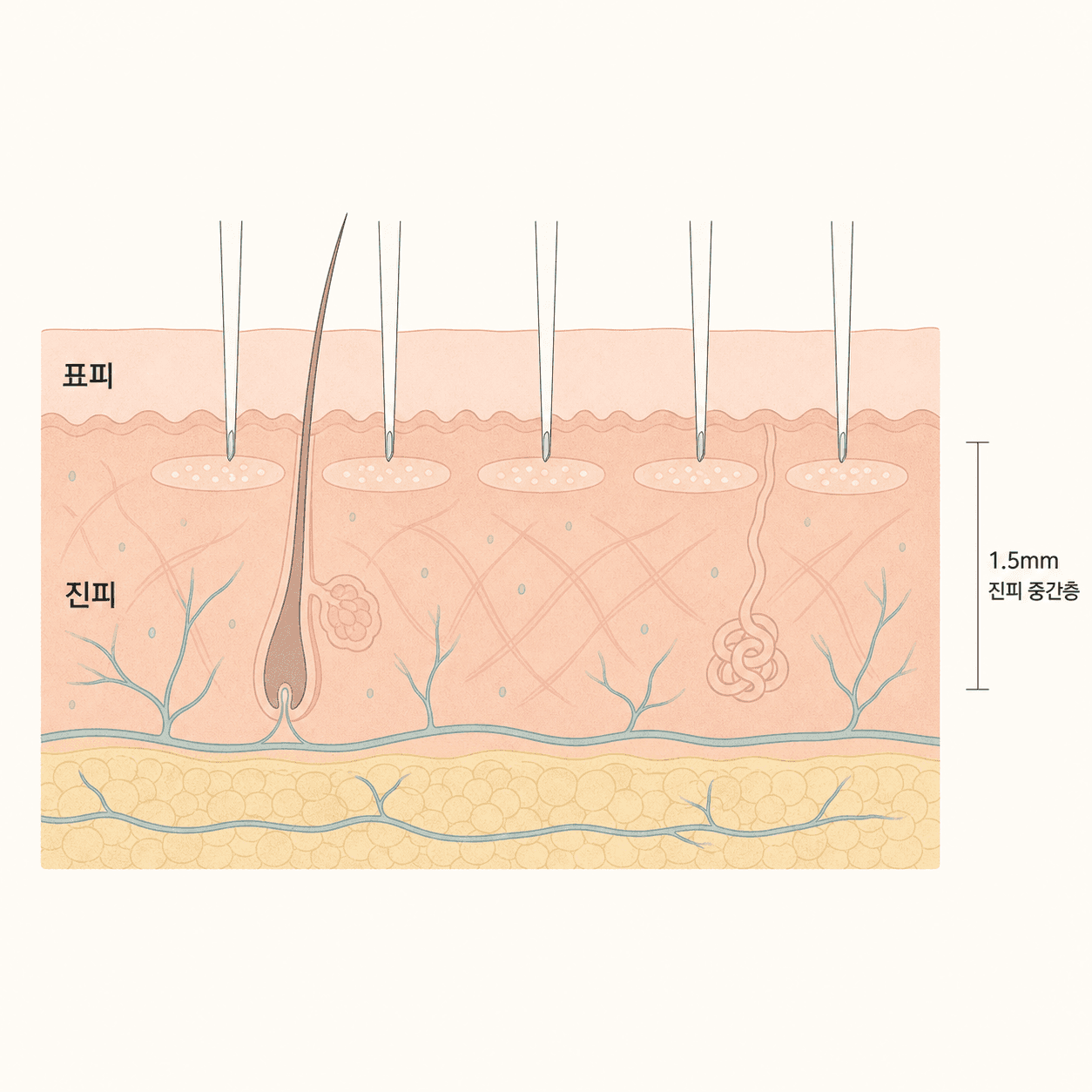
A skin booster injects ingredients like hyaluronic acid* into the shallow layers of your skin, in many small spots, using a fine needle. Because the needle enters so many points in a short time, each spot can briefly turn red or swell slightly and feel bumpy. It's a natural part of the process while the injected ingredient spreads and settles into the skin.
hyaluronic acid*: a moisturizing ingredient your skin already contains, which draws in water to keep skin hydrated and supple.
In fact, a study on micro-injecting hyaluronic acid into the skin reported that reactions like pain, swelling, and small bruises were fairly common, but most cleared within 3 to 4 days and were well tolerated. It's a good reminder that a reaction right after treatment doesn't automatically mean something is wrong.
Which reactions are common, and how long do they last?
In the first few days after a skin booster, mild reactions are reported often. Most fade on their own without any special treatment.
Common reaction | Usually lasts | Note |
|---|---|---|
Redness at injection spots | A few hours to a day | Most common |
Bumps and swelling | 1–3 days | Settles as the ingredient spreads |
Faint bruising | 3–7 days | Covers with concealer |
Stinging and tightness | 1–2 days | Eases with moisturizing |
Boiled down to one line: most of the small reactions right after treatment fade within a week. During this stretch, taking a short break from anything that rubs or irritates the skin makes recovery a lot smoother.
Which signs are worth a second look?
Most reactions fade with time, but it's worth checking in on any sign that's heading the other way. Here's roughly how redness and swelling typically taper off.

A study on the safety of gentler hyaluronic acid injections also found that most reactions passed temporarily. Still, if you notice the following signs, it's safer to talk with the medical team who treated you. That includes redness and swelling that don't settle after several days and instead get worse, or one area that hardens into a firm lump and hurts when pressed. Heat in the area, or pain that keeps building, is also worth asking about rather than leaving alone. These signs aren't common, but knowing them ahead of time cuts down on both needless worry and missed moments.

Why Beautystone Hapjeong?
When we recommend a skin booster at Beautystone Hapjeong, we tend to walk you through the few days of reactions afterward before the treatment itself. Even with the same procedure, people with thin or sensitive skin can see reactions stand out a little more, so we point out ahead of time which reactions are common and which signs are worth a second look. We're a small clinic within walking distance of Hapjeong Station, so we can look at each person's skin individually and follow the recovery together.

What to keep an eye on during recovery
For the first few days after treatment, watching for the following makes recovery a lot smoother.
Ease up on irritation — give rubbing or massaging the treated spots a few days' rest
Moisturize and soothe — keep skin hydrated with gentle, low-irritation moisturizing
Heat and sweat — putting off the sauna and intense workouts for a day or two helps the redness settle
Sun protection — apply sunscreen evenly starting the day after treatment
Redness and bumps after a skin booster are, in most cases, a passing reaction, so knowing the pattern and waiting it out puts your mind at ease. That said, this article covers general information, so whether your own reaction is within the common range or worth a second look is most accurately decided in consultation with the medical team who actually examined you. If redness or a lump doesn't settle after several days, or pain keeps building, it's safer to get checked first rather than leave it.

Frequently asked questions
Q. When do the bumps that came up settle down?
A. The bumps that form as the injected ingredient spreads usually settle on their own within 1 to 3 days. If your skin is thin or sensitive, they can linger a little longer. During this time, avoid rubbing hard and stick to moisturizing-focused care. If a firm spot is still there after a week, it's worth checking in.
Q. How soon after treatment can I wear makeup?
A. Light makeup is usually fine starting the next day. But if the injection spots are still red or stinging, hold off on color makeup for a day or two. Cleansing gently by patting, rather than rubbing, also helps recovery.
Q. I got a bruise — is there a way to fade it faster?
A. Faint bruises usually fade on their own within 3 to 7 days. For about a day after treatment, a light, gentle cold compress can help. Avoid pressing down hard. If a bruise lingers or keeps darkening, it's safer to talk with the medical team who treated you.
Q. What should I do if the redness won't settle?
A. Redness right after treatment usually fades within a day, but if it doesn't settle after several days and instead gets worse, or comes with heat or pain, it's better to talk with the medical team who treated you rather than leave it. It isn't common, but knowing this ahead of time lets you respond at the right moment.
Related reads


skin
Ellanse Cost: Duration Beats Price Per Visit

Lifting
Alltite RF: Two Effects, Two Timelines

Contouring & Volume
Why Juvelook Volume Quotes Vary by Clinic

men's
Nose Pore Treatment: Aftercare Timing Guide

skin
How Many Sessions Does Eyeliner Removal Take?

Hair Removal
Laser Hair Removal While Pregnant or Nursing