

Thermage RF and Ultherapy reach different layers. How to set the order and spacing, plus common recovery reactions.
Published -
Updated -

Author
Wi Young-jin · Chief director
Seoul National University College of Medicine · Seoul National University Hospital Specialist
→
Lots of people have heard of both Thermage and Ultherapy and think, "Wouldn't getting both be even better?" But once you start looking into it, the most confusing part is which to do first, whether you can have them on the same day, or whether you should space them out by weeks.
The short answer: the two treatments work on different layers of skin, so planning them together makes for a complementary combination. That said, rather than cramming both into one go, spacing out the order and interval makes both your recovery and your results more stable. Some people get them sequentially on the same day, others leave a few weeks between, and knowing why that difference happens makes it much easier to settle on the right flow for you during a consultation.
This article pulls together treatment information from Hapjeong Beautystone.
In this article
Which layer Thermage and Ultherapy each work on
Whether you can have both on the same day, and how long to wait if you space them out
What's usually considered first when deciding the order
How to tell common recovery reactions from signs worth a second look after a combined treatment
Wanting both makes complete sense
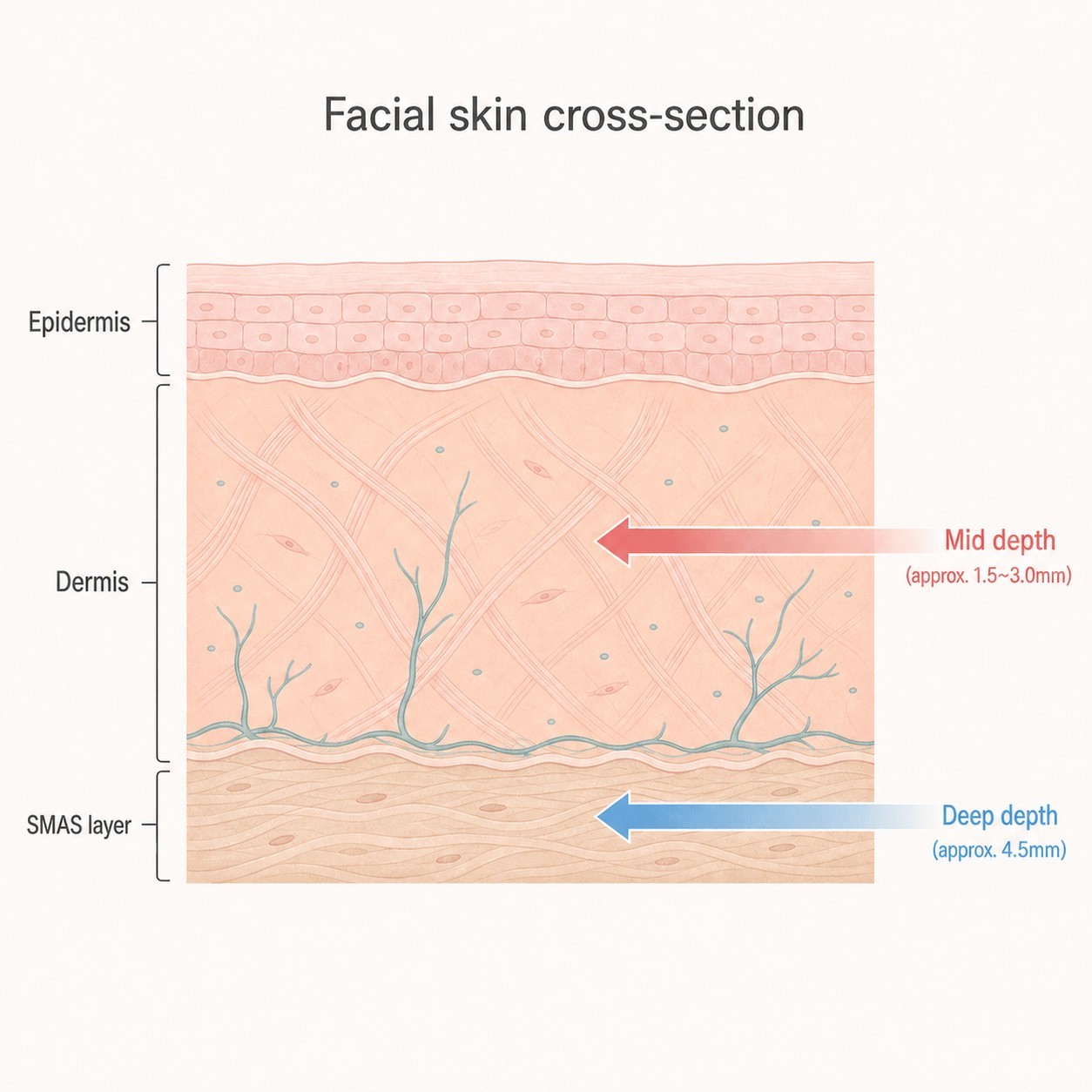
When your skin starts to feel less firm, one treatment can feel like not enough, so it's natural to think of pairing two. Thermage uses radiofrequency* to heat the dermis and contract collagen, while Ultherapy focuses ultrasound energy into deeper layers. Because their working depths don't overlap, you get the hope that "doing both would cover things layer by layer."
radiofrequency*: a method that passes a radiofrequency current through the skin to heat the dermis to a set temperature. The heat contracts collagen and then prompts new collagen to build up.
In fact, this explanation of how radiofrequency heats the dermis while preserving the epidermis to contract collagen, with new collagen forming over the following months makes it clear where Thermage works and why recovery takes time. That's why, rather than cramming both treatments at once, it's better to plan them with each one's recovery flow in mind.

Thermage and Ultherapy reach different layers
When comparing the two treatments, what helps most is "which layer they work on, and with what kind of energy." Thermage uses radiofrequency to heat the whole dermis broadly, so it tends to affect surface firmness and fine texture. Ultherapy focuses ultrasound on a single point to reach deeper layers, putting its weight on lifting sagging contours.
Category | Thermage (RF) | Ultherapy (ultrasound) |
|---|---|---|
Main layer | Across the dermis | Down to the deeper fascial layer |
What to expect | Skin firmness and texture | Lifting sagging contours |
How it feels | Mostly warm heat | Deep, pinpoint sensations |
Swelling tendency | Relatively little | A few days, depending on the area |
Seen this way, the two aren't really competitors but more of a combination, each handling a different layer. So instead of "which one is better," the starting point for deciding the order is "which layer is more lacking in my skin." If surface firmness is the main concern, you weight toward Thermage; if sagging contours are the main concern, you weight toward Ultherapy.
Here's how to set the order and spacing
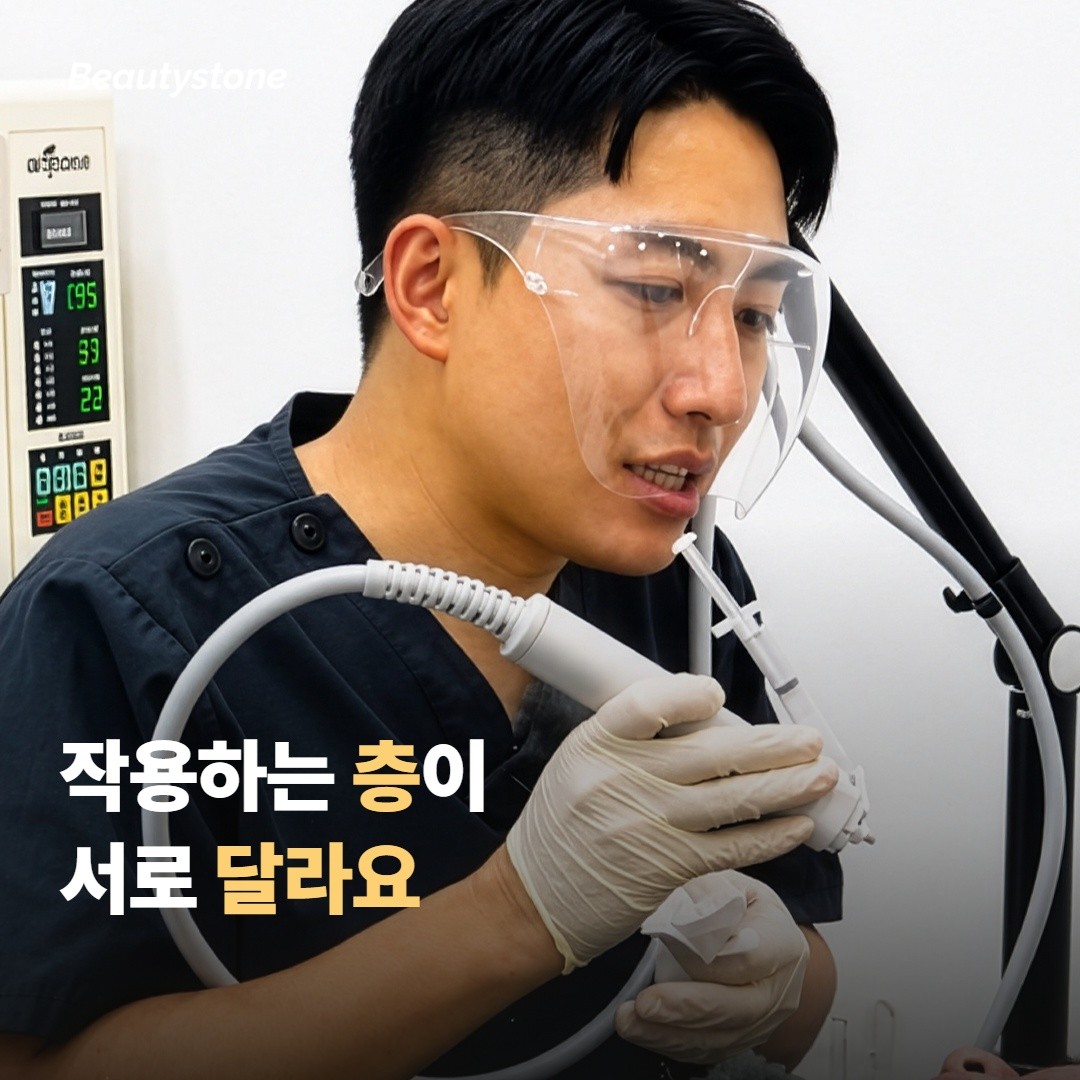
The most common questions in combined planning are about order and spacing. There's no fixed formula. It's set to match your skin condition and how much room you have to recover, but here's the flow people usually go by.
Sequentially on the same day — chosen by people short on time. But since all the stimulation lands at once that day, the recovery reaction can ramp up along with it
2–4 weeks apart — you see how one side recovers, then add the next. Good for adjusting as you watch the response
A longer interval — for when you want to see the collagen buildup play out fully before adding the next
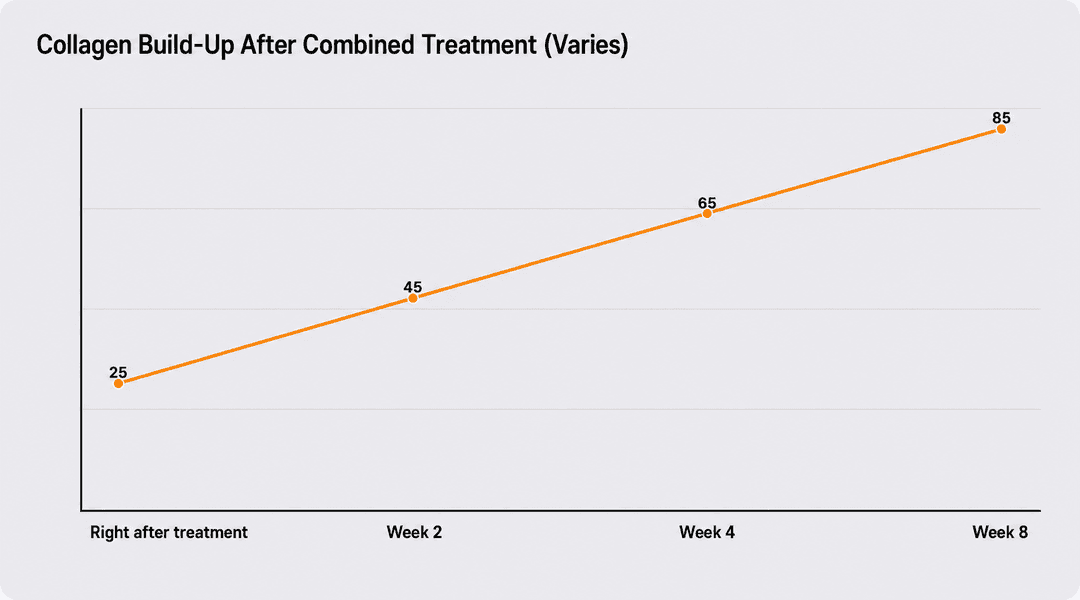
The deeper a treatment works, the more its results don't appear all at once but build up over time. Here's roughly how the changes accumulate day by day.
Why Hapjeong Beautystone
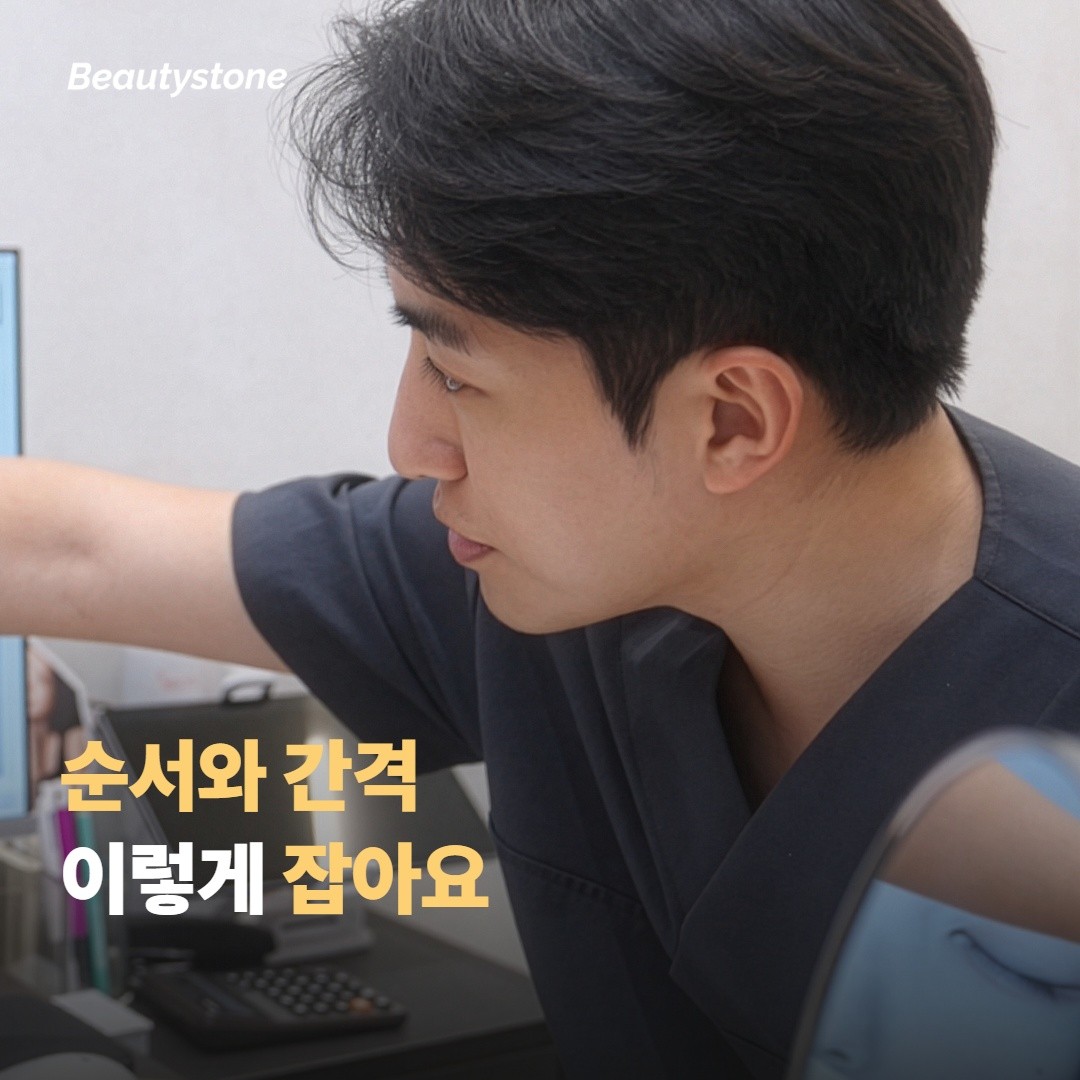
At Hapjeong Beautystone, before recommending a combined treatment, we tend to first look together at which layer is more lacking in your skin. We start by sorting out whether you need both Thermage and Ultherapy or whether one is enough, and if you do both, we set the order and spacing to match your recovery pace. As a small clinic within walking distance of Hapjeong Station, we can watch one person's response and adjust the next timing together.
Recovery flow and signs worth a second look
After a combined treatment, since the stimulation overlaps more than with a single treatment, it helps to keep a closer eye on the recovery reaction. Most are common reactions that settle within a few days.
Warm heat and mild redness — usually a few hours to a day
Faint swelling depending on the area — lasts a few days and gradually fades
A mild tenderness when pressed — an adjustment reaction after deep-layer stimulation
As this explanation of how ultrasound energy creates thermal coagulation points in the deep layers, with collagen rebuilding over 14 to 90 days describes, results settle in not right after the procedure but gradually over weeks to months. So even if you don't feel a big change within a week, there's no need to rush. That said, if swelling doesn't go down after more than two weeks, if one side feels noticeably firm, or if pain seems to be getting worse, it's safer to consult the provider who did the treatment. This article is general information, so whether a combined treatment suits you and in what order are best decided together with the provider who examined you in person.

Frequently asked questions
Q. Is it okay to get Thermage and Ultherapy on the same day?
A. Some people do get them sequentially on the same day. But since all the stimulation lands at once that day, recovery reactions like heat or swelling can ramp up too. If you're short on recovery time, schedule it so you can secure a few days of rest, and if your skin runs sensitive, it's worth discussing spacing them out with your provider.
Q. If I do only one first, which is better to start with?
A. Rather than a set answer, your benchmark is which layer your concern sits in. If surface firmness and fine texture are the main concern, you weight toward Thermage first; if you're keen to lift sagging contours, you weight toward Ultherapy first. Deciding together during a consultation, based on your skin condition, is the safe way to go.
Q. How far apart are the two treatments usually spaced?
A. Some go sequentially on the same day, others add the next 2 to 4 weeks after seeing one side recover. Since deep-layer treatments take time for results to build, some people choose a longer interval. You coordinate with your provider to match your recovery pace and schedule.
Q. Do results show faster if I get the combination?
A. It's less about faster and more about covering a wider range of layers. With both treatments, results appear as collagen builds, settling in gradually over weeks to months rather than right after the procedure. Pace varies from person to person, so it's better to give it time than to judge in a hurry.
Further reading


skin
Ellanse Cost: Duration Beats Price Per Visit

Lifting
Alltite RF: Two Effects, Two Timelines

Contouring & Volume
Why Juvelook Volume Quotes Vary by Clinic

men's
Nose Pore Treatment: Aftercare Timing Guide

skin
How Many Sessions Does Eyeliner Removal Take?

Hair Removal
Laser Hair Removal While Pregnant or Nursing