

Swelling after Ultherapy or Thermage: what is normal on day 1, week 1, week 2, and when to call.
Published -
Updated -

Author
Wi Young-jin · Chief director
Seoul National University College of Medicine · Seoul National University Hospital Specialist
→
You leave the clinic after Ultherapy or Thermage, catch your reflection, and think: my face looks puffier than I expected. Lifting treatments do not inject anything — they deliver heat underneath the surface — so the appointment itself is short, but the swelling and the odd tight, tingly feeling that follow can catch you off guard.
Here is the short answer first. Swelling is most obvious right after the session, drops off noticeably within about a week, and is largely settled around the two-week mark. Ultherapy and Thermage deliver heat in different ways, though, so they tend to swell in slightly different patterns. Rather than reading puffiness as a sign that something went wrong, it helps to know which reactions are common at which point. Individual results and recovery vary — skin thickness, the area treated, and the settings used all play a role — so your own timeline may run a little ahead of or behind the ranges below.
This article collects general treatment information from Beautystone, a skin clinic in Hapjeong, Seoul.
What you'll learn
How swelling changes right after treatment, at one week, and at two weeks
Why Ultherapy and Thermage swell in slightly different patterns
Everyday habits that help recovery, and what to hold off on
How to tell ordinary swelling from a sign worth calling about
Right after treatment: heat settles in, and so does the puffiness
The puffiness you see immediately after Ultherapy or Thermage happens because tissue reacts to heat delivered beneath the skin, and fluid briefly gathers at the treated depth. This edema* is a normal response to a thermal stimulus, not a sign that the treatment went wrong.
Edema*: a temporary build-up of fluid in the spaces between tissue, which makes an area look puffy from the outside. After energy-based treatments it is a common part of the recovery response.
An overview of therapeutic ultrasound, explaining how tissue temperature rises where the energy is absorbed and sets off a response makes it clearer why swelling arrives together with the heat. In those first hours you may also notice tenderness, a warm or slightly burning sensation, and some mild redness in the treated area. For most people that eases within a few hours to a day. Not rubbing the area and not adding more heat to it is the most useful thing you can do at this stage.
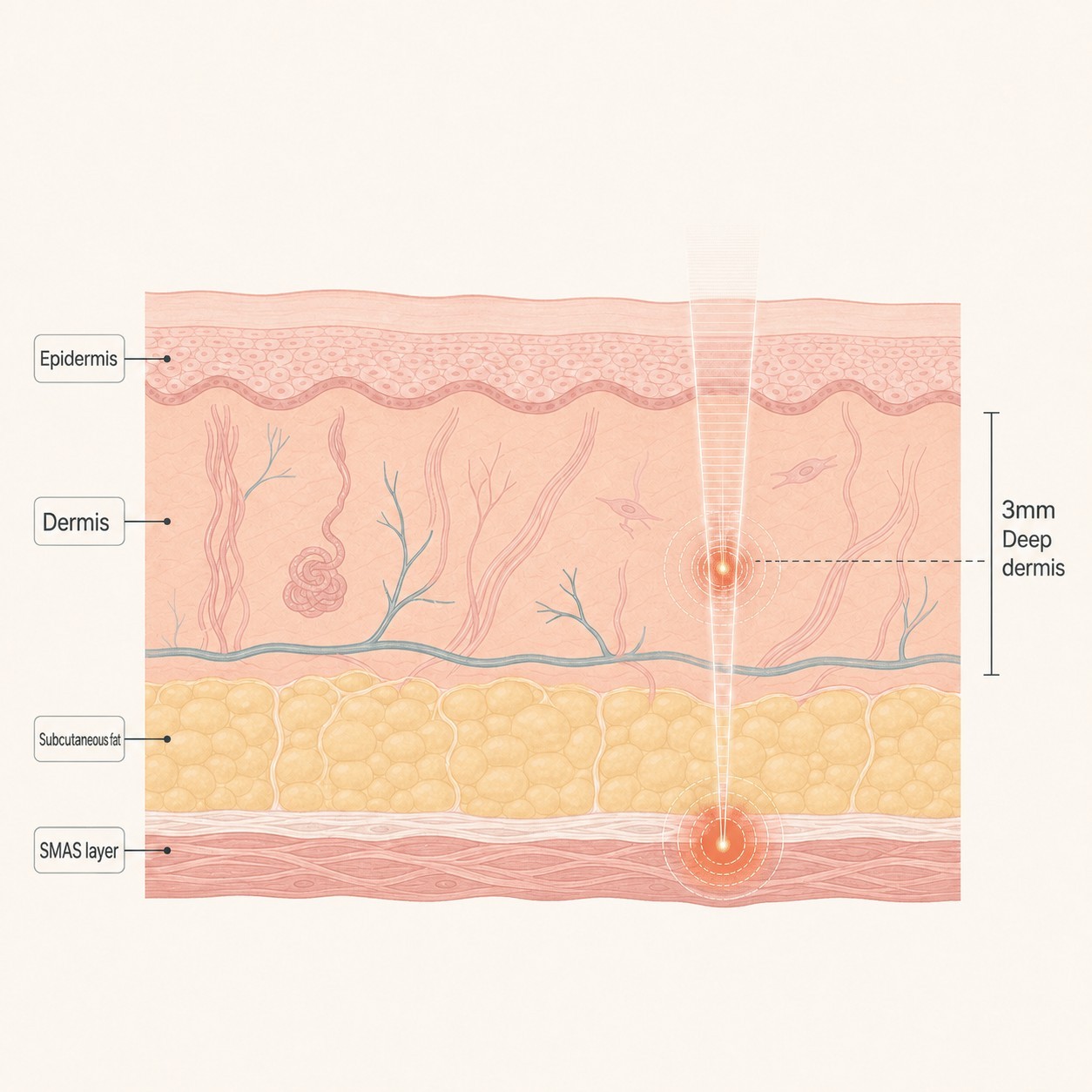
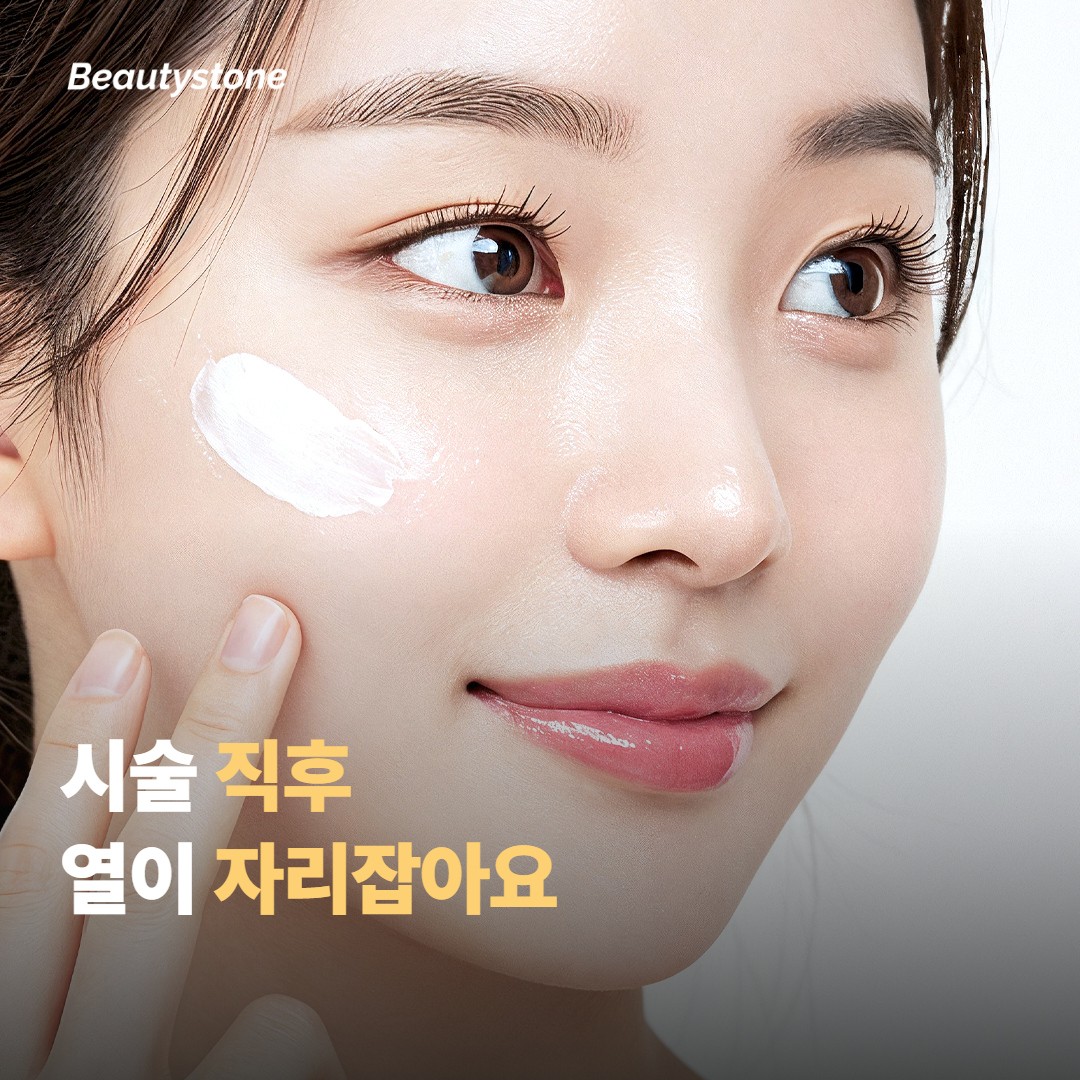
Through week one: swelling drops off noticeably
From the day after your session through the first week, swelling usually recedes gradually. It is also common to look a little puffier in the morning and better by evening. That daily swing happens because fluid shifts toward the face while you sleep, and it is not something to worry about on its own.
The underlying mechanism is described well in a reference on edema, which defines it as fluid accumulating in the space between tissues so the area looks swollen from outside. Fluid that briefly increased in response to the heat drains away again over time, so letting it resolve on its own is steadier than trying to squeeze or vigorously massage it out.
A few things make that first week easier.
Saunas, steam rooms, and hot showers — heat can add to the swelling, so keep water lukewarm for a few days
Hard workouts and heavy drinking — a fast rise in blood flow can make swelling and redness more obvious
Sleeping on an extra pillow — less fluid pools in the face overnight, which helps with morning puffiness
Plenty of water and less salt — salty food holds on to fluid and can stretch swelling out
Ultherapy and Thermage swell a little differently
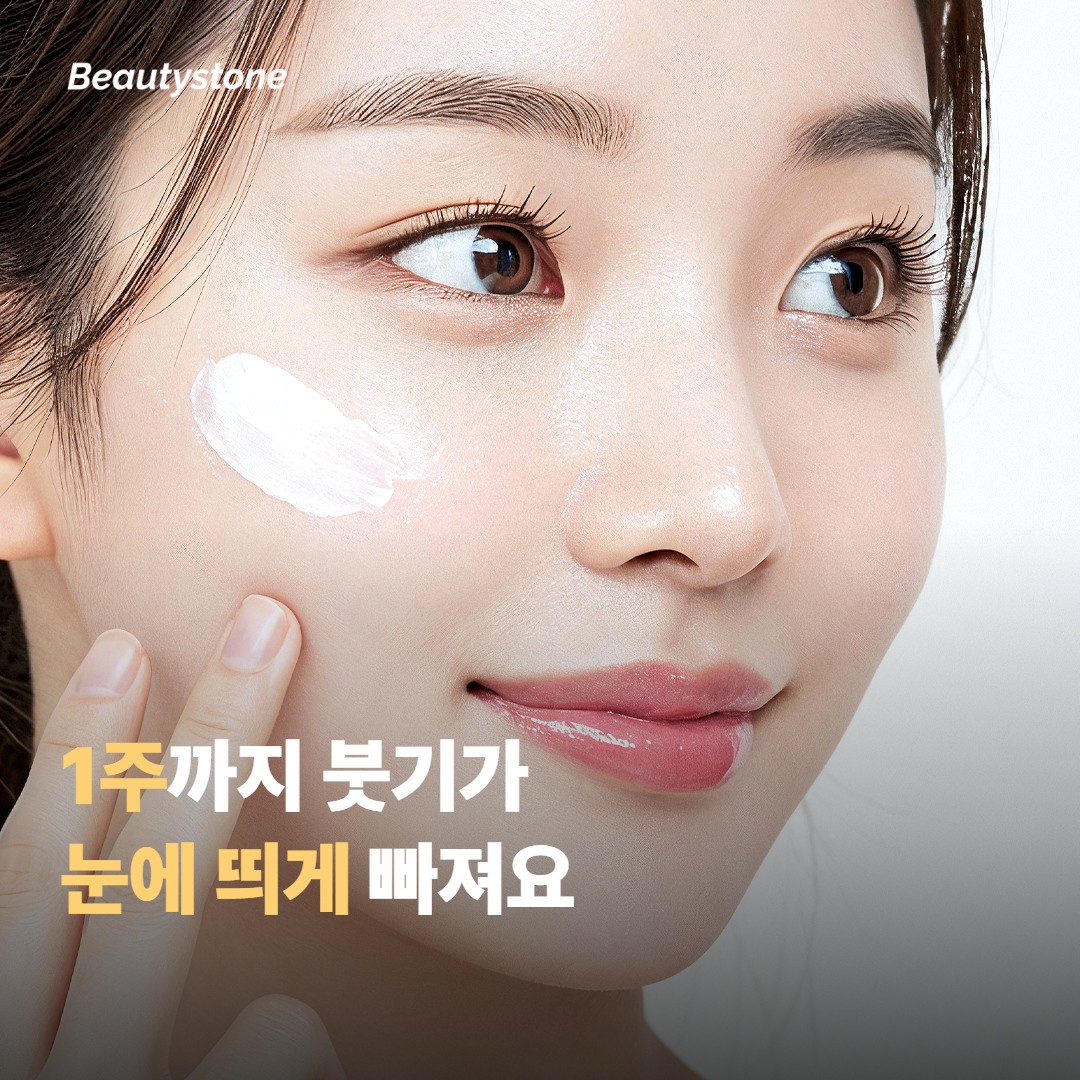
Both are lifting treatments, but they put heat into the skin in different ways, so the swelling looks a little different too. Ultherapy focuses ultrasound energy to a point at a set depth; Thermage spreads radiofrequency heat evenly across a wider surface. In the US both are FDA-cleared devices — "cleared" is the correct term for a device, whereas a drug such as Botox is "FDA-approved." Here is how their recovery tends to compare.
Item | Ultherapy | Thermage |
|---|---|---|
How heat is delivered | Ultrasound focused to a point | Radiofrequency spread widely |
How it feels right after | Tender, prickly | Hot, flushed warmth |
Swelling pattern | Local to the areas treated | Mild, across the whole face |
When swelling settles | Usually 3 to 7 days | Usually 5 to 10 days |
Redness | Light and brief | Can linger slightly longer |
As an explanation of how Thermage radiofrequency heat contracts collagen to tighten skin, and how redness and swelling afterward can last anywhere from a few hours to a few days notes, swelling and redness are part of the recovery process rather than a complication. Neither device is simply better than the other; the right choice depends on your skin and what you are trying to change. Judge the treatment on the whole recovery arc, not on how puffy you look on day one.
Why where you have it done still matters
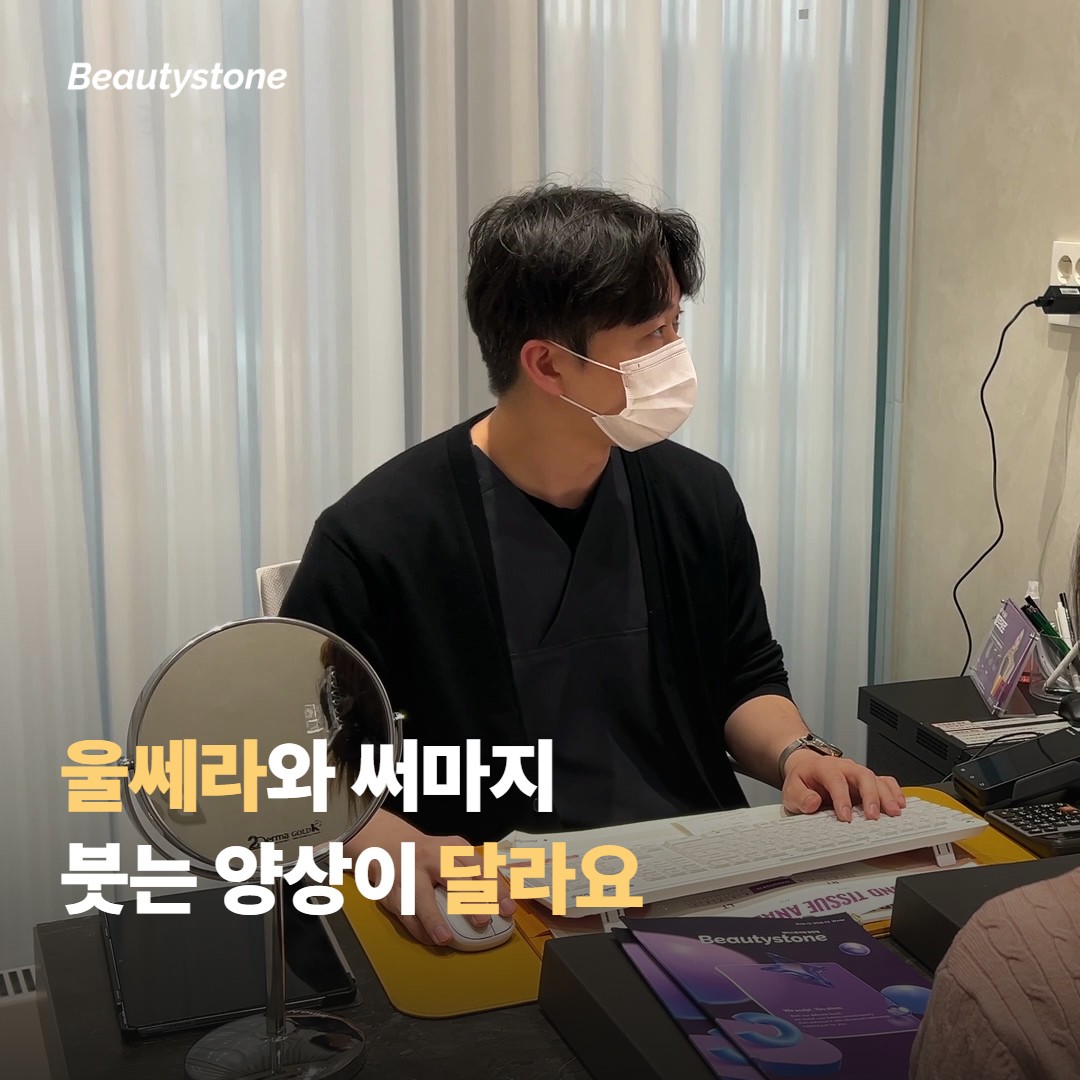
At Beautystone we tend to walk through the recovery arc before we talk about how strong a session will be. Ultherapy Prime and Thermage sit in the same lifting category but deliver heat differently, and even in the same person, swelling and recovery speed shift depending on the area and how thick the skin is there. We are a small clinic within walking distance of Hapjeong Station in Seoul, so there is room to explain which reactions fall inside the usual range for you and which ones deserve a second look, at your own pace of recovery. One honest limit worth planning around: if you have a treatment while travelling, find a qualified provider near home who can look at you if something changes after you fly back. Distance is the one part of aftercare a clinic cannot solve on your behalf.

Ordinary swelling versus a sign worth a call
Mild reactions are commonly reported in the two weeks after a lifting treatment. Most settle on their own without any intervention.
Soft swelling in the treated area — usually worst right after, and noticeably down within a week
Light redness and warmth — anywhere from a few hours to a few days
Tenderness or a pressed-on feeling — eases over a few days
Different areas recovering at different speeds — the jawline and cheeks may settle on separate schedules
Sketched out over time, the swelling curve tends to look roughly like this.
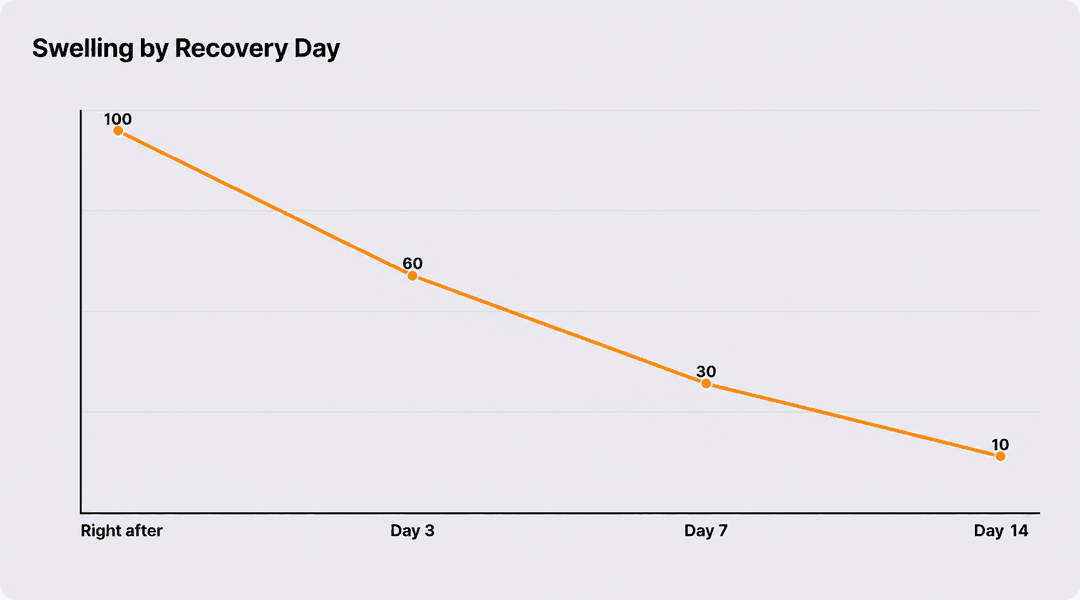
These signs, on the other hand, are worth raising with the provider who treated you.
Clear swelling that is still there after two weeks
One side swelling far more than the other, or a marked left-right asymmetry
Pain in the treated area that keeps getting worse
Blisters, severe redness, or pus — possible signs of infection, which need urgent care
Numbness or awkward facial movement that does not let up
Swelling and redness are usually just part of recovery, but the list above is worth one phone call for your own peace of mind. Because the lifting result itself settles gradually as collagen reorganises over roughly two to three months, try not to judge the outcome from how you look on day one. This article is general information; whether a treatment suits you, and how to handle your own recovery, is something to decide with the clinician who examined you.

Frequently asked questions
Q. My face is quite swollen right after the session. Is that normal?
A. The hours right after treatment are when swelling is most obvious, so it can be alarming. It is a natural recovery response to heat, with fluid briefly gathering at the treated depth, and for most people it comes down noticeably within a week. If one side swells far more than the other, or pain keeps increasing, contact the provider who treated you.
Q. Is there a way to bring swelling down faster?
A. Less salt, plenty of water, and sleeping on a higher pillow all help. For the first few days, skip saunas, hot showers, and hard workouts — anything that drives up heat and blood flow. Aggressive squeezing or deep massage tends to irritate the area rather than help, so it is better to let the fluid clear on its own.
Q. Which one swells less, Ultherapy or Thermage?
A. It varies enough by person and by area that neither can be called the milder one outright. Broadly, Ultherapy tends to swell locally in the zones treated, while Thermage tends to swell mildly across the whole face. Choosing the approach that fits your skin and your goal matters more than which one puffs up less.
Q. When can I wear makeup and wash my face normally again?
A. Gentle cleansing and basic skincare are usually fine from the next day, but if the treated area still feels irritated, hold off on colour makeup for a day or two. Pat rather than rub, and be thorough with sun protection through the whole recovery period.
Content




skin
Why Does Fractional CO2 Take Longer to Heal?

Contouring & Volume
How Many cc Does Forehead Filler Need?

skin
Why Is My Skin Oily but Tight in the Fall?

Hair Removal
Underarm Laser Hair Removal Cost: Do the Math

Tattoo removal
Laser Before a Cover-Up: How Many Sessions?

skin
큐어젯 다운타임, 다음 날 출근과 화장은 언제부터 될까요?