

Thermage vs. Ultherapy: 30s vs. 40s Picks
Thermage vs. Ultherapy: 30s vs. 40s Picks
Thermage vs. Ultherapy: 30s vs. 40s Picks
Thermage vs. Ultherapy: 30s Elasticity loss and 40s sagging differ—RF vs. HIFU depth explained.
Published -
Updated -

Author
Wi Young-jin · Chief director
Seoul National University College of Medicine · Seoul National University Hospital Specialist
→
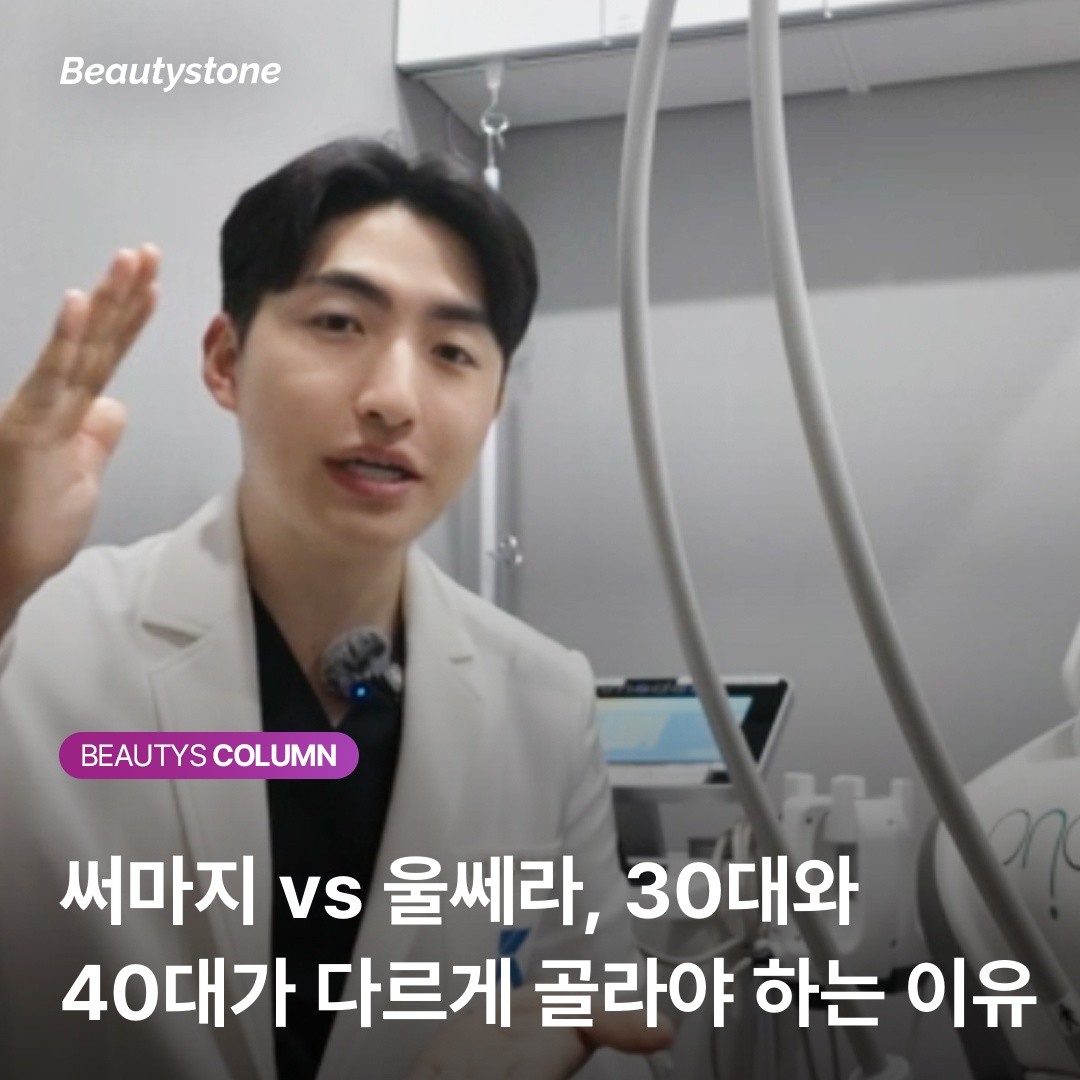
Thermage vs Ultherapy, why people in their 30s and 40s
should choose differently
"They say I should get both Thermage and Ultherapy,
do I really need both?"
A lot of people ask that.
Today, I’ll walk you through the answer step by step.
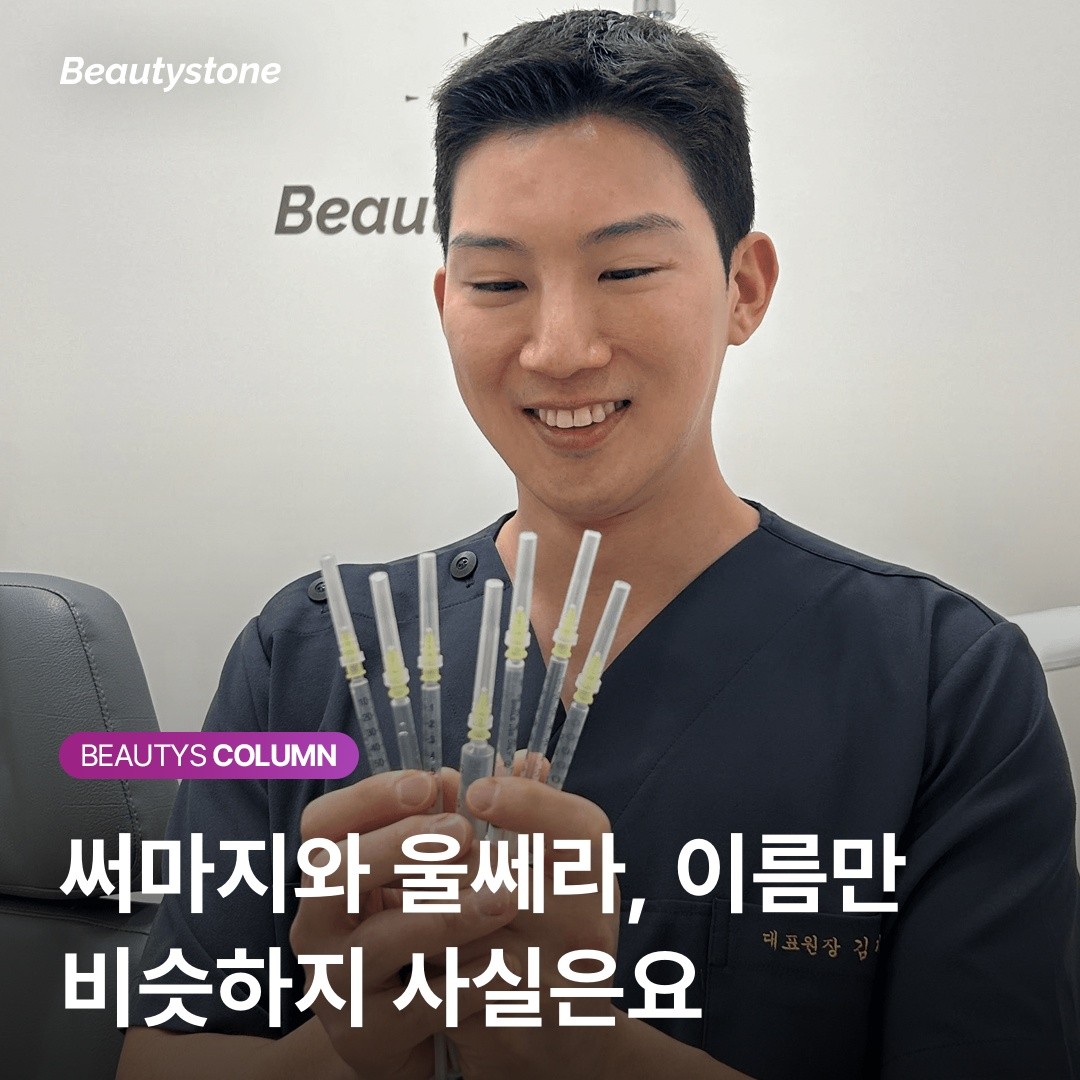
Thermage and Ultherapy,
their names may seem similar, but in fact
Thermage uses RF (radiofrequency) energy to
warm the entire dermis
and induce collagen contraction.
Unlike Ultherapy, Thermage
works on a "plane".
In contrast, Ultherapy uses HIFU (high-intensity focused ultrasound)
to coagulate the SMAS layer at a depth of 4.5 mm
as if piercing it with a "point".
They’re both in the anti-aging category,
but the layer they target and the way they work are completely different.
Why is it Thermage for some people with sagging,
and Ultherapy for others?
Director Wi Young-jin’s
key insight
Thermage heats the entire dermis with RF heat,
and Ultherapy uses HIFU ultrasound
to target the 4.5 mm fascia layer point by point.
For people in their 30s who have lost skin elasticity, Thermage,
and for people in their 40s whose sagging has started,
Ultherapy takes priority.
This may surprise you a little.
Last week, a 53-year-old client
came in saying, "I want the full 1,500-shot Thermage."
But after touching the face and looking at the photos,
it was clearly visible that the fat had sagged downward
from below the cheekbones to the corners of the mouth.
In cases like this, no matter how many Thermage shots you do,
the results won’t be very good.
So I recommended Ultherapy first.
That’s because Thermage targets the dermis, the inner layer of the skin,
heating the 1.5~3.0 mm depth over a wide area,
which makes it strong for improving the skin’s own elasticity.
But if the SMAS layer (fascia) has already started to sag,
the foundation is collapsing, so tightening only the dermis
can only have a limited effect.
Ultherapy, on the other hand, uses a 4.5 mm cartridge
to directly coagulate the fascia,
so it’s better for lifting sagging itself.
However, because it doesn’t heat the entire dermis as a plane,
improvements in skin texture and fine wrinkles
may be a bit weaker than with Thermage.
Adding InMode to the comparison makes it even easier.
InMode is strong for local areas, such as submental fat
or defining the line of a double chin.
In other words, Thermage handles overall plane-wide elasticity,
Ultherapy handles fascia sagging,
and InMode handles localized lines and contours.
Director Wi Young-jin’s key summary
Thermage is specialized for a feeling that "the skin itself has loosened,"
while Ultherapy is specialized for a feeling that "the face is sliding downward."
You need to honestly identify which one applies to you
to make the treatment choice easier.
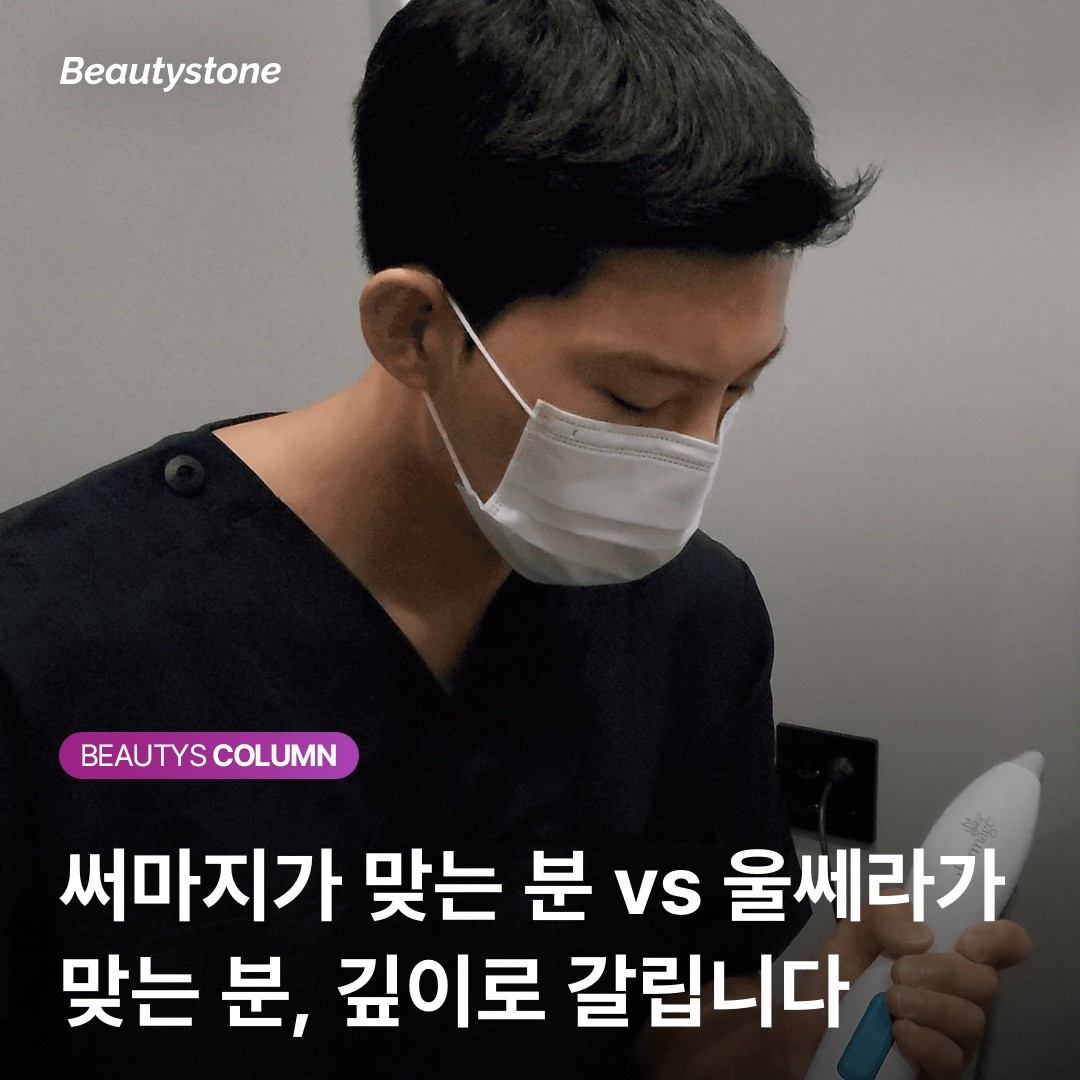
Who Thermage is right for
vs. who Ultherapy is right for,
it comes down to depth
Category | Thermage (Thermage) | Ultherapy (Ultherapy) |
Energy | RF (radiofrequency) | HIFU (focused ultrasound) |
Depth of action | Dermis 1.5~3 mm (plane) | SMAS 4.5 mm (point) |
Main effect | Improves elasticity, texture, and pores | Fascia lifting and sagging improvement |
Priority recommendation | Early 30s to 40s, loss of elasticity | After 40, line sagging |
Pain | Accumulating heat with a tingling sensation | Sharp stimulation that resonates to the bone |
A recent 45-year-old client had little sagging, but
as the skin became thinner, fine wrinkles stood out,
so I recommended Thermage before Ultherapy.
In the end, it’s not age, but whether your face has
a "plane" problem or a "point (sagging)" problem
that becomes the most important criterion.
The three questions I get most often in the exam room,
let me answer honestly
Q1. They say it works better if you get both,
can I get them on the same day?
A. To put it simply, I don’t recommend it.
You need to give the skin enough time
to recover from the heat energy.
Usually, we first lift sagging with Ultherapy,
then apply elasticity with Thermage 4 to 6 weeks later.
That sequence is the most ideal.
Q2. How long does the effect last?
Do I need it every year?
A. Both generally last about 12 to 18 months.
However, it’s less about the effect “disappearing”
and more about slowing the pace of aging.
I usually recommend full treatment every other year,
with lighter maintenance treatments in between
as a combined approach.
Q3. Are there any side effects or precautions?
A. Ultherapy can cause temporary sensory dullness,
and Thermage may rarely cause fat atrophy
if the output is excessively high.
So rather than blindly increasing the number of shots,
precise design based on your skin thickness
is essential.
If you take just one thing away today,
— choose the treatment not by age, but by whether it’s a plane or a point.
In the next article,
I’ll show specific cases of the
results depending on the interval between Ultherapy and Thermage treatments.
This was Wi Young-jin.
Read more
Ultherapy 300-shot effect, just on the cheekbones [Seoul National University specialist]
Ultherapy for the cheekbones: does it work only if you treat the whole face?
"Thermage has no effect?" An honest lifting story from the clinic - Hongdae Thermage
Frequently asked questions
Q. I heard that getting both is more effective, but can I get them on the same day?
A. To get straight to the point, I don’t recommend it. You need to give your skin enough time to recover from the heat.
Q. How long does the effect last? Do I need to get it every year?
A. Both are maintained for an average of 12 to 18 months.
Q. Are there any side effects or precautions?
A. Ultherapy may cause temporary numbness, and Thermage may rarely cause fat atrophy when used with excessive output.
Q. When choosing between Thermage and Ultherapy, is there a standard I can use to decide on my own?
A. Don't just think about your age—look at whether you need to treat an 'area' or a 'spot.' If your skin feels loose and lacks elasticity, Thermaqe is your go-to treatment, as it warms the dermis over a wide area. If your skin feels saggy and droopy, Ulthera should be your first choice, targetting the 4.5mm deep SMAS layer spot-by-spot.
Thermage vs Ultherapy, why people in their 30s and 40s
should choose differently
"They say I should get both Thermage and Ultherapy,
do I really need both?"
A lot of people ask that.
Today, I’ll walk you through the answer step by step.
Thermage and Ultherapy,
their names may seem similar, but in fact
Thermage uses RF (radiofrequency) energy to
warm the entire dermis
and induce collagen contraction.
Unlike Ultherapy, Thermage
works on a "plane".
In contrast, Ultherapy uses HIFU (high-intensity focused ultrasound)
to coagulate the SMAS layer at a depth of 4.5 mm
as if piercing it with a "point".
They’re both in the anti-aging category,
but the layer they target and the way they work are completely different.
Why is it Thermage for some people with sagging,
and Ultherapy for others?
Director Wi Young-jin’s
key insight
Thermage heats the entire dermis with RF heat,
and Ultherapy uses HIFU ultrasound
to target the 4.5 mm fascia layer point by point.
For people in their 30s who have lost skin elasticity, Thermage,
and for people in their 40s whose sagging has started,
Ultherapy takes priority.
This may surprise you a little.
Last week, a 53-year-old client
came in saying, "I want the full 1,500-shot Thermage."
But after touching the face and looking at the photos,
it was clearly visible that the fat had sagged downward
from below the cheekbones to the corners of the mouth.
In cases like this, no matter how many Thermage shots you do,
the results won’t be very good.
So I recommended Ultherapy first.
That’s because Thermage targets the dermis, the inner layer of the skin,
heating the 1.5~3.0 mm depth over a wide area,
which makes it strong for improving the skin’s own elasticity.
But if the SMAS layer (fascia) has already started to sag,
the foundation is collapsing, so tightening only the dermis
can only have a limited effect.
Ultherapy, on the other hand, uses a 4.5 mm cartridge
to directly coagulate the fascia,
so it’s better for lifting sagging itself.
However, because it doesn’t heat the entire dermis as a plane,
improvements in skin texture and fine wrinkles
may be a bit weaker than with Thermage.
Adding InMode to the comparison makes it even easier.
InMode is strong for local areas, such as submental fat
or defining the line of a double chin.
In other words, Thermage handles overall plane-wide elasticity,
Ultherapy handles fascia sagging,
and InMode handles localized lines and contours.
Director Wi Young-jin’s key summary
Thermage is specialized for a feeling that "the skin itself has loosened,"
while Ultherapy is specialized for a feeling that "the face is sliding downward."
You need to honestly identify which one applies to you
to make the treatment choice easier.
Who Thermage is right for
vs. who Ultherapy is right for,
it comes down to depth
Category | Thermage (Thermage) | Ultherapy (Ultherapy) |
Energy | RF (radiofrequency) | HIFU (focused ultrasound) |
Depth of action | Dermis 1.5~3 mm (plane) | SMAS 4.5 mm (point) |
Main effect | Improves elasticity, texture, and pores | Fascia lifting and sagging improvement |
Priority recommendation | Early 30s to 40s, loss of elasticity | After 40, line sagging |
Pain | Accumulating heat with a tingling sensation | Sharp stimulation that resonates to the bone |
A recent 45-year-old client had little sagging, but
as the skin became thinner, fine wrinkles stood out,
so I recommended Thermage before Ultherapy.
In the end, it’s not age, but whether your face has
a "plane" problem or a "point (sagging)" problem
that becomes the most important criterion.
The three questions I get most often in the exam room,
let me answer honestly
Q1. They say it works better if you get both,
can I get them on the same day?
A. To put it simply, I don’t recommend it.
You need to give the skin enough time
to recover from the heat energy.
Usually, we first lift sagging with Ultherapy,
then apply elasticity with Thermage 4 to 6 weeks later.
That sequence is the most ideal.
Q2. How long does the effect last?
Do I need it every year?
A. Both generally last about 12 to 18 months.
However, it’s less about the effect “disappearing”
and more about slowing the pace of aging.
I usually recommend full treatment every other year,
with lighter maintenance treatments in between
as a combined approach.
Q3. Are there any side effects or precautions?
A. Ultherapy can cause temporary sensory dullness,
and Thermage may rarely cause fat atrophy
if the output is excessively high.
So rather than blindly increasing the number of shots,
precise design based on your skin thickness
is essential.
If you take just one thing away today,
— choose the treatment not by age, but by whether it’s a plane or a point.
In the next article,
I’ll show specific cases of the
results depending on the interval between Ultherapy and Thermage treatments.
This was Wi Young-jin.
Read more
Ultherapy 300-shot effect, just on the cheekbones [Seoul National University specialist]
Ultherapy for the cheekbones: does it work only if you treat the whole face?
"Thermage has no effect?" An honest lifting story from the clinic - Hongdae Thermage
Frequently asked questions
Q. I heard that getting both is more effective, but can I get them on the same day?
A. To get straight to the point, I don’t recommend it. You need to give your skin enough time to recover from the heat.
Q. How long does the effect last? Do I need to get it every year?
A. Both are maintained for an average of 12 to 18 months.
Q. Are there any side effects or precautions?
A. Ultherapy may cause temporary numbness, and Thermage may rarely cause fat atrophy when used with excessive output.
Q. When choosing between Thermage and Ultherapy, is there a standard I can use to decide on my own?
A. Don't just think about your age—look at whether you need to treat an 'area' or a 'spot.' If your skin feels loose and lacks elasticity, Thermaqe is your go-to treatment, as it warms the dermis over a wide area. If your skin feels saggy and droopy, Ulthera should be your first choice, targetting the 4.5mm deep SMAS layer spot-by-spot.


Latest post
Latest post

Hair Removal
레이저 제모 1회에도 남는 몫이 있어요 — 밀도를 모자이크로 보는 법

Tattoo removal
Why Extremity Tattoos Are Slower to Remove

Tattoo removal
Tattoo Removal Cost: Why Quotes Vary by Area

Tattoo removal
Unused Tattoo Removal Sessions: What Happens?

Lifting
Forehead Thread Lifting: How Far Can It Go?

skin
Skin Booster Prices: What to Check in a Quote
1:1 Custom Approach
1:1 Consultation Whatsapp
🌸 Beautystone Clinic attends the Meditox Bangkok Cadaver Workshop 🌸
1:1 Custom Approach