

Does Ultherapy have to hurt to work? Why pain isn't proof, and how numbing keeps results.
Published -
Updated -

Author
Wi Young-jin · Chief director
Seoul National University College of Medicine · Seoul National University Hospital Specialist
→
When you start looking into Ultherapy, you hear things like “no pain, no gain” or “if it doesn't hurt, you wasted your money.” That worries people into thinking less pain means less result, and some even wonder whether they should skip the numbing.
Here's the bottom line: Ultherapy hurts because it delivers heat deep into the skin, not because it's working harder. The intensity of the pain and the size of the result aren't proportional. Ease the pain and, as long as energy still reaches the depth it needs to, the effect stays the same.
It hurts because it reaches the deep layers
Ultherapy focuses high-intensity ultrasound* not on the skin's surface but deep inside, creating heat in tiny pinpoint spots. Where that heat lands is the SMAS layer*, the layer that supports your face. Because those heat points form deep down in an instant rather than on the surface, you feel a sharp, prickling, or throbbing sensation.
* high-intensity ultrasound: a method that concentrates ultrasound energy at a single point to generate heat. It works only at a specific depth inside, without touching the surface.
* SMAS layer: a firm layer beneath the facial skin that supports your contour. It's the target a lifting treatment aims to stimulate, so the energy has to reach deep enough to touch it.
In other words, pain is a side sensation that tells you “the deep layer is being stimulated” — it isn't a gauge measuring how much effect you're getting.

“No pain, no gain” is a myth
How much pain you feel varies a lot from person to person. At the very same energy setting, someone sensitive to pain feels it more, while someone less sensitive feels it less. Pain sensitivity comes down to nerve distribution and how you're feeling that day, so feeling less pain doesn't mean less energy went in.
If anything, when it hurts so much that you flinch and keep stopping mid-treatment, it can become harder to deliver energy evenly where it's needed. Easing the pain enough to stay still and relaxed can actually help the result.
There's a reason this myth spread. In the past there weren't good ways to dull the pain, so it was seen as “a treatment you just have to grit your teeth through,” and over time the pain itself got passed around by word of mouth as if it were proof of results. But when the same energy setting leaves one person hurting a lot and another barely at all, that tells you pain reflects a person's sensitivity — not the effect.
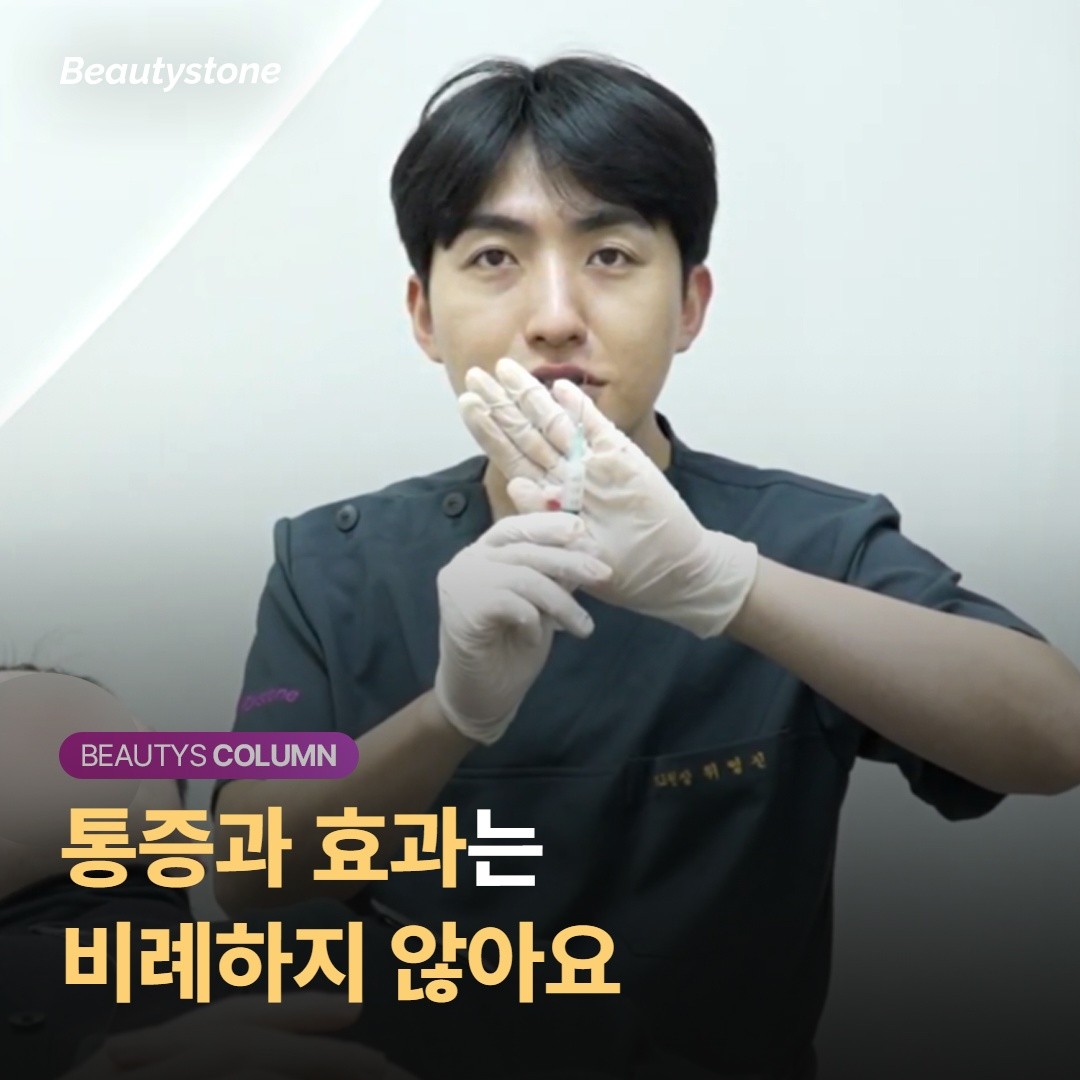
Less pain, same result
So the tools used to ease pain aren't there to dial down the effect — they're there to help deliver the energy you actually need. Numbing cream, pain relief, adjusting the energy by area, and pacing the treatment all make the sensation bearable. The key is not blindly lowering the energy, but putting the right energy into the right depth while managing only the pain.
Of course, if your skin is thin or you're very sensitive to pain, the energy may be adjusted. But that's an individual adjustment for safety and comfort — it does not mean “less pain equals giving up results.”
It also helps to know that different areas feel different. Spots cushioned by more tissue, like the cheekbones and cheeks, are relatively tolerable, while areas close to bone or with thin skin — the forehead, chin tip, and around the mouth — feel sharper. Even on the same person, pain varies by area, so if you say “this spot really hurts” during treatment, the pace or intensity can be tuned just for that area. Gritting your teeth isn't a virtue here; speaking up as you go leads to a steadier result.
How much it hurts, and what to watch for
Ultherapy pain tends to be a throbbing or stinging jolt that passes quickly. Areas near bone or with thin skin can feel more tender. For a few days afterward you may have a tingly or pressed-on feeling and some mild swelling, which usually settles on its own. That said, if the pain stays severe long after the treatment or the swelling doesn't go down, don't tough it out — it's safer to get it checked where you had the procedure.
If you're worried about pain, it's better to mention it ahead of time than to grin and bear it, since numbing or energy adjustments can make it bearable. Telling your provider before the treatment how sensitive you usually are to pain and how much numbing you'd like lets them prepare around how you're feeling that day.
To sum up: Ultherapy pain isn't “proof of effect” — it's a sensation that comes along as the deep layers are stimulated. So rather than skipping numbing altogether out of a “less pain means I'm losing out” mindset, the smarter approach is to put energy into the depth it needs while managing the pain appropriately. Find the approach that fits your skin thickness and pain sensitivity in a consultation, and the key is not to treat pain as the measure of results.
Consult with us on KakaoTalk
Wondering if this treatment is right for you? The director will take a look personally.
▶ Start a 1:1 chat on KakaoTalk
Frequently asked questions
Q. Does Ultherapy only work well if it hurts?
No. Pain is a side sensation you feel as heat is delivered to the deep layers — it's not a measure of how much effect you'll get. Pain sensitivity differs from person to person, so feeling less pain doesn't mean less energy went in.
Q. Doesn't numbing reduce the results?
Numbing only dulls the pain — it doesn't block the ultrasound energy going into the deep layers of your skin. If anything, staying relaxed and still can help deliver energy more evenly where it's needed.
Q. If it hurts too much, is it okay to lower the energy?
If your skin is thin or you're sensitive to pain, the energy is adjusted by area. But that's an individual adjustment for safety and comfort, set so that energy still reaches the depth it needs to — which is different from simply turning it down across the board.
Q. How long does the pain last?
The sharp jolt during the treatment passes quickly, and for a few days afterward you may have a tingly or pressed-on feeling and some mild swelling. It usually settles gradually, but if it lingers or feels severe, it's best to get it checked.
Further reading


Hair Removal
레이저 제모 1회에도 남는 몫이 있어요 — 밀도를 모자이크로 보는 법

Tattoo removal
Why Extremity Tattoos Are Slower to Remove

Tattoo removal
Tattoo Removal Cost: Why Quotes Vary by Area

Tattoo removal
Unused Tattoo Removal Sessions: What Happens?

Lifting
Forehead Thread Lifting: How Far Can It Go?

skin
Skin Booster Prices: What to Check in a Quote