Ultherapy, Shurink, Sofwave: same HIFU?
All HIFU, but depth (1.5/3/4.5mm) and imaging guidance set them apart.
Ulthera, Shurink, Sofwave Are All HIFU—Are They Really the Same Treatment?
When you’re getting a lifting consultation, you often hear, “Try HIFU once.” But when you ask, “Please show me the different types of HIFU treatments,” and see Ulthera, Shurink, Sofwave, and Linear Firm listed together, it starts to get confusing. If they work on the same principle, why is there such a big price difference, and why do the reviews sound so different?
Bottom line. HIFU* uses the same principle of “focusing ultrasound at one point to warm the skin from within,” but results differ depending on which depth is targeted, how precisely the points are placed, and whether the treatment is delivered while watching in real time. It’s similar to how the same camera can produce different photos depending on the lens and the photographer’s hand.
HIFU (High-Intensity Focused Ultrasound, 고강도 집속 초음파): a focused heating method that concentrates multiple ultrasound beams at one point and heats only that spot to 65–70°C. The surrounding tissue passes through almost unchanged, and only the target depth is heated.
First, the misconception that “ultrasound just makes the surface tingle”
The word ultrasound is more familiar from pregnancy scans or physical therapy, so it gives the impression of only “gentle vibration.” Because of that, many people assume HIFU also just stimulates the surface.
In reality, HIFU is the opposite. It concentrates multiple ultrasound beams at one point and instantly raises only that tiny area to over 65°C. A point of thermal coagulation* forms there, while the intervening surface skin is barely affected. That means the downtime is short, yet deeper layers of the dermis can still be treated.
Thermal Coagulation Point (TCP): a small thermal injury site that forms at the exact point where the ultrasound converges. This area becomes a signal for collagen regeneration.
How precisely that coagulation point is placed at the intended depth, and how evenly it is distributed across depths, accounts for almost all of the effect.

Why separate the depths into 1.5 mm, 3 mm, and 4.5 mm?
HIFU devices usually divide depths using 1.5 mm, 3.0 mm, and 4.5 mm cartridges. These numbers indicate which skin layer is being targeted.
- 1.5 mm reaches the shallow dermis to refine pores, fine lines, and skin texture. - 3.0 mm goes into the deeper dermis to improve firmness. - 4.5 mm reaches the SMAS layer (superficial musculoaponeurotic system) to address sagging. This is the layer directly treated in surgical facelifts.
Even if you receive the same “HIFU lifting” treatment, what changes is whether 1.5 mm, 3 mm, or 4.5 mm cartridges are used, and how many shots are delivered. That’s what determines whether the result feels like “better texture” or “a more defined jawline.” If you’re only concerned about pores, the 4.5 mm layer is left untouched; if you’re only concerned about sagging, the 1.5 mm layer is left untouched.
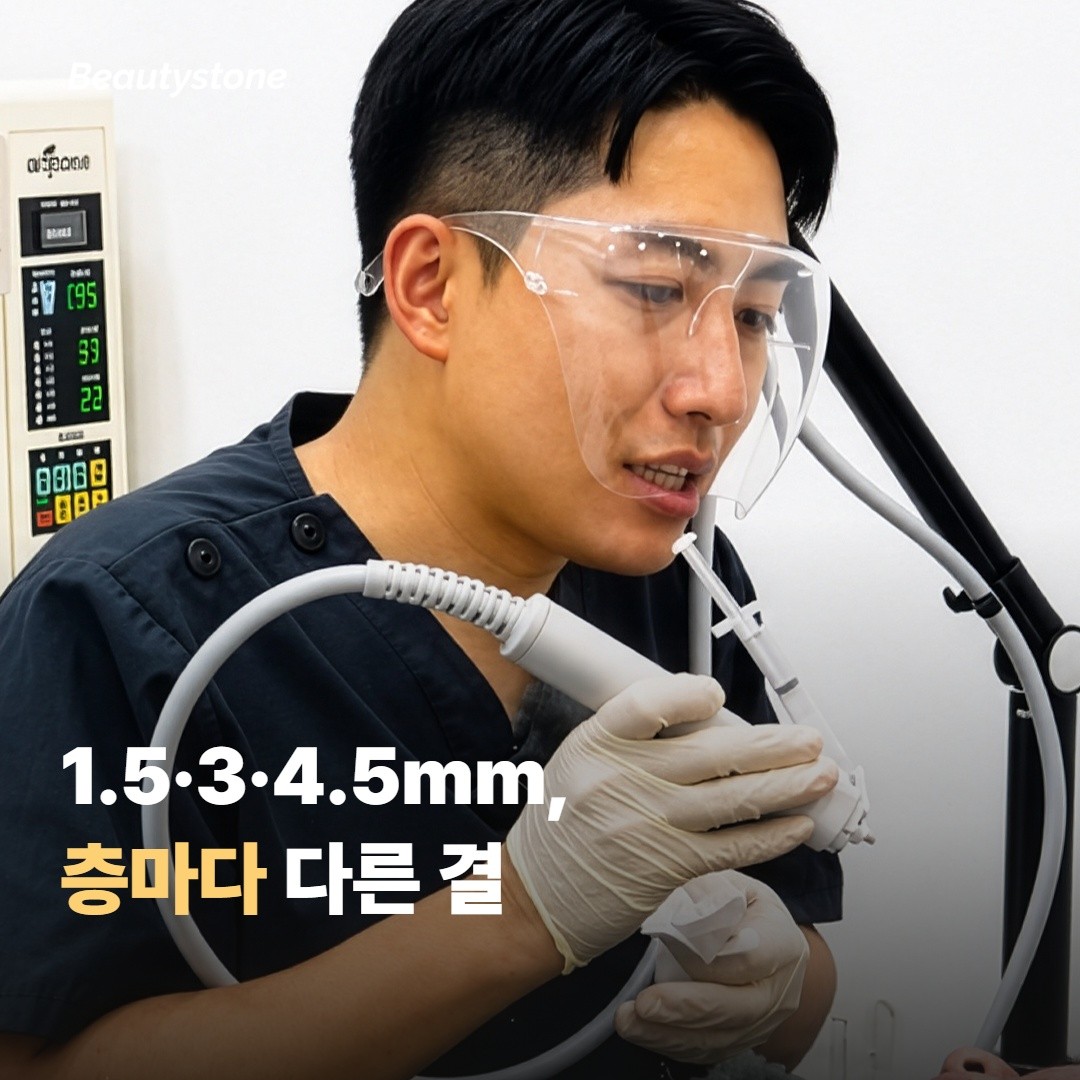
Ulthera, Shurink, Sofwave — the differences, even though they’re all HIFU
The three devices work on the same principle, but there’s one crucial difference.
Ulthera is the only device that lets the doctor place treatment points while viewing real-time ultrasound images. Because the doctor can see on screen whether the 4.5 mm depth is truly reaching the SMAS layer, there’s less variation between “hit” and “miss.” That also makes it more expensive.
Shurink/Shurink Universe is a device made by the Korean company Classys, and it uses a method of rapidly switching depth-specific cartridges without image guidance. Because the points are placed quickly, more shots can be delivered in the same amount of time. However, the pattern is less about “precise SMAS targeting” and more about “even coverage by depth.”
Sofwave does not work point by point; instead, seven ultrasound beams simultaneously enter the dermis at a 1.5 mm depth in a band-like pattern. Since its concept is heating the dermal layer above the SMAS, it aims for changes closer to “skin texture and fine lines” than to “sagging.”
This difference is why one person may say, “I was satisfied with Shurink, but my friend says Ulthera was better.” They’re targeting different layers.

Three things to check before your consultation
First, clarify whether what you want to improve is “sagging” or “texture.” If it’s sagging, look first at devices that can reach 4.5 mm; if it’s texture or pores, look first at devices that offer 1.5 mm.
Second, ask whether image guidance is used. Around the cheekbones and jawline, the bone is close and nerves pass through the area, so if 4.5 mm is delivered without imaging, some shots may hit correctly while others miss. That’s one reason Ulthera costs more.
Finally, think through how many times you’ll receive it in the same area within a year. Since the collagen cycle of HIFU runs on a 3- to 6-month basis, many people see longer-lasting results when they time it well and have one thorough treatment rather than repeating it too soon.
This article summarizes general information, and the HIFU that’s right for your skin and degree of sagging should be confirmed directly with a medical professional.

Related reading
Article title | Link |
|---|---|
Ulthera vs. Shurink: The Difference Between Once a Year and Once Every 6 Months | |
Shurink 4.5 mm Results: Why People with Fuller Cheeks and Thin Faces See Different Outcomes | |
Shurink Universe — The Real Variable Behind the Results I Saw During a 47-Minute Consultation | |
Ulthera Side Effects — Honestly, Even I Didn’t Know This 5 Years Ago | |
Would Sofwave Be Right for Fine Lines? |
Frequently Asked Questions
Q. How long does HIFU last after one treatment?
A. It takes 2 to 3 months for new collagen to form, and the effect usually lasts 6 to 12 months. However, because the aging process itself doesn’t stop, many people choose to schedule it on a yearly basis.
Q. I’ve seen many reviews saying it hurts a lot— is that true?
A. At 4.5 mm depth, you may feel a heavy, deep ache in areas close to the bone (the jawline and the outer edges of the cheekbones). We recommend 3 mm. Devices with image guidance (Ulthera) have fewer off-target shots, so it’s easier to achieve the same effect with less pain.
Q. Can you treat pores and sagging all at once?
A. It is possible, but you’ll need to use cartridges for all depths, which increases the cost and time. If you set priorities in advance, you can proceed more safely within the same budget.
Related reading
Ulthera, Shurink, Sofwave Are All HIFU—Are They Really the Same Treatment?

When you’re getting a lifting consultation, you often hear, “Try HIFU once.” But when you ask, “Please show me the different types of HIFU treatments,” and see Ulthera, Shurink, Sofwave, and Linear Firm listed together, it starts to get confusing. If they work on the same principle, why is there such a big price difference, and why do the reviews sound so different?
Bottom line. HIFU* uses the same principle of “focusing ultrasound at one point to warm the skin from within,” but results differ depending on which depth is targeted, how precisely the points are placed, and whether the treatment is delivered while watching in real time. It’s similar to how the same camera can produce different photos depending on the lens and the photographer’s hand.
HIFU (High-Intensity Focused Ultrasound, 고강도 집속 초음파): a focused heating method that concentrates multiple ultrasound beams at one point and heats only that spot to 65–70°C. The surrounding tissue passes through almost unchanged, and only the target depth is heated.
First, the misconception that “ultrasound just makes the surface tingle”
The word ultrasound is more familiar from pregnancy scans or physical therapy, so it gives the impression of only “gentle vibration.” Because of that, many people assume HIFU also just stimulates the surface.
In reality, HIFU is the opposite. It concentrates multiple ultrasound beams at one point and instantly raises only that tiny area to over 65°C. A point of thermal coagulation* forms there, while the intervening surface skin is barely affected. That means the downtime is short, yet deeper layers of the dermis can still be treated.
Thermal Coagulation Point (TCP): a small thermal injury site that forms at the exact point where the ultrasound converges. This area becomes a signal for collagen regeneration.
How precisely that coagulation point is placed at the intended depth, and how evenly it is distributed across depths, accounts for almost all of the effect.

Why separate the depths into 1.5 mm, 3 mm, and 4.5 mm?
HIFU devices usually divide depths using 1.5 mm, 3.0 mm, and 4.5 mm cartridges. These numbers indicate which skin layer is being targeted.
- 1.5 mm reaches the shallow dermis to refine pores, fine lines, and skin texture. - 3.0 mm goes into the deeper dermis to improve firmness. - 4.5 mm reaches the SMAS layer (superficial musculoaponeurotic system) to address sagging. This is the layer directly treated in surgical facelifts.
Even if you receive the same “HIFU lifting” treatment, what changes is whether 1.5 mm, 3 mm, or 4.5 mm cartridges are used, and how many shots are delivered. That’s what determines whether the result feels like “better texture” or “a more defined jawline.” If you’re only concerned about pores, the 4.5 mm layer is left untouched; if you’re only concerned about sagging, the 1.5 mm layer is left untouched.

Ulthera, Shurink, Sofwave — the differences, even though they’re all HIFU
The three devices work on the same principle, but there’s one crucial difference.
Ulthera is the only device that lets the doctor place treatment points while viewing real-time ultrasound images. Because the doctor can see on screen whether the 4.5 mm depth is truly reaching the SMAS layer, there’s less variation between “hit” and “miss.” That also makes it more expensive.
Shurink/Shurink Universe is a device made by the Korean company Classys, and it uses a method of rapidly switching depth-specific cartridges without image guidance. Because the points are placed quickly, more shots can be delivered in the same amount of time. However, the pattern is less about “precise SMAS targeting” and more about “even coverage by depth.”
Sofwave does not work point by point; instead, seven ultrasound beams simultaneously enter the dermis at a 1.5 mm depth in a band-like pattern. Since its concept is heating the dermal layer above the SMAS, it aims for changes closer to “skin texture and fine lines” than to “sagging.”
This difference is why one person may say, “I was satisfied with Shurink, but my friend says Ulthera was better.” They’re targeting different layers.

Three things to check before your consultation
First, clarify whether what you want to improve is “sagging” or “texture.” If it’s sagging, look first at devices that can reach 4.5 mm; if it’s texture or pores, look first at devices that offer 1.5 mm.
Second, ask whether image guidance is used. Around the cheekbones and jawline, the bone is close and nerves pass through the area, so if 4.5 mm is delivered without imaging, some shots may hit correctly while others miss. That’s one reason Ulthera costs more.
Finally, think through how many times you’ll receive it in the same area within a year. Since the collagen cycle of HIFU runs on a 3- to 6-month basis, many people see longer-lasting results when they time it well and have one thorough treatment rather than repeating it too soon.
This article summarizes general information, and the HIFU that’s right for your skin and degree of sagging should be confirmed directly with a medical professional.

Related reading
Article title | Link |
|---|---|
Ulthera vs. Shurink: The Difference Between Once a Year and Once Every 6 Months | |
Shurink 4.5 mm Results: Why People with Fuller Cheeks and Thin Faces See Different Outcomes | |
Shurink Universe — The Real Variable Behind the Results I Saw During a 47-Minute Consultation | |
Ulthera Side Effects — Honestly, Even I Didn’t Know This 5 Years Ago | |
Would Sofwave Be Right for Fine Lines? |
Frequently Asked Questions
Q. How long does HIFU last after one treatment?
A. It takes 2 to 3 months for new collagen to form, and the effect usually lasts 6 to 12 months. However, because the aging process itself doesn’t stop, many people choose to schedule it on a yearly basis.
Q. I’ve seen many reviews saying it hurts a lot— is that true?
A. At 4.5 mm depth, you may feel a heavy, deep ache in areas close to the bone (the jawline and the outer edges of the cheekbones). We recommend 3 mm. Devices with image guidance (Ulthera) have fewer off-target shots, so it’s easier to achieve the same effect with less pain.
Q. Can you treat pores and sagging all at once?
A. It is possible, but you’ll need to use cartridges for all depths, which increases the cost and time. If you set priorities in advance, you can proceed more safely within the same budget.
Related reading
Latest post
Latest post

Lifting
20대부터 50대까지, 연령대별 리프팅 시술은 언제 어떤 것부터 시작하면 좋을까요?
리프팅 시작 시점은 나이보다 피부 신호가 기준이에요. 연령대별 로드맵과 방식을 고르는 기준, 흔한 오해까지 짚어봐요.

Contouring & Volume
눈두덩이 무겁고 눈썹이 처져 보일 때, 이마·눈썹 초음파 리프팅이 도움이 될까요?
무거운 눈매의 원인이 눈썹·이마 처짐일 때, 초음파 리프팅의 원리와 어울리는 경우, 회복 신호와 효과 시점을 함께 정리한 안내예요.

Lifting
목주름과 흐려진 넥라인이 함께 신경 쓰일 때, 고주파 리프팅은 어떤 도움이 될까요?
목주름과 넥라인 흐려짐의 원인부터 고주파 리프팅의 작용 원리, 주름 유형별 접근과 회복 신호까지 정리한 안내예요.

Contouring & Volume
관자놀이와 이마가 꺼져 보이기 시작할 때, 쥬베룩 볼륨은 어떤 도움이 될 수 있을까요?
관자놀이·이마 꺼짐의 원인과 쥬베룩 볼륨이 콜라겐을 유도해 서서히 채우는 원리, 어떤 경우에 어울리는지 기준과 회복 신호를 정리한 안내예요.

Body
온다 마이크로웨이브는 셀룰라이트에도 도움이 될까요, 지방과 결합조직에 어떻게 작용할까요?
온다 마이크로웨이브는 깊은 지방과 섬유 결합조직을 데워 콜라겐을 리모델링하는 방식이에요. 리프팅과 셀룰라이트 개선이 노리는 층의 차이와 회복 반응을 정리했어요.

Hair Removal
젠틀맥스 제모 후 모낭염, 왜 생기고 어떻게 관리하면 좋을까요?
젠틀맥스 제모 후 며칠 뒤 올라오는 뾰루지는 털이 빠져나오는 과정과 얽힌 모낭염인 경우가 많아요. 흔한 반응과 다시 봐야 할 신호, 집에서 하는 관리를 정리했어요.
1:1 Custom Approach
1:1 Consultation Whatsapp
🌸 Beautystone Clinic attends the Meditox Bangkok Cadaver Workshop 🌸
1:1 Custom Approach