

Deep-layer Ultherapy Prime vs broad-heat Thermage—which to weigh first for 50s cheeks.
Published -
Updated -

Author
Wi Young-jin · Chief director
Seoul National University College of Medicine · Seoul National University Hospital Specialist
→
When you reach your 50s and start to feel that your jawline and cheeks aren't quite what they used to be, you will almost certainly come across two names while researching lifting treatments: Ulthera Prime* and Thermage. Both are introduced as non-surgical ways to lift sagging cheeks, but the more explanations you hear, the more confusing it can be to decide which one to consider first.
The short answer is that these two treatments target different skin layers and use different heating methods, so the one you should look into first depends on what is causing your sagging. If the sagging of the deeper layers is prominent, it is best to consider Ulthera Prime first. If a general loss of elasticity is spread widely across the entire skin surface, Thermage is a great place to start. Rather than one being universally better than the other, the key is to first understand the unique pattern of your skin's sagging.
This content compiles treatment information from Beautystone Hapjeong.
In This Article, You Will Learn:
How to tell if sagging cheeks in your 50s are a skin surface issue or a deeper structural issue
The differences in depth and heating methods between Ulthera Prime and Thermage
Which treatment you should look into first based on your specific type of sagging
Important things to check before your treatment and key individual differences
Sagging Cheeks in Your 50s: Is It the Skin Surface or the Deep Structure?
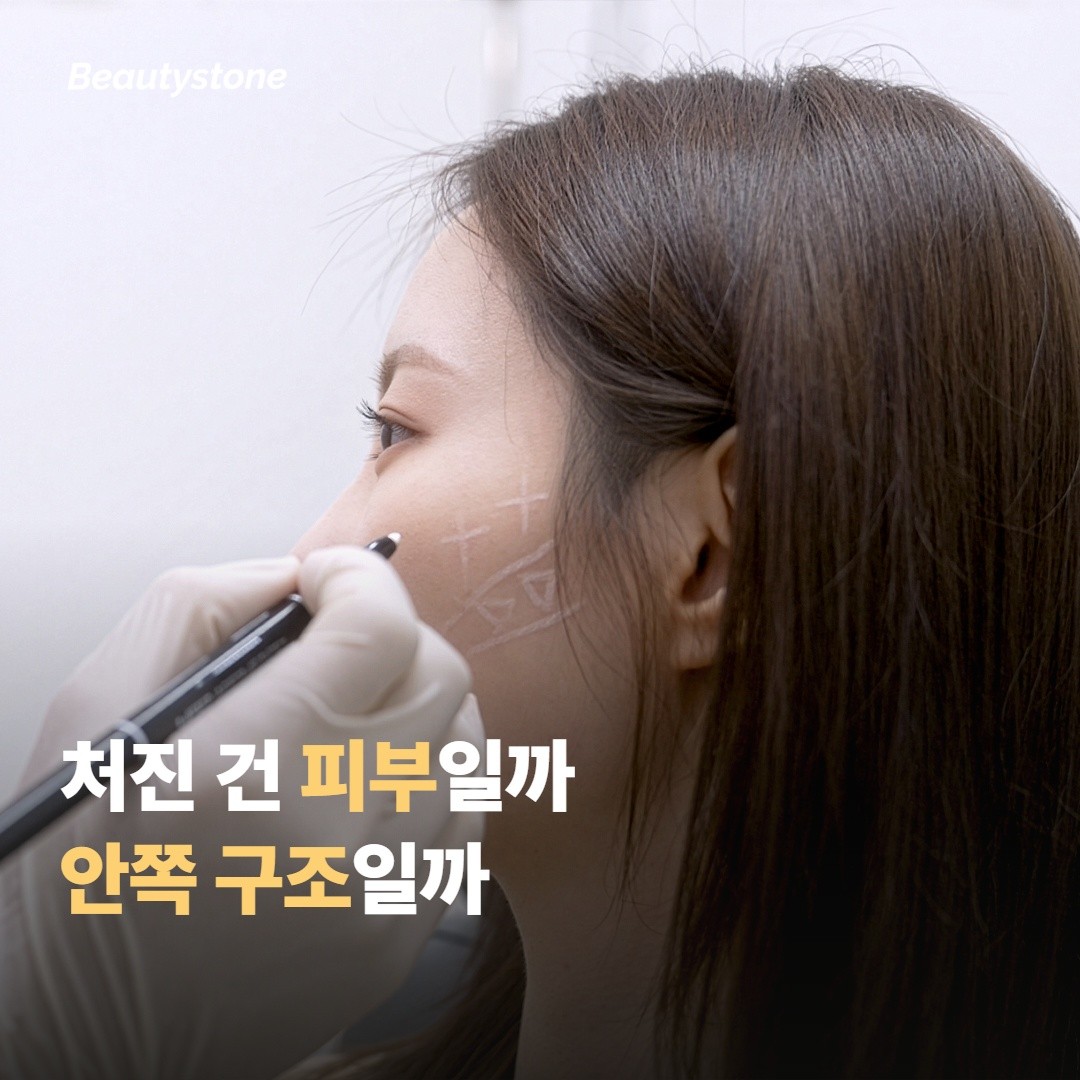
Cheek sagging involves several different layers of the skin working together. There is a loss of elasticity in the outermost epidermis and dermis*, and underneath lies the SMAS* (Superficial Muscular Aponeurotic System), a muscle-fascia layer that supports your facial expressions and volume. As we enter our 50s, collagen in the dermis decreases, causing the skin itself to become thinner and looser. At the same time, the inner SMAS and supporting ligaments also relax, leading to an overall downward shift of the cheeks. In fact, studies on the age-related decline of type I and type III collagen synthesis show that the actual amount of collagen produced by fibroblasts in aging skin decreases significantly.
Dermis*: The thick layer of skin located just below the epidermis. It houses collagen and elastic fibers, serving as the foundation that supports skin elasticity.
This is why, even for the same sagging cheeks, the primary cause varies from person to person. Some people experience a prominent surface change with thinning skin and fine wrinkles, while others have relatively good skin quality on the surface but feel a heavy, downward sag coming from deep within the cheeks. Reading these subtle details is the first step in determining which treatment is the best fit for your unique concerns.

Ulthera Prime Warms the Deeper Layers, While Thermage Heats the Entire Dermis
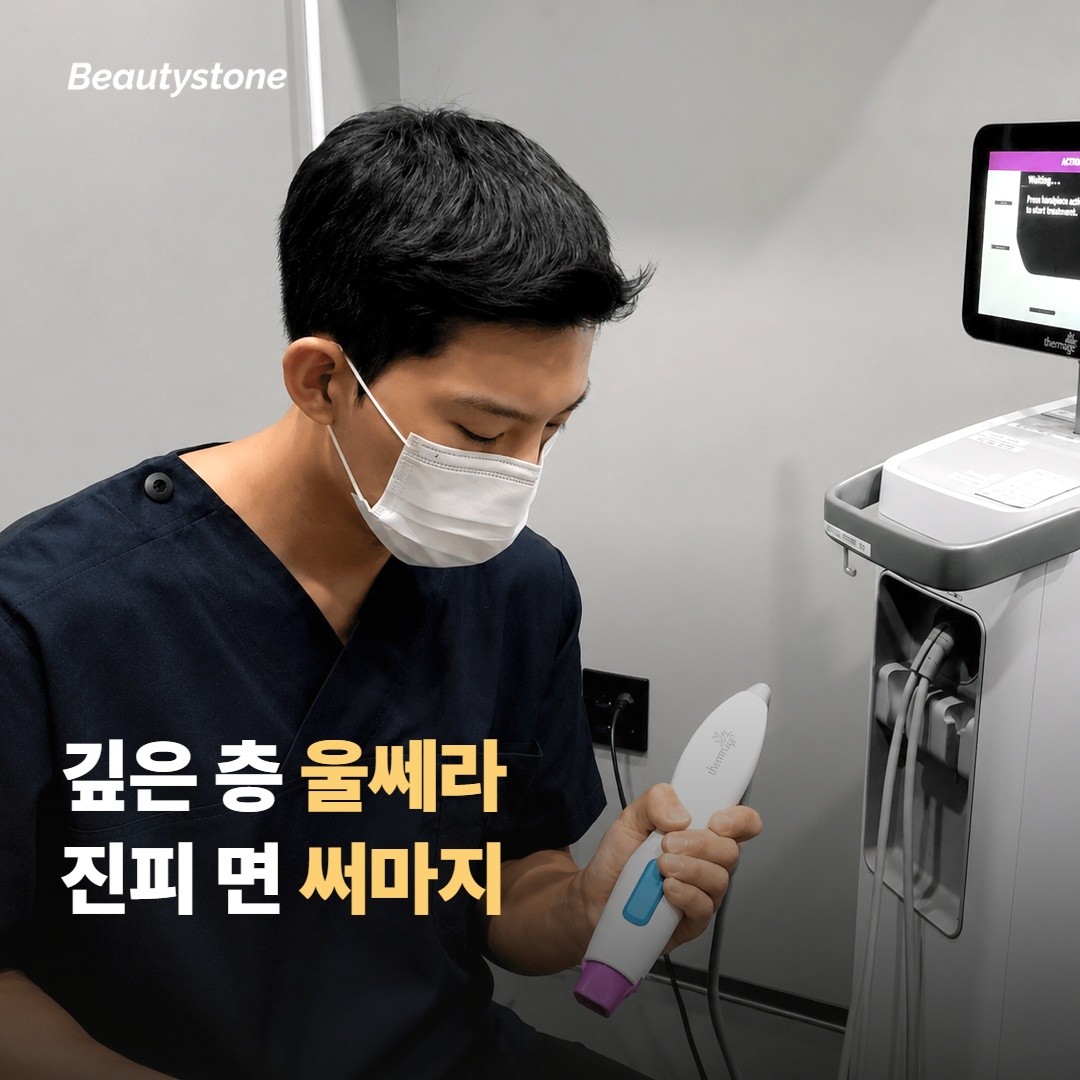
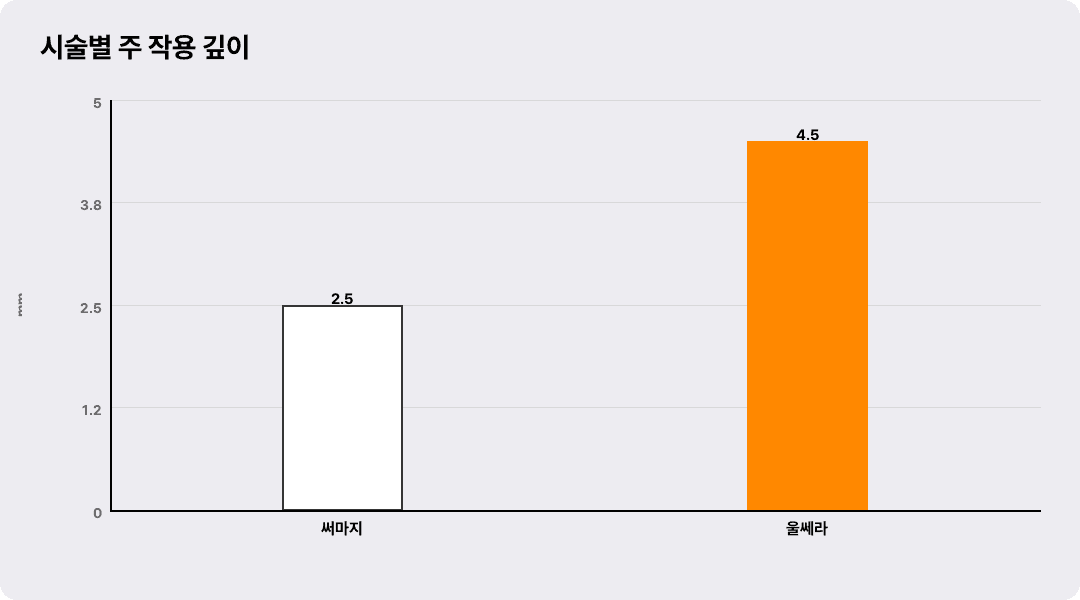
Ulthera Prime uses High Intensity Focused Ultrasound (HIFU)* to focus energy to a single point, creating tiny thermal coagulation points in the deeper layers, including the SMAS. This approach triggers a natural healing process that contracts the tissue and stimulates new collagen production. Indeed, research showing that High Intensity Focused Ultrasound increases type I and type III collagen synthesis in aging skin has observed a clear increase in collagen fibers following the treatment.
High Intensity Focused Ultrasound (HIFU)*: A method that delivers thermal energy deep into the skin layers by focusing ultrasound energy on a single point. It is designed to work inside without affecting the outer skin surface.
On the other hand, Thermage utilizes monopolar radiofrequency (RF)* to gently heat a broad area of the dermis. It protects and cools the outer surface of the skin while raising the temperature of the dermis, encouraging collagen to contract and remodel. Studies showing that monopolar RF increases collagen density by heating the dermis while protecting the epidermis demonstrate this sophisticated design, which keeps the surface temperature cool while selectively heating the dermis. Simply put, think of one as precisely targeting deeper points, and the other as evenly warming the entire dermal plane.
Monopolar Radiofrequency (RF)*: A method that generates heat deep within the skin layers using high-frequency electrical currents. It is used to broadly warm the dermis while cooling the surface.
Your Ideal Treatment Depends on Your Type of Sagging
Because these two procedures target different depths, the treatment you should consider first depends on your specific type of sagging. If the loosening of the inner SMAS is more prominent, Ulthera Prime—which targets the deeper layers—is often the best starting point. If there is a widespread loss of elasticity in the dermis, Thermage, which warms the entire surface plane, is frequently recommended first.
Classification | Ulthera Prime | Thermage |
|---|---|---|
Heating Method | High Intensity Focused Ultrasound (HIFU) | Monopolar Radiofrequency (RF) |
Main Target Layer | Deep layers, including the SMAS | Entire Dermis |
Energy Delivery | Focused Point-by-Point | Even, Surface Plane-to-Plane |
Recommended First For | Prominent sagging of deep structural layers | Widespread loss of surface elasticity |
Of course, treatment path is not decided solely by depth alone. Even in your 50s, skin thickness, volume of facial fat, and daily facial expressions can all influence how your skin responds, which is why many patients choose to receive both treatments at different intervals. The rate at which you notice results also varies: the visible changes that come from new collagen growth gradually appear over several weeks to two or three months. Because individual variations are significant, it is best to view this as a progressive journey over multiple sessions rather than expecting a dramatic transformation all at once.
Why Choose Beautystone Hapjeong?
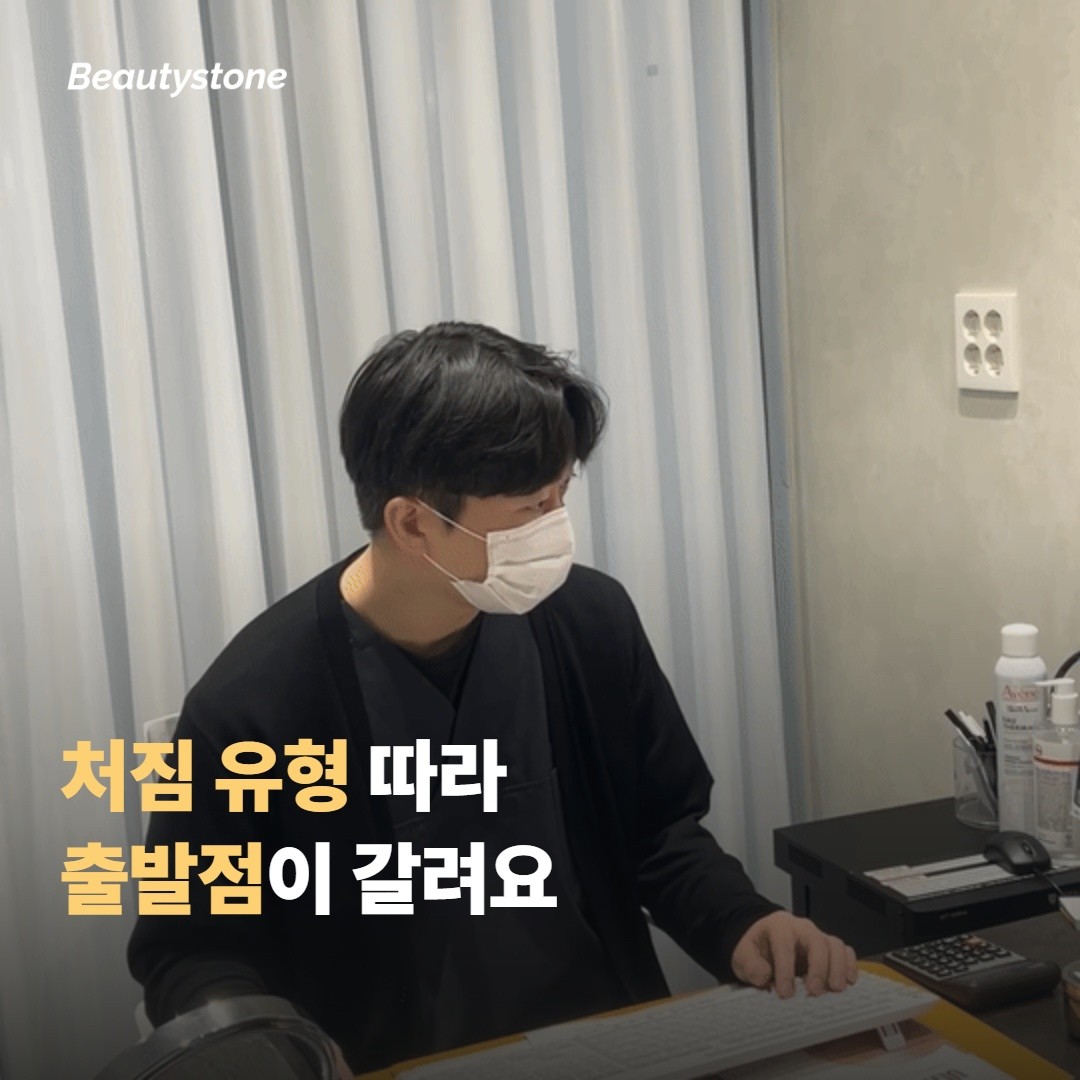
At Beautystone Hapjeong, we customize our treatment combinations to match the unique skin qualities of each individual patient. We do not recommend the same treatment for everyone; we carefully assess whether your sagging is primarily surface-level or structural, and together we plan whether to start with Ulthera Prime or Thermage. As a welcoming boutique clinic located just a short walk from Hapjeong Station, we are dedicated to monitoring your unique skin thickness and recovery speed to guide you comfortably through every step of your aesthetic journey.

Things to Keep in Mind Before Your Treatment
Reviewing a few practical details before deciding on a lifting treatment can help make your journey much more comfortable and satisfying. The most important thing to remember is that visible changes happen gradually and naturally.
Time to See Results — Because it takes time for your body to build new collagen, key changes are typically noticed gradually over two to three months.
Individual Differences — Your skin's response will vary depending on your skin thickness, facial fat volume, and age.
Recovery Experience — Temporary redness, mild swelling, or a tender sensation when pressed may occur immediately after the procedure and can last for a few days.
Duration of Results — While it varies from person to person, results are commonly reported to last from several months up to a year.
Medications & Skin Condition — Please let us know during your consultation if you have any pre-existing skin conditions, are taking medications, or have had recent cosmetic procedures.
Lifting sagging cheeks is less about a one-time quick fix and more about a gentle process of helping your skin regenerate its own natural collagen over time. To ensure your safety and get the best results, it is highly recommended to consult with an experienced medical professional to determine which treatment and schedule are best for you.

Frequently Asked Questions
Q. Can I get Ulthera Prime and Thermage done together?
A. Yes. Because they target different layers of the skin, many patients choose to receive both. However, rather than doing them both on the same day, we often recommend spacing them out based on how your skin responds. The best approach depends heavily on your unique skin condition, so we recommend discussing this during your consultation.
Q. Is it too late to start lifting treatments in my 50s?
A. Absolutely not. However, if there is a more significant amount of sagging, the visible change from a single session might feel subtle. In these cases, we often recommend a step-by-step approach over multiple sessions or combining treatments. Setting realistic expectations tailored to your skin is a great way to start.
Q. Will I see the results immediately after the treatment?
A. You may feel a slight tightening or firming sensation immediately after the procedure, but the true benefits of new collagen growth appear gradually over several weeks to two or three months. Since the speed of these changes varies individually, a patient approach is key.
Q. Is the procedure very painful?
A. Both procedures deliver warm thermal energy into the skin, which can cause a tingling or warm, hot sensation. Today, we manage discomfort well by adjusting energy levels and applying topical numbing creams. Since everyone's sensitivity to pain is different, please let us know beforehand so we can customize the comfort level for you.
Suggested Readings


Hair Removal
레이저 제모 1회에도 남는 몫이 있어요 — 밀도를 모자이크로 보는 법

Tattoo removal
Why Extremity Tattoos Are Slower to Remove

Tattoo removal
Tattoo Removal Cost: Why Quotes Vary by Area

Tattoo removal
Unused Tattoo Removal Sessions: What Happens?

Lifting
Forehead Thread Lifting: How Far Can It Go?

skin
Skin Booster Prices: What to Check in a Quote