Thermage 'no results'? Usually shot count.
70% of 'Thermage failed' reviews come from too few shots. Under 600 won't trigger Collagen.
Why some reviews say Thermage has no effect: the real reason is often the shot count
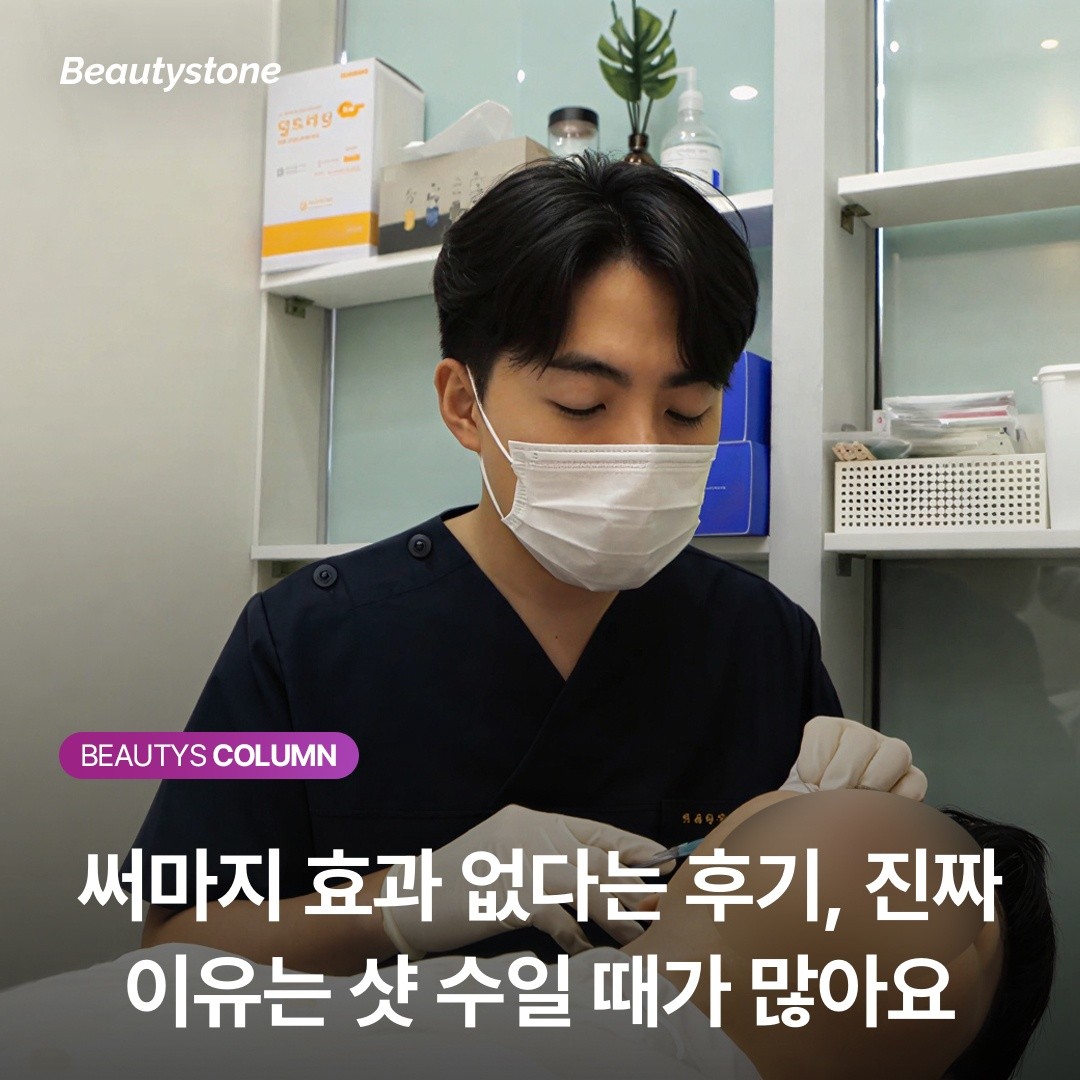
You may have searched for reviews saying, "I got Thermage, but it had no effect." It’s completely natural to feel unsure before treatment. It’s expensive, it can be painful, and if the results are unclear, anyone would hesitate.
But why is it that with the same procedure, one person sees a lifted contour while another only notices temporary radiance? Is it the doctor’s skill? The degree of skin aging? Those factors matter to some extent, but the answer that comes up most often in the data is surprisingly simple: the shot count.
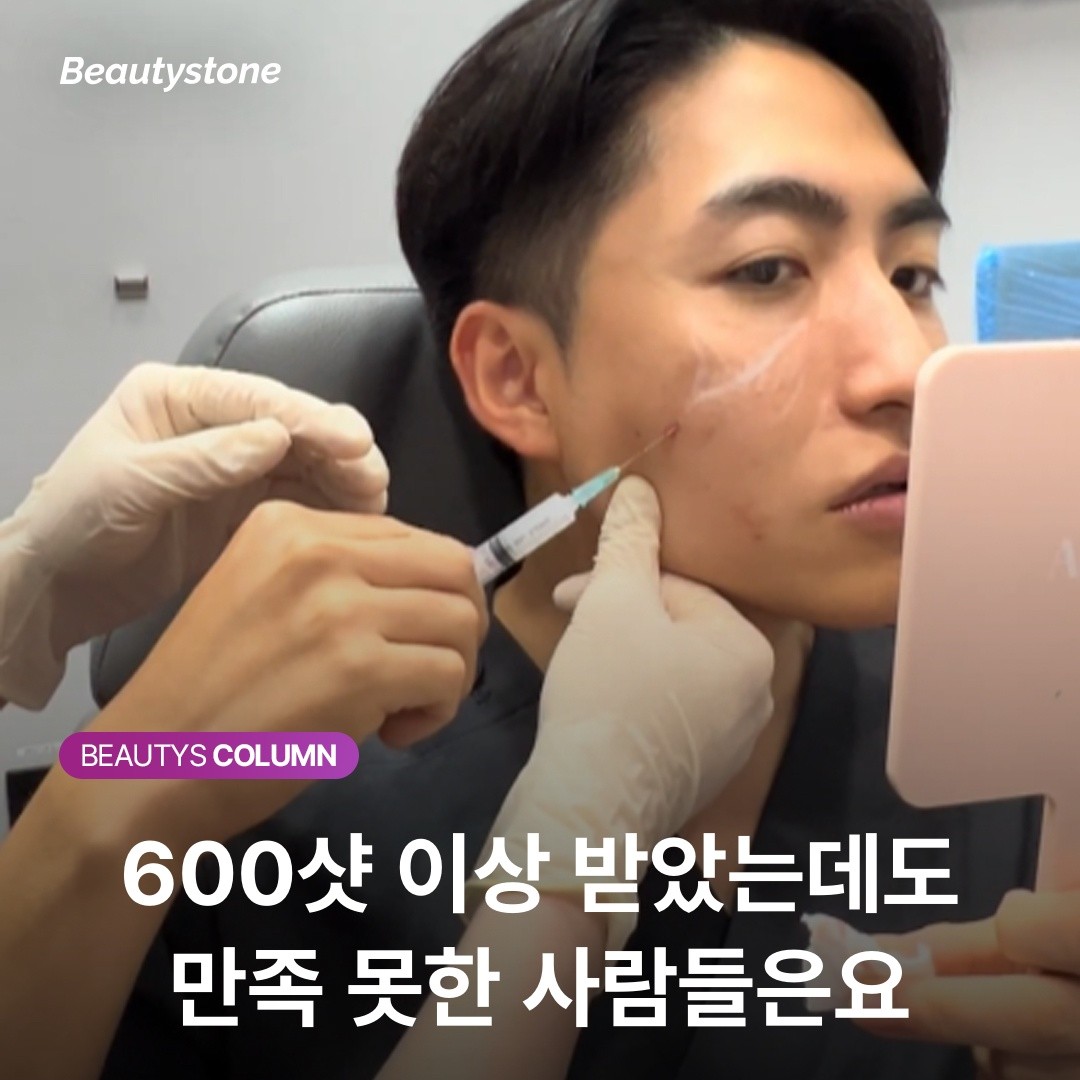
The short answer. About 70% of reviews saying “it had no effect” are caused by too few shots. If the full face receives fewer than 600 shots, the treatment often does not reach the threshold needed for collagen contraction, so most people only notice a brief glow for 1–2 weeks.
Why is 600 shots such an important benchmark?
Thermage delivers RF* heat deep into the skin, using radiofrequency energy to tighten by contracting collagen. By design, a certain amount of heat must accumulate for collagen to contract immediately and for new collagen to begin forming in that area.
*RF: radiofrequency. This method delivers heat into the dermis to induce collagen denaturation and contraction.*
In practice, that threshold is usually around 600 shots. When you look at the entire face as 100% of the treatment area, going below 600 shots means the RF energy reaches the skin only in scattered points, and the contraction signal is not delivered sufficiently to the entire collagen network. In that case, the post-treatment glow or slight tightening sensation may last only 1–2 weeks and then fade.
This glow is easy to mistake for real results. If your face looks smoother right after treatment and feels slightly tighter, it’s easy to think, “Oh, it worked.” But this is often just the result of heat stimulation and moisture changes, not true collagen contraction. Real lifting is a change in which sagging lines move upward over time, and that typically appears only when the threshold has been met.
Some clinics say 300 shots is enough. Why is that?
The reason is price. Each genuine tip* has a fixed number of shots, and that unit cost is directly reflected in the treatment fee. From a patient’s perspective, there can be a difference of several hundred thousand won between a full 600-shot treatment and a 300-shot treatment.
*Tip: a disposable consumable attached to the Thermage device. Genuine tips are restricted to a set number of firings.*
That is why some treatment packages are structured as something like “forehead + cheeks + jawline integrated course, 300 shots.” The unit price becomes lower, but because it is below the threshold, it often leads to reviews saying “it had no effect.” The saying that half the price means less than half the effect comes from this kind of structure.
There is also a misconception that dividing the shots by area will be more effective, but collagen contraction is a change that occurs across the overall treatment area. If too few shots are distributed over a small area, the overall contour change does not show well. If only the cheekbones look more defined while the jawline remains unchanged, the face can even look awkward. Even with the same 600 shots, results are better when they are distributed well according to the pattern of sagging.
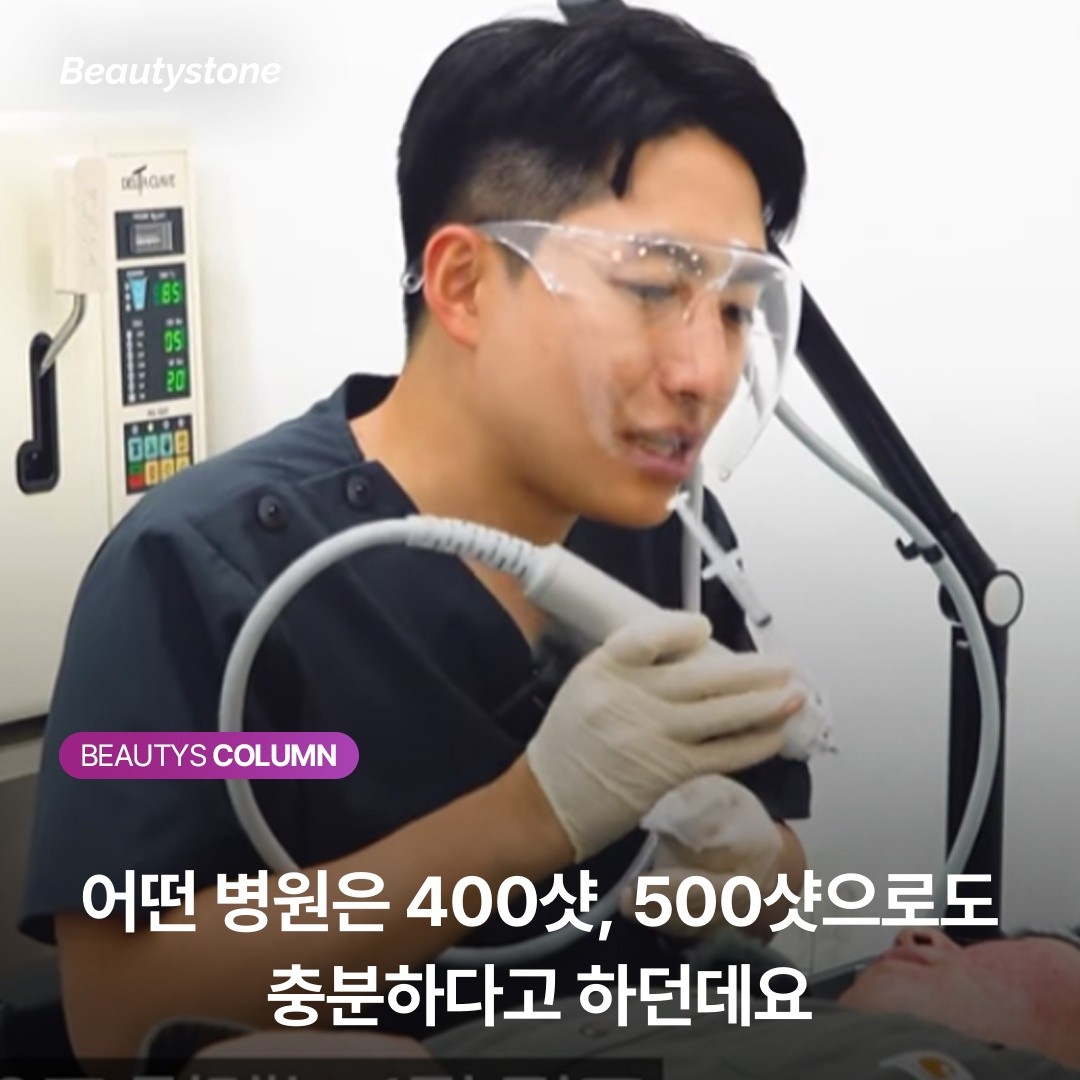
What if someone received more than 600 shots and still wasn’t satisfied?
In that case, the evaluation timing is often too early. With Thermage, collagen remodeling begins in earnest around the 3-month mark, and the peak effect is usually around 6 months.
In the first 1–2 weeks after treatment, the skin may even look drier because moisture is lost from the heat, and at around 1 month the changes can still be subtle, making it easy to feel that “it’s not that great.” The real contour improvement appears after 3 months, so if someone posts a review before then, negative impressions are naturally more common.
There is one more thing: collagen remodeling is not a change that ends with a single treatment. Looking at the 1-year point, about 50% of the 6-month contour and only about 20% of the 12-month contour typically remains. If you expect to do it once and be done, satisfaction will naturally be lower. People who receive it once a year and build up the effect over time tend to achieve the best contour results. When reading reviews, you should also distinguish between people who “had it once and never again” and those who “continued annually.”
What should you check before treatment?
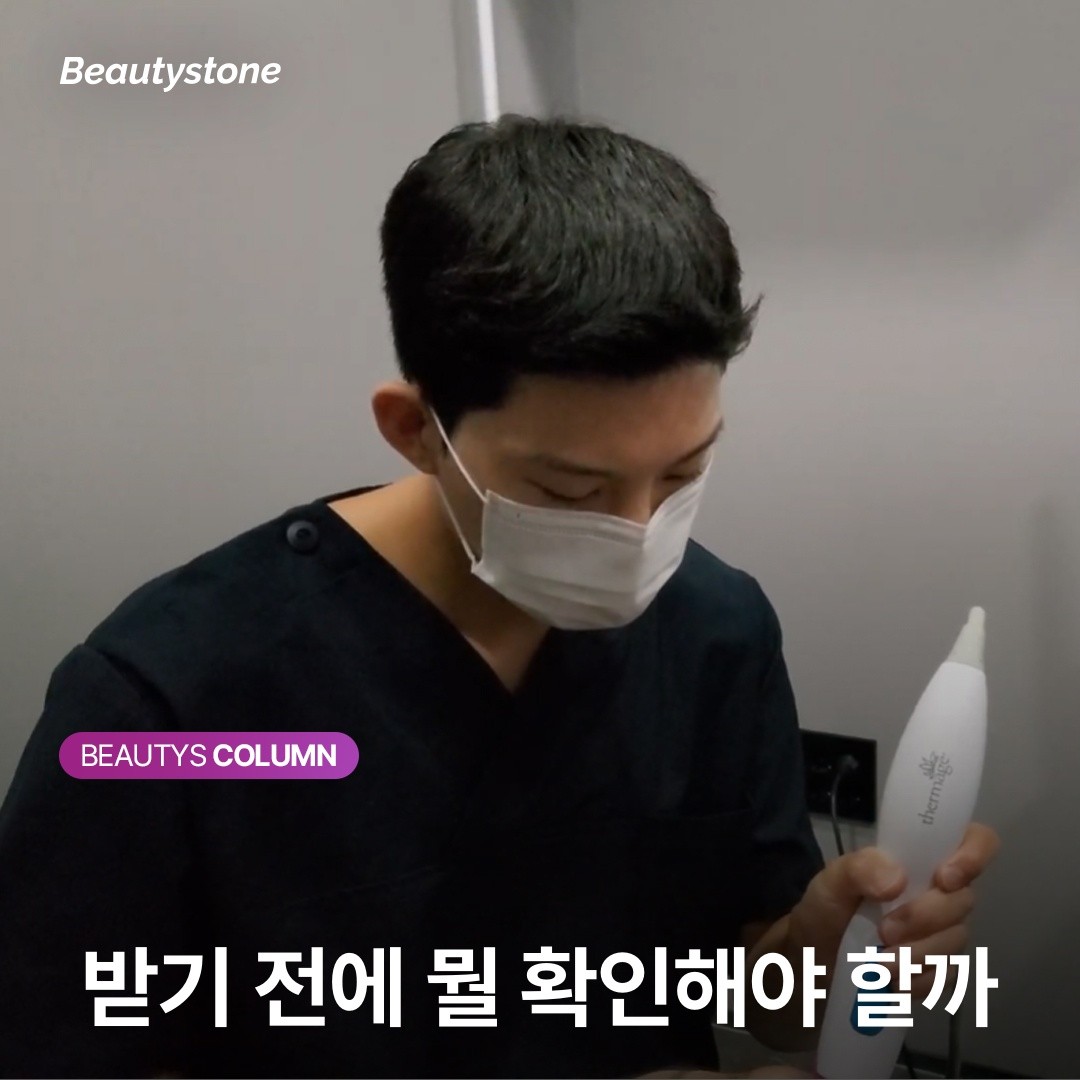
Before comparing prices, the first things to check are the shot count and whether the tip is genuine. If you want full-face treatment, 600 shots or more is the basic standard. If there are areas where sagging has started, such as the cheekbones or jawline, additional shots may be needed.
You can confirm authenticity by checking whether the tip serial number is written on the treatment consent form. Some clinics may reuse genuine tips or use non-genuine compatible tips. In those cases, even with the same shot count, the delivered energy may be insufficient and the treatment may not reach the threshold.
Finally, it is best to assess the results after waiting 3 months. If you decide based on 1-week or 1-month reviews, your own expectations can fall into the same trap, and your decision about the next session may also become unstable. If you are investing the same cost, the most reasonable approach is to wait long enough and then judge the outcome.
Frequently asked questions
Q1. Is 600 shots an absolute standard?
A. No, it is not absolute. It varies depending on face size, degree of sagging, and which areas are treated. That said, 600 shots is the usual starting point for seeing results across the full face.
Q2. Can the results differ depending on the doctor even with the same 600 shots?
A. Yes. Even with the same shot count, results can differ depending on how deep the shots are delivered and how they are distributed across the areas. In many cases, 600 shots concentrated in the areas where sagging begins can be more effective than 900 shots spread evenly.
Q3. Can we analyze “no effect” reviews even without considering timing?
A. Timing is the biggest factor, but for an accurate evaluation you should also look at whether the tip was genuine, whether the doctor performed the procedure directly, and whether the shots were distributed appropriately by area. It is best to give more weight to reviews written after the 3-month mark.
Why some reviews say Thermage has no effect: the real reason is often the shot count

You may have searched for reviews saying, "I got Thermage, but it had no effect." It’s completely natural to feel unsure before treatment. It’s expensive, it can be painful, and if the results are unclear, anyone would hesitate.
But why is it that with the same procedure, one person sees a lifted contour while another only notices temporary radiance? Is it the doctor’s skill? The degree of skin aging? Those factors matter to some extent, but the answer that comes up most often in the data is surprisingly simple: the shot count.
The short answer. About 70% of reviews saying “it had no effect” are caused by too few shots. If the full face receives fewer than 600 shots, the treatment often does not reach the threshold needed for collagen contraction, so most people only notice a brief glow for 1–2 weeks.
Why is 600 shots such an important benchmark?
Thermage delivers RF* heat deep into the skin, using radiofrequency energy to tighten by contracting collagen. By design, a certain amount of heat must accumulate for collagen to contract immediately and for new collagen to begin forming in that area.
*RF: radiofrequency. This method delivers heat into the dermis to induce collagen denaturation and contraction.*
In practice, that threshold is usually around 600 shots. When you look at the entire face as 100% of the treatment area, going below 600 shots means the RF energy reaches the skin only in scattered points, and the contraction signal is not delivered sufficiently to the entire collagen network. In that case, the post-treatment glow or slight tightening sensation may last only 1–2 weeks and then fade.
This glow is easy to mistake for real results. If your face looks smoother right after treatment and feels slightly tighter, it’s easy to think, “Oh, it worked.” But this is often just the result of heat stimulation and moisture changes, not true collagen contraction. Real lifting is a change in which sagging lines move upward over time, and that typically appears only when the threshold has been met.

Some clinics say 300 shots is enough. Why is that?
The reason is price. Each genuine tip* has a fixed number of shots, and that unit cost is directly reflected in the treatment fee. From a patient’s perspective, there can be a difference of several hundred thousand won between a full 600-shot treatment and a 300-shot treatment.
*Tip: a disposable consumable attached to the Thermage device. Genuine tips are restricted to a set number of firings.*
That is why some treatment packages are structured as something like “forehead + cheeks + jawline integrated course, 300 shots.” The unit price becomes lower, but because it is below the threshold, it often leads to reviews saying “it had no effect.” The saying that half the price means less than half the effect comes from this kind of structure.
There is also a misconception that dividing the shots by area will be more effective, but collagen contraction is a change that occurs across the overall treatment area. If too few shots are distributed over a small area, the overall contour change does not show well. If only the cheekbones look more defined while the jawline remains unchanged, the face can even look awkward. Even with the same 600 shots, results are better when they are distributed well according to the pattern of sagging.

What if someone received more than 600 shots and still wasn’t satisfied?
In that case, the evaluation timing is often too early. With Thermage, collagen remodeling begins in earnest around the 3-month mark, and the peak effect is usually around 6 months.
In the first 1–2 weeks after treatment, the skin may even look drier because moisture is lost from the heat, and at around 1 month the changes can still be subtle, making it easy to feel that “it’s not that great.” The real contour improvement appears after 3 months, so if someone posts a review before then, negative impressions are naturally more common.
There is one more thing: collagen remodeling is not a change that ends with a single treatment. Looking at the 1-year point, about 50% of the 6-month contour and only about 20% of the 12-month contour typically remains. If you expect to do it once and be done, satisfaction will naturally be lower. People who receive it once a year and build up the effect over time tend to achieve the best contour results. When reading reviews, you should also distinguish between people who “had it once and never again” and those who “continued annually.”

What should you check before treatment?
Before comparing prices, the first things to check are the shot count and whether the tip is genuine. If you want full-face treatment, 600 shots or more is the basic standard. If there are areas where sagging has started, such as the cheekbones or jawline, additional shots may be needed.
You can confirm authenticity by checking whether the tip serial number is written on the treatment consent form. Some clinics may reuse genuine tips or use non-genuine compatible tips. In those cases, even with the same shot count, the delivered energy may be insufficient and the treatment may not reach the threshold.
Finally, it is best to assess the results after waiting 3 months. If you decide based on 1-week or 1-month reviews, your own expectations can fall into the same trap, and your decision about the next session may also become unstable. If you are investing the same cost, the most reasonable approach is to wait long enough and then judge the outcome.

Frequently asked questions
Q1. Is 600 shots an absolute standard?
A. No, it is not absolute. It varies depending on face size, degree of sagging, and which areas are treated. That said, 600 shots is the usual starting point for seeing results across the full face.
Q2. Can the results differ depending on the doctor even with the same 600 shots?
A. Yes. Even with the same shot count, results can differ depending on how deep the shots are delivered and how they are distributed across the areas. In many cases, 600 shots concentrated in the areas where sagging begins can be more effective than 900 shots spread evenly.
Q3. Can we analyze “no effect” reviews even without considering timing?
A. Timing is the biggest factor, but for an accurate evaluation you should also look at whether the tip was genuine, whether the doctor performed the procedure directly, and whether the shots were distributed appropriately by area. It is best to give more weight to reviews written after the 3-month mark.
Latest post
Latest post

Lifting
20대부터 50대까지, 연령대별 리프팅 시술은 언제 어떤 것부터 시작하면 좋을까요?
리프팅 시작 시점은 나이보다 피부 신호가 기준이에요. 연령대별 로드맵과 방식을 고르는 기준, 흔한 오해까지 짚어봐요.

Contouring & Volume
눈두덩이 무겁고 눈썹이 처져 보일 때, 이마·눈썹 초음파 리프팅이 도움이 될까요?
무거운 눈매의 원인이 눈썹·이마 처짐일 때, 초음파 리프팅의 원리와 어울리는 경우, 회복 신호와 효과 시점을 함께 정리한 안내예요.

Lifting
목주름과 흐려진 넥라인이 함께 신경 쓰일 때, 고주파 리프팅은 어떤 도움이 될까요?
목주름과 넥라인 흐려짐의 원인부터 고주파 리프팅의 작용 원리, 주름 유형별 접근과 회복 신호까지 정리한 안내예요.

Contouring & Volume
관자놀이와 이마가 꺼져 보이기 시작할 때, 쥬베룩 볼륨은 어떤 도움이 될 수 있을까요?
관자놀이·이마 꺼짐의 원인과 쥬베룩 볼륨이 콜라겐을 유도해 서서히 채우는 원리, 어떤 경우에 어울리는지 기준과 회복 신호를 정리한 안내예요.

Body
온다 마이크로웨이브는 셀룰라이트에도 도움이 될까요, 지방과 결합조직에 어떻게 작용할까요?
온다 마이크로웨이브는 깊은 지방과 섬유 결합조직을 데워 콜라겐을 리모델링하는 방식이에요. 리프팅과 셀룰라이트 개선이 노리는 층의 차이와 회복 반응을 정리했어요.

Hair Removal
젠틀맥스 제모 후 모낭염, 왜 생기고 어떻게 관리하면 좋을까요?
젠틀맥스 제모 후 며칠 뒤 올라오는 뾰루지는 털이 빠져나오는 과정과 얽힌 모낭염인 경우가 많아요. 흔한 반응과 다시 봐야 할 신호, 집에서 하는 관리를 정리했어요.
1:1 Custom Approach
1:1 Consultation Whatsapp
🌸 Beautystone Clinic attends the Meditox Bangkok Cadaver Workshop 🌸
1:1 Custom Approach