

Cheek Filler: Fold Injections Look Puffier
Cheek Filler: Fold Injections Look Puffier
Cheek Filler: Fold Injections Look Puffier
Injecting along the line adds weight to the fold. Where 0.5 to 1 cc goes instead, about 1.5 cm inside the cheekbone, and when hyaluronidase is premature.
Published -
Updated -

Author
Wi Young-jin · Chief director
Seoul National University College of Medicine · Seoul National University Hospital Specialist
→
Front Cheek Filler and the Nasolabial Fold Effect: Why It Can Look More Swollen When Placed in the Fold
Please check this before reading
Q. Isn’t filler supposed to work if it’s placed directly into the nasolabial fold?
A. Surprisingly, it’s often the opposite.
If you place it “along the line” of the nasolabial fold,
instead of smoothing the wrinkle, only the line may become plumper and more prominent.Filler selection matters!
Q. Then why does front cheek filler affect the nasolabial folds?
A. The nasolabial fold is not really a problem of the “line” itself,
but often appears because the support of the midface (front cheek) drops downward.
Quick conclusion
Conclusion. Even if you’re worried about nasolabial folds,
injecting directly into the fold line is not always the answer.
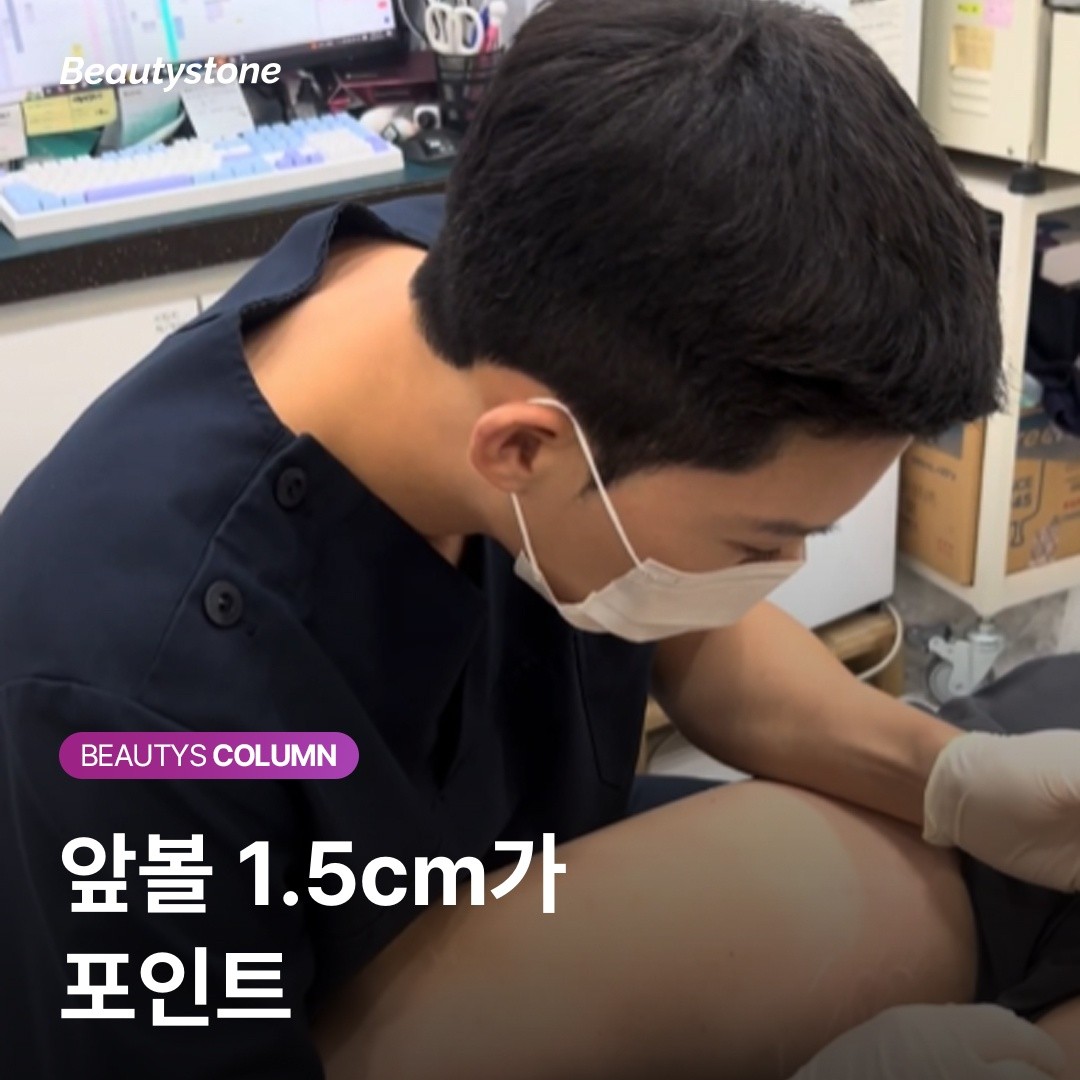
Even placing just 0.5~1 cc in the front cheek (about 1.5 cm inward from the cheekbone),
can make the fold look lighter.
What makes the difference. Is it a problem of a sunken wrinkle line,
or a problem of the front cheek descending and folding?
What we’ll look at today. Where to place filler for my nasolabial folds,
and when to decide whether to use hyaluronidase (filler dissolver) if you don’t like the result.
What this article will cover
The optical illusion that happens when nasolabial folds are not a “nasolabial line problem”
The structural reason why 0.5~1 cc in the front cheek (1.5 cm inward from the cheekbone) can work on nasolabial folds
Choosing filler by area (lips/nose/nasolabial folds/chin/forehead) and when to use hyaluronidase
Front cheek filler and nasolabial folds: same filler, so why does the “placement” matter?
Front cheek filler reinforces the hollow of the midface (anterior cheek),
reducing the force that makes nasolabial folds look folded.
>>> Simply put, pinch the area under your eyes
You can see the nasolabial folds disappear.
Nasolabial fold filler adds volume directly to the nasolabial “line” itself,
making the shadow less visible.
There’s one more difference.
The front cheek feels like lifting a “support pillar,” and
the nasolabial line feels like filling in a “creased mark,” so
even with the same hyaluronic acid (HA) filler, the results differ.
I said the same thing in a consultation yesterday.
For people who kept adding filler only to the nasolabial folds but found it looked more obvious in photos,
it is usually less about the line being deep and more about the front cheek having descended.
Why does front cheek filler create a nasolabial effect: the logic of depth and 1.5 cm inward from the cheekbone
Dr. Wi Young-jin’s key insight
If you inject filler directly into the nasolabial fold, it only makes it look puffier.
Even 0.5~1 cc placed in the front cheek (1.5 cm inward from the cheekbone) can pull the skin upward and soften the nasolabial folds.
The same principle explains why people who have had cheekbone reduction surgery often complain of sagging.
“If it’s a nasolabial fold, shouldn’t filler go into the fold?”
I get this question all the time in the clinic.
But there’s something important here.
Sometimes the fold really is a sunken line,
but much more often it’s a case of the front cheek folding as it moves downward.
Anatomically, the midface has
malar fat pad (cheek fat pad),
deep medial cheek fat (DMCF,
deep inner cheek fat), and
retaining ligaments that support these structures.
When that support weakens,
the nasolabial area becomes less of a “depression” and more of a boundary where folding occurs.
So if you place filler “along the line” of the nasolabial fold,
you’re adding weight to the boundary of the fold,
which can actually make the line look plumper.
Especially when smiling.
By contrast, in the front cheek, especially
around about 1.5 cm inward from the zygoma (cheekbone),
placing just 0.5~1 cc at the “front cheek support point”
creates an upward pulling direction in the skin,
and the nasolabial fold may look lighter.
The same structure explains why people who undergo cheekbone surgery (cheekbone reduction)
complain that the sagging looks more pronounced.
And then the question comes up: “What if I don’t like the filler?”
Hyaluronidase is an enzyme that breaks down HA filler.
In the clinic, we also shorten it to “Hyalase.”
But it’s not always the best solution.
If you dissolve it too hastily, swelling and unevenness may stand out more for a bit,
and you may also feel that the natural hydration of your own tissue has decreased a little.
Still, if the shape looks too “puffed up,”
it can be faster to tidy it up and reset than to wait.
Actually, this is something I hear in the clinic two or three times a week.
Last month, a 31-year-old patient came into the consultation room with a friend,
and at first she said, “I’m just here to look around,”
but once the conversation turned to nasolabial folds, her expression changed completely.
When taking photos, her nasolabial area looked plump,
so she felt that the filler was actually making it more noticeable.
That day, I didn’t immediately go for “adding more into the fold.”
First we checked the front-cheek support,
and decided to place about 0.8 cc into the front-cheek point on one side and observe the result.
When she came back two weeks later, she said that even though we hadn’t touched the fold line itself,
the shadow of the nasolabial fold had already softened in her selfies.
This type is often not a problem of the fold line itself, but of “midface descent.”
Dr. Wi Young-jin’s key summary
Nasolabial folds are more often caused by “a boundary formed as the front cheek descends”
than by “a line that has sunk.”
Before filling the fold line itself, it’s more natural to first support the front cheek.
Fillers by area: if you want a nasolabial effect, where should you start?
A one-line summary of fillers by area is this:
Lips/nose/nasolabial folds/chin/forehead all have different “goals,”
and some areas indirectly affect the nasolabial folds.
I made a table to make it easier to see.
Area | How it affects the nasolabial folds | Consider first when | Points to watch |
|---|---|---|---|
Front cheek (midface) | Reduces folding and softens the “shadow” | The fold border stands out when smiling | If the plane is wrong, the cheek can look bulky |
Nasolabial fold (wrinkle line) | Fills the sunken part of the line itself | For types where the line is deeply “etched” even in still photos | If overdone, it can easily look swollen |
Nose (columella/nasal bridge) | Little direct effect | When adjusting the balance of the center of the face | Because of the area’s characteristics, the plan should be more conservative |
Lips | Changes the impression around the mouth more than the folds | When the mouth area is thin and makes the face look tired | Swelling and asymmetry are relatively easy to notice |
Chin | Changes the “impression” of the nasolabial folds through lower-face proportions | When the face looks short and the folds stand out more | The line may change depending on bite/chin habits |
Forehead | Low direct relation to nasolabial folds | When the goal is to refine the upper-face impression | The design goal is different from nasolabial correction |
You can get the idea from the table.
If you think of nasolabial folds only as a “fold line” problem, you’ll always inject the same area,
and that’s when cases with lingering puffiness can happen.
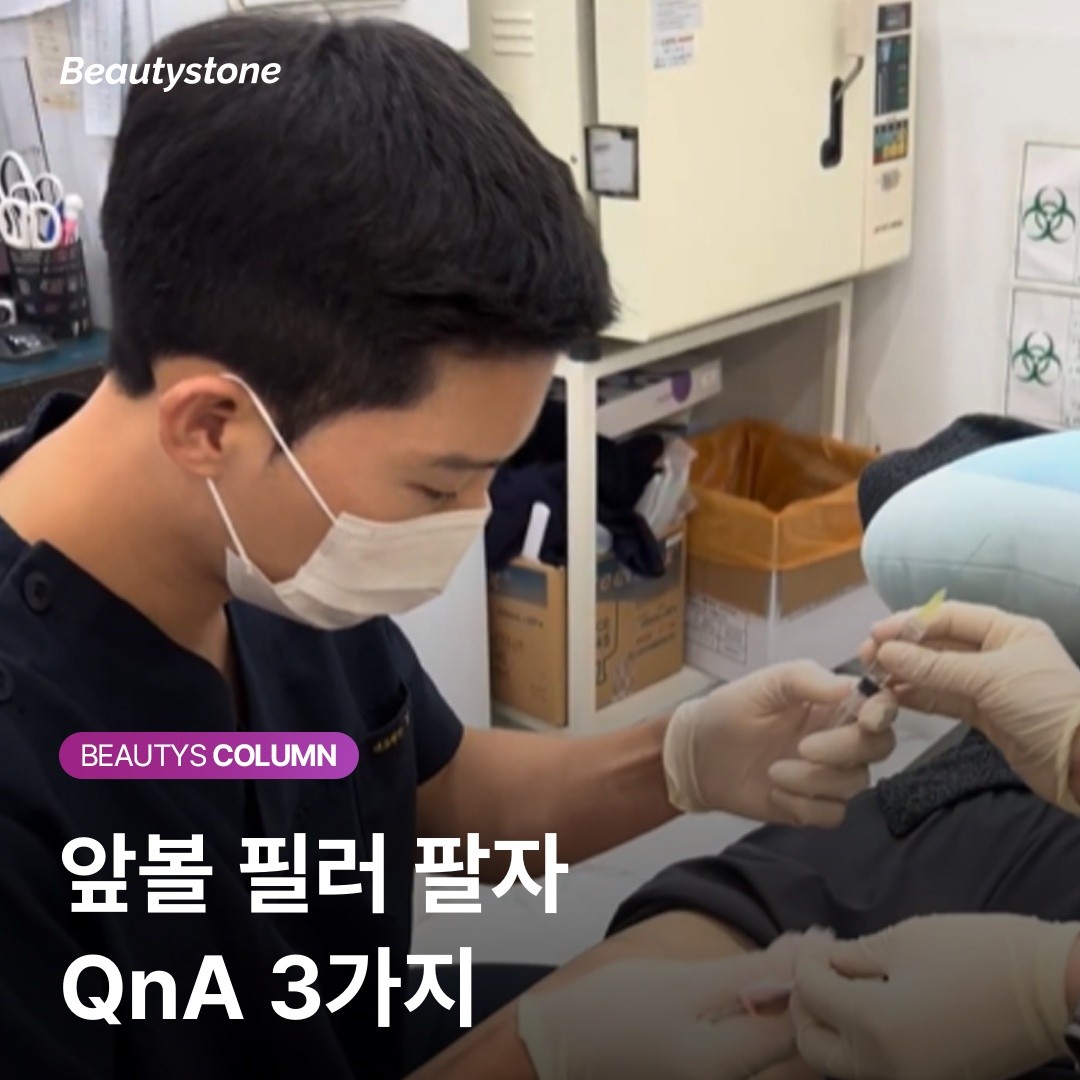
Front cheek filler and nasolabial folds: 3 questions that always come up in the consultation room
Q1. I had cheekbone reduction surgery—can front cheek filler still improve nasolabial folds?
A. I’ll answer with a case someone recently asked me about.
Last month, a 31-year-old patient came with a friend,
and said she disliked taking photos because of her nasolabial folds.
She was the type who looked plumper if filler was put into the fold line,
so we first created “support” with 0.8 cc at the front-cheek point.
Regardless of whether she had cheekbone surgery or not,
supporting the descended axis upward can sometimes reduce the shadow of the fold first.
By this point, you may be wondering about this too.
Q2. How long does front cheek filler usually last?
A. If you look at the statistics, the answer is pretty clear:
hyaluronic acid filler is not permanent; it tends to gradually wear off.
In clinical practice, about seven out of ten people feel that around 10~12 months
it’s “not quite like before.”
However, people who use their face a lot or have major weight fluctuations may lose it faster,
and conversely, some midface cases hold up longer than expected.
As a benchmark, think in terms of about one year and adjust based on your lifestyle.
This is the last question I get most often.
Q3. If I don’t like it, can I just dissolve it right away with hyaluronidase?
A. This is a point many people misunderstand,
but it’s not as simple as “just dissolve it right away and it’s over.”
In short, wait about one week before deciding.
If you still don’t like it after that,
you can dissolve it with hyaluronidase.
Hyaluronidase does break down HA filler,
but swelling or tissue reaction can overlap and make things look different.
In my experience, if you touch it too quickly within a week,
the shape may be tidied up, but the expression can feel a bit awkward for a while.
If it’s urgent, handle it urgently; if it should be observed slowly, let it be observed slowly.
Don’t look at nasolabial folds only as a “line”; if you see them as a “fold” created as front-cheek support descends, the answer changes.
In the next article, I’ll explain how the front-cheek point is viewed differently depending on depth (layer). Even with the same 0.8 cc, I’ll show why the results can diverge. This was Wi Young-jin.
Read more
Front Cheek Filler and the Nasolabial Fold Effect: Why It Can Look More Swollen When Placed in the Fold
Please check this before reading
Q. Isn’t filler supposed to work if it’s placed directly into the nasolabial fold?
A. Surprisingly, it’s often the opposite.
If you place it “along the line” of the nasolabial fold,
instead of smoothing the wrinkle, only the line may become plumper and more prominent.Filler selection matters!
Q. Then why does front cheek filler affect the nasolabial folds?
A. The nasolabial fold is not really a problem of the “line” itself,
but often appears because the support of the midface (front cheek) drops downward.
Quick conclusion
Conclusion. Even if you’re worried about nasolabial folds,
injecting directly into the fold line is not always the answer.
Even placing just 0.5~1 cc in the front cheek (about 1.5 cm inward from the cheekbone),
can make the fold look lighter.
What makes the difference. Is it a problem of a sunken wrinkle line,
or a problem of the front cheek descending and folding?
What we’ll look at today. Where to place filler for my nasolabial folds,
and when to decide whether to use hyaluronidase (filler dissolver) if you don’t like the result.
What this article will cover
The optical illusion that happens when nasolabial folds are not a “nasolabial line problem”
The structural reason why 0.5~1 cc in the front cheek (1.5 cm inward from the cheekbone) can work on nasolabial folds
Choosing filler by area (lips/nose/nasolabial folds/chin/forehead) and when to use hyaluronidase
Front cheek filler and nasolabial folds: same filler, so why does the “placement” matter?
Front cheek filler reinforces the hollow of the midface (anterior cheek),
reducing the force that makes nasolabial folds look folded.
>>> Simply put, pinch the area under your eyes
You can see the nasolabial folds disappear.
Nasolabial fold filler adds volume directly to the nasolabial “line” itself,
making the shadow less visible.
There’s one more difference.
The front cheek feels like lifting a “support pillar,” and
the nasolabial line feels like filling in a “creased mark,” so
even with the same hyaluronic acid (HA) filler, the results differ.
I said the same thing in a consultation yesterday.
For people who kept adding filler only to the nasolabial folds but found it looked more obvious in photos,
it is usually less about the line being deep and more about the front cheek having descended.
Why does front cheek filler create a nasolabial effect: the logic of depth and 1.5 cm inward from the cheekbone
Dr. Wi Young-jin’s key insight
If you inject filler directly into the nasolabial fold, it only makes it look puffier.
Even 0.5~1 cc placed in the front cheek (1.5 cm inward from the cheekbone) can pull the skin upward and soften the nasolabial folds.
The same principle explains why people who have had cheekbone reduction surgery often complain of sagging.
“If it’s a nasolabial fold, shouldn’t filler go into the fold?”
I get this question all the time in the clinic.
But there’s something important here.
Sometimes the fold really is a sunken line,
but much more often it’s a case of the front cheek folding as it moves downward.
Anatomically, the midface has
malar fat pad (cheek fat pad),
deep medial cheek fat (DMCF,
deep inner cheek fat), and
retaining ligaments that support these structures.
When that support weakens,
the nasolabial area becomes less of a “depression” and more of a boundary where folding occurs.
So if you place filler “along the line” of the nasolabial fold,
you’re adding weight to the boundary of the fold,
which can actually make the line look plumper.
Especially when smiling.
By contrast, in the front cheek, especially
around about 1.5 cm inward from the zygoma (cheekbone),
placing just 0.5~1 cc at the “front cheek support point”
creates an upward pulling direction in the skin,
and the nasolabial fold may look lighter.
The same structure explains why people who undergo cheekbone surgery (cheekbone reduction)
complain that the sagging looks more pronounced.
And then the question comes up: “What if I don’t like the filler?”
Hyaluronidase is an enzyme that breaks down HA filler.
In the clinic, we also shorten it to “Hyalase.”
But it’s not always the best solution.
If you dissolve it too hastily, swelling and unevenness may stand out more for a bit,
and you may also feel that the natural hydration of your own tissue has decreased a little.
Still, if the shape looks too “puffed up,”
it can be faster to tidy it up and reset than to wait.
Actually, this is something I hear in the clinic two or three times a week.
Last month, a 31-year-old patient came into the consultation room with a friend,
and at first she said, “I’m just here to look around,”
but once the conversation turned to nasolabial folds, her expression changed completely.
When taking photos, her nasolabial area looked plump,
so she felt that the filler was actually making it more noticeable.
That day, I didn’t immediately go for “adding more into the fold.”
First we checked the front-cheek support,
and decided to place about 0.8 cc into the front-cheek point on one side and observe the result.
When she came back two weeks later, she said that even though we hadn’t touched the fold line itself,
the shadow of the nasolabial fold had already softened in her selfies.
This type is often not a problem of the fold line itself, but of “midface descent.”
Dr. Wi Young-jin’s key summary
Nasolabial folds are more often caused by “a boundary formed as the front cheek descends”
than by “a line that has sunk.”
Before filling the fold line itself, it’s more natural to first support the front cheek.
Fillers by area: if you want a nasolabial effect, where should you start?
A one-line summary of fillers by area is this:
Lips/nose/nasolabial folds/chin/forehead all have different “goals,”
and some areas indirectly affect the nasolabial folds.
I made a table to make it easier to see.
Area | How it affects the nasolabial folds | Consider first when | Points to watch |
|---|---|---|---|
Front cheek (midface) | Reduces folding and softens the “shadow” | The fold border stands out when smiling | If the plane is wrong, the cheek can look bulky |
Nasolabial fold (wrinkle line) | Fills the sunken part of the line itself | For types where the line is deeply “etched” even in still photos | If overdone, it can easily look swollen |
Nose (columella/nasal bridge) | Little direct effect | When adjusting the balance of the center of the face | Because of the area’s characteristics, the plan should be more conservative |
Lips | Changes the impression around the mouth more than the folds | When the mouth area is thin and makes the face look tired | Swelling and asymmetry are relatively easy to notice |
Chin | Changes the “impression” of the nasolabial folds through lower-face proportions | When the face looks short and the folds stand out more | The line may change depending on bite/chin habits |
Forehead | Low direct relation to nasolabial folds | When the goal is to refine the upper-face impression | The design goal is different from nasolabial correction |
You can get the idea from the table.
If you think of nasolabial folds only as a “fold line” problem, you’ll always inject the same area,
and that’s when cases with lingering puffiness can happen.
Front cheek filler and nasolabial folds: 3 questions that always come up in the consultation room
Q1. I had cheekbone reduction surgery—can front cheek filler still improve nasolabial folds?
A. I’ll answer with a case someone recently asked me about.
Last month, a 31-year-old patient came with a friend,
and said she disliked taking photos because of her nasolabial folds.
She was the type who looked plumper if filler was put into the fold line,
so we first created “support” with 0.8 cc at the front-cheek point.
Regardless of whether she had cheekbone surgery or not,
supporting the descended axis upward can sometimes reduce the shadow of the fold first.
By this point, you may be wondering about this too.
Q2. How long does front cheek filler usually last?
A. If you look at the statistics, the answer is pretty clear:
hyaluronic acid filler is not permanent; it tends to gradually wear off.
In clinical practice, about seven out of ten people feel that around 10~12 months
it’s “not quite like before.”
However, people who use their face a lot or have major weight fluctuations may lose it faster,
and conversely, some midface cases hold up longer than expected.
As a benchmark, think in terms of about one year and adjust based on your lifestyle.
This is the last question I get most often.
Q3. If I don’t like it, can I just dissolve it right away with hyaluronidase?
A. This is a point many people misunderstand,
but it’s not as simple as “just dissolve it right away and it’s over.”
In short, wait about one week before deciding.
If you still don’t like it after that,
you can dissolve it with hyaluronidase.
Hyaluronidase does break down HA filler,
but swelling or tissue reaction can overlap and make things look different.
In my experience, if you touch it too quickly within a week,
the shape may be tidied up, but the expression can feel a bit awkward for a while.
If it’s urgent, handle it urgently; if it should be observed slowly, let it be observed slowly.
Don’t look at nasolabial folds only as a “line”; if you see them as a “fold” created as front-cheek support descends, the answer changes.
In the next article, I’ll explain how the front-cheek point is viewed differently depending on depth (layer). Even with the same 0.8 cc, I’ll show why the results can diverge. This was Wi Young-jin.
Read more


Latest post
Latest post

Hair Removal
레이저 제모 1회에도 남는 몫이 있어요 — 밀도를 모자이크로 보는 법

Tattoo removal
Why Extremity Tattoos Are Slower to Remove

Tattoo removal
Tattoo Removal Cost: Why Quotes Vary by Area

Tattoo removal
Unused Tattoo Removal Sessions: What Happens?

Lifting
Forehead Thread Lifting: How Far Can It Go?

skin
Skin Booster Prices: What to Check in a Quote
1:1 Custom Approach
1:1 Consultation Whatsapp
🌸 Beautystone Clinic attends the Meditox Bangkok Cadaver Workshop 🌸
1:1 Custom Approach