

Swallowed collagen breaks into amino acids before any of it reaches skin. What a review of 11 randomized trials found, and what helps more as you heal.
Published -
Updated -

Author
Wi Young-jin · Chief director
Seoul National University College of Medicine · Seoul National University Hospital Specialist
→
After a skin procedure, it's natural to want to try anything that might help you heal faster. Collagen supplements come up a lot, you see the ads everywhere and friends swear by them, so it's easy to hope that popping one will help you bounce back quicker.
The short answer: your nutrition does affect how you heal, but no single supplement is going to dramatically speed things up. Let's walk through how collagen supplements actually work on your skin, which nutrients are worth prioritizing while you recover, and how much you can realistically expect from them.
This article rounds up procedure information from Hapjeong Beautystone.
What you'll learn
How nutrition factors into recovery after a procedure
Whether collagen supplements really reach your skin
Which nutrients are worth prioritizing as you heal
The limits of what a supplement alone can do
Does nutrition really affect recovery after a procedure?
Healing your skin ultimately comes down to rebuilding new tissue and collagen*. The protein, vitamins, and minerals that go into that work are the raw materials, and if you're short on them, recovery can drag. So if your everyday diet is on the thin side or skewed toward one thing, simply balancing it out can support your healing.
* collagen: the protein in the dermis that holds up your skin's firmness and volume. It's newly built during recovery and fills in skin tissue after a procedure.
In fact, a systematic review pooling clinical studies on oral collagen supplementation analyzed 11 randomized controlled trials and found that collagen supplements may improve skin elasticity, hydration, and dermal collagen density, and even support wound healing. That said, this means recovery proceeds steadily when nutrition is adequate, not that everyone heals faster just by taking a supplement.
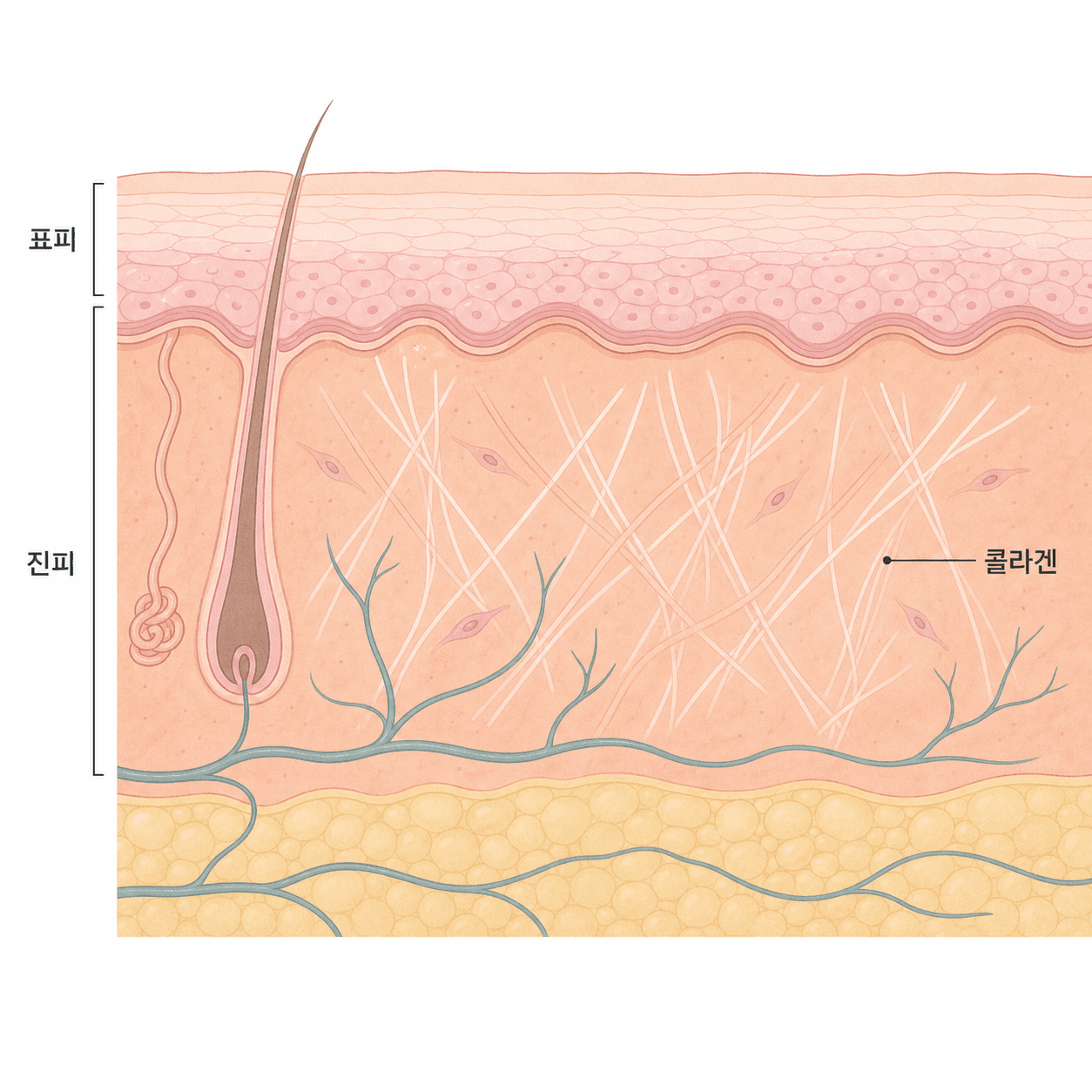

Do collagen supplements really reach your skin?
This is where a common misconception creeps in. Eating collagen doesn't mean that collagen becomes your skin's collagen as-is. The collagen you swallow is broken down during digestion into amino acids* and small peptide fragments, then absorbed. Those building blocks get used to make protein all over your body, and some of them go toward synthesizing skin collagen.
* amino acids: the basic units that make up protein. The collagen you eat is broken down into amino acids and small peptides, then reused as raw material to build protein again in your body.
In other words, it's less "collagen supplement = collagen shipped straight to your skin" and more "a top-up of the raw materials recovery needs." So singling out collagen on its own may not be much different from simply eating enough protein. Where a supplement can pull its weight is when you're struggling to get enough protein from food.

Nutrients worth prioritizing during recovery, and how to take them
Rather than fixating on collagen alone, the realistic move is to cover a balanced range of nutrients that support recovery across the board. Here's a quick breakdown.
Nutrient | Role in recovery | Common sources |
|---|---|---|
Protein | Core raw material for new tissue and collagen | Lean meat, fish, eggs, beans |
Vitamin C | A cofactor that helps collagen synthesis | Vegetables, fruit |
Zinc | Involved in wound healing and immunity | Nuts, seafood |
Water | Maintains the skin barrier and metabolism | Water, soup, tea |
As the table shows, a balanced everyday diet matters more than any single supplement. Even if you add one, think of it as filling a gap rather than replacing meals. If you take regular medication or have a chronic condition, it's safest to check with your provider before adding any supplement.
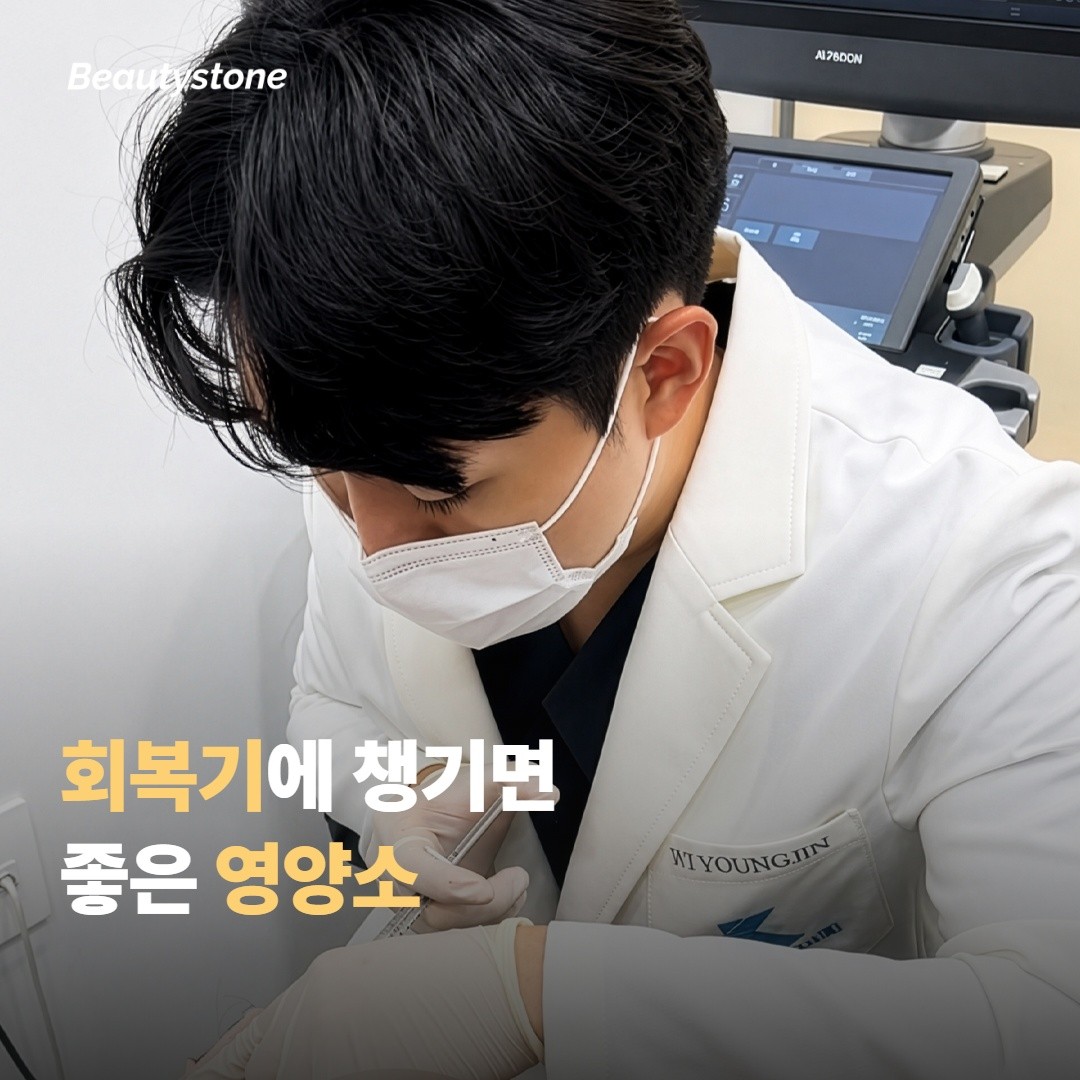
Why Hapjeong Beautystone?
When people ask us about recovery after a procedure, we tend to start with the basics that genuinely move the needle rather than reaching for add-ons like supplements first. Things that seem obvious, enough sleep, a balanced diet, sun protection, are actually what shapes your recovery the most. On top of that foundation, we'll help you figure out whether any extra support makes sense for your situation. We're a small clinic within walking distance of Hapjeong Station, so we can actually follow each person's recovery and guide accordingly.
The limits of supplements, and a few cautions
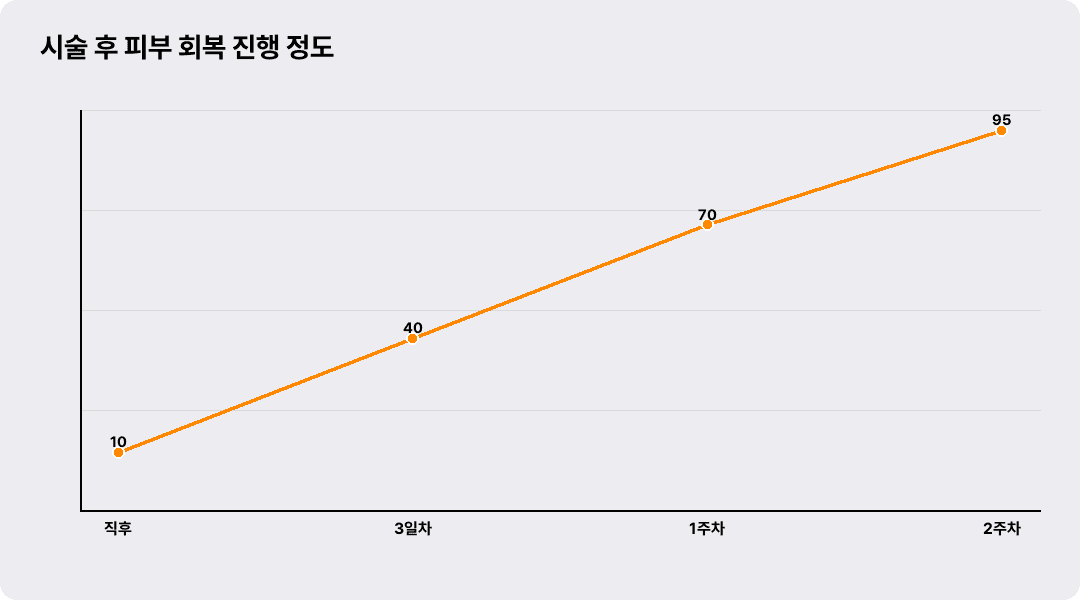
Nutrition is the foundation that supports your recovery, not a treatment that changes the result of a procedure on its own. If you picture how recovery unfolds, nutrition is closer to the thing that helps that curve climb steadily.
More isn't better — going over the recommended dose won't speed up your recovery
Watch for drug interactions — if you're on any medication, talk to your provider first
Check allergies and ingredients — steer clear if you're sensitive to sources like marine-derived collagen
Basics come first — sleep, diet, and sun protection matter more than any supplement
There's also a randomized controlled trial in pressure-ulcer patients showing collagen supplementation helped wound healing, but that result came from a patient group prone to nutritional deficiency, so it doesn't translate directly to ordinary recovery after a procedure. Recovery speed and outcomes vary from person to person, and a supplement won't give everyone the same effect. Whether post-procedure recovery care and nutritional support are right for you is safest to decide together with the provider who treated you.

Frequently asked questions
Q. Do I have to take collagen supplements?
A. No, you don't have to. If you already eat a balanced diet with plenty of protein, the extra benefit from a supplement may be small. But if you find it hard to get enough protein from food, one can help as a backup. It's best to look at your own eating habits and decide whether you need it.
Q. When should I start taking them?
A. There's no set timing. Recovery starts the moment your procedure is done, so eating well day to day comes first, and if you add a supplement, treat it as backup on top of that. If you're on any medication or your procedure calls for special care right after, check with your provider before you start.
Q. Will taking more help me recover faster?
A. No. Going over the recommended dose won't speed up recovery, and it can actually lead to digestive strain or other nutritional imbalances. The key with nutrition is covering your needs without falling short, not piling more on. Sticking to a sensible amount is the safe move.
Q. What matters more for recovery than supplements?
A. Enough sleep, a balanced diet, and sun protection and moisturizing suited to the treated area do the most for your recovery. Easing off alcohol and smoking for a while helps too. Think of supplements as something you add on top of those basics, and prioritizing gets a lot easier.






skin
Fraxel CO2: Why Prices Vary & What to Check

skin
How to Choose an Acne Dermatologist: 5 Signs

Contouring & Volume
Nasolabial Folds: When Lifting Isn't Enough

skin
Sculptra Cost: Why Sessions and Vials Matter

Lifting
After Shurink Universe: Wash, Work Out & Drink

skin
Sofwave Before a Wedding: Timing Guide