

Eye Botox aftercare: what to avoid now, when to resume daily life, and tips for lasting results.
Published
Updated

Author
Wi Young-jin · Chief director
Seoul National University College of Medicine · Seoul National University Hospital Specialist
→
Many people leave the consultation room after getting under-eye Botox with questions suddenly popping up, such as "Can I work out today?" or "When can I start getting massages?" While the procedure itself takes only a few minutes, the real confusion lies in how to spend the first few days after it is completed.
To answer briefly, the first 24 hours immediately following the treatment is the most critical period. Keeping a few daily habits on low-intensity for just one week will ensure a more stable recovery and longer-lasting results. Since the skin around the eyes is thin and the orbicularis oculi muscle is very close by, it is a bit more sensitive to aftercare than other Botox areas. However, there are many rumors out there, such as "You can't even lie down" or "You shouldn't even drink water." Having a clear understanding of what you actually need to be careful of and what you don't will give you peace of mind.
This content compiles treatment guidelines from Beautystone Hapjeong.
What you will learn from this article
What behaviors you truly need to avoid during the first 24 hours post-treatment
Exactly which day you can safely resume massages, exercise, and hot baths/saunas
How to distinguish between normal recovery reactions and warning signs to contact your doctor
Daily habits to help your results last as long as possible
First 24 hours: The formula is settling in
The first 24 hours after your treatment is the crucial window where the Botulinum Toxin* settles so that it acts only on the intended target muscles. During this phase, putting strong pressure on the treated area or engaging in activities that cause the product to migrate to other muscles can affect your final results.
Botulinum Toxin*: A protein component that temporarily blocks nerve signals responsible for muscle contractions. In cosmetic dermatology, a small amount is injected into the muscles that create expression lines to temporarily reduce their movement.
Please avoid the following for the first 24 hours:
Category | Details |
|---|---|
Massaging, rubbing, or pressing the treated area | This includes rubbing off eye makeup, vigorous cleansing, and pressure from tight eyeglass frames. |
Keeping your head bent down for a long time | This includes washing your hair head-down, tying shoelaces, or lying face down on a desk. |
Vigorous exercise, running, or heavy lifting | A rapid increase in blood flow can affect the diffusion of the toxin. |
Saunas, hot baths, steam rooms, or hot showers | These combine both heat stimulation and an increase in blood circulation. |
Alcohol consumption | It tends to increase the risk of bruising and swelling. |
Reviewing how Botulinum Toxin blocks nerve-to-muscle pathways and how the effects gradually appear over several days makes it clearer why this initial settling stage is so important. For the first 4 hours, it is best to remain upright (sitting or standing) if possible. Lying down or bending over too soon might cause the toxin to spread in an unintended direction.
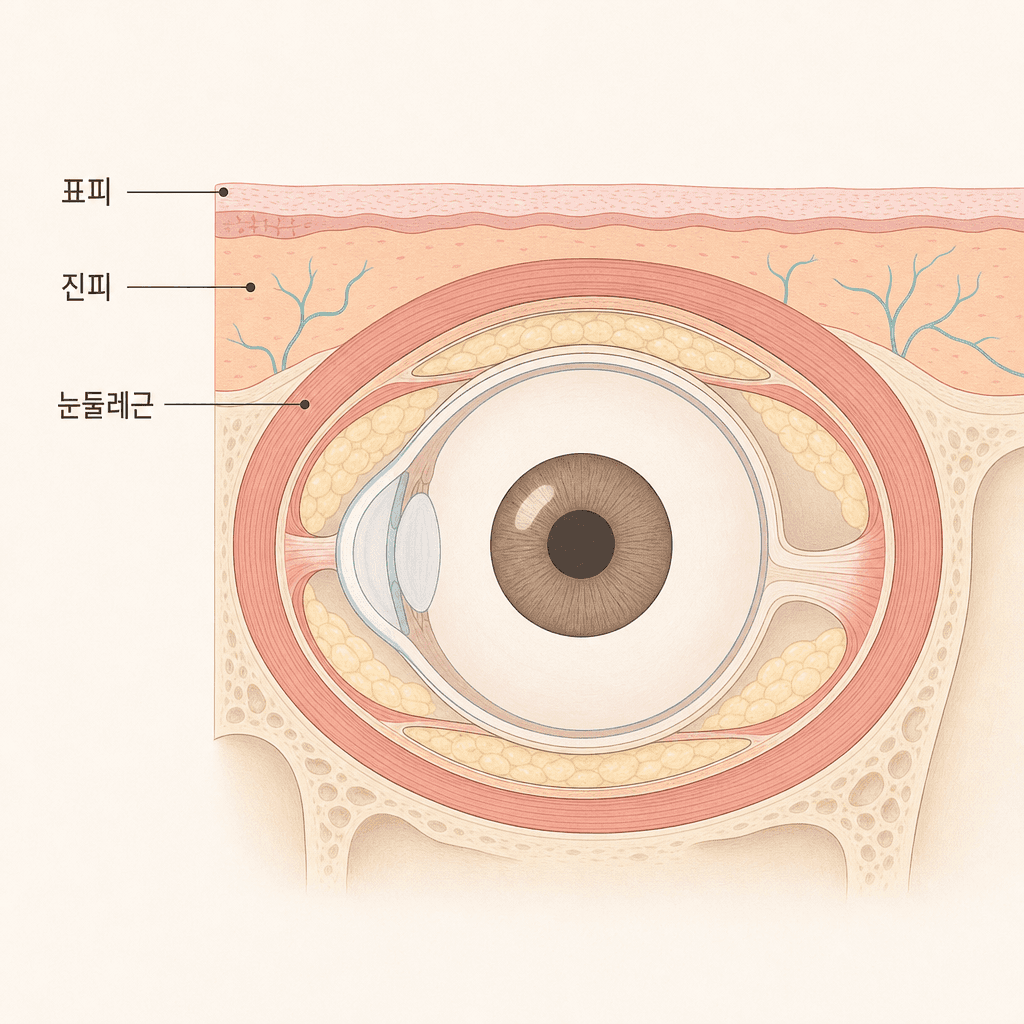

The 1-week recovery: Gradually scaling up
After 24 hours, you can return to most of your normal daily activities. However, for the first week, it is safest to gradually ramp back up to your usual routine rather than jumping straight back into high-intensity habits. Here is a quick guide on when you can comfortably restart each activity:
Using your facial expression muscles normally is fine. In the past, some guidelines suggested making deliberate facial expressions or blinking to help the toxin settle, but modern consensus shows it doesn't make a significant difference. Expressing yourself naturally is more than enough.
If you need pain management during your recovery, products containing acetaminophen* are relatively safe. Non-inflammatory painkillers like aspirin or ibuprofen can increase the risk of bruising, so it is best to avoid them for the first 1 to 2 days. However, if you are taking any regular prescription medications, please consult with your prescribing physician rather than stopping them on your own.
Acetaminophen*: A pain-relieving and fever-reducing medication. It is often preferred for post-treatment pain because it has minimal blood-thinning effects.
Sunscreen & eye cream: Keep your daily skincare simple for now
The skin around the eyes is exceptionally thin, making it highly vulnerable to UV rays and dryness. For the first 1 to 2 days post-treatment, keep your skincare routine simple and be even more diligent than usual with sun protection.
Category | Details |
|---|---|
Sunscreen from the next day | Apply evenly around the eye area and reapply every 2 to 3 hours. |
Makeup | Usually fine starting the next day. If any irritation remains at the injection sites, hold off on color makeup for 1 to 2 days. |
Cleansing | Do not rub; gently pat the skin clean. |
Eye cream & serums | Stick to gentle, hydrating products. Put active ingredients like retinol or acids on hold for about a week. |
Eye rollers & Gua Sha | Wait at least 1 week, and then start with very light pressure. |
Eyelash extensions/perms | Since this involves close contact with the treated area, it is safe to wait 1 to 2 weeks. |
Even if active ingredients like Retinol, AHA, or BHA are normally staples in your routine, it is safest to skip them for a few days. Adding active irritation to temporarily sensitive skin can delay the healing process. While Botox smooths out expression lines, it does not stop aging caused by UV damage, so a diligent sunscreen habit is essential to maintaining beautiful, long-term results.
Why Beautystone Hapjeong?
At Beautystone Hapjeong, we believe in prioritizing your detailed recovery timeline just as much as the procedure itself. Because the skin around the eyes is so delicate, even the exact same dosage can yield slightly different reactions depending on your unique skin condition. That is why we thoroughly walk you through what signs are normal and what signs require a check-up before you even leave. As a cozy clinic located just a short walk from Hapjeong Station, we make it possible to monitor your individual recovery pace and plan subsequent sessions together seamlessly.

Normal reactions vs. signs to contact your doctor
Mild, temporary side effects are common within 1 to 7 days after under-eye Botox. Most subsides naturally without any special treatment.
Category | Details |
|---|---|
Mild redness & stinging at the injection site | Usually lasts from a few hours up to a day. |
Light bruising | Can last 3 to 10 days; easily concealable with makeup. |
Slightly heavy eyelids | Can be felt for about 2 to 3 days. |
Awkwardness when making expressions | This is an adjustment phase that naturally softens within 3 to 7 days. |
To help you easily gauge what to expect, here is a general timeline comparing normal swelling and bruising with signs that warrant a professional check-up.
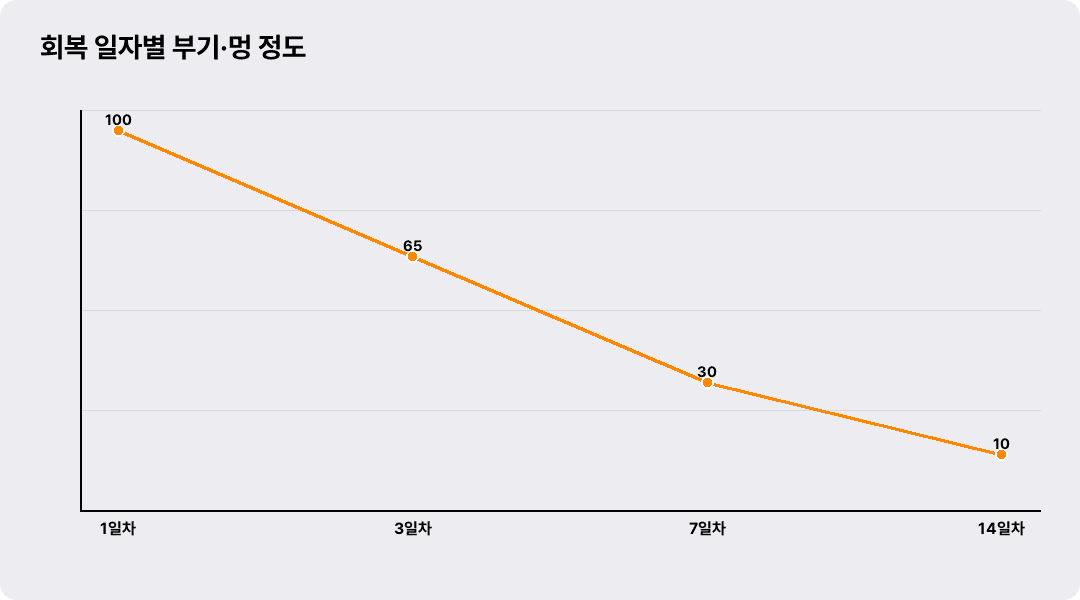
Please consult with your treating physician right away if you experience any of the following symptoms:
Drooping of one eyelid or significant asymmetry — This could be a sign of temporary ptosis*, which usually resolves naturally within 2 to 6 weeks.
Blurry vision or double vision — Please contact your doctor immediately.
Swelling that does not go down after 2 weeks
Pain at the injection site that gradually worsens over time
High fever, severe redness, or heat radiating from the skin — These are signs that suggest a potential infection.
Difficulty swallowing, speaking, or breathing — Though extremely rare, please go to the nearest emergency room immediately.
Ptosis*: A condition where the muscle that lifts the eyelid becomes weak, causing the eyelid to droop. If it occurs temporarily after Botox, it typically resolves on its own over time.
While severe emergency reactions are incredibly rare with cosmetic dosages, official safety labels state that if Botulinum Toxin spreads beyond the injection area, it can potentially cause systemic symptoms like difficulty swallowing or breathing. Being aware of these rare scenarios actually helps eliminate unnecessary anxiety. Typically, the smoothing effects of Botox begin to show within 3 to 7 days, fully stabilizing by week 2. While the duration varies by individual, as the body slowly builds new connections between nerves and muscles, the effects gradually taper off, averaging about 3 to 4 months. To maximize this beautiful window, stay diligent with your suncreen habit and pay attention to any unconscious habits of scowling or squinting. Booking your next treatment too early can cause muscle resistance, while waiting too long might allow deep lines to re-etch themselves. Thus, it is best to determine your next visit together with your doctor by tracking your facial expressions. Since this article is for general informational purposes, please make sure to consult directly with your medical provider regarding your medical suitability and customized recovery plan.

Frequently Asked Questions
Q. Can I wash my hair on the day of the procedure?
A. Yes, you can wash your hair. However, try to avoid bending your head downward for long periods during the first 4 hours. Wash quickly with lukewarm water, keeping strong water pressure from spraying directly onto your eye area. Using the cool setting on your hairdryer is even safer.
Q. I have some bruising. Is there a way to make it fade faster?
A. Within the first 24 hours, applying a cold compress very gently without pressing down can help. Avoid any firm pressure. Afterward, you can consult with your doctor about using vitamin K cream or arnica ointment. Normal, faint bruises typically fade naturally within 5 to 10 days.
Q. My eyelids feel a bit heavy. Is this normal?
A. A slightly heavy sensation 2 to 3 days post-treatment is a very common reaction. It is simply part of the adjustment process as the formula settles and usually resolves within a week. However, if one eyelid is noticeably drooping or obstructing your vision, it could be ptosis, so please contact your clinic.
Q. When should I schedule my next Botox treatment?
A. An interval of 3 to 4 months is typical, but the rate at which the effects wear off varies from person to person. Retreating too early can be a burden on the muscle, while waiting too long allows wrinkles to deepen again. It is safest to schedule your next appointment with your doctor based on how your natural expressions return.




Lifting
XERF for a Thin Face: Depth vs. Hollowing?

Lifting
Thread Lift Swelling: What's Normal in 5 Days?

Lifting
Thermage Cost: 4 Lines to Check on a Quote

Contouring & Volume
Xeomin Cost: Why Do 50-Unit Quotes Differ?

skin
Back Acne That Won't Clear? It Might Be Fungal

Tattoo removal
Bad Brow Tattoo: Cover It Up or Fade It First?