

Why lasers can trigger dark spots (PIH) and how sun care helps keep them in check.
Published
Updated

Author
Wi Young-jin · Chief director
Seoul National University College of Medicine · Seoul National University Hospital Specialist
→
You booked a laser treatment to even out your skin, so the last thing you want is a new patch of darkness where the beam did its work. Yet that's exactly what can happen when freshly treated skin meets the sun. It's frustrating — and, in many cases, largely preventable.
This reaction has a name: post-inflammatory hyperpigmentation, or PIH. It isn't a sign that your laser went wrong. It's your skin's pigment machinery overreacting to inflammation, and sunlight pours fuel on the fire. In this article, we'll cover why lasers make PIH more likely, how it differs from the spots you already had, why sunscreen is your best defense, and how to build a simple recovery routine that protects your results.
What Is Post-Laser Hyperpigmentation?
Post-inflammatory hyperpigmentation is a flat, brown-to-gray discoloration that shows up after the skin has been inflamed or injured. A laser is one common trigger, but so are acne, eczema, cuts, and other treatments. A review of the condition notes that PIH follows a wide range of causes — from inflammatory skin diseases to procedure-related (iatrogenic) and physical injury — which is summarized in the medical literature.
The key thing to understand: PIH is a pigment problem, not a scar. The skin's structure is intact. There's simply too much melanin — the pigment that gives skin its color — sitting where the inflammation was. That's actually good news, because pigment tends to fade over time, especially when you don't keep re-triggering it.
Why Do Lasers Make Dark Spots More Likely?
Lasers work by delivering targeted heat and light energy into the skin. That energy does its job, but it also leaves behind a mild inflammatory response as the skin recovers. In some people, that inflammation nudges melanocytes — the cells that produce melanin — into overdrive.
When melanocytes are over-stimulated, they crank out extra pigment, and it settles unevenly in and around the treated area. Research on the biology of this process describes how inflammation can push melanin production past normal levels, leading pigment to build up abnormally, as explained in this study.
A few factors raise the odds. Darker or more melanin-rich skin tones are generally more prone to PIH. So is any skin that's already irritated going into treatment. And then there's the big external multiplier: ultraviolet light. Add sun exposure to freshly inflamed skin, and you've handed your melanocytes a second reason to darken the area.
Post-Laser PIH vs. the Spots You Already Had
Not all dark spots are the same, and telling them apart helps you manage them. The pigmentation you walked in with — think sun spots or melasma — usually built up slowly over years of accumulated UV exposure and hormonal shifts. Post-laser PIH is different: it appears relatively quickly, tied to a specific event, in a specific spot.
That distinction matters for prevention. Because post-laser pigment is triggered by a single, recent event, much of it can be headed off with careful sun protection in the early weeks — a window you don't get with pigment that took a decade to form.
Feature | Pre-existing pigment | Post-laser PIH |
|---|---|---|
Trigger | Years of UV and hormones | Inflammation after treatment |
How fast it appears | Gradually | Relatively quickly |
UV sensitivity | High | Especially high early on |
Room for prevention | Limited | Substantial with early care |
One caveat: this is a general framework, not a diagnosis. If you're unsure what kind of pigmentation you're looking at, your provider can help sort it out.
How Does Sun Protection Prevent PIH?
Here's the short version: UV light directly stimulates melanocytes to make more pigment, so blocking it removes one of the main things driving PIH. During the sensitive post-laser window, that protection matters even more than usual.
Consistent use of a broad-spectrum sunscreen has been shown to help prevent pigmentary disorders and reduce their severity, as described in a review on photoprotection. After a laser, it's worth thinking beyond UV alone — visible light can nudge pigment too, so broad-spectrum coverage across a wider range of wavelengths is a smart move.
That said, sunscreen isn't a force field. A single morning application won't carry you through a full day outdoors. To get steady protection, pay attention to three things:
Amount: Most people under-apply. Use enough to actually coat the treated area.
Reapplication: Top up every couple of hours when you're outside or sweating.
Physical shade: A hat, an umbrella, or simply staying in the shade adds a layer sunscreen can't match on its own.
Side Effects and What to Watch For
Some reaction after a laser is normal. Redness, mild swelling, and a sunburn-like sensation are common in the first day or two and usually settle on their own. This is the inflammation phase — and it's exactly why the sun matters so much right now.
A few ground rules keep that phase from turning into stubborn pigment:
Don't pick or scrub. Never pick at scabs or exfoliate treated skin — that's fresh inflammation you're adding on top.
Go gentle with actives. Harsh brightening ingredients on raw skin can backfire and deepen pigment rather than fade it.
Watch the area for a few days. If a spot starts to darken, resist the urge to treat it yourself and check in with your provider instead.
Most reactions are minor and short-lived. But if you notice spreading redness, fever, worsening pain, or signs of infection, don't wait it out — seek medical care right away. Those aren't normal parts of healing.
How Beautystone Approaches Post-Laser Sun Care
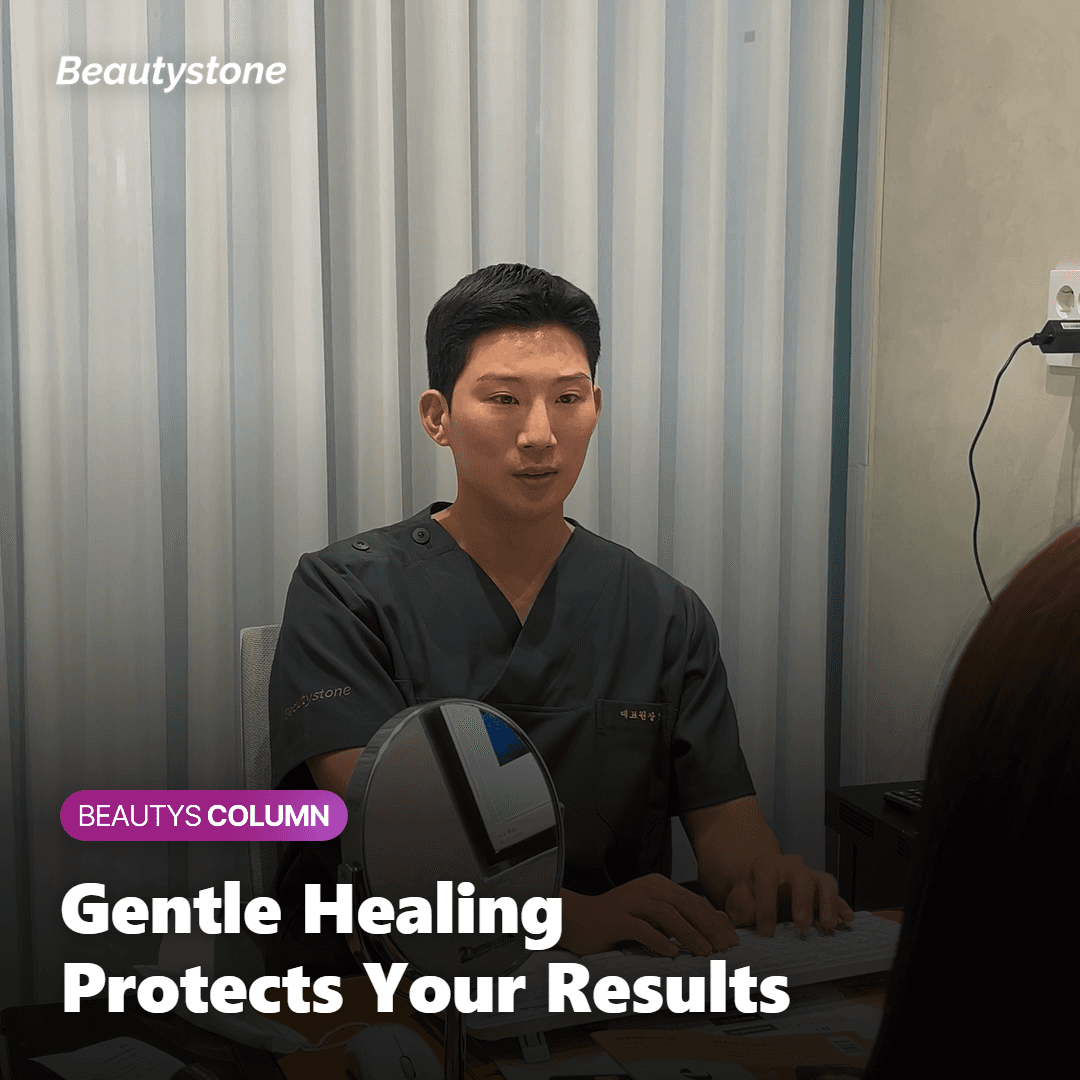
Beautystone is a dermatology clinic in Seoul's Hapjeong area, and one thing we emphasize during laser consultations is that the treatment itself is only half the story. How you handle sun exposure in the days that follow can be the difference between a clean result and lingering pigment.
So we don't just talk about the laser. We match a sun-protection plan to your skin type and the area being treated, flag the recovery days that need extra caution if you tend to pigment easily, and talk through practical steps — like dialing back intense outdoor time for a short stretch. It isn't complicated, but it's easy to overlook when you're focused on the treatment alone.
The Bottom Line
Post-laser dark spots are common, but they're often one of the more preventable outcomes in skin care. To recap:
Why it happens: Inflammation after a laser can push melanocytes to overproduce pigment.
What sets it apart: Unlike old sun spots, post-laser PIH is tied to a recent event — which makes early care powerful.
Your best defense: Broad-spectrum sunscreen, reapplied and paired with physical shade, plus a hands-off approach to healing skin.
Like any procedure, lasers come with trade-offs, and results vary from person to person. Ultimately, the choice of how to protect your skin afterward depends on your skin type, your routine, and your goals. If you're considering a laser treatment, a consultation is the best way to find out what fits you — and how to guard your results once you're home. You can see current offers at our promotions page.
Frequently asked questions
Q. Does post-laser hyperpigmentation go away on its own?
A. In many cases, yes — with good sun care in the early weeks, it tends to fade gradually over time. But if you skip protection or get heavy sun exposure, the pigment can linger longer. That's why the first few weeks after treatment matter most.
Q. Do I need sunscreen indoors after a laser?
A. It can help. UV rays pass through windows, and some indoor lighting emits wavelengths that can nudge pigment. During the sensitive post-laser window, a light layer of sunscreen indoors is a reasonable precaution rather than an overreaction.
Q. Is sunscreen alone enough to prevent dark spots?
A. Sunscreen is the foundation, but it isn't a complete shield by itself. You'll get steadier results by combining a generous amount, regular reapplication, and physical shade like a hat or umbrella, especially while your skin is still recovering.
Q. Can I use brightening products if a spot appears after my laser?
A. Go carefully. Harsh actives on freshly treated skin can irritate it and make pigment worse rather than better. Instead of adding products on your own, it's safer to check with your provider about what suits your skin's current state.




Contouring & Volume
Hip Dip Filler Before and After: 4 Checks

Body
Potenza Treatment Interval: Why 4 Weeks?

Lifting
Ultherapy Before and After: Why Wait 90 Days?

Contouring & Volume
Belotero Revive Cost: 2cc Price vs. 3 Sessions

skin
Lip Hyperpigmentation Laser: Does It Work?

Contouring & Volume
Men's Forehead Filler: Hollow or Just Lines?