

Scabs are the repair stage, not damage. Here's the window your skin needs, and the two habits that turn a healing crust into a lasting dark mark.
Published -
Updated -

Author
Wi Young-jin · Chief director
Seoul National University College of Medicine · Seoul National University Hospital Specialist
→
A few days after a laser treatment, tiny scabs and flaky patches show up and the worry kicks in: "Can I pick this off?" "Will I be left with a mark if I get this wrong?" The fear of pigmentation makes you extra cautious.
The short answer: scabs and flaking after laser are just your skin healing, so the key is not to disturb them. If you pick them off or expose them to UV during this window, melanin gets over-stimulated and is far more likely to leave a dark mark. The path to fewer marks isn't "peel it off fast for a clean finish" — it's protecting the area until it falls away on its own and keeping UV out.
This article rounds up treatment information from Beautystone in Hapjeong.
What you'll get from this article
Why scabs and flaking show up after laser
Why poor aftercare leads to pigmentation
How to care for your skin to prevent dark marks
What's worth checking before and after your treatment
Why scabs and flaking appear after laser
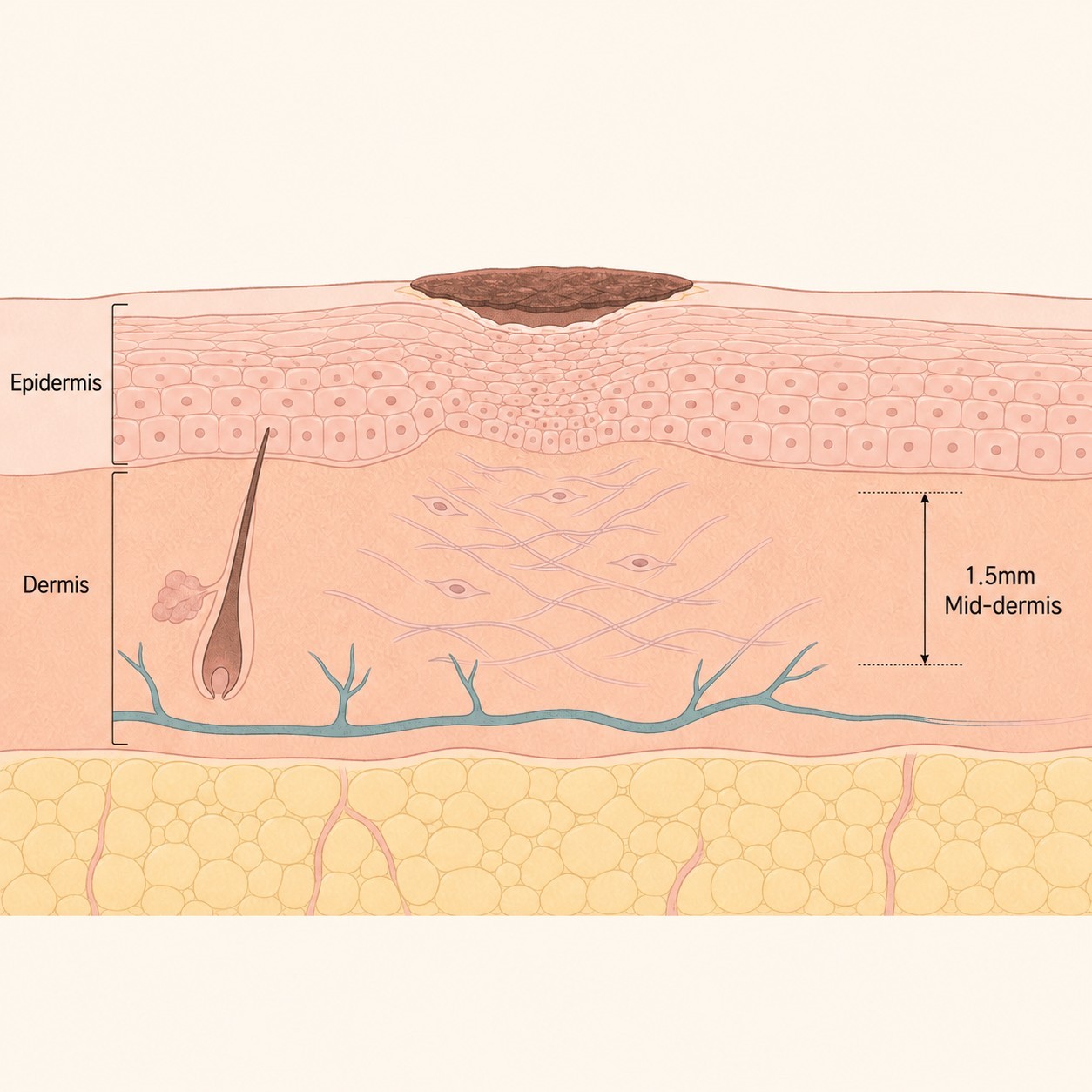
Laser delivers tiny pulses of heat to the surface or deeper layers of your skin to break up pigment or remodel its texture. As the small wounds left in the epidermis heal, a dry layer forms on the surface — a scab* — and flaking builds up over it. This is a sign your skin is repairing itself. A study on preventing pigmentation and its risk factors after CO2 laser likewise found that how you care for the skin during recovery has a big say in whether a mark is left behind.
scab*: the dry layer that forms on the surface as the tiny wounds from the laser heal. Forcing it off can leave a scar or pigmentation.
The problem comes when you force a scab off or scrub hard during this stage. Adding friction to a spot where new skin hasn't fully filled in yet can over-produce melanin and leave a darkened mark.

Why it can turn into pigmentation
Pigmentation* is when melanin is over-produced after irritation or inflammation, leaving the skin darkened. During recovery from laser your skin is sensitive, so picking at a scab or stepping into UV can set off this melanin response easily. UV in particular is one of the biggest stressors on healing skin.
Action | Pigmentation risk | What we recommend |
|---|---|---|
Forcing scabs off | High | Leave them until they fall off on their own |
UV exposure | High | Cover up actively with sunscreen and a hat |
Scrubbing hard | High | Cleanse gently and pat dry |
Under-moisturizing | Moderate | Moisturize well to protect the skin barrier |
Ample protection and moisture | Low | Supports healing and fewer marks |
As the table shows, most of the pigmentation risk comes from "touching and exposing." Protecting and moisturizing, on the other hand, is what cuts down on marks.
How to care for your skin and prevent dark marks
Two things matter most: leaving the scab alone until it falls off naturally, and blocking UV actively. Cleanse gently without scrubbing, and keep the skin supple with moisturizer — recovery goes much more smoothly. A study comparing ways to reduce pigmentation after laser and energy-based treatments also points to sun protection and recovery-stage care as the heart of prevention.
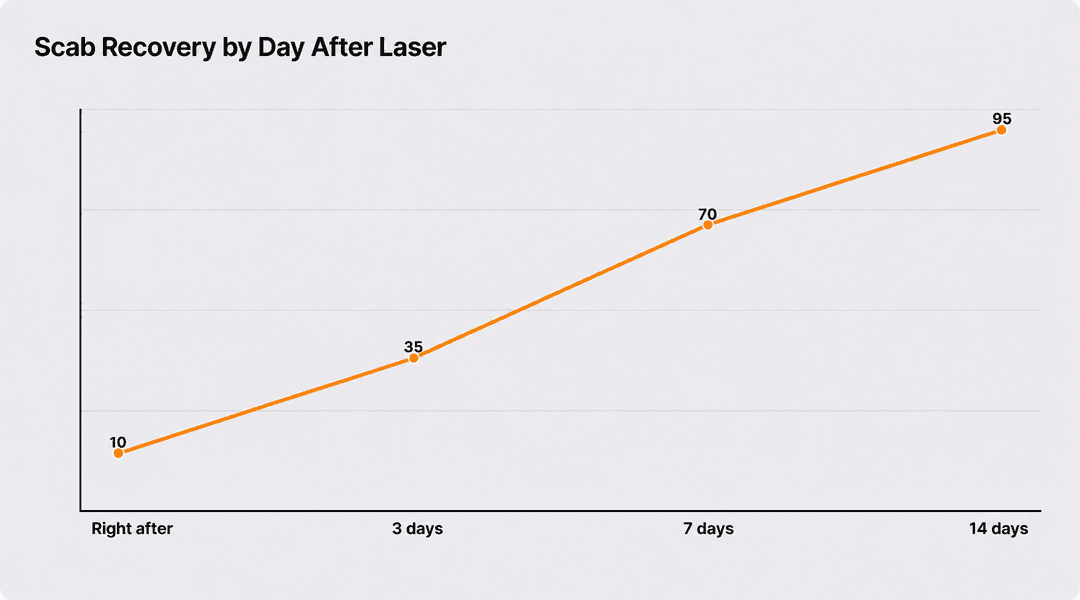
Scabs usually fall off on their own within a few days to one or two weeks. Staying patient through this stretch and keeping up protection and sun blocking is, in the end, what lets the skin heal cleanly without a mark.

Why Beautystone in Hapjeong
Rather than leaving it at "the scab will fall off by itself," Beautystone in Hapjeong tends to walk you through the specifics — what to watch for during recovery and how to protect the skin, matched to your treatment type and skin condition. Pigmentation really comes down to recovery-stage care, so we go over the basics like sun protection and moisturizing in a way that fits into your daily routine. As a small clinic within walking distance of Hapjeong Station, we can check your recovery as it goes and fine-tune the care you need together.

Worth checking before you go in
To ease the pigmentation worries, sorting out a few things before and after your treatment puts your mind at rest.
Sun protection on hand — have sunscreen, a hat, and a parasol ready for after the treatment
A buffer in your schedule — factor in the time it takes for scabs to fall off and avoid booking right before a big event
Gentle cleanser and moisturizer — protect the skin barrier with low-irritation products
Your skin's tendency to mark — if you mark easily, protect more aggressively
Hands off — even if it itches or lifts, leave the scab until it falls off on its own
This article is general information, so it's safest to settle your own recovery care and pigmentation risk with the medical team who treats you directly.

Frequently asked questions
Q. The scab is itchy — is it okay to pick it off?
A. Even if it itches, it's best not to force it off. Touching a spot where new skin hasn't fully filled in can easily leave a scar or pigmentation. Keeping the skin supple with moisturizer eases the itch a lot, and the scab falls off on its own within a few days.
Q. I think pigmentation has already set in — what should I do?
A. If a dark mark shows up during recovery, the first step is to step up your sun protection and cut back on irritation. It often fades with time, but if it lingers or deepens, it's best to talk with your medical team about how to manage it.
Q. When can I start washing my face and wearing makeup again?
A. It depends on the treatment, but early in recovery the key is to cleanse gently and avoid scrubbing. Many people start makeup with low-irritation products once the scabs have settled down a bit. For the exact timing, it's safest to decide with your medical team based on the treatment you had.
Q. How careful do I really need to be about UV?
A. During recovery, UV is one of the biggest triggers for pigmentation, so it's worth blocking actively. Apply sunscreen thoroughly and shield yourself from direct sun with a hat or parasol. Even indoors, sunlight by a window can reach you, so don't let your guard down.


skin
Fraxel CO2: Why Prices Vary & What to Check

skin
How to Choose an Acne Dermatologist: 5 Signs

Contouring & Volume
Nasolabial Folds: When Lifting Isn't Enough

skin
Sculptra Cost: Why Sessions and Vials Matter

Lifting
After Shurink Universe: Wash, Work Out & Drink

skin
Sofwave Before a Wedding: Timing Guide