

Post-laser dark marks (PIH): why they appear, how to prevent them, and what actually fades them.
Published -
Updated -

Author
Wi Young-jin · Chief director
Seoul National University College of Medicine · Seoul National University Hospital Specialist
→
You have a laser done to clear melasma or sunspots, and a few weeks later the exact spot you treated comes back darker than before. The pigment you were trying to remove looks worse, and the first thought is usually: did the laser go wrong? The brown marks that appear after a treatment like this are called post-inflammatory hyperpigmentation*.
Post-inflammatory hyperpigmentation*: brown or grey-brown pigment left behind after skin has been injured or inflamed. It is usually shortened to PIH.
Here is the short answer first. This is skin overproducing melanin after being provoked, which means prevention comes down to two things: reduce the provocation before and after treatment, and be uncompromising about sun protection. Planning for it lowers the chance it happens at all, and when it does happen, good handling keeps it faint.
This article collects general treatment information from Beautystone, a skin clinic in Hapjeong, Seoul.
What you'll learn
Why pigment rises after a laser in the first place
The prevention that starts before you are even in the chair
How hard to push on sun protection and calming care afterwards
How to fade pigment that has already come up
Why pigment rises after a laser
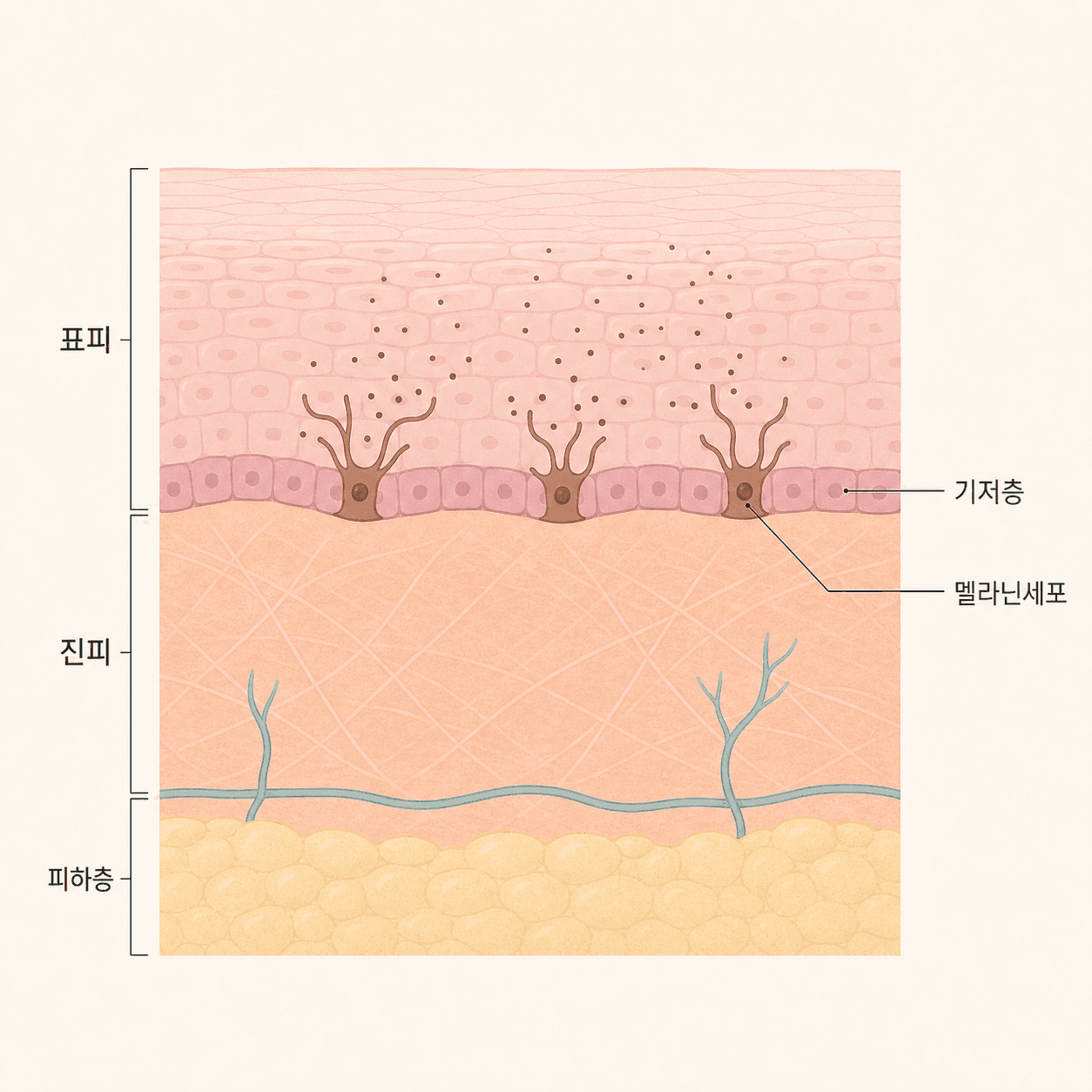
A laser treats a target such as pigment or a blood vessel with heat, and in the process the surrounding skin takes some minor stress too. When the melanocytes* sitting beneath the epidermis read that as a signal and start producing more melanin than usual, the pigment either builds up in the epidermis or, where the basal layer has been disturbed, drops into the dermis. Either way it reads as a brown mark.
Melanocytes*: cells in the bottom layer of the epidermis that manufacture melanin pigment. UV exposure or inflammation prompts them to increase production.
Reading an explanation of how inflammation stimulates melanocytes in the epidermis to synthesise more melanin, and how damage to the basal layer traps pigment in the dermis makes it obvious why reducing provocation is where prevention starts. It matters more for some people than others: as a reference notes, this reaction shows up far more distinctly in richly pigmented skin types, Fitzpatrick III to VI. If your skin sits in that range, prevention is not optional caution — it is the main event. In the US the lasers used for these treatments are FDA-cleared devices; "cleared" is the correct term for a device, whereas a drug such as Botox is "FDA-approved."

Prevention starts before the appointment
Most people start thinking about pigment on treatment day, but the groundwork is steadier if it begins several days earlier. Skin that is already irritated or sun-darkened when the laser hits it reacts harder.
Cut sun exposure for 2 to 4 weeks beforehand — tanned or sun-darkened skin reacts more strongly with pigment
Pause retinol and acid exfoliants — stopping 3 to 5 days before leaves the skin barrier less reactive
Settle any active breakouts or inflammation first — existing inflammation raises the pigment risk
Share your skin type and any pigment history — if you have had PIH before, say so up front
Being straightforward at the consultation about your skin tone and any past pigmentation lets the clinician dial the laser back and space sessions further apart. Going gently across several sessions carries less pigment risk than pushing hard in one.
Sun protection and calming: how far do you take it?
Aftercare rests on two pillars: blocking UV and calming the skin. UV in particular is the trigger that re-provokes already sensitised melanocytes and darkens pigment further, so overcast days and time indoors are not exemptions.
What to manage | Right after to day 3 | Day 4 to 7 | Week 2 onward |
|---|---|---|---|
Sunscreen | SPF50+, meticulously | Keep at SPF50+ | Daily, ongoing |
Physical cover (hat, parasol) | Strongly advised | Strongly advised | Advised outdoors |
Moisture and calming | Generous, nothing harsh | Generous | Back to normal |
Retinol and exfoliants | On hold | On hold | Reintroduce slowly |
Brightening actives | Ask your clinician | Start after checking | Can continue |
With sunscreen, the reapplication habit matters as much as the first application. Rather than one layer in the morning and nothing after, top it up every two to three hours if you are outdoors. Friction can call up pigment too in those first days, so remove cleanser and makeup by patting rather than scrubbing. Keep calming simple and moisture-led, and add any new active product one at a time, once the skin has stabilised. If the area blisters, weeps, or becomes painful and spreading rather than settling, that is an infection question rather than a pigment one — contact your provider promptly or seek urgent care.

Why where you have it done still matters
At Beautystone we tend to talk through how your skin is likely to react before we talk about the laser itself. The same device behaves differently depending on your skin tone and your pigment history, so we go through the pigmentation risk beforehand and set the intensity and the spacing conservatively. We are a small clinic within walking distance of Hapjeong Station in Seoul, which leaves room to watch whether pigment surfaces and decide the next step together. Worth planning for if you are travelling: PIH often appears weeks after the session, by which point you may be home, so line up a qualified provider where you live who can look at it. Distance is the one part of aftercare a clinic cannot solve for you.

If the pigment has already come up
It is deflating when you did everything right and the pigment surfaces anyway, but post-inflammatory hyperpigmentation often fades with time. Continued UV exposure is what slows that fading down, which is exactly why protection matters most during this stretch. Below is a rough sense of which factors contribute to lightening it.
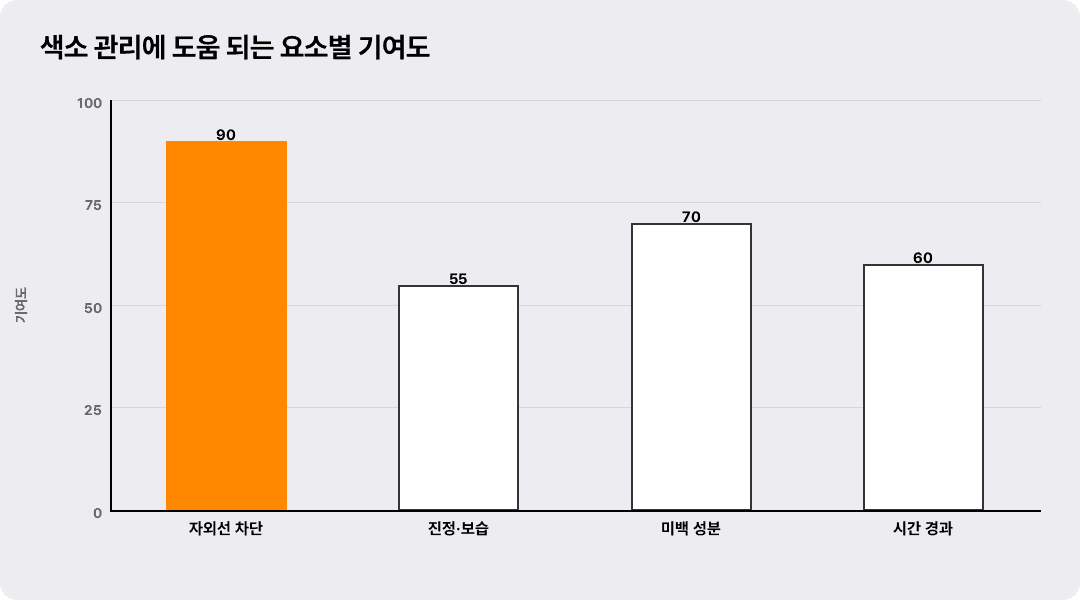
Broadly, the plan looks like this.
Step up sun protection — the single biggest variable while it fades
Brightening actives — add ingredients such as niacinamide or vitamin C after checking with your clinician
Minimise irritation — hold off on rubbing and exfoliating until the pigment has stabilised
Give it time and watch — pigment sitting in the epidermis tends to fade over a few months
Pigment in the epidermis lightens comparatively easily; pigment that has dropped into the dermis takes longer. Individual results vary. If several months pass with no change, or the mark darkens instead, it may need distinguishing from other pigment conditions, so it is worth going back to the clinician who treated you. Prescription options such as hydroquinone should only be used on a clinician's direction. This article is general information; whether a treatment suits you, and how to manage your own pigmentation, is something to decide with the clinician who examined you.

Frequently asked questions
Q. Does pigmentation always happen after a laser?
A. No, it is not a given. Whether it appears depends on your skin type, the intensity of the treatment and how carefully you manage UV afterwards. People with deeper skin tones or a history of pigmentation are at comparatively higher risk, so sharing that at the consultation and setting the intensity and spacing conservatively can lower the odds.
Q. How soon after treatment can pigment appear?
A. Most commonly it shows up as a brown mark somewhere between one and four weeks afterwards. The usual pattern is brief redness or flaking right after treatment, which settles, and then pigment gradually surfacing in the same place. Blocking UV thoroughly and reducing irritation during this window helps it pass faintly.
Q. Do I need sunscreen indoors as well?
A. UVA comes through window glass and is present on overcast days, so during the recovery period it is safer to wear sunscreen indoors too. If you spend long stretches by a window or go outside at all, apply SPF50+ in the morning and top it up once during the day.
Q. Can I start using a brightening cream straight away?
A. Putting brightening actives on freshly sensitised skin can irritate it instead. Wait until the skin has calmed down, then add ingredients such as niacinamide or vitamin C one at a time after discussing it with your clinician. Prescription-strength options such as hydroquinone should only be used with medical guidance.
Content





skin
Why Does Fractional CO2 Take Longer to Heal?

Contouring & Volume
How Many cc Does Forehead Filler Need?

skin
Why Is My Skin Oily but Tight in the Fall?

Hair Removal
Underarm Laser Hair Removal Cost: Do the Math

Tattoo removal
Laser Before a Cover-Up: How Many Sessions?

skin
큐어젯 다운타임, 다음 날 출근과 화장은 언제부터 될까요?