

Had filler recently? Here's what to know about MRI, flights, and dental work.
Published -
Updated -

Author
Wi Young-jin · Chief director
Seoul National University College of Medicine · Seoul National University Hospital Specialist
→
One of the most common questions we hear after a filler appointment goes something like this: "I've got an MRI next month, and I'm flying to Europe the week after — do I need to cancel everything?" The short answer? Not usually. But the nuances matter, and a lot of what circulates online overstates the risk significantly.
Dermal fillers have become so routine that it's easy to forget they're still a medical procedure, and it makes sense to think through how they interact with other things happening in your body and your schedule. In this article, we'll cover what the research actually says about MRI compatibility, how cabin pressure affects filler in practice, what to keep in mind before your next dental appointment, and a few other everyday situations that come up more than you'd think.
Can You Have an MRI With Filler?
Yes — in almost all cases. Hyaluronic acid (HA) fillers, which are by far the most widely used, contain no metallic components, so they don't interact with the magnetic fields used in MRI scanning. Studies on dermal filler materials confirm that standard HA fillers pose no contraindication for MRI and don't require removal before scanning (DermNet NZ — Dermal fillers and augmentation procedures).
There are two things worth mentioning, though. First, if you've had silicone-based or certain older permanent fillers, those rules may be different — this is a conversation to have with both your radiologist and your dermatologist before the scan. Second, some radiology centers ask patients to disclose cosmetic procedures as part of their intake forms. That's not because HA filler is dangerous in the scanner; it's because the filler material can occasionally show up as a subtle soft-tissue density on facial MRI images, which could look unfamiliar to a radiologist who doesn't know it's there. Letting them know in advance means they can note it in context rather than flag it as something to investigate.
So the practical answer: standard HA filler and MRI are compatible. Just mention your filler history on the intake form and let the care team decide if there's anything else to note.

What About Long-Haul Flights and Cabin Pressure?
Cabin pressure is lower at cruising altitude than at sea level — roughly equivalent to sitting at 6,000 to 8,000 feet. This causes mild tissue swelling in most passengers, which is why your shoes sometimes feel tighter after a long flight. For people who've had filler recently, the concern is whether that pressure difference causes filler to shift or behave differently.
In practice, most clinicians advise waiting at least one to two weeks after any filler injection before a long flight, for a straightforward reason: newly placed filler hasn't fully stabilized. The first week post-injection is when swelling, minor bruising, and positional adjustment are most active. Traveling during that window means you're swollen and confined to a seat, which is just uncomfortable — it doesn't mean the filler moves to a different location, but it can make the downtime harder to manage.
Once filler has had two weeks to settle, cabin pressure exposure isn't considered a meaningful risk by most dermatologists. Your filler isn't going to shift because you flew to Tokyo. Individual recovery varies, so if you had a larger volume treatment or experienced significant post-procedure swelling, erring on the side of a longer wait is reasonable.
First 48–72 hours: Avoid any air travel if possible — this is the peak swelling window.
One to two weeks out: Most providers consider flights safe once initial swelling has resolved.
Beyond two weeks: Cabin pressure exposure is generally not a concern for stable filler.
Stay hydrated on long flights regardless. Dehydration doesn't affect filler stability, but it does make the general post-procedure recovery period harder on your skin.

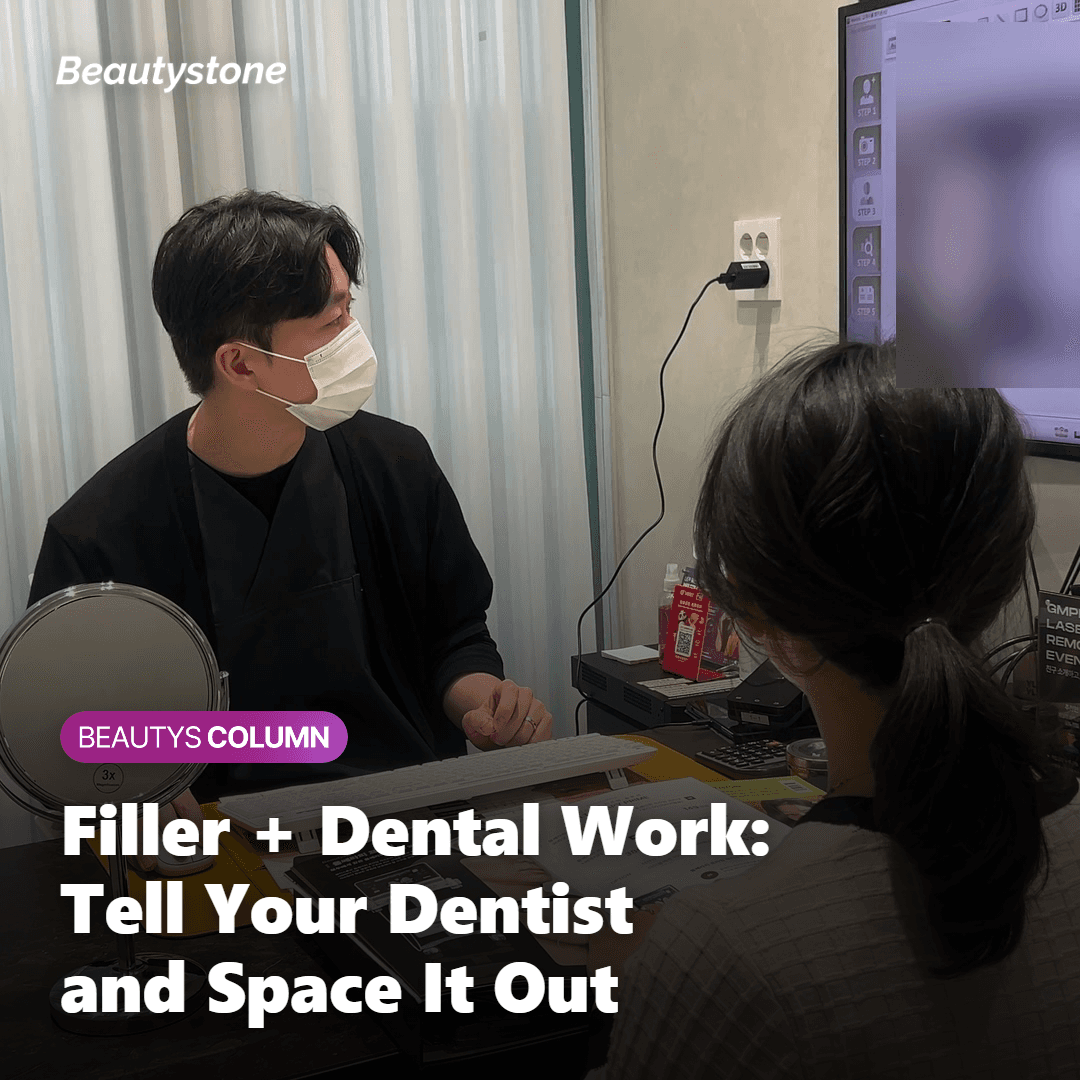
Dental Work, Local Anesthesia, and Filler: What to Know
This is the one that gets more complicated, but it's also more manageable than most people realize once you understand what's actually happening.
The concern with dental work after filler is primarily about two things: pressure and proximity. Dental procedures around the mouth, jaw, cheeks, and lip area involve physical contact, retraction, and sometimes significant pressure. If you've had filler in the lips, nasolabial folds, marionette lines, or cheeks, your dentist is working in or near territory where filler is present.
For routine cleaning or procedures far from the filler zones, timing generally doesn't matter much. For anything more involved — especially extractions, fillings with cheek retraction, or procedures in the lip and perioral area — it's worth flagging your filler history before the appointment. Here's what's worth paying attention to:
Local anesthesia (lidocaine injections): Dental local anesthesia is injected differently from filler and uses different landmarks. That said, a dentist who knows filler is present can adjust technique to avoid inadvertently compressing or distorting a recently treated area. For most patients with stable, well-settled filler, dental local anesthesia presents no meaningful issue — but it's still worth mentioning.
Timing around injections: If you're planning a dental procedure and filler, try not to schedule them within two to four weeks of each other. Getting filler right before or right after dental work around the same zone increases the swelling and recovery management you're dealing with at one time.
Post-treatment pressure: If you've recently had lip filler, talk to your dentist about avoiding strong cheek or lip retraction in the first one to two weeks.
The bigger picture is that filler and dental care aren't incompatible — they just need a little coordination. Telling your dentist about recent cosmetic procedures is the same kind of medical transparency you'd extend to any provider.
Side Effects and When to Seek Help
Most filler side effects are temporary and resolve without intervention. Swelling, redness, and tenderness at injection sites are common and typically settle within a few days to one week. Bruising, when it happens, usually clears in one to two weeks.
The side effects that need prompt attention are less common but important to recognize:
Spreading redness, warmth, or increasing pain beyond the first week: This may suggest infection. Seek care right away — don't wait for a scheduled follow-up.
Sudden vision changes or severe headache after facial filler: This is a rare but serious sign of vascular compromise. Seek emergency medical care immediately.
Skin that turns white, dusky, or mottled right after injection: This is a sign the filler may be affecting local blood flow. Your injector needs to know immediately — don't leave the clinic.
Firm nodules appearing weeks to months later: These may be granulomas or delayed reactions. Your provider can assess and, in the case of HA filler, dissolve the material if needed.
If you notice spreading redness, fever, or worsening pain after filler, seek medical care right away rather than waiting to see if it resolves on its own. Individual results vary and most people don't experience serious complications, but it's always better to flag something early.
A Few Other Situations That Come Up
Beyond MRI, flights, and dental work, a few other everyday scenarios come up in filler consultations:
Strenuous exercise: Most providers suggest avoiding vigorous workouts for 24 to 48 hours post-injection to reduce pressure and flushing in the treatment area.
Saunas, hot baths, and steam rooms: The first 24 to 48 hours is the window to avoid these. Heat and increased blood flow can worsen swelling in the early post-injection period.
Sunburn or significant sun exposure: In the first week, UV exposure and heat can aggravate post-filler inflammation. Sunscreen is non-negotiable.
Facial massage: Avoid firm massage of filler areas for at least two weeks. Light touch is fine.
Other injections in the same area: If you're planning multiple injectables — Botox and filler in the same zone, for instance — ask your provider about sequencing. The usual guidance is to space them out or plan them strategically in the same session.
These restrictions have a common theme: the first two weeks are when filler is actively settling and the surrounding tissue is recovering. Most of the rules loosen up considerably after that window.
The Bottom Line
Filler and everyday life are compatible — it's mainly the first two weeks that need some thought. Here's the recap:
MRI: Standard HA fillers are MRI-safe. Mention them on your intake form so the radiologist has context.
Flights: Wait at least one to two weeks after injection, then fly without concern. Cabin pressure doesn't cause stable filler to shift.
Dental work: Tell your dentist about filler. For procedures near the injection zone, try to space treatments at least two to four weeks apart.
Red flags: Spreading redness, fever, vision changes, or worsening pain warrant prompt medical attention.
Like any procedure, filler comes with trade-offs and a short window of real restriction. Ultimately, the choice of when to schedule it depends on your life, your calendar, and what your provider advises for your specific treatment. If you're considering dermal filler and want to understand how it fits around your schedule, a consultation is the best way to get a clear picture. Beautystone is a dermatology clinic in Seoul's Hapjeong area — you can see current offers at /en/promotion.
Frequently asked questions
Q. Is it safe to have an MRI after getting filler?
A. Yes, standard hyaluronic acid fillers contain no metallic components and are compatible with MRI. Just mention your filler history on the intake form so the radiologist has context. If you've had silicone or permanent fillers, check with both your dermatologist and radiologist beforehand.
Q. How soon after filler can I take a long flight?
A. Most providers recommend waiting one to two weeks, mainly because the first week is when swelling is most active and flying during that window makes the recovery harder to manage. Once filler has settled — around the two-week mark — cabin pressure exposure isn't considered a meaningful risk.
Q. Can I go to the dentist after getting filler?
A. Yes, but tell your dentist about recent filler, especially if the procedure is near the lips, cheeks, or jaw area. For procedures involving pressure or retraction near injection zones, it's worth spacing things at least two to four weeks apart if you can.
Q. What side effects from filler should I take seriously?
A. Redness, swelling, and tenderness are common and usually settle within a week. If you notice spreading redness, increasing pain, fever, sudden vision changes, or skin that turns white or mottled right after injection, seek medical care right away. Don't wait to see if those specific symptoms resolve on their own.


Hair Removal
레이저 제모 1회에도 남는 몫이 있어요 — 밀도를 모자이크로 보는 법

Tattoo removal
Why Extremity Tattoos Are Slower to Remove

Tattoo removal
Tattoo Removal Cost: Why Quotes Vary by Area

Tattoo removal
Unused Tattoo Removal Sessions: What Happens?

Lifting
Forehead Thread Lifting: How Far Can It Go?

skin
Skin Booster Prices: What to Check in a Quote