What’s the difference between Juvelook and filler?

Juvelook, Sculptra, PRP, Filler look alike but work differently. Boosters vs fillers, explained.
What’s the difference between Juvelook and filler?

When you consult a dermatologist, you may hear things like, “Let’s use filler here, and a collagen booster there.” When names like Juvelook, Encia, and PRP come up all at once, it can get even more confusing. You may wonder, “Aren’t they all basically the same?” But the way they work is completely different.
The short answer. Filler is a treatment that “fills in volume,” while a collagen booster is a treatment that “encourages your skin to make collagen.” They can be used in the same area, but the results are different in nature.
Filler works right away, boosters work gradually
Filler usually involves directly injecting ingredients such as hyaluronic acid* into the skin to plump up the area. You can see the change immediately after the procedure. Indentations are filled in, and the contour looks subtly restored right away.
Hyaluronic acid: A moisture-retaining substance that is also found in our body. It is naturally broken down over time.
Collagen boosters, on the other hand, do not fill in volume directly. Ingredients such as PDLLA* work slowly inside the skin to stimulate your own skin to produce collagen. That means there may not be a big change immediately after treatment. The effect builds gradually over one to two months.
PDLLA: A lactic-acid-based ingredient that helps promote collagen production in the skin. It is used in collagen booster treatments such as Juvelook.

Which treatment is right for which area?
Filler works well in areas that need volume. These include clearly sunken or shadowed areas such as nasolabial folds, marionette lines, and under-eye hollows. It is used when you want an immediate result in a place where it is obvious that “this area needs to be filled.”
Collagen boosters are better suited for areas where the overall thickness and elasticity of the skin have declined more than the volume itself. They are good for broader areas such as the upper cheeks, forehead, and temples when the skin feels slightly deflated overall, or when you want to improve general skin quality such as pores and fine lines.
To put it simply: if a clear “line” bothers you when you look closely in the mirror, filler may be the answer. If an overall “blurred surface” bothers you when you look from farther away, a booster may be better. If both concerns are present, trying to solve everything with just one treatment may leave you unsatisfied with either result. Distinguishing whether your skin needs both or only one is the best way to manage both cost and results.
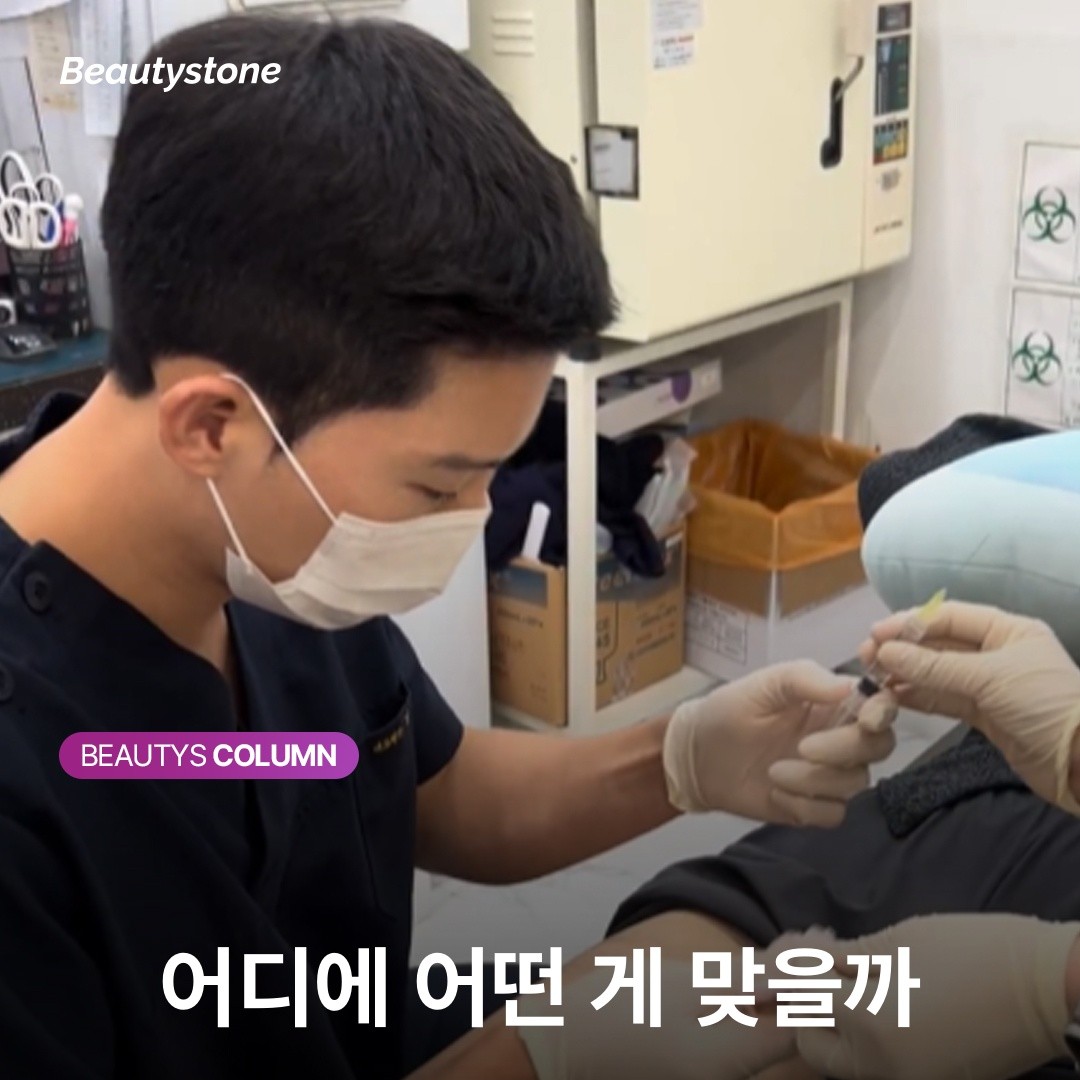
They can also be used together in the same area
A combination often seen in consultations is using filler for the nasolabial folds and a collagen booster for the upper or outer cheek area. The filler fills in the shadow right away, while the booster thickens the surrounding skin itself so the result looks more natural overall.
However, receiving both treatments at the same time in the same area can be more burdensome, so they are usually spaced out over time. Rather than doing everything at once, it is safer to first see how one treatment heals before deciding on the next one.
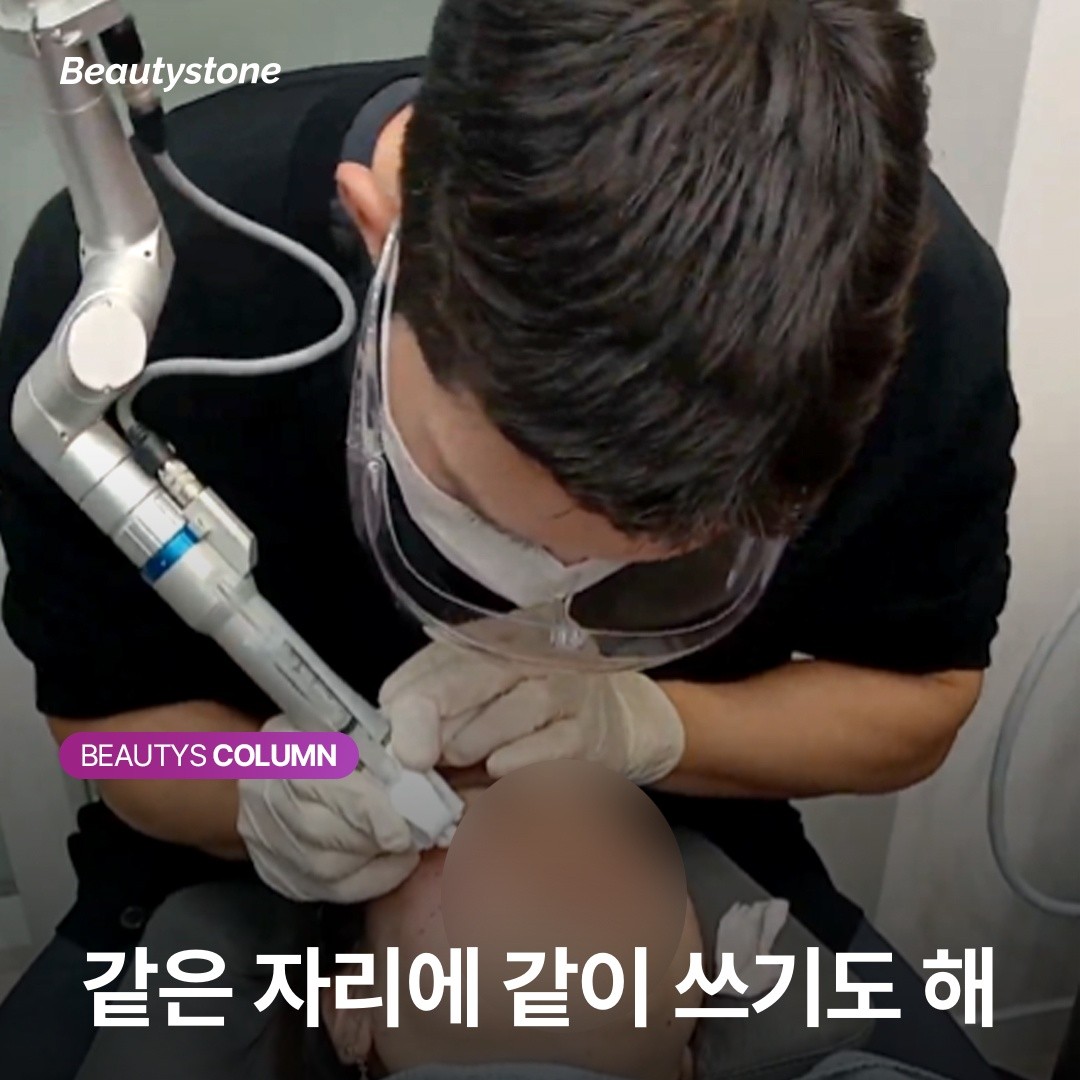
PRP, Encia, and Juvelook are all different too
Even among collagen boosters, there are different types. There are PDLLA-based products such as Juvelook and Sculptra, PCL*-based products such as Encia, and PRP*, which uses concentrated material prepared from your own blood.
PCL: A booster containing caprolactone. Its effect tends to last longer than PDLLA-based products.
PRP: A treatment in which your blood is drawn, the platelet-rich plasma is separated, and then injected back into the skin.
Each product differs in how quickly it breaks down, how strong the stimulation is, and when the results become visible. The best product for your skin should be chosen by a doctor after looking at your skin thickness and overall condition. It is safer not to choose just because “it is popular.”

What to decide before treatment
If you organize just three things in advance, the consultation will go much more smoothly. First, decide whether what bothers you most right now is a clear “indentation” or an overall “sunken” look. If it is a definite indentation, filler may be more suitable; if it is an overall lack of volume, a booster may be better.
Second, separate the areas where you want an immediate change from the areas where gradual improvement is acceptable. If an event is coming up soon, filler, which shows results right away, may be more practical.
Third, collagen boosters may not be a one-time treatment. They are often done two or three times at one- to two-month intervals, so it is a good idea to plan your schedule and budget in advance.
After a booster treatment, mild swelling or a slightly palpable lump may remain for a few days. This is usually a normal reaction and will gradually settle. However, if the swelling lasts more than a week or one side feels unusually firm, it is a good idea to check back with your doctor. Trying to massage it out yourself may distort the final shape, so it is safest not to touch it on your own.
Also, because boosters work gradually, it is natural to feel that “there is no big change” right after the procedure. Usually, the skin tone starts to look a little brighter after 2–3 weeks, and after one to two months the overall texture begins to look more refined. If you compare photos taken right after treatment with photos taken one and two months later under the same conditions, the change becomes clearly visible.
Frequently asked questions
Q1. How long does a collagen booster last?
A. It varies by product, but it is usually around one to one and a half years. Since it does not fill volume directly, but instead stimulates the skin to make collagen, the effect fades gradually and naturally.
Q2. Can I get a booster and filler on the same day?
A. It may be possible if the treatment areas are different, but it is usually not recommended. The overall stimulation can be too much at once, which may make recovery take longer.
Q3. Is PRP considered a booster?
A. In a broad sense, yes, since it is a treatment that stimulates collagen. But it is a bit different in that it uses your own blood rather than adding an external ingredient. Its effect is also generally gentler than other boosters.
What’s the difference between Juvelook and filler?

When you consult a dermatologist, you may hear things like, “Let’s use filler here, and a collagen booster there.” When names like Juvelook, Encia, and PRP come up all at once, it can get even more confusing. You may wonder, “Aren’t they all basically the same?” But the way they work is completely different.
The short answer. Filler is a treatment that “fills in volume,” while a collagen booster is a treatment that “encourages your skin to make collagen.” They can be used in the same area, but the results are different in nature.
Filler works right away, boosters work gradually
Filler usually involves directly injecting ingredients such as hyaluronic acid* into the skin to plump up the area. You can see the change immediately after the procedure. Indentations are filled in, and the contour looks subtly restored right away.
Hyaluronic acid: A moisture-retaining substance that is also found in our body. It is naturally broken down over time.
Collagen boosters, on the other hand, do not fill in volume directly. Ingredients such as PDLLA* work slowly inside the skin to stimulate your own skin to produce collagen. That means there may not be a big change immediately after treatment. The effect builds gradually over one to two months.
PDLLA: A lactic-acid-based ingredient that helps promote collagen production in the skin. It is used in collagen booster treatments such as Juvelook.

Which treatment is right for which area?
Filler works well in areas that need volume. These include clearly sunken or shadowed areas such as nasolabial folds, marionette lines, and under-eye hollows. It is used when you want an immediate result in a place where it is obvious that “this area needs to be filled.”
Collagen boosters are better suited for areas where the overall thickness and elasticity of the skin have declined more than the volume itself. They are good for broader areas such as the upper cheeks, forehead, and temples when the skin feels slightly deflated overall, or when you want to improve general skin quality such as pores and fine lines.
To put it simply: if a clear “line” bothers you when you look closely in the mirror, filler may be the answer. If an overall “blurred surface” bothers you when you look from farther away, a booster may be better. If both concerns are present, trying to solve everything with just one treatment may leave you unsatisfied with either result. Distinguishing whether your skin needs both or only one is the best way to manage both cost and results.

They can also be used together in the same area
A combination often seen in consultations is using filler for the nasolabial folds and a collagen booster for the upper or outer cheek area. The filler fills in the shadow right away, while the booster thickens the surrounding skin itself so the result looks more natural overall.
However, receiving both treatments at the same time in the same area can be more burdensome, so they are usually spaced out over time. Rather than doing everything at once, it is safer to first see how one treatment heals before deciding on the next one.

PRP, Encia, and Juvelook are all different too
Even among collagen boosters, there are different types. There are PDLLA-based products such as Juvelook and Sculptra, PCL*-based products such as Encia, and PRP*, which uses concentrated material prepared from your own blood.
PCL: A booster containing caprolactone. Its effect tends to last longer than PDLLA-based products.
PRP: A treatment in which your blood is drawn, the platelet-rich plasma is separated, and then injected back into the skin.
Each product differs in how quickly it breaks down, how strong the stimulation is, and when the results become visible. The best product for your skin should be chosen by a doctor after looking at your skin thickness and overall condition. It is safer not to choose just because “it is popular.”

What to decide before treatment
If you organize just three things in advance, the consultation will go much more smoothly. First, decide whether what bothers you most right now is a clear “indentation” or an overall “sunken” look. If it is a definite indentation, filler may be more suitable; if it is an overall lack of volume, a booster may be better.
Second, separate the areas where you want an immediate change from the areas where gradual improvement is acceptable. If an event is coming up soon, filler, which shows results right away, may be more practical.
Third, collagen boosters may not be a one-time treatment. They are often done two or three times at one- to two-month intervals, so it is a good idea to plan your schedule and budget in advance.
After a booster treatment, mild swelling or a slightly palpable lump may remain for a few days. This is usually a normal reaction and will gradually settle. However, if the swelling lasts more than a week or one side feels unusually firm, it is a good idea to check back with your doctor. Trying to massage it out yourself may distort the final shape, so it is safest not to touch it on your own.
Also, because boosters work gradually, it is natural to feel that “there is no big change” right after the procedure. Usually, the skin tone starts to look a little brighter after 2–3 weeks, and after one to two months the overall texture begins to look more refined. If you compare photos taken right after treatment with photos taken one and two months later under the same conditions, the change becomes clearly visible.
Frequently asked questions
Q1. How long does a collagen booster last?
A. It varies by product, but it is usually around one to one and a half years. Since it does not fill volume directly, but instead stimulates the skin to make collagen, the effect fades gradually and naturally.
Q2. Can I get a booster and filler on the same day?
A. It may be possible if the treatment areas are different, but it is usually not recommended. The overall stimulation can be too much at once, which may make recovery take longer.
Q3. Is PRP considered a booster?
A. In a broad sense, yes, since it is a treatment that stimulates collagen. But it is a bit different in that it uses your own blood rather than adding an external ingredient. Its effect is also generally gentler than other boosters.
Latest post
Latest post

Contouring & Volume
How does Altite RF work for mid-face sagging around the cheekbones, and who is the ideal candidate for this treatment?
We’ve put together a guide on how Artite RF works on mid-face elasticity, when you can expect to see the full results, and how it differs from other lifting treatments and fillers.

Lifting
When choosing a clinic for Ultherapy and Thermage combination lifting, what standards should you look for?
We've summarized everything from the differences in treatment depth between Ultherapy and Thermage, to the key standards—including equipment, experience, and customized treatment planning—to consider when choosing a clinic for combination lifting treatments.

Contouring & Volume
Who is the ideal candidate for Inmode FX, and is it truly effective for treating a double chin and sagging cheeks?
We have put together an explanation of how InMode FX works to improve a sagging jawlines and cheek elasticity, including its limitations and how it differs from other treatments.

skin
At what age should you start collagen boosters, and how do the expected benefits vary across different age groups?
We’ve put together a guide on how collagen boosters stimulate your skin's natural collagen production, along with the specific goals and expected results for different age groups.

skin
Blemishes, melasma, and freckles require different lasers depending on the type of pigment. How do you choose the right one for your skin?
We have compared and summarized how the depth of blemishes, melasma, and freckles differ, as well as the selection criteria for lasers depending on the type of pigment.

Lifting
소프웨이브 리프팅 효과는 시술하고 나서 언제부터 나타나고 얼마나 오래 유지되는 걸까요?
소프웨이브는 초음파 열로 콜라겐을 자극해 효과가 차오르듯 나타나는 시술이에요. 직후 체감부터 본격 변화 시점, 유지 기간, 재시술 시점, 효과를 오래 가져가는 습관까지 한 번에 짚어봐요.
1:1 Custom Approach
1:1 Consultation Whatsapp
🌸 Beautystone Clinic attends the Meditox Bangkok Cadaver Workshop 🌸
1:1 Custom Approach