

Two wavelengths (755 and 1064nm) or one (810nm)? How skin tone and hair pick the laser.
Published -
Updated -

Author
Wi Young-jin · Chief director
Seoul National University College of Medicine · Seoul National University Hospital Specialist
→
Look into laser hair removal and two names keep surfacing: "GentleMax Pro Plus" and "diode laser." You go in for a consultation, hear the same treatment described with different machine names attached, and leave without a sense of which one actually fits you.
Here is the short answer first. The two devices fire light at different wavelengths, and that single difference decides which hair and which skin tones they suit. GentleMax Pro Plus packs two different lasers into one machine so the operator can switch between them; a diode laser fires one wavelength steadily and repeatedly. Neither is simply better. The choice comes down to how coarse and dark your hair is, and how dark your skin is.
This article collects general treatment information from Beautystone, a skin clinic in Hapjeong, Seoul.
What you'll learn
What laser hair removal is actually targeting inside the hair
How GentleMax Pro Plus and diode lasers differ on wavelength and skin tone
How to judge which suits your own hair and skin
What to sort out before you sit down for a consultation
What the laser is actually aiming at
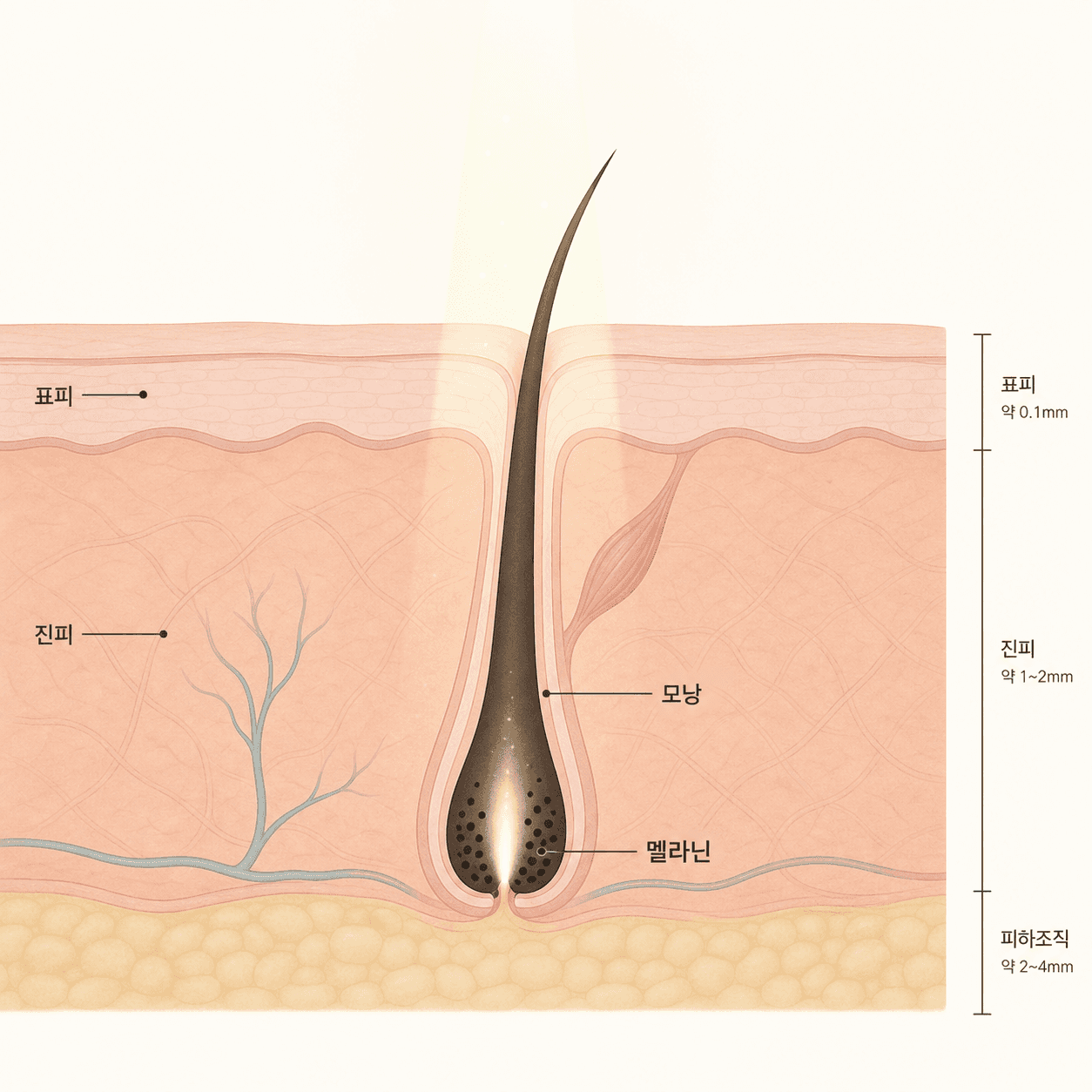
Laser hair removal works by targeting pigment inside the hair and turning light into heat there. Hair and the follicle root contain melanin, a pigment that absorbs laser light and converts it to heat, and that heat travels to the structures that grow the hair. The principle is called selective photothermolysis. Because it heats darkly pigmented hair while largely leaving the surrounding skin alone, the response is strongest on hair that is dark and coarse.
Melanin*: the pigment that gives skin and hair their colour. Laser hair removal relies on the fact that this pigment absorbs light.
Selective photothermolysis*: choosing a wavelength that is absorbed mainly by the target pigment, so damage to surrounding tissue is limited.
Reading a reference explaining how hair removal lasers use light in the 600 to 1200nm range to target melanin in the hair and heat the follicle, and which wavelengths suit which skin tones makes it clearer why two machines doing the same job can behave so differently. Wavelength is where they part company. Longer wavelengths travel deeper into skin; shorter ones react more readily with pigment close to the surface. So the wavelength a device uses is effectively the answer to which hair and which skin it suits. In the US, hair removal lasers of both kinds are FDA-cleared devices — "cleared" is the correct term for a device, whereas a drug like Botox is "FDA-approved."

GentleMax Pro Plus: two wavelengths you can switch between
GentleMax Pro Plus holds two wavelengths in one machine — alexandrite at 755nm and Nd*: YAG at 1064nm. Being able to pick between them mid-course is the whole point of the design.
Alexandrite*: a 755nm laser. Pigment absorbs it readily, so it tends to respond well on dark hair against lighter skin.
Nd*: YAG*: a 1064nm laser. The longer wavelength reaches deeper and reacts less with pigment in the epidermis, so it is generally gentler on darker skin tones.
Set side by side, the two behave like this.
Alexandrite 755nm — strong pigment absorption, so it responds well to dark, coarse hair on lighter skin
Nd*:YAG 1064nm — a longer wavelength that reaches deeper and reacts less with surface pigment, so it is used more broadly on darker skin tones
Switching between them — the operator can select or alternate by area and by skin condition
One area can be treated with alexandrite while a darker-toned area, or deeper hair, is handled with Nd:YAG. That widens the options if your skin tone varies across the body. Having more wavelengths available is not automatically better, though — the result still depends on a clinician choosing the settings that match your skin and your hair.

Diode lasers: one wavelength, repeated steadily
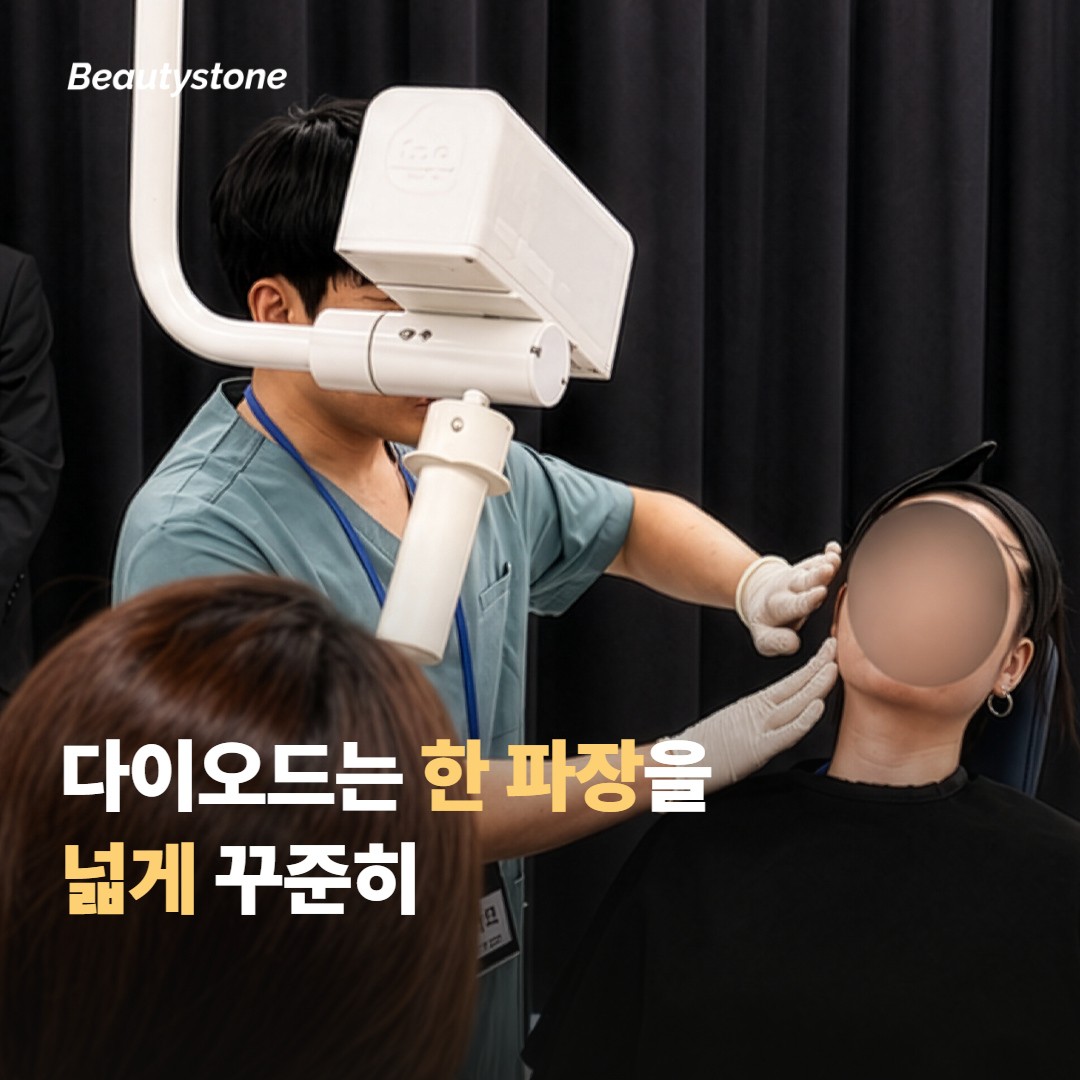
Diode lasers usually run at 810nm. Rather than swapping wavelengths the way GentleMax Pro Plus does, their strength is repeating one wavelength consistently and covering large areas quickly.
At 810nm the wavelength is slightly longer than 755nm, so it reaches a little deeper into skin and puts relatively less heat load on the epidermis. An overview of dermatologic lasers, noting that the 810nm diode penetrates deeper with less epidermal damage and is comparatively safer on darker skin tones, and that different wavelengths suit different skin types explains why diode devices are used across such a wide range of skin tones. Many come with integrated cooling that chills the surface during treatment, which suits anyone wanting to cover a large area comfortably.
Put simply: a diode is "one wavelength, wide and consistent," while GentleMax Pro Plus is "two wavelengths, matched to the situation."
The two devices, side by side on wavelength
Lined up by wavelength and by which skin tones they suit, the comparison looks like this.
Item | GentleMax Pro Plus | Diode laser |
|---|---|---|
Wavelength | 755nm + 1064nm (two) | 810nm (one) |
Wavelength choice | Switched by area and skin tone | One wavelength, repeated |
Light skin, dark hair | Responds well at 755nm | Handles it fine |
Darker skin tones | Covered broadly at 1064nm | Comparatively safe |
Overall approach | Matched to the situation | Wide areas, consistently |
Laid out as numbers, the wavelength range and the span of skin tones each covers become easier to see at a glance.
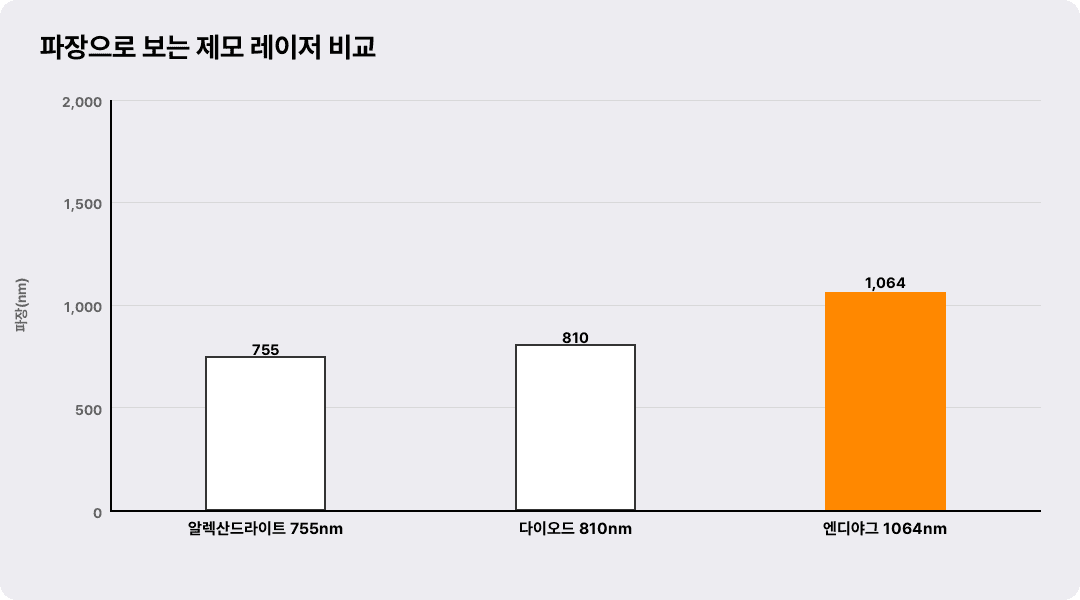
On wavelength alone, Nd:YAG is the longest of the three: it reaches deepest into skin while reacting least with surface pigment. GentleMax Pro Plus holds both ends of that spectrum, 755 and 1064, while the diode works steadily in the middle at 810. Rather than one being better, the deciding question is where your own skin tone and hair sit along that spectrum.
Why where you have it done still matters
At Beautystone we would rather check your hair thickness and skin tone first, then agree the wavelength and settings together, than lead with a machine name. Even within GentleMax Pro Plus, whether alexandrite or Nd:YAG is the right call shifts by area and by the state of your skin, so at the first consultation we run a test patch, watch how you react, and adjust the intensity from there. We are a small clinic within walking distance of Hapjeong Station in Seoul, so there is room to review the response after each session and set the next one together. Pricing varies a lot by area, by session count and by clinic, so ask for the per-area and per-course figures in writing rather than working from a headline number. And if you are having sessions while travelling, arrange a qualified provider near home for anything that comes up after you fly back.

Worth sorting out before your consultation
Laser hair removal is not a one-visit treatment; it runs across several sessions. Hair grows on its own individual cycle, so only the hairs actively growing at a given moment respond. Having the following clear beforehand makes the decision much easier.
Your skin tone and your hair colour and thickness — dark hair on light skin points one way; darker skin points to a longer wavelength
The area you want treated — face, underarms, arms and legs all differ in hair depth and density
Your recent skin condition — if you have had a lot of sun, or tanned recently, the timing needs adjusting
Spacing between sessions — usually a few weeks apart, across several rounds
Medications and skin conditions — anything that can cause photosensitivity is worth flagging up front
Above all, response tends to be strongest on dark, coarse hair against lighter skin, so having your own situation clear makes the consultation far more productive. If your skin blisters, blanches, or becomes severely painful after a session rather than settling, seek urgent care rather than waiting it out. Individual results and recovery vary. This article is general information; the device, the wavelength and the session plan that suit you are things to decide with the clinician who examined you.
Related reading
If you are only just starting to look into hair removal, the area-by-area differences and the aftercare are worth reading alongside this.
Frequently asked questions
Q. Which is better, GentleMax Pro Plus or a diode laser?
A. Rather than one being better outright, what matters is using the wavelength that matches your skin tone and your hair. Dark hair on light skin responds well at 755nm; if your skin is on the darker side, longer wavelengths such as 1064nm or 810nm place comparatively less load on it. GentleMax Pro Plus lets the operator pick between two wavelengths, while a diode uses one wavelength widely and consistently. Decide with your clinician based on your own situation.
Q. My skin is fairly dark. Is laser hair removal still an option?
A. Longer wavelengths such as Nd:YAG at 1064nm and diode at 810nm react less with surface pigment, so they are used comparatively broadly on darker skin tones. The intensity and wavelength still need matching carefully to your skin, so the safe route is a test patch to confirm how you respond before going further.
Q. How many sessions does laser hair removal take?
A. Because each hair follows its own growth cycle, not all of them respond at once, so treatment usually runs across several sessions spaced a few weeks apart. The number varies with the area, the hair density and how you respond individually, so it is best to map out the plan at the consultation.
Q. Can I have laser hair removal right after tanning?
A. Straight after tanning the pigment in your skin is heightened, so the epidermis can absorb more heat. Adjusting the timing is the safer route. If you have had a lot of sun exposure, it is better to wait until your skin has calmed down, and to confirm the exact timing with your clinician after they have looked at it.
Content


![[Wi Young-jin] GentleMax Pro Plus price & output guide](https://framerusercontent.com/images/9ExM3nIrTtCa9caOWsdiTEpv3mw.jpg?width=1080&height=1080)


skin
Why Does Fractional CO2 Take Longer to Heal?

Contouring & Volume
How Many cc Does Forehead Filler Need?

skin
Why Is My Skin Oily but Tight in the Fall?

Hair Removal
Underarm Laser Hair Removal Cost: Do the Math

Tattoo removal
Laser Before a Cover-Up: How Many Sessions?

skin
큐어젯 다운타임, 다음 날 출근과 화장은 언제부터 될까요?