

Why do underarms need fewer laser sessions than legs? Hair growth cycles explain it.
Published -
Updated -

Author
Wi Young-jin · Chief director
Seoul National University College of Medicine · Seoul National University Hospital Specialist
→
When you start researching laser hair removal, you'll hear all kinds of numbers: "underarms only take a few sessions," "legs need a lot more." It's the same GentleMax Pro Plus laser (laser hair removal), so why does the recommended count change from one area to the next? With every ad quoting a different figure, it's easy to feel lost.
The short answer: the number of sessions you need depends on how fast the hair grows in that area, plus how dense and thick it is. Laser hair removal doesn't clear every hair in one go — it only affects follicles that are actively growing, which is why treatment is spread across several sessions. Once you understand why that "several" shifts from area to area, it's much easier to gauge roughly how many sessions your own treatment area will need.
This article summarizes treatment information from Hapjeong Beautystone.
What you'll take away
Why laser hair removal can't be done in a single session
Why underarms and legs call for different numbers of sessions
How to estimate the right count for your area and situation
Why a few weeks are spaced between sessions
Laser only affects follicles that are actively growing
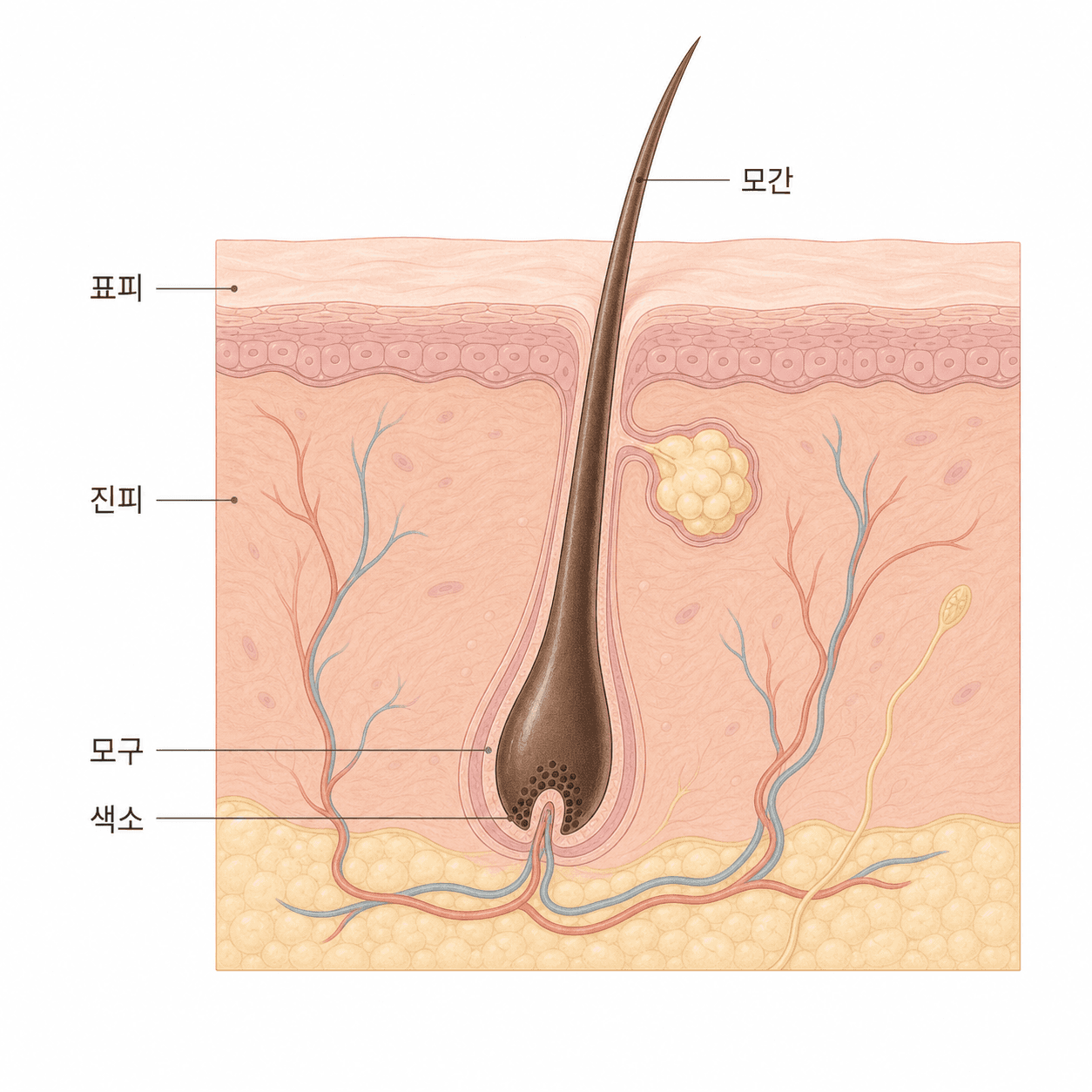
Laser hair removal works by having the pigment inside the hair absorb the laser's light, which carries heat down to the follicle. But not every hair is in the same state at once — each follicle cycles between growing and resting phases. The hairs that respond well to the laser are the ones in their active growth phase*.
* growth phase: the stage when a follicle is growing most actively and holds the most pigment, so it responds well to the laser. These are the hairs the treatment mainly works on.
Follicles hold the most pigment during their growth phase and respond best to the laser, and since not all hairs are in that phase at the same time, treatment is usually spread across several sessions about 4 to 6 weeks apart — which makes it clear why one session isn't enough. Only the hairs growing at a given moment respond, so when the resting hairs come up later, you need another session to catch them.

Underarms vs. legs: why the session counts differ
Even with the same laser, the hair behaves differently in each area, so the number of sessions changes. Laying the two areas side by side, item by item, it breaks down like this.
Factor | Underarms | Legs |
|---|---|---|
Hair thickness | On the thick side | Varies by spot |
Surface area | Small | Large |
Share in growth phase | On the higher side | Relatively lower |
Sessions usually advised | 6–8 | 8–10 or more |
Time per session | Short | Longer, with the larger area |
The table shows why underarms tend to be advised fewer sessions than legs. Underarms cover a small area packed with thick, well-pigmented hair that responds well, while legs span a much larger area with a mix of fine and coarse hair from spot to spot — so they often take more sessions, spread further out.
How to gauge the right count for your area and situation
The number of sessions depends not only on the area but also on your hair's color and thickness, your skin tone, and hormonal influences. Thick, dark hair holds more pigment and tends to respond faster, while fine, light hair needs more sessions for the effect to build up. So even for the same legs, the recommended count can vary from person to person.
If you have a more revealing season like summer coming up, it's a good idea to start your sessions early, with some buffer. Because the effect accumulates session by session, keeping to the recommended spacing and going steadily gives more stable results than cramming sessions into a short window. That said, the exact number is safest to settle with a clinician who has looked at your hair and skin tone in person.

Why Hapjeong Beautystone
At Hapjeong Beautystone, rather than leading with a "set package of X sessions," we tend to look at your hair condition and the area's size first, then estimate the count from there. Even in the same area, hair responds differently depending on its thickness, color, and your skin tone, so we set the spacing and energy level by looking at each person individually. Being a small clinic within walking distance of Hapjeong Station means we can watch how much the hair thins each session and fine-tune the next visit together.

What the procedure and recovery look like
A session can be just a few minutes for some areas, and longer for wider ones like the legs. During treatment there's a light stinging, like a rubber band snapping against the skin, and right afterward the area may look slightly red or feel warm. For most people this settles within a few hours, and you can usually return to your day right away.
Rather than showing all at once, the effect builds as sessions add up. Each time, the hairs that were actively growing respond and fall out, so the overall amount of hair drops step by step. If you map out the remaining hair by session, it roughly traces a curve like this.
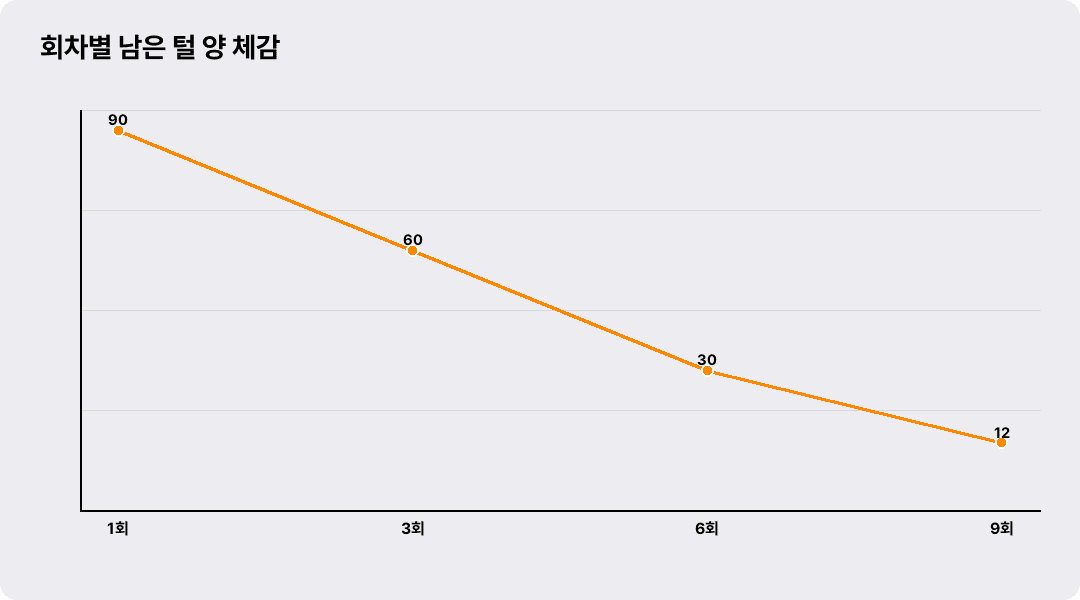
As this curve shows, the hair thins more with each session, so rather than judging after one or two, it's better to complete the recommended number and watch the overall trend. Sessions are usually spaced 4 to 6 weeks apart, timed to when resting hairs grow back in. The exact count and spacing are safest to settle with a clinician as you watch your progress. This article gathers general information, so whether the treatment is right for you is best decided after consulting a clinician who has examined you in person.

Frequently asked questions
Q. Do underarms really need fewer sessions than legs?
A. That's usually the trend. Underarms cover a small area with plenty of thick, well-pigmented hair that responds well, so they often wrap up in fewer sessions. Still, everyone's hair is different, so the exact count is best gauged after looking at it in person.
Q. Can't I just cram the sessions together to finish faster?
A. Ignoring the recommended spacing and packing sessions together won't boost the results. The laser only responds to hairs that are actively growing, so you have to time each session to when the resting hairs grow back in to catch the next batch. That's why going steadily, usually 4 to 6 weeks apart, gives more stable results.
Q. Will the hair disappear right after a session?
A. Rather than going smooth immediately, the hairs that responded shed over several days to a week or two. The overall amount drops as sessions add up, so instead of judging after one or two, it's better to complete the recommended number and see how it goes.
Q. Is there anything to watch out for after a session?
A. On the day of treatment, it's best to avoid anything that raises your body heat sharply, like saunas, jjimjilbangs, or hot showers. Sun protection matters especially, so take care not to let the treated area get much sun exposure. Redness or a warm feeling usually settles within a day, but if blistering or severe redness lingers, please check in with the clinician who treated you.


skin
Fraxel CO2: Why Prices Vary & What to Check

skin
How to Choose an Acne Dermatologist: 5 Signs

Contouring & Volume
Nasolabial Folds: When Lifting Isn't Enough

skin
Sculptra Cost: Why Sessions and Vials Matter

Lifting
After Shurink Universe: Wash, Work Out & Drink

skin
Sofwave Before a Wedding: Timing Guide