

A slim frame changes hip filler design. Here's how depth, dosing, and pacing shift.
Published -
Updated -

Author
Wi Young-jin · Chief director
Seoul National University College of Medicine · Seoul National University Hospital Specialist
→
If you're on the leaner side and someone has told you that hip filler "doesn't show much" on a slim frame, you're not imagining it. A thinner layer of subcutaneous fat genuinely changes how added volume reads on the body.
The short answer? Hip filler can still work on a slim frame — but the plan has to change. Injection depth, product choice, and how sessions are paced matter more than the raw number of syringes.
In this article, we'll cover what hip filler actually is, why lean tissue shows volume differently, how the injection design shifts, what recovery looks like week by week, and the side effects worth understanding before you book a consultation.
What Is Hip Filler?
Hip filler — also called buttock filler — is an injectable treatment that adds contour to the upper outer hip, where many people notice an indentation between the hip bone and the thigh. That indentation has a nickname most of us have heard by now: the 'hip dip.'
Two product families dominate this area, and they behave very differently:
Hyaluronic acid (HA) fillers: a gel that occupies space, so the shape is visible almost right away. HA can be dissolved with hyaluronidase if placement needs correcting.
Collagen stimulators: products such as Sculptra (poly-L-lactic acid) work by prompting your own collagen over several months. Slower to appear, more gradual in the way they build.
Body work uses much larger volumes than facial work, so it's normally staged across visits instead of finished in one sitting. Individual results vary from person to person.
Why Does a Slim Frame Show Less Volume?
Because there's less tissue sitting above the product to soften and spread it. On a body with a thicker fat layer, injected volume diffuses into a continuous curve. On a lean frame, that same volume sits closer to the surface, where the eye picks up edges instead of a smooth line.
Three practical consequences follow from that:
Contour show-through: a firm deposit placed too superficially can read as a ridge or a step rather than blending into the curve.
Perceived volume: the same syringe count often looks smaller, because a lean silhouette has a wider gap to bridge between the hip bone and the upper thigh.
Less scaffolding: thin tissue supports product less, so material placed in the wrong plane can shift under sustained pressure.

Published reviews of gluteal augmentation technique make a similar point: the plane of placement, not simply the amount injected, drives how natural a result looks and how safely it sits. Two of them are indexed on PubMed — a review of gluteal augmentation technique and safety and an analysis of injectable gluteal augmentation outcomes.
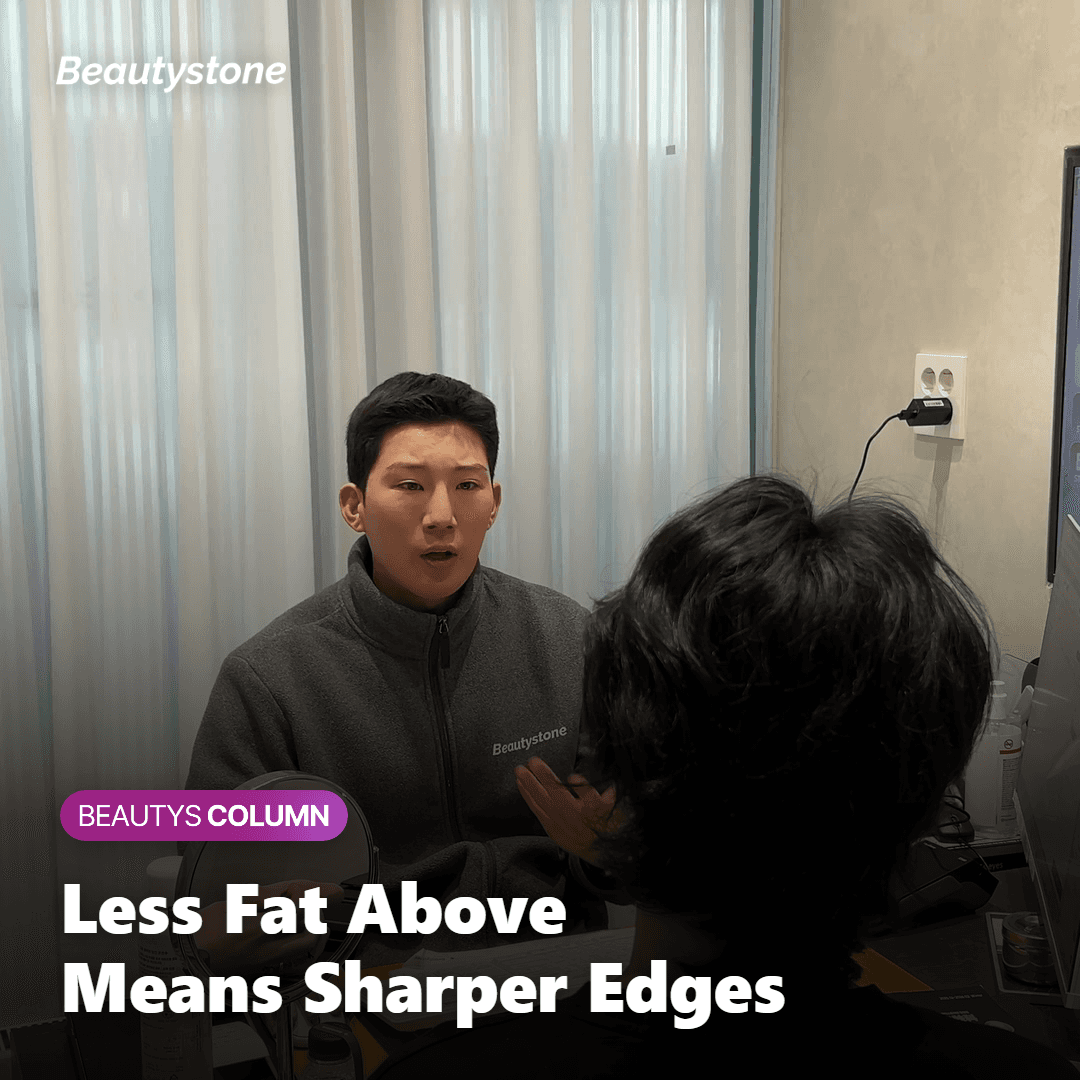
How the Injection Plan Changes for Thin Tissue
Here's what typically changes when the fat layer is thin. None of it is exotic — it's mostly a shift toward patience.
Deeper plane: product is generally placed in the deep subcutaneous layer, close to the muscle rather than near the skin, so the tissue above it can blur the outline.
Smaller aliquots, wider fanning: instead of a few large deposits, many small threads are spread across the area. It takes longer in the chair, but the surface stays smoother.
Product selection: a cohesive filler with real lift capacity holds shape against body weight, while an overly firm product under thin skin is more likely to be felt.
Staged sessions: building across two or three visits lets your provider judge how the previous round settled before adding more.
Edge feathering: the transition toward the thigh and the buttock crease matters more on a lean frame than the middle of the treated zone does.
A rough sense of how the two situations differ:
Design factor | Average body fat | Slim frame |
|---|---|---|
Injection plane | Deep subcutaneous | Deep subcutaneous, kept consistently low |
Deposit style | Fewer, larger deposits are workable | Many small threads, wide fanning |
Volume per visit | Larger increments tolerated | Conservative increments, then reassess |
Sessions to target | Often fewer | Usually more, spaced further apart |
Main issue to manage | Side-to-side asymmetry | Visible edges and palpability |
Your provider will map the area standing, seated, and in motion, because a dip that looks deep when you're standing still can nearly disappear once the glutes engage. That's also why photographs alone are a weak basis for planning body volume.

What to Expect: Recovery and Timeline
Most of the visible change happens in the first two weeks. The honest version of the timeline looks like this.
Day of treatment: mild swelling and tenderness at the treated area. You can walk normally, but plan a quiet evening rather than a workout.
First 48 hours: swelling tends to peak. Bruising, when it appears, usually clusters around entry points. A cold compress helps.
Days 3 to 7: tenderness fades. Prolonged sitting and heavy lower-body training are typically limited during this window.
Weeks 2 to 4: swelling resolves and the contour you're actually keeping becomes clear. HA fillers are close to their settled shape here.
Months 2 to 6: collagen stimulators keep building quietly. This is when a staged plan gets reviewed and topped up if needed.
How long the result holds depends on the product, the volume placed, your activity level, and any weight change along the way. Studies suggest longevity varies widely between individuals, and a touch-up is part of a normal plan rather than a sign that something went wrong.

Side Effects and Risks
Every injectable comes with trade-offs, and body volume is no exception. Knowing the range in advance makes the first week far less stressful.
Common and short-lived: swelling, bruising, tenderness, and temporary firmness at the treated site. These usually settle within a few days to two weeks.
Less common: asymmetry between sides, palpable or visible nodules, and product shifting when aftercare instructions get ignored.
Rare but serious: infection, vascular occlusion, and tissue injury. This is exactly why product choice, sterile technique, and an experienced injector matter more than price.
If you develop a fever, spreading redness, severe or escalating pain, skin that turns dusky or pale, or any drainage from an injection site, seek medical care right away. Don't wait to see whether it settles overnight.
On a slim frame specifically, the complaint people raise most often isn't dramatic — it's texture. Product that can be felt through thin skin. Conservative dosing and correct depth are the main protections against that.
Who's a Good Candidate?
Broadly, hip filler on a slim frame suits someone whose weight has been stable, whose expectations are proportional to their build, and who is comfortable with a staged plan instead of one dramatic session.
Good fit: stable weight, healthy skin at the treatment area, a dip you can point to, and a willingness to come back for review.
Worth postponing: active infection or a skin breakout in the area, pregnancy or breastfeeding, a recent large weight change, or an important event within the next two weeks.
Discuss first: autoimmune conditions, blood-thinning medication, and any prior implants or fat grafting in the same region.
If the goal is a change in overall body proportion rather than a specific contour, filler probably isn't the right tool, and a good consultation will tell you that directly.

The Bottom Line
To recap:
A slim frame doesn't rule out hip filler — it changes the design.
Depth and deposit pattern matter more than syringe count when tissue is thin.
Staged sessions with review beat one oversized session.
Swelling settles over weeks, so the fair assessment comes around week four.
Like any procedure, it comes with trade-offs, and results differ from person to person. Ultimately, the choice depends on your anatomy, your goals, and how much maintenance you want to sign up for.
If you're considering hip filler, a consultation is the most useful next step — an in-person read of your tissue thickness tells you more than any article can. Beautystone is a dermatology clinic in the Hapjeong area of Seoul, Korea, and we regularly see international patients; consultations for overseas visitors run through LINE. You can see what's currently running on our promotions page.
Frequently asked questions
Q. Does hip filler hurt?
A. Most people describe it as pressure with brief stinging rather than sharp pain. A topical numbing cream is standard, and many HA products contain lidocaine, so discomfort during the session is usually manageable. Soreness afterward feels a bit like a deep bruise and eases within a few days.
Q. How many sessions will I need on a slim frame?
A. There isn't a fixed number. Lean tissue usually means more conservative increments per visit, so a staged plan across two or three sessions is common rather than one large treatment. Your provider should reassess after each round once swelling has settled, typically around the four-week mark.
Q. How long do the results last?
A. It depends on the product and on you. HA fillers in body areas tend to soften gradually over roughly a year to two, while collagen stimulators build slowly and fade on their own schedule. Activity level, metabolism, and weight change all shift the timeline, so individual results vary.
Q. When can I sit normally or go back to the gym?
A. Short sitting is generally fine straight away, but prolonged pressure on the treated area is usually limited for about a week. Light movement such as walking is encouraged early. Heavy lower-body training, cycling, and saunas are typically paused for one to two weeks, and your provider will give you a schedule based on how much was placed.


skin
Fraxel CO2: Why Prices Vary & What to Check

skin
How to Choose an Acne Dermatologist: 5 Signs

Contouring & Volume
Nasolabial Folds: When Lifting Isn't Enough

skin
Sculptra Cost: Why Sessions and Vials Matter

Lifting
After Shurink Universe: Wash, Work Out & Drink

skin
Sofwave Before a Wedding: Timing Guide