

Juvelook in 30s: Why Most Finish in 3 Sessions
Juvelook in 30s: Why Most Finish in 3 Sessions
Juvelook in 30s: Why Most Finish in 3 Sessions
Juvelook in your 30s works 1.5x faster than in 40s. See who needs 3 sessions—and who needs more.
Published -
Updated -

Author
Wi Young-jin · Chief director
Seoul National University College of Medicine · Seoul National University Hospital Specialist
→
Juvelook in Your 30s,
The Real Reason More Than Half of People
Finish in 3 Sessions
Please Check This Before Reading
Q. Do people in their 30s also need the full 4-session course?
A. No. More than half are satisfied and stop after
the third session.
Their collagen-producing ability is still alive.
Q. Then why are the results different from people in their 40s
even with the same amount of particles?
A. Even if the particles go in,
what turns them into collagen is
your own skin cells.
Those cells still work well in your 30s.
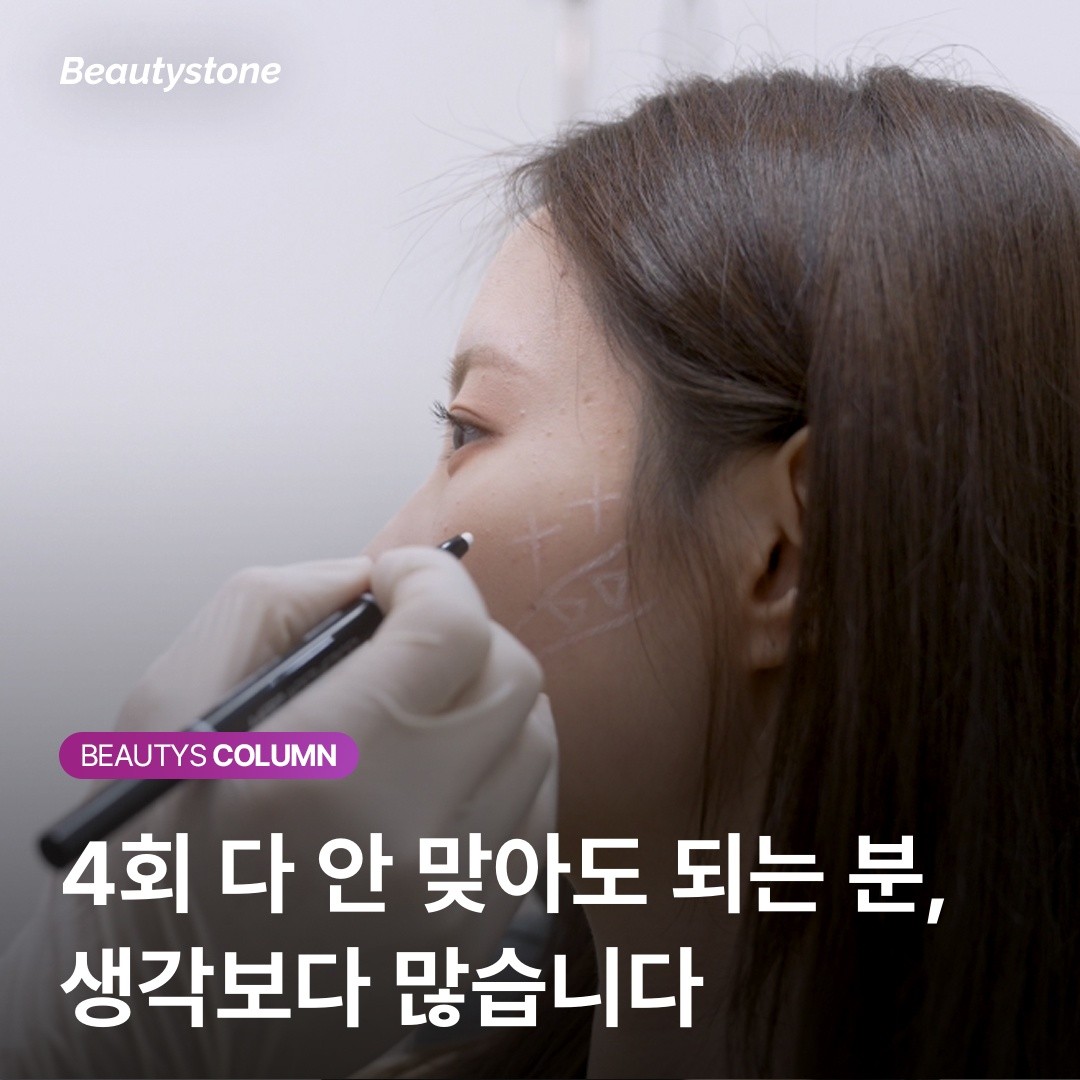
People who don't need all 4 sessions,
are more common than you think
Juvelook is a collagen booster that
puts PDLLA (poly-D,L-lactic acid) particles into
the dermis to induce your own collagen production.
If Rejuran gives cell regeneration signals with PN,
then,
Juvelook works by letting the particles themselves break down
so collagen fills in that space.
The idea that Juvelook is better the more often you get it,
may actually be the opposite
Key point of this article
For people in their 30s, 3 Juvelook sessions are often enough.
Because collagen production is still active,
with the same amount of particles,
results are about 1.5 times better than in your 40s.
The earlier you start,
the bigger the effect you get with less product.
"Collagen boosters are better the more you get them,"
you may have heard that before.
But in people in their 30s, this often works
the exact opposite way.
Let me explain why.
The PDLLA particles in Juvelook do not create
volume by themselves.
Once the particles settle in the dermis, your fibroblasts
surround them and newly produce collagen.
The key to the result is not the amount injected, but
how well your skin's fibroblasts
are working.
And this fibroblast activity
drops fairly sharply starting in the mid-30s.
This is the difference I feel in practice.
Even when the same 1 vial is injected at the same depth,
people in their early to mid-30s
show changes in skin tone and elasticity about 1.5 times faster than people in their late 40s.
At the second session, the percentage of people who look in the mirror and say,
"Oh, it looks a bit different,"
is about half in their 30s,
and about a quarter in their late 40s.
A case of a 28-year-old client who came back last month
is exactly like that.
She first came in about a year ago and
had 3 sessions for her cheeks and nasolabial folds,
and after the third session she said, "This is enough," and
stopped.
When she came back after a year, her skin texture and elasticity were
almost the same as they had been right after the third session
a year earlier.
This time, instead of saying let's complete all 4 sessions,
we said, "We'll just give you 1 vial once a year," and
switched to maintenance mode.
This is a strategy only possible in your 30s.
Once you pass the mid-40s,
the collagen made in 3 sessions won't last a year.
That's because the breakdown of existing collagen happens faster
than the rate at which new collagen is produced.
Director Wi Young-jin's key summary
Your 30s are Juvelook's "best value golden time."
With the same amount,
you get bigger results and they last longer.
Rather than forcing yourself to complete all 4 sessions,
make the results with 3 sessions
and then move to maintenance once a year
— that's the smarter strategy.
Even within your 30s, it varies,
See where you fit
"So do I only need 3 sessions, or do I need to go to 4
sessions?"
This is the question people in their 30s
ask most often.
Type | Recommended sessions | Maintenance strategy |
Early 30s · good elasticity | 2–3 sessions | Maintenance once a year |
Mid-30s · texture changes starting | 3 sessions | Maintenance once every 8–10 months |
Late 30s · volume loss starting | 3–4 sessions | Maintenance once every 6–8 months |
Autoimmune · keloid-prone constitution | Not recommended | Consult for other options |
Not everyone in their 30s is suitable.
If you have an autoimmune disease, a keloid-prone constitution,
or chronic inflammation at the treatment area,
I do not recommend Juvelook itself.
Because the immune response to the particles
can be stronger than expected,
raising the risk of nodules.
It's also good to know in advance
how to treat nodules if they occur.
In the early stage, massage is the first response,
and if it doesn't resolve after 2–3 weeks,
low-dose steroid
local injections are used to calm it down.
Honestly, in people in their 30s,
if we choose the indication carefully,
I almost never see cases that go as far as incision or removal.
3 things people in their 30s ask a lot
in the clinic
Q1. Isn't it too early to start
if I haven't sagged yet?
A. Juvelook is not a procedure that lifts sagging skin,
it's a procedure that produces new collagen.
So starting "before you sag" is actually
the standard approach.
If you build up about 2 sessions in your early 30s,
it costs less than getting 4 sessions later, and
your skin condition is better too.
Q2. What about the cost per session in your 30s
and how long does it last?
A. It varies quite a bit depending on the area and number of vials.
But in the end, if a person in their 30s goes through a 3-session course,
the cumulative cost is
about 25–30% lower than in your 40s.
The duration lasts about
8–12 months after the last treatment, and
if you add 1 vial in between,
the period is extended again.
Q3. Do side effects happen the same way in your 30s?
A. The frequency is lower in your 30s, but
the treatment process is the same.
Bruising goes away in 2–3 days.
Nodules are handled in stages: massage → steroids.
One important thing I must tell you:
avoid strenuous exercise and
saunas for one week after the procedure.
If you take away just one thing today,
— in your 30s, with Juvelook, it's not "more" but
"earlier and less" that gives you the best value.
In the next article,
we'll look at whether 4 weeks or 6 weeks is better
between Juvelook's first and second treatments.
This has been Wi Young-jin.
Read More
Juvelook in Your 30s,
The Real Reason More Than Half of People
Finish in 3 Sessions
Please Check This Before Reading
Q. Do people in their 30s also need the full 4-session course?
A. No. More than half are satisfied and stop after
the third session.
Their collagen-producing ability is still alive.
Q. Then why are the results different from people in their 40s
even with the same amount of particles?
A. Even if the particles go in,
what turns them into collagen is
your own skin cells.
Those cells still work well in your 30s.
People who don't need all 4 sessions,
are more common than you think
Juvelook is a collagen booster that
puts PDLLA (poly-D,L-lactic acid) particles into
the dermis to induce your own collagen production.
If Rejuran gives cell regeneration signals with PN,
then,
Juvelook works by letting the particles themselves break down
so collagen fills in that space.
The idea that Juvelook is better the more often you get it,
may actually be the opposite
Key point of this article
For people in their 30s, 3 Juvelook sessions are often enough.
Because collagen production is still active,
with the same amount of particles,
results are about 1.5 times better than in your 40s.
The earlier you start,
the bigger the effect you get with less product.
"Collagen boosters are better the more you get them,"
you may have heard that before.
But in people in their 30s, this often works
the exact opposite way.
Let me explain why.
The PDLLA particles in Juvelook do not create
volume by themselves.
Once the particles settle in the dermis, your fibroblasts
surround them and newly produce collagen.
The key to the result is not the amount injected, but
how well your skin's fibroblasts
are working.
And this fibroblast activity
drops fairly sharply starting in the mid-30s.
This is the difference I feel in practice.
Even when the same 1 vial is injected at the same depth,
people in their early to mid-30s
show changes in skin tone and elasticity about 1.5 times faster than people in their late 40s.
At the second session, the percentage of people who look in the mirror and say,
"Oh, it looks a bit different,"
is about half in their 30s,
and about a quarter in their late 40s.
A case of a 28-year-old client who came back last month
is exactly like that.
She first came in about a year ago and
had 3 sessions for her cheeks and nasolabial folds,
and after the third session she said, "This is enough," and
stopped.
When she came back after a year, her skin texture and elasticity were
almost the same as they had been right after the third session
a year earlier.
This time, instead of saying let's complete all 4 sessions,
we said, "We'll just give you 1 vial once a year," and
switched to maintenance mode.
This is a strategy only possible in your 30s.
Once you pass the mid-40s,
the collagen made in 3 sessions won't last a year.
That's because the breakdown of existing collagen happens faster
than the rate at which new collagen is produced.
Director Wi Young-jin's key summary
Your 30s are Juvelook's "best value golden time."
With the same amount,
you get bigger results and they last longer.
Rather than forcing yourself to complete all 4 sessions,
make the results with 3 sessions
and then move to maintenance once a year
— that's the smarter strategy.
Even within your 30s, it varies,
See where you fit
"So do I only need 3 sessions, or do I need to go to 4
sessions?"
This is the question people in their 30s
ask most often.
Type | Recommended sessions | Maintenance strategy |
Early 30s · good elasticity | 2–3 sessions | Maintenance once a year |
Mid-30s · texture changes starting | 3 sessions | Maintenance once every 8–10 months |
Late 30s · volume loss starting | 3–4 sessions | Maintenance once every 6–8 months |
Autoimmune · keloid-prone constitution | Not recommended | Consult for other options |
Not everyone in their 30s is suitable.
If you have an autoimmune disease, a keloid-prone constitution,
or chronic inflammation at the treatment area,
I do not recommend Juvelook itself.
Because the immune response to the particles
can be stronger than expected,
raising the risk of nodules.
It's also good to know in advance
how to treat nodules if they occur.
In the early stage, massage is the first response,
and if it doesn't resolve after 2–3 weeks,
low-dose steroid
local injections are used to calm it down.
Honestly, in people in their 30s,
if we choose the indication carefully,
I almost never see cases that go as far as incision or removal.
3 things people in their 30s ask a lot
in the clinic
Q1. Isn't it too early to start
if I haven't sagged yet?
A. Juvelook is not a procedure that lifts sagging skin,
it's a procedure that produces new collagen.
So starting "before you sag" is actually
the standard approach.
If you build up about 2 sessions in your early 30s,
it costs less than getting 4 sessions later, and
your skin condition is better too.
Q2. What about the cost per session in your 30s
and how long does it last?
A. It varies quite a bit depending on the area and number of vials.
But in the end, if a person in their 30s goes through a 3-session course,
the cumulative cost is
about 25–30% lower than in your 40s.
The duration lasts about
8–12 months after the last treatment, and
if you add 1 vial in between,
the period is extended again.
Q3. Do side effects happen the same way in your 30s?
A. The frequency is lower in your 30s, but
the treatment process is the same.
Bruising goes away in 2–3 days.
Nodules are handled in stages: massage → steroids.
One important thing I must tell you:
avoid strenuous exercise and
saunas for one week after the procedure.
If you take away just one thing today,
— in your 30s, with Juvelook, it's not "more" but
"earlier and less" that gives you the best value.
In the next article,
we'll look at whether 4 weeks or 6 weeks is better
between Juvelook's first and second treatments.
This has been Wi Young-jin.
Read More


Latest post
Latest post

Hair Removal
레이저 제모 1회에도 남는 몫이 있어요 — 밀도를 모자이크로 보는 법

Tattoo removal
Why Extremity Tattoos Are Slower to Remove

Tattoo removal
Tattoo Removal Cost: Why Quotes Vary by Area

Tattoo removal
Unused Tattoo Removal Sessions: What Happens?

Lifting
Forehead Thread Lifting: How Far Can It Go?

skin
Skin Booster Prices: What to Check in a Quote
1:1 Custom Approach
1:1 Consultation Whatsapp
🌸 Beautystone Clinic attends the Meditox Bangkok Cadaver Workshop 🌸
1:1 Custom Approach