

Why to skip retinoids and strong acids while pregnant—and safe picks like azelaic acid.
Published -
Updated -

Author
Wi Young-jin · Chief director
Seoul National University College of Medicine · Seoul National University Hospital Specialist
→
From the moment many discover they are pregnant, they find themselves carefully reviewing each skincare product on their vanity. Worry often builds up because of conflicting information on whether beloved acne creams or brightening serums might affect the baby, and which products should be paused.
To give you a quick answer, there is a relatively clear distinction during pregnancy and breastfeeding between ingredients recommended to avoid and those that are safe to continue. The key is not to throw everything out blindly, but to understand which ingredients require caution and why. This way, you can look after your skin with peace of mind without unnecessarily discarding your favorite products.
This content is a summary of skincare and treatment information from Beautystone Hapjeong.
With this guide, you will:
Understand why your skin becomes more sensitive and prone to pigmentation during pregnancy
Identify which skincare ingredients are recommended to avoid during pregnancy and breastfeeding
Learn about gentle, alternative ingredients you can safely continue using
Get a clear idea of what to check before starting any treatment or skincare routine
Why does skin become more sensitive and prone to pigmentation during pregnancy?
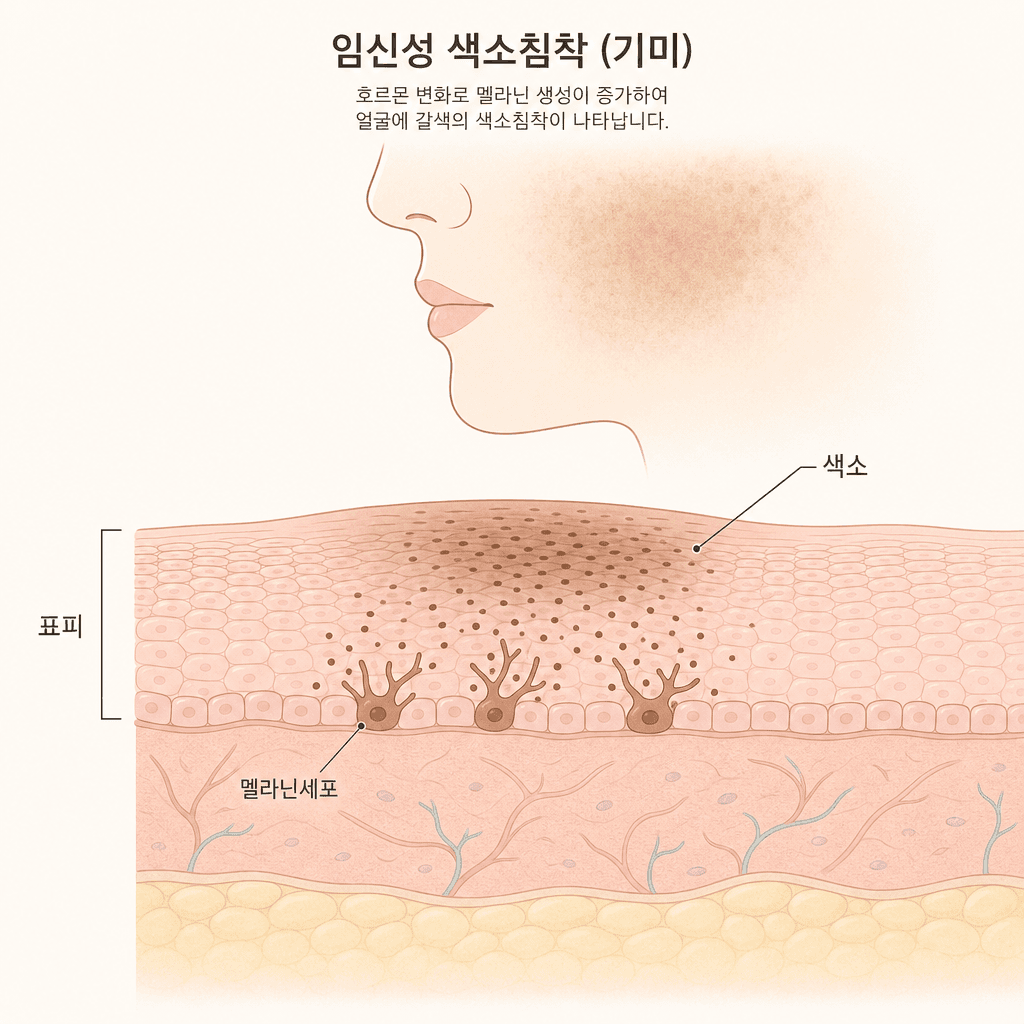
During pregnancy, hormonal changes cause various parts of your skin to react differently than usual. One of the most common changes is melasma—broad patches of pigmentation on the cheeks or forehead—caused by overactive melanin-producing cells. Fluctuations in the moisture and elasticity of the dermis can also make products that usually suit you perfectly suddenly sting. In fact, a review summarizing the safety of skincare products during pregnancy also highlights that ingredient selection must be approached with greater caution during this period.
Melanin*: The pigment that determines skin color. It is produced in larger quantities under UV light or hormonal stimulation, appearing as melasma or dark spots.
That is why choosing "ingredients that are safe for both my skin and my baby right now" over "highly potent active ingredients" is a very natural direction. Since many of these changes are temporary, a significant portion of the pigmentation often fades naturally once hormones stabilize postpartum.
Which ingredients are recommended to avoid during pregnancy and breastfeeding?
The most clearly recommended group to avoid is retinoids*. In particular, oral isotretinoin is strictly contraindicated during pregnancy due to the risk of fetal malformations. A review on acne treatments during pregnancy and breastfeeding also notes that isotretinoin is contraindicated during pregnancy, and topical retinoids should also be avoided. Along the same lines, the safety review mentioned above suggests avoiding topical retinoids during pregnancy until more safety data becomes available.
Retinoid*: An ingredient derived from Vitamin A. Although highly effective for wrinkles and acne, it is recommended to avoid during pregnancy due to safety concerns.
In addition, strong BHA peels using high concentrations of salicylic acid, or high concentrations of hydroquinone used for brightening, are generally approached with caution during pregnancy. Since over-the-counter cosmetic formulations and professional clinical treatments have very different concentrations, the most reassuring way to check your current products is to take the ingredient list to your doctor during a consultation.
What are some safe skincare alternatives you can continue using?
Fortunately, there are several ingredients you can continue to use relatively safely during pregnancy and breastfeeding. If acne is a concern, azelaic acid*, benzoyl peroxide, and topical clindamycin are regarded as relatively safe, first-line options. For hydration and fine lines, a gentle base routine using mild ingredients like niacinamide, hyaluronic acid, and vitamin C serums is highly recommended.
Azelaic Acid*: An ingredient used to treat acne and hyperpigmentation. It is classified as relatively safe during pregnancy and is frequently recommended as an alternative.
Category | Ingredients to Avoid | Safe Alternatives |
|---|---|---|
Acne | Oral isotretinoin, topical retinoids | Azelaic acid, benzoyl peroxide, clindamycin |
Pigmentation & Brightening | High-concentration hydroquinone | Vitamin C serum, azelaic acid |
Exfoliation & Texture | High-concentration salicylic acid (BHA) | Low-concentration lactic acid, niacinamide |
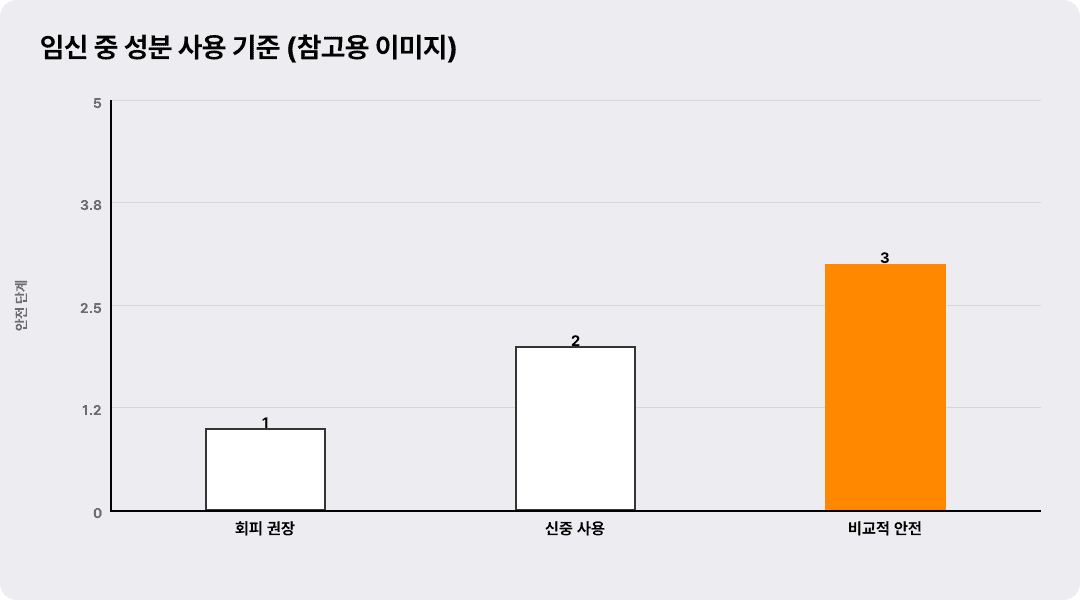
However, please note that these are general guidelines. Even with the same ingredient, safety can vary depending on its concentration, how much you use, and your skin's current condition. Rather than introducing completely new products, it is safer to assess the ones you are currently using, and you will feel most at ease by consulting your doctor about any ingredients you find confusing.

Why Beautystone Hapjeong?
During pregnancy and breastfeeding, skincare is less about adding new steps and more about discussing what to pause and what to safely keep. At Beautystone Hapjeong, we never start by simply recommending procedures. We look at your current skincare routine and skin condition first, helping you select gentle, safe treatments that you can enjoy with peace of mind. As a cozy clinic located just steps from Hapjeong Station, you can comfortably discuss your long-term plan with us, including which treatments are best to resume at each stage after childbirth and nursing.
What should you check before starting a clinical treatment or skincare routine?
Managing your skin during pregnancy and breastfeeding starts with separating what to keep from what to pause. Checking a few things beforehand can help ease any unnecessary worries.
Your current products — Check the packaging for retinoids or high-strength acids.
Breastfeeding status — Even during breastfeeding, certain ingredients require careful evaluation due to potential absorption and transfer.
Timing of treatments — Most purely cosmetic clinical treatments are best postponed until after childbirth and breastfeeding.
Pigmentation changes — Melasma developed during pregnancy often fades naturally after birth, so there is no need to rush into treatments.
Underlying conditions & medications — Please let us know during your consultation if you have any pre-existing skin conditions or are taking any medications.
Most skin changes during this beautiful season are temporary and driven by hormones. The safest approach is always to consult with a medical professional to find the perfect, personalized routine for you.
Frequently Asked Questions
Q. Do I have to stop using my retinol cream immediately upon finding out I'm pregnant?
A. It is highly recommended to stop using retinoids as soon as you confirm your pregnancy and discuss them at your next prenatal check-up. Rather than worrying about having used it for a few days, the most practical approach is simply to pause using it now, switch to a safe alternative, and verify it with your doctor at your next appointment.
Q. Do I need to be just as cautious during breastfeeding as I was during pregnancy?
A. While some ingredients are kept under less strict guidelines during breastfeeding compared to pregnancy, certain active ingredients still require caution. Decisions are based on the application area, the amount used, and the possibility of skin-to-skin contact with your baby, so it's always safe to walk through your specific situation during a medical consultation.
Q. Is it best to treat pregnancy-induced melasma with clinical procedures immediately?
A. Because pregnancy-induced melasma often lightens naturally once your hormones stabilize after childbirth, it is usually recommended to postpone cosmetic procedures until after you have finished breastfeeding. In the meantime, focusing on diligent sun protection and gentle, nourishing skincare to prevent the pigmentation from darkening further is an excellent approach.
Q. Can I safely purchase and try new skincare products if they are listed as safe?
A. Even for ingredients categorized as relatively safe, it is best to keep your routine simple and rely on familiar, pre-existing products during pregnancy rather than introducing several new ones. If you do wish to start a new product, it is safest to introduce them one by one after confirming their ingredients during a consultation.
You Might Also Enjoy Reading


Hair Removal
레이저 제모 1회에도 남는 몫이 있어요 — 밀도를 모자이크로 보는 법

Tattoo removal
Why Extremity Tattoos Are Slower to Remove

Tattoo removal
Tattoo Removal Cost: Why Quotes Vary by Area

Tattoo removal
Unused Tattoo Removal Sessions: What Happens?

Lifting
Forehead Thread Lifting: How Far Can It Go?

skin
Skin Booster Prices: What to Check in a Quote