

Bony, veiny hands: how Sculptra rebuilds collagen instead of filling, and how long it takes.

Author
Wi Young-jin · Chief director
→
You look after your face. Then you glance down at the backs of your hands and they seem to belong to someone ten years older. Tendons and veins stand out, the skin looks thin and bony, and you catch yourself tucking your hands under the table.
Here is the short answer first: bony-looking hands are mostly a story about lost volume and lost collagen underneath the skin. Hyaluronic acid filler adds that volume the moment it goes in. A collagen stimulator such as Sculptra* works from the other direction, prompting your own skin to rebuild it. Hands are not faces, though. They move all day and the skin over them is thin, so which route suits you depends on what your hands actually look like up close.
Sculptra*: an injectable made from poly-L-lactic acid (PLLA), a lactic-acid-based material. Rather than filling a space, it gradually prompts the skin to produce its own collagen. In the US, Sculptra is FDA-approved for facial areas, so treating the hands with it is an off-label use your provider should talk through with you.
> This is general information from Beautystone, a small skin clinic in Hapjeong, Seoul.
What you will learn
Why the backs of your hands look bony and veiny in the first place
How Sculptra restores volume differently from a filler
What makes hands harder to treat than the face
How long collagen takes to build, and what recovery looks like
Bony hands are a volume problem before they are a wrinkle problem
On the hands, age shows up as thinning long before it shows up as lines. When the fat layer and the collagen beneath the skin thin out, the padding that used to cover tendons and veins goes with them, and the structures underneath start to read straight through.
It is the same process you see on the face. Collagen production itself drops as we get older. Research showing that type I and type III collagen synthesis falls in aged skin found a marked decline compared with younger skin. Hands simply show it earlier, because they sit in daylight almost every day of your life.
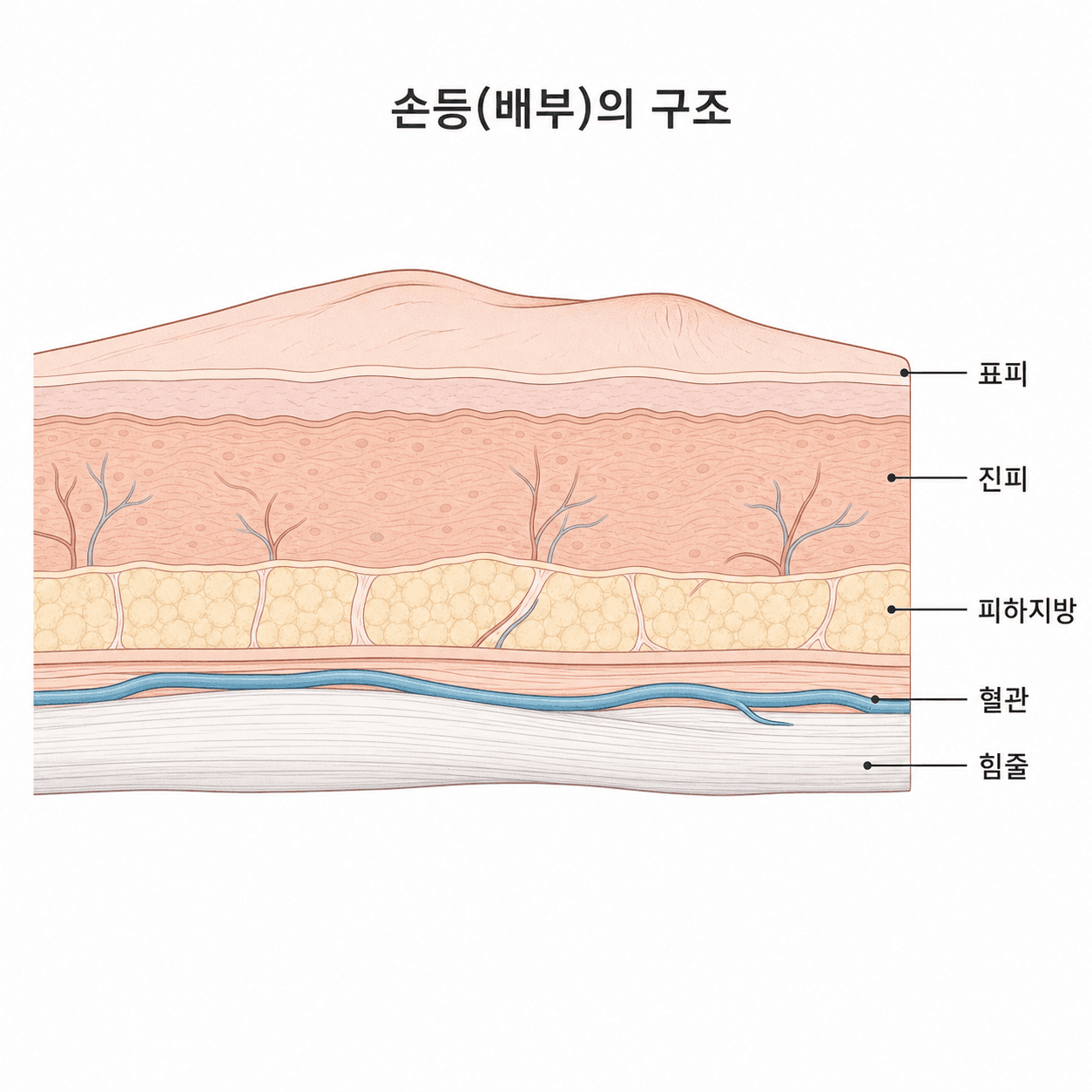
Which means treating hands is not about smoothing the surface. It is about rebuilding the layer that got thin.

Sculptra rebuilds collagen rather than filling a space
This is where the two approaches part ways. Hyaluronic acid filler creates volume immediately, because the material itself takes up room where it is placed. Sculptra does not do that. The material is not the volume. It is the prompt that asks your skin to make collagen of its own.
Poly-L-lactic acid* breaks down slowly in the body and sets off a mild repair response, and new collagen forms during that process. A review describing how poly-L-lactic acid stimulates fibroblasts to induce the body's own collagen makes the same point: this is gradual collagen induction, not instant filling. So the result arrives slowly, and what comes back reads more like restored thickness and texture than like added bulk. Individual results and timelines vary.
Poly-L-lactic acid*: also written PLLA, a lactic-acid-based material. It is the main ingredient in collagen stimulators, and as it breaks down in the skin it supports collagen production.
The two behave differently enough that the right pick depends on the state of your hands.
What differs | Hyaluronic acid filler | Sculptra (collagen stimulator) |
|---|---|---|
How volume appears | Fills the moment it is injected | Builds gradually as collagen forms |
When you notice it | Right after treatment | Progressively, over several weeks |
How it reads | Added volume | Restored thickness and texture |
How it holds | Fades as the material is absorbed | Carried by the collagen that formed |
Suits you if | You want one spot corrected now | Your hands have thinned overall |
If it has to show right away, filler is the more direct route. If the whole back of the hand has thinned out, rebuilding collagen tends to be the better fit.

Hands ask for more care than the face does
What makes hand treatment different is movement and thickness. You open and close your hands all day, and there is very little room between skin and bone, so the layer the material sits in has to be judged more precisely.
Thin skin — there is less cover than on the face, so injection depth has to be judged carefully
Constant movement — your hands keep working, so how the material settles in the first days matters
Tendons and veins — they sit close to the surface, and placing the layer around them is the whole job
Daily sun — be especially consistent with sunscreen while you recover
Because a collagen stimulator works through a repair response, mild swelling or a slightly lumpy feeling in the first few days is common. Massaging gently, exactly as your clinic instructs, helps the material settle evenly. Tell your provider ahead of time if you are pregnant or breastfeeding, if there is active inflammation or infection where you would be treated, or if you scar heavily, as with keloids. And if you are treated away from home, plan for the fact that any follow-up you need may have to happen with a provider where you live.

Why the assessment matters more than the product name
Beautystone is a small skin clinic in Hapjeong, Seoul, and we look at your hands before recommending anything. Two people can describe the same bony look and still need different answers, because how far the skin has thinned and how sharply the tendons stand out is what decides whether filler or a collagen stimulator makes more sense. So we tend to talk through the longer arc of rebuilding volume rather than a quick change. Being small and a short walk from Hapjeong Station means we can watch how one person is actually recovering and set the next step together. Pricing depends on how many sessions you end up planning, so ask for the cost of the full course rather than a single-session figure before you commit to anything.
What the collagen timeline actually feels like
Results from a collagen stimulator do not land on treatment day. They accumulate over weeks. Knowing that in advance takes the sting out of the early stretch, when it is easy to decide nothing is happening.
Collagen really does build up over time. A study finding that dermal collagen density rises over the weeks after a poly-L-lactic acid implant shows density climbing as the weeks pass. Here is roughly how that reads from the outside.
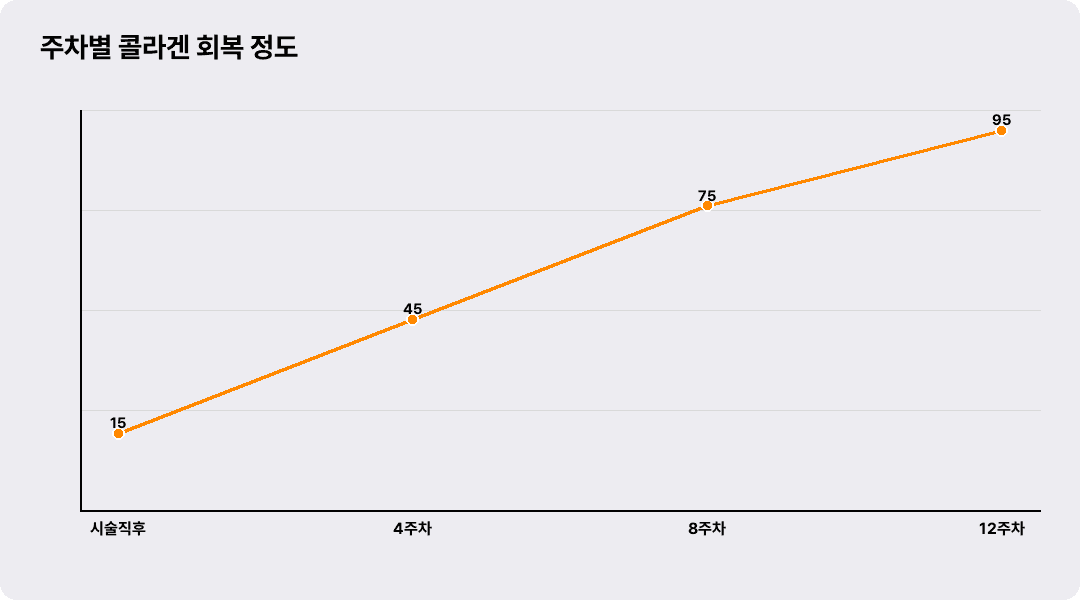
Treatment is usually split across several sessions, with time in between for collagen to settle. How many sessions, and how far apart, depends on the state of your hands, so set that with your provider based on how you are actually recovering. This article is general information, so whether the treatment suits you is a decision for the clinician who examines you.

Frequently asked questions
Q. When do Sculptra results on the hands start to show?
A. A collagen stimulator does not fill on the spot. Volume returns as collagen forms, so the change shows up over several weeks rather than right after treatment. Sessions are usually spread out with time in between for collagen to settle, so it helps to watch the process rather than rush it. Individual results vary.
Q. How is this different from filler?
A. Filler creates volume where it is placed, so it shows immediately. Sculptra is not the volume itself; it prompts your skin to build its own collagen, so the result comes on slowly and reads more like restored thickness and texture. If you need an immediate correction, filler fits better. If the whole back of the hand has thinned, a collagen stimulator usually suits it more.
Q. Can I use my hands normally afterwards?
A. Ordinary use is fine for most people, but ease off hard gripping and strong pressure for the first few days. Massaging gently as instructed helps the material settle evenly. If swelling or a lumpy feeling lingers or bothers you, talk to the clinician who treated you.
Q. My hands are already thin. Can I still have this done?
A. Thin skin with prominent tendons and veins is exactly the situation where rebuilding collagen may help. Thin skin also means injection depth has to be judged more carefully, so it is safer to have your hands examined and then decide between filler and a collagen stimulator together. Tell your provider beforehand if you are pregnant or breastfeeding, or if you form keloid scars.
Related reading


Tattoo removal
피코 레이저로 문신 지우는 중인데 살구색 부분만 더 검어졌어요, 흰색 잉크 때문일까요?
커버업 문신을 지우다 색이 반대로 짙어졌을 때 무엇을 확인하고 다음 세션 상담에서 어떤 정보를 말해야 하는지 설명해요.

skin
써마지 시술을 받은 뒤에 사우나와 찜질방, 그리고 운동은 언제부터 다시 해도 될까요?
써마지 시술 직후 진피에서 진행되는 회복 반응과, 열 자극이 홍반을 길게 만드는 경로를 나눠서 자세히 설명했어요.

skin
Lash Extensions & Eye Procedures: Timing Guide
Can you keep eyelash extensions during eye-area procedures? Here is what to remove before laser, lifting, or skin boosters, and when to reattach them safely.

Contouring & Volume
Radiesse vs Juvelook: Which Collagen Booster?
Radiesse or Juvelook? How these collagen boosters differ and why the injector matters.

Lifting
Shurink Universe + Jaw Botox Same Day: Order
Can Shurink Universe HIFU and jaw Botox be done on the same day? Yes — but the order matters. Here's the sequencing logic and what to expect afterward.

Lifting
InMode FX After a Fat Graft: When Is It Safe?
Will InMode FX dissolve your fat graft? Learn how transplanted fat survives RF heat, when engraftment finishes, and how long to wait before RF is safe.