

If skin stings after washing, tolerance beats results. A sensitive-skin treatment guide.
Published -
Updated -

Author
Wi Young-jin · Chief director
Seoul National University College of Medicine · Seoul National University Hospital Specialist
→
If your cheeks sting after washing your face, or if changing even one or two cosmetics leaves your skin burning for days, then when considering procedures for this skin condition, “a treatment that your skin can tolerate” comes before “a treatment that works well.”
To put it simply, sensitive skin does not mean procedures are off-limits. However, procedures that cause a greater degree of dermal injury can lead to prolonged erythema during downtime or make side effects more noticeable, so we design them with different intensity and intervals. Even with the same laser, we reduce the power and the number of passes, and avoid the temptation to finish everything in one session.
Where sensitive skin becomes a weakness in procedures
Sensitive skin refers to skin with a thinner-than-average barrier or heightened nerve reactivity. When procedures are performed in this state, two reactions tend to appear more strongly than usual. First, post-procedure erythema and stinging last longer. Second, the chance of post-inflammatory hyperpigmentation (PIH) during recovery is slightly higher.
So rather than avoiding procedures altogether, we plan by lowering the intensity and building up gradually. Instead of pursuing deep treatment in one session to see results quickly, it is safer to divide treatment into several gentler sessions and allow enough time for the irritation to settle.
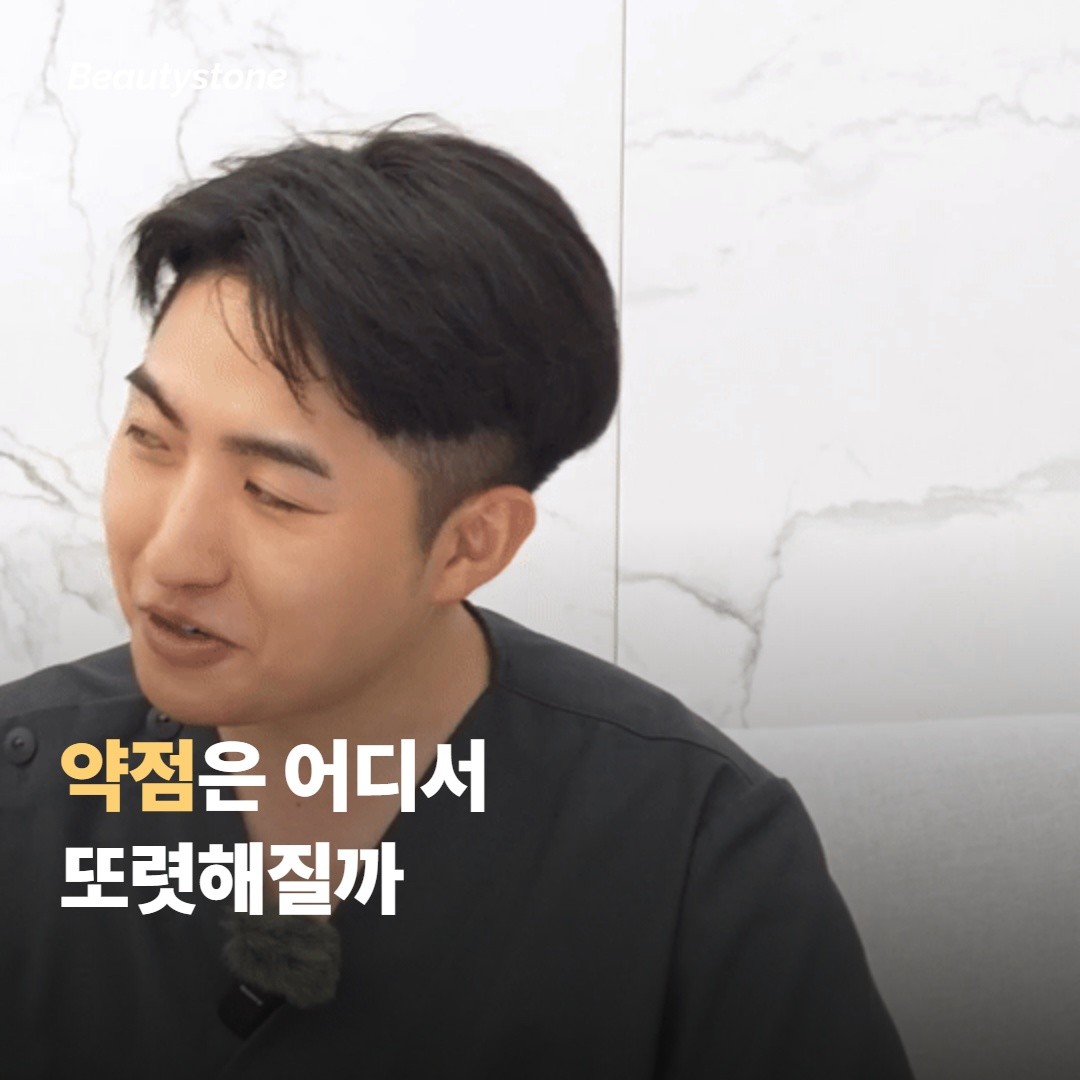
Looking at low-irritation procedure categories first
LED masks, non-ablative toning (low-energy pico and Nd:YAG), and low-power IPL are relatively gentle on the skin surface. Instead of injuring deep dermal tissue, they act briefly on superficial pigment or blood vessels, so many patients find that the burning sensation on the day of treatment subsides within one or two hours.
Skin booster treatments (Rejuran HB, Juvelook, and some water-glow injections) also tend to be low in surface irritation, but if injections themselves feel burdensome, we start with enough numbing cream or choose a treatment with a finer needle. Rather than doing one strong session, building results every 3 to 4 weeks helps distribute the irritation.
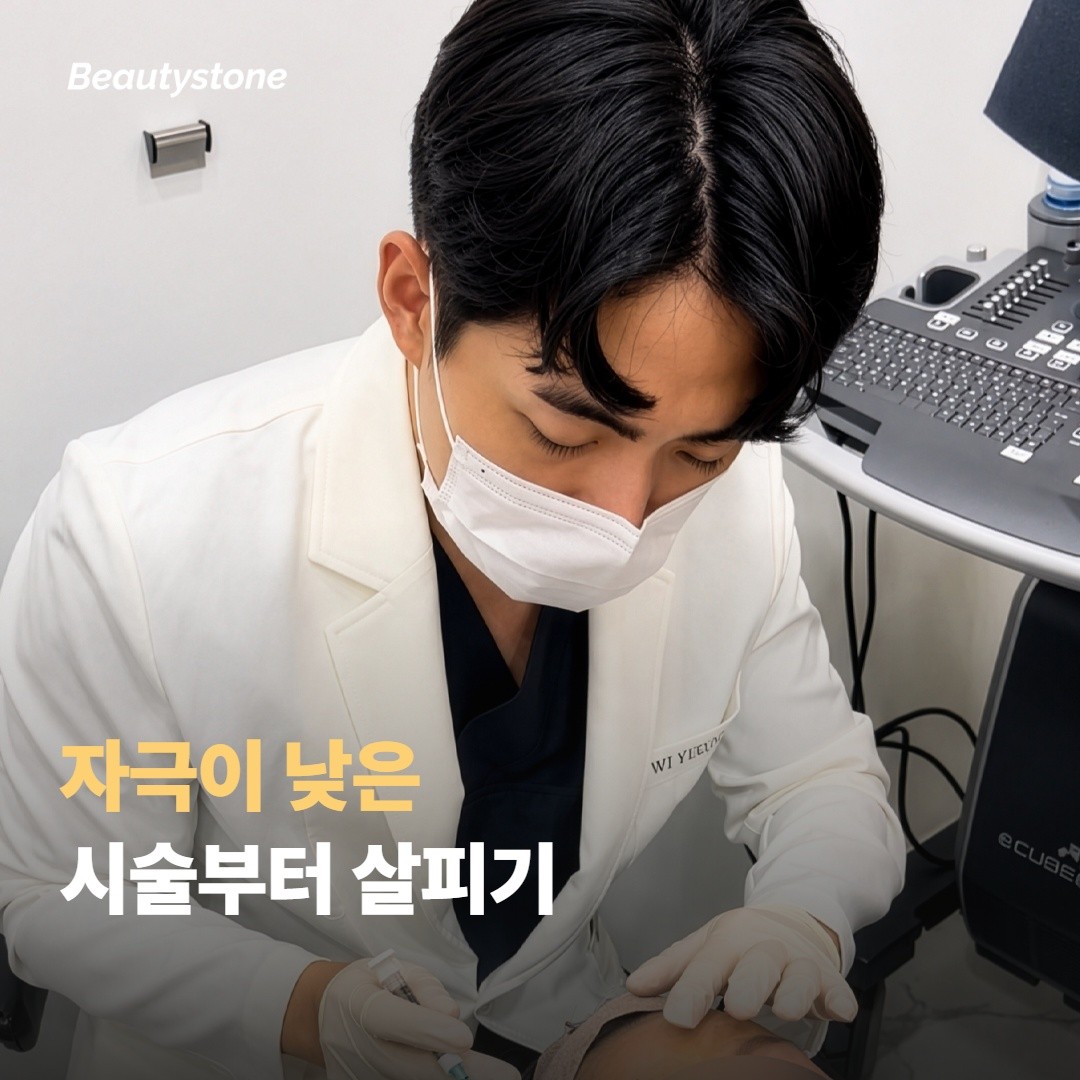
How to handle procedures that are more irritating
Ablative lasers such as CO2 fractional laser or erbium:YAG, RF microneedling, and high-power IPL deliver larger results, but they also increase surface irritation. If such procedures are truly needed, we focus on two things together.
First, lower the treatment intensity together with the physician. If the usual setting is 5, start at 2 or 3, observe the skin response, and then increase gradually in the next session. Second, pause irritating ingredients such as retinol, AHA, and BHA for about one week before and after treatment. Even the same procedure ends with less downtime when the skin barrier has recovered.

Useful information to prepare before consultation
If you only tell a dermatologist you are “sensitive-skinned,” it does not show how sensitive it is. If you briefly organize the following information before your visit, the treatment intensity can be set much more accurately: which cosmetics usually cause irritation, how many days redness lasted after previous procedures, and whether you have a history of cosmetic allergies or atopy.
In particular, if your recovery period after a past procedure was longer than average, that is the clearest clue. Even if you receive the same treatment again, it becomes the basis for deciding whether to lower the intensity accordingly or switch to a different type. This article is a general overview, and the treatment intensity that suits your skin should be decided in consultation with the doctor who sees you directly.
Frequently asked questions
Q. I have sensitive skin. Can I still undergo laser treatment?
A. You can still proceed. However, please start at one level lower in intensity and schedule the sessions at longer intervals than usual. If you keep track of how many days the erythema lasted after the first session, it will be very helpful in deciding the next intensity level.
Q. How should I manage my cosmetics before and after the procedure?
A. Please pause retinol, AHA, BHA, and scrub products starting one week before your procedure. After the treatment, moisturizer and sunscreen are usually all you need. It’s best to avoid trying new products right after the procedure.
Q. What should I do if PIH (post-inflammatory hyperpigmentation) develops after the procedure?
A. Please be more diligent with sun protection and reduce the use of irritating ingredients. It usually fades naturally over 2 to 6 months, but if it still looks the same after two months, you may want to discuss a separate pigment treatment such as toning.
Q. When mentioning that I have sensitive skin, what other information is helpful to share with the doctor?
A. Before your visit, please note down which skincare products caused irritation, how many days redness lasted after previous procedures, and whether you have a history of atopy or cosmetic allergies. In particular, your past recovery time serves as a crucial clue for determining the intensity of your treatment.


Hair Removal
레이저 제모 1회에도 남는 몫이 있어요 — 밀도를 모자이크로 보는 법

Tattoo removal
Why Extremity Tattoos Are Slower to Remove

Tattoo removal
Tattoo Removal Cost: Why Quotes Vary by Area

Tattoo removal
Unused Tattoo Removal Sessions: What Happens?

Lifting
Forehead Thread Lifting: How Far Can It Go?

skin
Skin Booster Prices: What to Check in a Quote