

Sofwave vs. Thermage FLX: how each works, results, risks, and which fits your skin goals.
Published -
Updated -

Author
Wi Young-jin · Chief director
Seoul National University College of Medicine · Seoul National University Hospital Specialist
→
If you've been researching non-surgical lifting and keep running into "Sofwave vs. Thermage" — you're not alone. They're two of the most talked-about devices in skin tightening right now, and the comparison can get confusing fast. Both use thermal energy to stimulate collagen, neither involves needles or scalpels, and both are done in under an hour. So what's actually different? Quite a bit, it turns out. In this article, we'll cover how each technology works, what the experience is like, how long results tend to last, and what the risks look like — so you can walk into a consultation with a clearer picture.
How Sofwave Works: Ultrasound in the Mid-Dermis
Sofwave is an FDA-cleared non-invasive lifting device that uses focused ultrasound energy — but it operates at a shallower target depth than HIFU devices like Ultherapy. It delivers heat to the mid-dermis at approximately 1.5 mm, while simultaneously cooling the skin surface to protect the epidermis. That simultaneous cooling is one of Sofwave's defining design choices: the handpiece protects the outer layer while energy focuses beneath it.
At 1.5 mm, Sofwave is targeting the collagen-rich zone of the mid-dermis. The heat causes controlled micro-injury, which triggers the body's repair response — new collagen synthesis over the following weeks and months. Studies suggest this mechanism can improve skin laxity, fine lines, and brow position. Research published in PMC has explored ultrasound-based collagen stimulation as a mechanism for non-invasive lifting (PMC3583892). Individual results vary based on skin condition, age, and lifestyle factors.
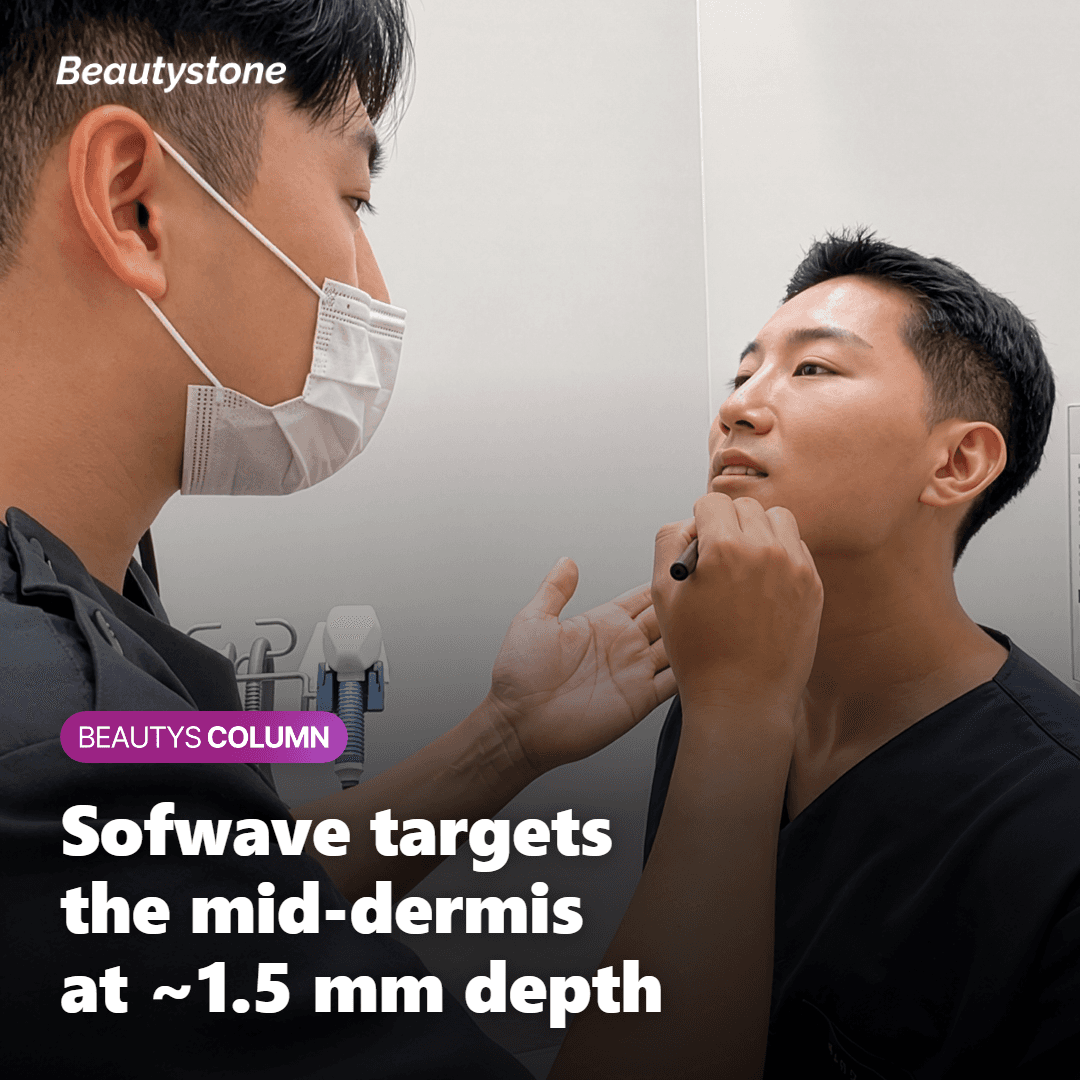
Sofwave treatments typically take around 30 to 45 minutes for a full face. The handpiece glides across the skin, and most clinics apply a topical numbing cream beforehand to manage the warm, prickling sensation during treatment. There's no downtime in the traditional sense — most people go about their day immediately after.
How Thermage FLX Works: Monopolar RF in the Deep Dermis
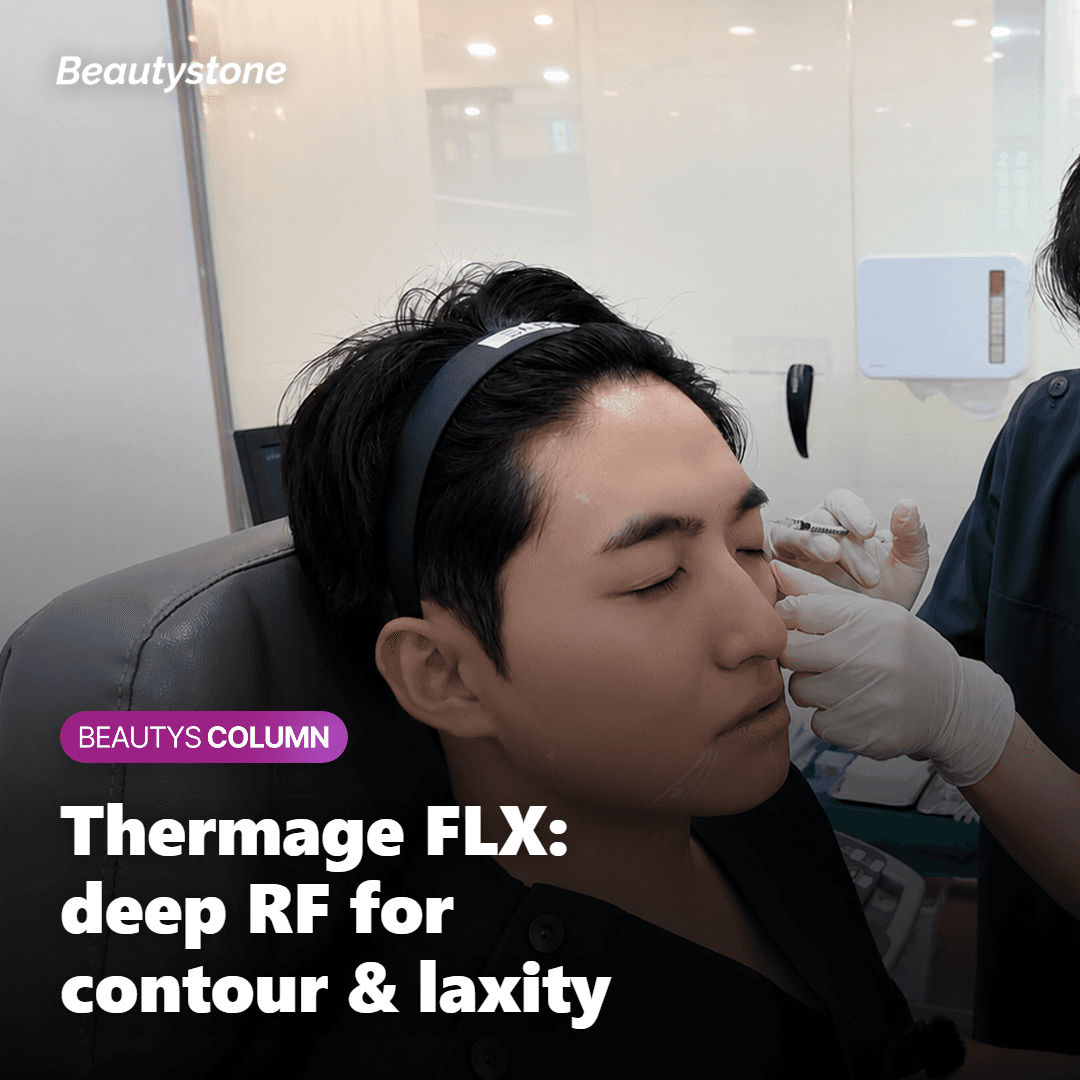
Thermage FLX is also FDA-cleared, but it uses radiofrequency (RF) energy — specifically monopolar RF — rather than ultrasound. The key difference is how deep that energy travels. Monopolar RF penetrates more broadly, reaching from the surface down through the deep dermis and into the subcutaneous tissue, which can be several millimeters deep depending on the area being treated.
Like Sofwave, Thermage FLX protects the skin surface — it uses a cooling tip that chills the epidermis at the moment of each pulse. But the energy itself is distributed through a larger volume of tissue rather than pinpointed at one narrow depth. This broader, deeper reach is part of why Thermage is often used when the goal is facial contouring, jawline definition, or addressing more pronounced laxity in areas like the cheeks and jowls.
Thermage FLX sessions typically run 45 to 90 minutes, depending on the treatment area and shot count. Shot counts (the number of RF pulses delivered) vary — a full-face treatment might involve 300 to 600 or more shots. An eye-specific tip ("Thermage Eye") is also available for treating upper eyelid laxity, which Sofwave doesn't currently offer as a distinct protocol in the same way.
Side Effects, Risks, and Downtime
Being honest about the downsides is important here — both treatments carry real risks, even though they're non-surgical.
Sofwave side effects are generally mild. Redness and warmth are the most common, and they typically settle within a few hours to a day. Most people can apply makeup and return to normal activities the same day. That said, some individuals do experience temporary swelling or tenderness around the treated area. These usually resolve within 24 to 48 hours.
Thermage FLX side effects are similar in category but can run slightly more intense, given that the energy reaches deeper tissue. Redness and mild swelling are common in the first few days. Some people notice a feeling of tightness or subtle bruising in treated areas. There have been reports of irregular heating sensations and, in rare cases, temporary numbness. These generally resolve, but if you notice spreading redness, worsening pain, or signs of a burn reaction, contact your provider right away — or seek medical care if symptoms escalate.
Both treatments share some absolute contraindications. You shouldn't have either if you're pregnant or breastfeeding, have a pacemaker or internal defibrillator, have metal implants in the treatment area, or have a history of keloid scarring. Devices like these should always be performed by a trained medical professional after a proper intake and skin assessment.
One nuance worth knowing: some patients who've had significant volume loss from previous procedures — particularly repeated RF treatments — can experience a hollowed appearance over time. This isn't common, and it's not a guaranteed outcome, but it's a conversation worth having with your provider before committing to a series of sessions.
Results: What to Expect and How Long It Lasts
Neither treatment delivers instant dramatic results. Collagen remodeling is a slow biological process — that's actually a feature, not a bug, because gradual improvement looks more natural than sudden change.
Sofwave timeline: Some people notice a subtle lift immediately after treatment due to acute tissue contraction. The more meaningful improvement — from new collagen synthesis — typically becomes visible between 4 and 12 weeks post-treatment, with peak results often appearing around 2 to 3 months in. Maintenance is generally recommended every 6 to 12 months to sustain results. Individual results vary.
Thermage FLX timeline: A similar pattern applies — initial tightening is possible on treatment day, with progressive improvement over 2 to 6 months as collagen matures. Because Thermage reaches deeper tissue, some providers describe the results as more durable for significant laxity, with effects that may last 1 to 2 years in some cases. Again, individual results vary depending on skin quality, age, sun exposure history, and how many treatment sessions are done.
Both can be repeated, and both are sometimes combined with each other or with other treatments like botulinum toxin or collagen stimulators. The order and timing of combination treatments matters — that's something to plan with a provider, not improvise.
Sofwave vs. Thermage: Which One Fits Your Goals?
There's no universally "better" option here. The choice depends on what you're trying to address, your skin's current condition, and how much downtime you're willing to work around.
Factor | Sofwave | Thermage FLX |
|---|---|---|
Energy type | Focused ultrasound | Monopolar RF |
Target depth | ~1.5 mm (mid-dermis) | Deep dermis to subcutaneous tissue |
Primary targets | Fine lines, brow lift, surface laxity | Jowls, cheeks, facial contour, eyelids |
Session length | ~30–45 min | ~45–90 min |
Downtime | Minimal (hours) | Mild (a few days) |
Results peak | 2–3 months post-treatment | 2–6 months post-treatment |
A few practical rules of thumb: if your main concerns are fine lines around the forehead and eyes, or early-stage laxity that hasn't progressed to significant sagging, Sofwave is often the starting point providers recommend. If you're dealing with more pronounced jowling, heavier cheek descent, or want to address eyelid laxity with a dedicated tip, Thermage FLX's deeper reach tends to be the conversation.
That said, skin type and anatomy matter enormously. Someone with thicker skin and deeper laxity might respond differently than someone with thinner, more reactive skin. Your provider's assessment after examining you in person is far more reliable than any general comparison chart — including this one.

The Bottom Line
Here's what it comes down to:
Sofwave uses focused ultrasound to heat the mid-dermis (~1.5 mm), with excellent surface protection and minimal downtime — it's often the first recommendation for early or surface-level laxity.
Thermage FLX uses monopolar RF to reach deeper tissue layers, making it a stronger candidate when the goal is jawline contour, cheek lifting, or eyelid tightening.
Both require patience — collagen remodeling takes weeks to months, and results vary from person to person.
Like any procedure, both come with trade-offs: risk of side effects, cost, and the need for maintenance sessions.
Ultimately, the choice depends on your skin, your goals, and your budget. The best way to figure out which fits you is a proper in-person consultation — not an algorithm. If you're considering either treatment, Beautystone is a dermatology clinic in Seoul's Hapjeong neighborhood. You can view current offers and get in touch at /en/promotion.
Frequently asked questions
Q. Is Sofwave or Thermage more painful?
A. Most people describe Sofwave as producing a warm, prickling sensation that's manageable with topical numbing cream. Thermage FLX can feel more intense since the RF energy penetrates deeper tissue — the pulses are sometimes described as a brief, deep warmth or snap. Both clinics typically offer numbing options. Pain tolerance varies, so ask your provider what to expect specifically for your treatment area.
Q. Can Sofwave and Thermage FLX be done together?
A. Some providers do combine them, since they target different depths and can complement each other. Sofwave addresses the mid-dermis while Thermage FLX reaches deeper tissue. That said, combining two thermal treatments in the same session adds cumulative heat load, so spacing and sequencing should be planned carefully with a medical professional — not improvised.
Q. How long do Sofwave and Thermage results last?
A. Individual results vary. Sofwave results typically peak around 2 to 3 months post-treatment and may be maintained with sessions every 6 to 12 months. Thermage FLX results can last 1 to 2 years in some cases, especially when addressing deeper laxity. Both are influenced by age, skin condition, sun exposure, and lifestyle — there's no universal answer.
Q. Who isn't a good candidate for these treatments?
A. Both Sofwave and Thermage FLX are generally not suitable if you're pregnant or breastfeeding, have a pacemaker or implantable defibrillator, have metal implants in the treatment area, or have a history of keloid scarring. Active skin infections or open wounds in the treatment zone are also contraindications. A medical provider should review your full history before any session.


skin
Ellanse Cost: Duration Beats Price Per Visit

Lifting
Alltite RF: Two Effects, Two Timelines

Contouring & Volume
Why Juvelook Volume Quotes Vary by Clinic

men's
Nose Pore Treatment: Aftercare Timing Guide

skin
How Many Sessions Does Eyeliner Removal Take?

Hair Removal
Laser Hair Removal While Pregnant or Nursing