

Thermage tightens the neck and décolleté, but the settings differ from a face treatment. Learn what to expect, how it works, and whether it's right for you.
Published -
Updated -

Author
Wi Young-jin · Chief director
Seoul National University College of Medicine · Seoul National University Hospital Specialist
→
If you've been wondering whether Thermage works the same way on your neck and chest as it does on your face — it doesn't, and that's actually a good thing. The skin on your neck and décolleté is thinner, less supported by subcutaneous fat, and more prone to showing sun damage and crepiness. That means a skilled provider needs to adjust the device settings, tip size, and shot distribution — and your recovery can look a little different too.
In this article, we'll cover exactly how neck and décolleté Thermage differs from a standard face treatment, what the procedure feels like, what to realistically expect afterward, and who makes a good candidate. Read on.
What Is Thermage, and Why Does the Neck Area Matter?
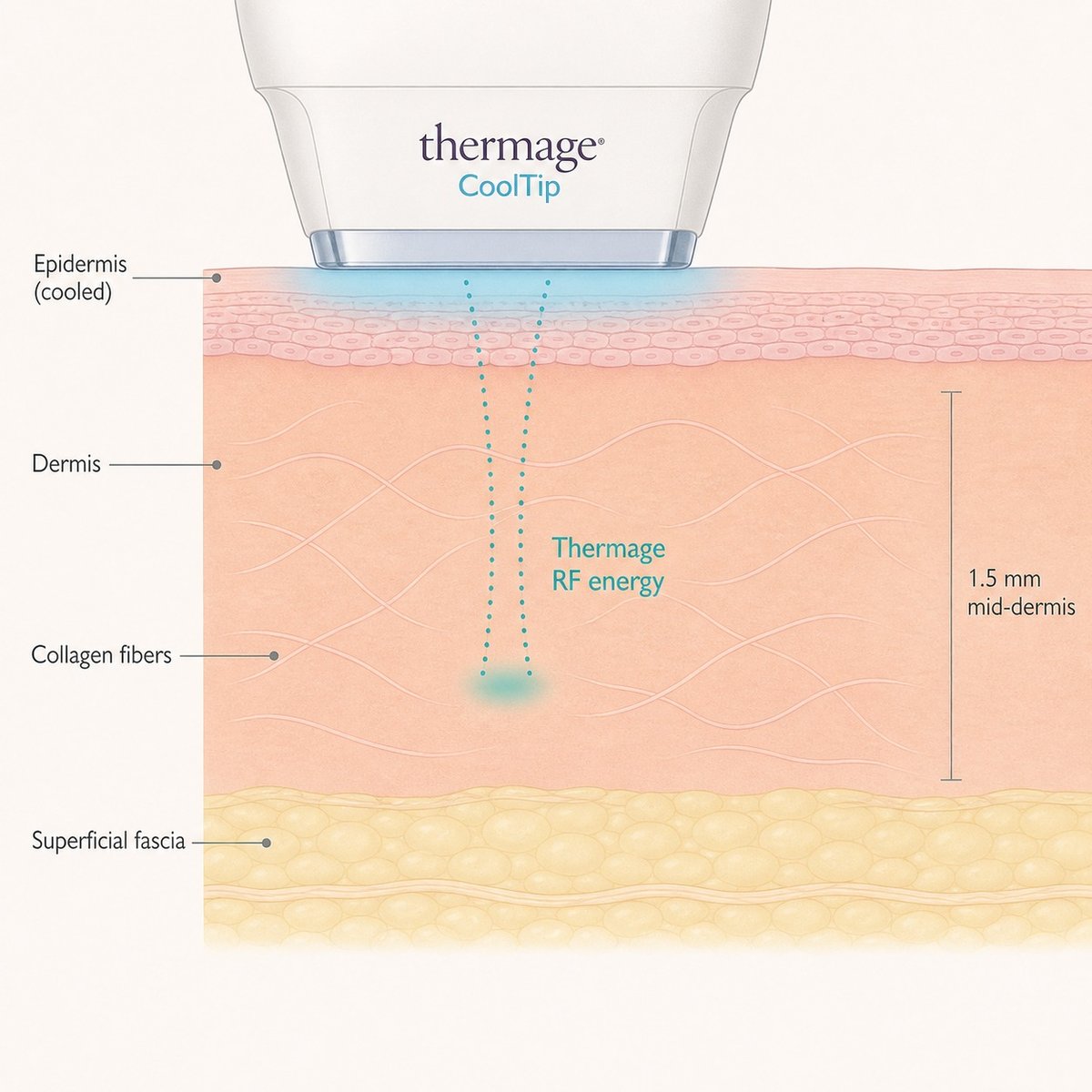
Thermage is a monopolar radiofrequency (RF) device cleared by the FDA for non-invasive skin tightening. It delivers controlled heat deep into the dermis and the connective tissue layer beneath, which prompts collagen remodeling over time. The surface is cooled simultaneously — hence the name CoolTip — to protect the outer skin while the deeper layers heat up.
Here's why the neck and décolleté deserve special attention: these areas age differently than the face. Collagen density is lower to begin with, the skin is more sun-exposed, and there's less underlying fat to buffer the RF energy. Studies suggest that collagen fibers in photo-damaged skin respond to heat remodeling, but the dose matters — too much energy in thinner skin can cause more irritation, while too little may not trigger meaningful remodeling at all (PMC3047947).
That's why treating your neck isn't simply a matter of moving the face handpiece downward and pressing go.
How the Settings Differ From a Face Treatment
The short answer? Lower energy per shot, smaller tip, and a different shot-count strategy. Here's what that means in practice.
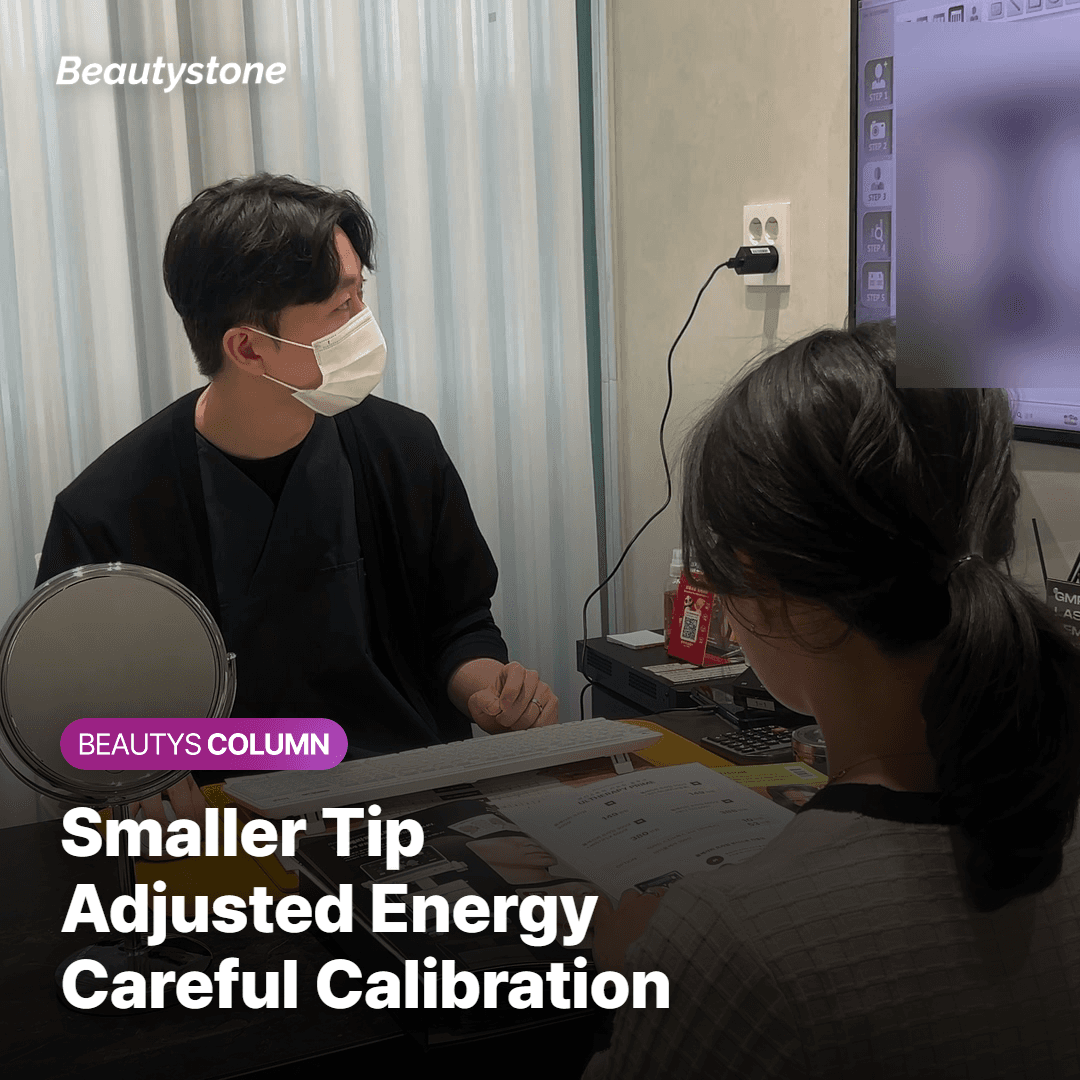
Tip size: A face treatment typically uses a larger 3.0 cm² or 4.0 cm² tip for broad coverage. On the neck and chest, providers often switch to a smaller tip — allowing more precision and reducing the risk of localized overheating on thinner skin.
Energy level: Because the dermal layer is thinner, the fluence (energy per pulse) is typically set more conservatively than on the mid-face. Your provider will often start at the lower end and increase based on your real-time feedback — if the heat feels uncomfortable rather than just warm, that's your cue to say so.
Shot distribution: The chest and neck have large surface areas relative to the face. Providers generally use more total shots to cover the décolleté evenly, but they're distributed across a wider zone rather than stacked in one spot.
Passes: Multiple passes at different depths and angles are common to ensure even collagen stimulation without hot spots.
The fundamental goal — heat the dermis, spare the surface — doesn't change. But the calibration to get there on thinner, more fragile skin is genuinely different. Individual results vary depending on your skin thickness, degree of laxity, and how your body remodels collagen.
What to Expect: Before, During, and After
Here's a realistic timeline so you know what you're signing up for.
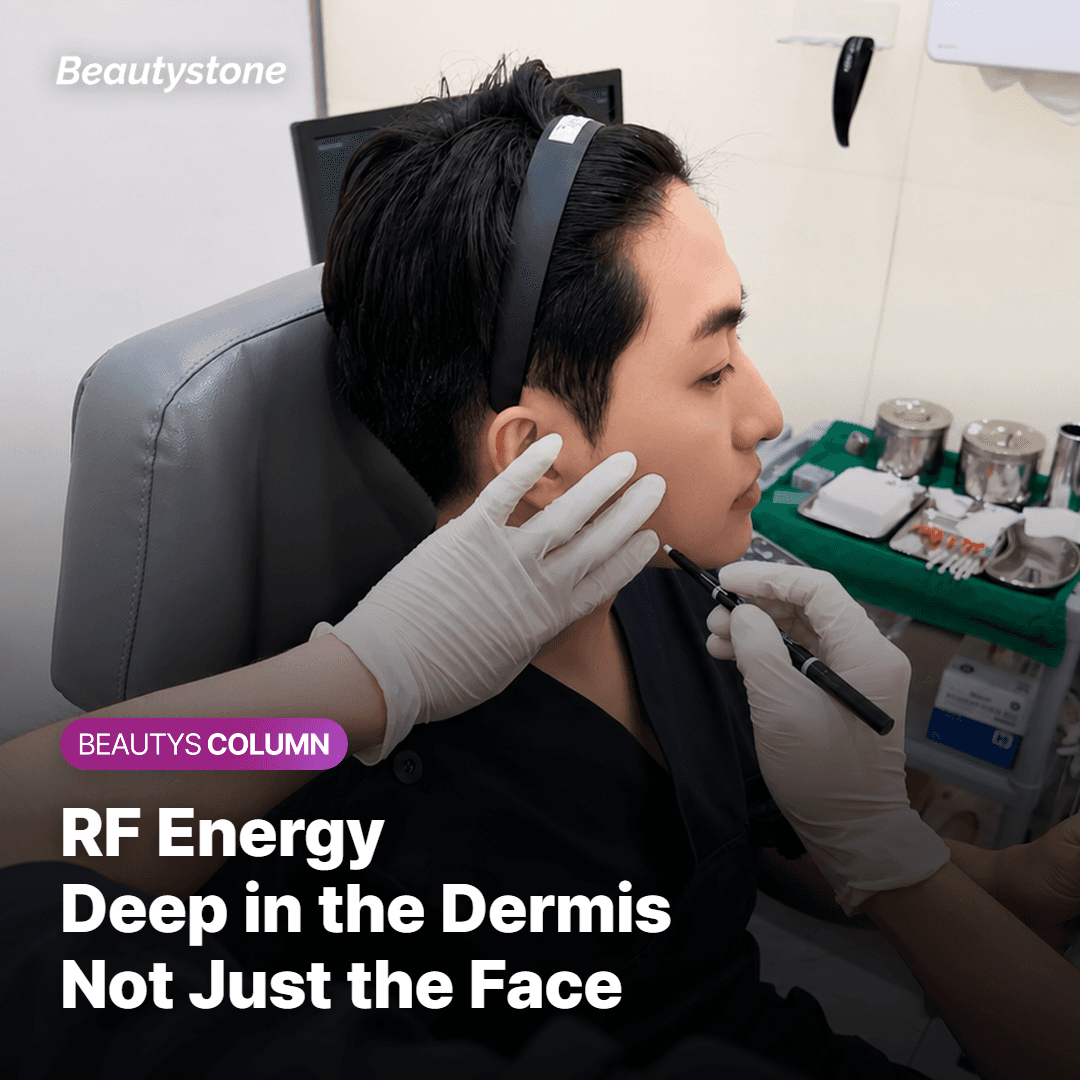
Before the session: Most clinics apply a topical numbing cream 30–45 minutes prior. A grid is drawn on your neck and chest to guide even coverage. You'll remove jewelry and keep the area clean and dry. Avoid retinol or exfoliating acids for a few days beforehand — your provider will confirm the exact window.
During the session: Each pulse delivers warmth that builds and then dissipates. Most people describe it as a hot stone sensation — intense for a second, then gone. The neck area can feel more sensitive than the cheeks because the skin is closer to the bone and there's less cushioning. That said, most people tolerate it well with numbing cream in place.
Immediately after: Expect redness and mild swelling, especially along the jawline-to-neck transition. This typically settles within 24–48 hours. The décolleté area can stay pink a bit longer — up to three or four days in some cases.
Weeks 1–4: You may notice some subtle tightening early, but this is mostly the acute inflammatory response, not the real result. The collagen remodeling process takes time.
Months 2–6: This is when you'll typically see the most noticeable change. Studies on RF skin tightening suggest that peak collagen synthesis occurs over a two-to-six month window after treatment (PMID 19076932). Skin on the neck and décolleté may feel firmer and look smoother, with some reduction in horizontal neck lines and chest crepiness. Individual results vary.
How long does it last? Research indicates that results from monopolar RF remodeling can persist for one to two years, though natural aging continues. Many people choose a maintenance session annually.
Side Effects and Risks: What to Watch For
Thermage is generally well tolerated, but it's not without trade-offs — and the neck and décolleté area comes with a few specific considerations worth knowing about.
Redness and swelling: Common and usually resolve within 48–72 hours. The décolleté may stay flushed a day or two longer than the face would.
Temporary sensitivity: The treated skin may feel tender to the touch for a few days. Tight collars or necklaces can aggravate this — give your neck some breathing room.
Blistering or surface burns: Rare, but possible if energy is delivered unevenly or at too high a level on very thin skin. This is one reason provider experience with neck cases specifically matters.
Fat atrophy: There have been isolated reports of subcutaneous fat loss in areas with very little underlying fat — a concern that's more theoretical for the décolleté than the face. A conservative energy approach and experienced hands reduce this risk significantly.
Prolonged numbness or tingling: Some people notice brief tingling sensations in the neck for a week or two afterward. This typically resolves on its own.
If you notice spreading redness, fever, worsening pain, or any signs of skin breakdown beyond normal post-treatment pinkness, seek medical care right away. These are red flags that warrant immediate follow-up rather than a wait-and-see approach.

Who's a Good Candidate for Neck and Décolleté Thermage?
Thermage works best for people who are starting to notice skin laxity but still have reasonable skin quality. Here's a rough guide to who tends to see the most satisfying results.
Good candidates: Adults in their 30s to 60s with mild-to-moderate skin laxity on the neck or horizontal chest lines (often called 'tech neck' lines or décolleté crepiness). People who want a non-surgical option with minimal downtime. Those with realistic expectations — you're looking for gradual improvement, not a dramatic overnight change.
May need additional options: Significant skin redundancy ('turkey neck' level of laxity) where the amount of excess skin exceeds what RF remodeling can meaningfully address. Severe photo-damage with very thin, fragile skin may require a more cautious approach or a different treatment altogether.
Not recommended if: You have a pacemaker or implanted electronic device in the treatment area, active skin infections, open wounds, or a history of keloid scarring in the area. Pregnancy is also a contraindication. Your provider will screen for these during your consultation.
Everyone's skin is different, and what works well for one person may not be the right fit for another — a consultation is the only way to get an honest read on your specific anatomy and goals.
Aftercare Tips That Actually Matter for the Neck and Chest
The neck and décolleté are notoriously hard to protect — they're sun-exposed during daily activities, prone to friction from clothing, and easy to forget in a skincare routine. Here's what to prioritize after your treatment.
Sun protection: Sunscreen on the neck and chest is non-negotiable after Thermage, and honestly, before it too. UV exposure degrades the collagen you're trying to rebuild. SPF 30+ daily, reapplied if you're outdoors.
Gentle cleansing: Avoid scrubbing the treated area for the first week. A mild, fragrance-free cleanser is your best bet.
Moisturize: Keeping the skin barrier supported helps recovery. A simple, non-irritating moisturizer — nothing with retinol, AHAs, or BHAs until the redness fully clears.
Skip the heat: Hot showers, saunas, and steam rooms should wait at least 48 hours. The skin has already been through a heating cycle — piling on more isn't helpful.
Loose clothing: Tight turtlenecks and snug necklaces pressing on freshly treated skin are more uncomfortable than you'd expect. Give yourself a few days of soft, breathable fabrics around the neck.
The Bottom Line
Thermage for the neck and décolleté is a legitimate option for non-surgical skin tightening — but it's not a copy-paste of a face treatment. The thinner, more sun-exposed skin in this area calls for adjusted energy settings, careful tip selection, and a provider who's treated necks specifically, not just faces.
Here's a quick recap:
The neck and décolleté require lower energy settings and smaller tips than a face session — the skin is thinner and has less fat cushioning.
Results build over two to six months as collagen remodels; peak improvement is gradual, not immediate.
Side effects are usually mild (redness, sensitivity) and resolve within a few days, though rare complications like blistering are possible.
Sun protection after treatment is essential — UV damage undoes the collagen remodeling you're investing in.
Like any procedure, it comes with trade-offs. Ultimately, the choice depends on your skin, your goals, and your budget.
If you're considering Thermage for your neck or chest, a consultation is the best starting point. Beautystone is a dermatology clinic in Seoul's Hapjeong area — see current offers at /en/promotion.
Frequently asked questions
Q. Does Thermage hurt more on the neck than on the face?
A. It can feel more intense on the neck because there's less subcutaneous fat to buffer the RF energy, and the skin sits closer to bone and cartilage. Most people tolerate it well with numbing cream applied beforehand. You'll feel brief pulses of deep warmth — not constant pain. If the intensity feels too high, tell your provider immediately so they can adjust.
Q. How many shots are needed for the neck and décolleté?
A. Shot count varies by the size of the treatment area, the degree of laxity, and your provider's approach. The chest and neck together cover a larger surface than the face, so higher total shot counts are common. Your provider will plan the distribution during your consultation based on your specific anatomy.
Q. When will I see results from neck and décolleté Thermage?
A. Most people notice gradual improvement starting around week four, with more visible tightening between months two and six as collagen remodeling peaks. Individual results vary — factors like your baseline skin quality, age, and sun damage history all play a role.
Q. Can I combine Thermage with other neck treatments?
A. Combining Thermage with other modalities — such as Ultherapy for deeper SMAS lifting or collagen biostimulators for volume — is something many people explore. Timing and sequencing matter, so this is a conversation to have with your provider. They'll assess whether your skin can handle a layered approach and in what order.
Content




skin
Why Does Fractional CO2 Take Longer to Heal?

Contouring & Volume
How Many cc Does Forehead Filler Need?

skin
Why Is My Skin Oily but Tight in the Fall?

Hair Removal
Underarm Laser Hair Removal Cost: Do the Math

Tattoo removal
Laser Before a Cover-Up: How Many Sessions?

skin
큐어젯 다운타임, 다음 날 출근과 화장은 언제부터 될까요?