

Jaw Botox slims volume; forehead softens expression—where to start, and how fast each works.
Published -
Updated -

Author
Wi Young-jin · Chief director
Seoul National University College of Medicine · Seoul National University Hospital Specialist
→
If you're in your 20s and looking into Botox for the first time, you might find yourself torn between two popular areas: the jawline and the forehead. While both are commonly discussed, they target entirely different concerns. Choosing one simply because it's popular might lead to results that don't quite match your expectations.
In short, jaw Botox reduces the size of the chewing muscles to soften your facial profile, while forehead Botox gently relaxes the muscles that cause expressions lines. So, whether you should start with your jaw or forehead depends on whether you're more concerned about a 'squared contour' or 'wrinkles that appear when you move your face'. In fact, looking at the study showing a reduction in muscle volume when botulinum toxin is injected into the chewing muscles, you can see that the two areas function in completely different ways.
This content is a helpful guide compiled from the clinical experience at Hapjeong Beautystone.
In this guide
Understand how jaw Botox and forehead Botox target different concerns
Learn the difference in how quickly they work and how long they last
Get a sense of where to start if it's your very first time
Discover key tips and individual variations to check before your first session
Jaw Botox reduces the volume of the chewing muscles
A square-looking jaw isn't just about bone structure; muscles play a significant role as well. If the masseter muscle*, which you can feel hardening at the side of your cheek when you clench your teeth, is highly developed, it often makes the jawline look wide and squared. Jaw Botox works by injecting botulinum toxin into this masseter muscle to temporarily reduce its activity, allowing the muscle to gradually slim down over time. Indeed, according to the clinical study showing that masseter muscle volume starts to decrease from the 3rd week and reduces by about 20-30%, the results appear naturally over time rather than all at once.
Masseter Muscle*: The chewing muscle on the side of the cheek that Kensington tightens up when you clench your teeth. It is the primary target for jaw Botox.
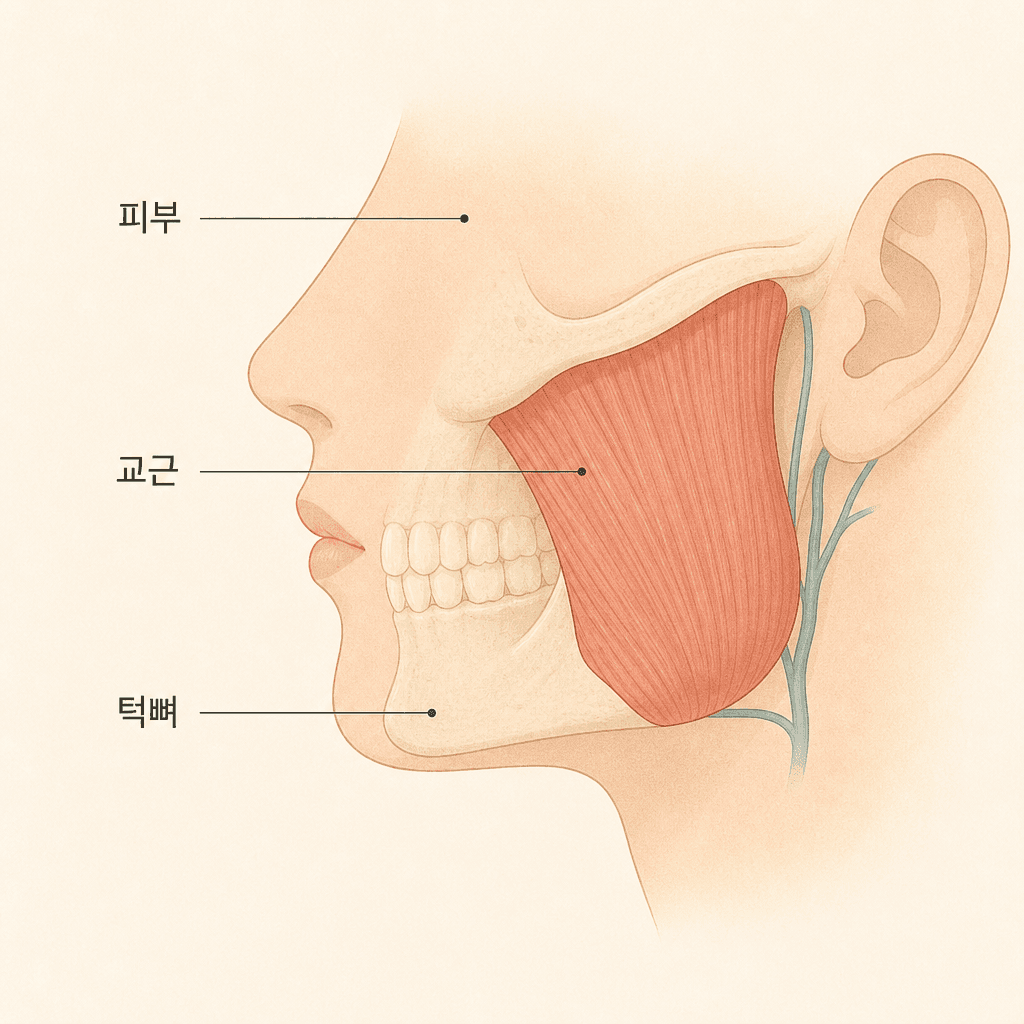
This is why jawlines differ from person to person. Some have a more muscular contour due to developed masseter muscles, while others have a naturally square bone structure. Since Botox works specifically on muscles, it's essential to understand the root cause of your jaw contour to set realistic and satisfying goals.

Forehead Botox* relaxes the muscles that cause expression lines
The forehead requires a different approach. The horizontal creases that appear when you raise your eyebrows are caused by the repetitive movement of the frontalis muscle*. Forehead Botox helps to temporarily soften this muscle's movement, preventing deep creases from forming when you make expressions. Rather than reducing volume like jaw Botox, it gently relaxes movement to slow down the process of lines setting in. As shown in the clinical guidelines stating that upper face Botox (like the forehead and frown lines) begins to show effects in about two days, peaks within 1 week to a month, and lasts for 3 to 4 months, you tend to notice the results here much faster than in the jaw.
Frontalis Muscle*: The expressive muscle that creates horizontal forehead lines when you raise your eyebrows. It is the main target for upper face Botox.
However, because the forehead is directly linked to the movement of your eyebrows, using too much product can make your expressions look stiff or your eyebrows feel heavy. If you're a beginner, a wise and safe approach is to start with a subtle dose and adjust it gradually based on how your muscles move.
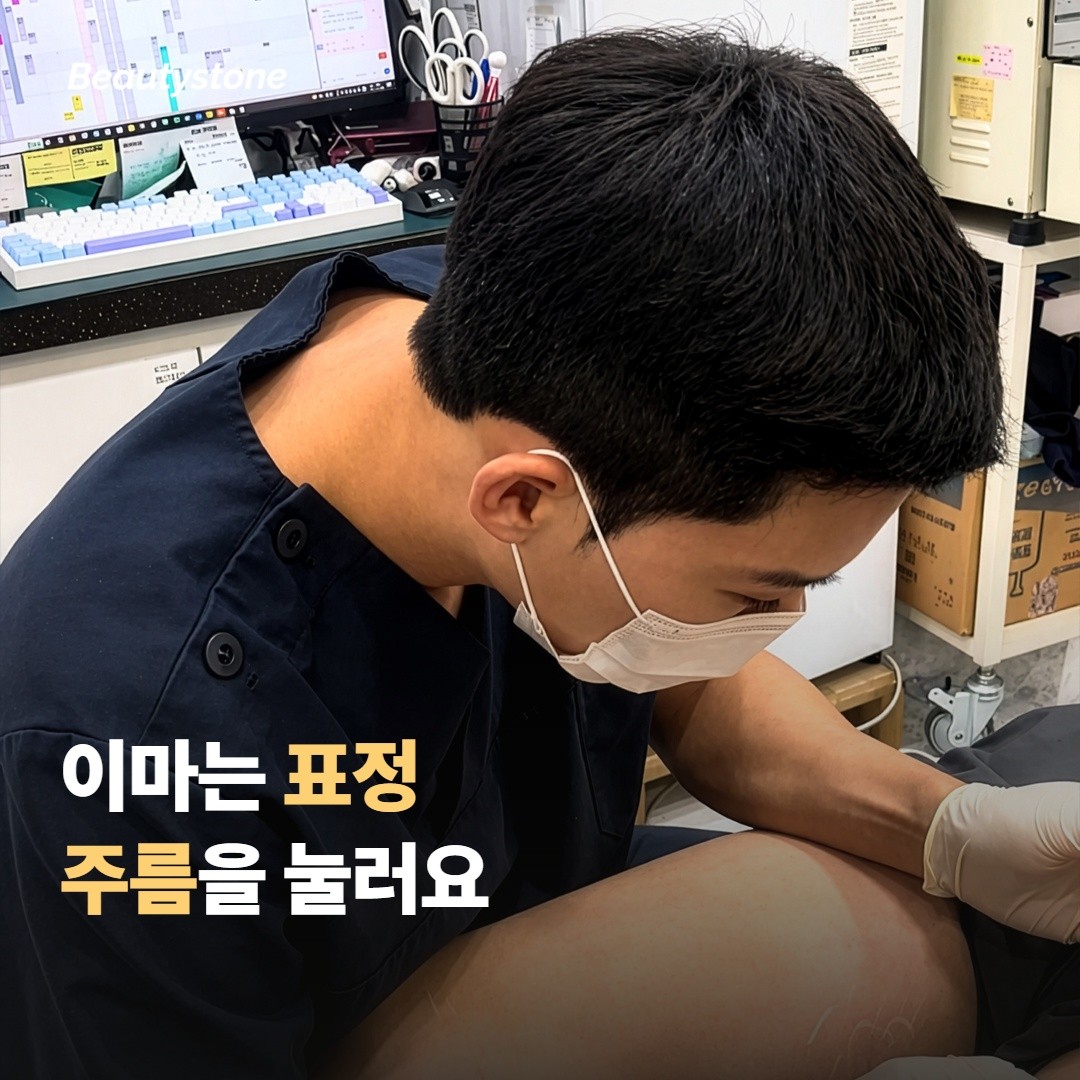
If you're a beginner, your starting point depends on your main concern
Since these two areas have different benefits, your starting point should align with what worries you most. If you want to soften a strong jawline, jaw Botox to reduce muscle volume is the way to go. If you're more concerned about horizontal forehead lines when you express yourself, forehead Botox to relax movement is a great place to start.
Details | Jaw Botox | Forehead Botox |
|---|---|---|
Main Target | Masseter (chewing muscle) | Frontalis (forehead expression muscle) |
How It Works | Reduces muscle volume | Relaxes expressive movement |
OnsetTime | About 3 weeks | 2 days to 1 week |
Duration | About 6 months | 3 to 4 months |
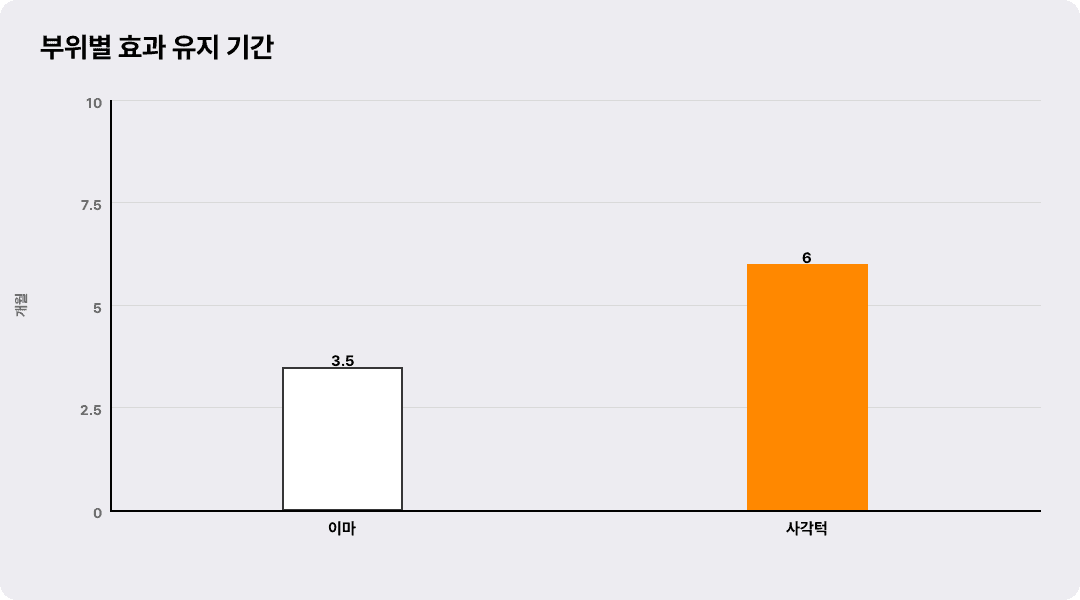
Of course, your treatment plan isn't decided solely by the treatment area. Even among those in their 20s, responses vary based on muscle development, expression habits, and skin thickness, which is why some clients choose to receive both treatments at staggered intervals. The onset of the treatment differs too: forehead results are felt within a few days, while jaw results gradually appear over several weeks. Because individual results vary, it is best to aim for subtle, natural adjustments rather than expecting dramatic changes overnight.

Why Hapjeong Beautystone?
For first-timers, Beautystone does not recommend the exact same dosage to everyone. Even for jaw Botox, we take a different approach for clients with muscular jaws versus those with structural jawlines, and we carefully adjust the forehead dosage based on your natural expressions. If it's your first time, we plan a gentle initial dose rather than a strong one, allowing us to monitor your natural movements and response. As a cozy, welcoming clinic located just a short walk from Hapjeong Station, we take the time to study each individual's muscle structure and expression habits, ensuring a comfortable, personalized journey all the way to your next visit.
What to know before your first Botox session
Understanding a few key details before your first treatment will help you feel much more comfortable and relaxed about your results. The most important thing to remember is that the onset and duration of the effects differ by area.
Onset of Results — You'll likely feel the effects on the forehead within a few days, while jaw Botox takes about 3 weeks to show gradual slimming.
Duration — Though it varies by person and area, results typically last around 3 to 6 months.
Individual Variations — The response depends greatly on your muscle development, expression habits, and dosage.
Dosage Control — If you are a beginner, it is much safer to start with a conservative dose and adjust after seeing how your face moves.
Medications & Medical History — Please let us know during your consultation if you have any previous treatment history or are taking medication.
Your first Botox session is less about a one-time change and more about finding the perfect balance for how your unique muscles and expressions respond. To find the right area and precise dosage for you, we highly recommend sound guidance through a personal consultation with our medical team.

Frequently Asked Questions
Q. Can I get both jaw and forehead Botox on the same day?
A. Since they target different muscle groups, many clients do receive both treatments on the same day. However, if it's your first time, we often suggest seeing the response of one area first, or tailoring the plan based on your unique muscle profile during your design consultation.
Q. Is it too early to start Botox in my 20s?
A. Not at all. Active masseter muscles and expression habits can develop regardless of age. If you have specific concerns, it's more important to look at your current muscle condition rather than your age. However, we always recommend a conservative dosage for your first time to ensure natural results.
Q. Will I see the results immediately after the injection?
A. This depends on the area. Forehead Botox begins to soften your expressions in about two days. Jaw Botox takes longer because it takes time for the muscle to naturally slim down, with results gradually visible around 3 weeks. Since the timeline varies for everyone, a little patience is always helpful!
Q. Will my face look stiff or unnatural?
A. While too much product can cause temporary stiffness, this can be easily prevented by customizing the dosage to your natural movements. Especially for the forehead, which is linked to your eyebrows, we start conservatively and adjust naturally at your next session.
Recommended Reads
Forehead Botox*: Honestly, even I didn't perform it this way 5 years ago
Jaw Botox 60U*: Why you shouldn't blindly believe that more is always better
An honest timeline of results for 30-somethings getting Botox for the first time
Jawline Botox*: It's not just the masseter muscle (Explained by our Director)


Hair Removal
레이저 제모 1회에도 남는 몫이 있어요 — 밀도를 모자이크로 보는 법

Tattoo removal
Why Extremity Tattoos Are Slower to Remove

Tattoo removal
Tattoo Removal Cost: Why Quotes Vary by Area

Tattoo removal
Unused Tattoo Removal Sessions: What Happens?

Lifting
Forehead Thread Lifting: How Far Can It Go?

skin
Skin Booster Prices: What to Check in a Quote