

Wrinkles smooth because muscles can't move. How Botox works at the neuromuscular junction.
Published
Updated

Author
Wi Young-jin · Chief director
Seoul National University College of Medicine · Seoul National University Hospital Specialist
→
🔗 Read more
What is Botox? — 1.1 The History of Botox
Types — 2.1 Brand Comparison (Botox, Dysport, Nabota, Coretox)
Treatment Areas — 3.1 Wrinkles (Forehead, Between the Brows, Around the Eyes, Around the Mouth) · 3.2 Contouring (Square Jaw, Calves, Parotid Gland)
Things to Know — 4.1 Duration of Results · 4.2 Side Effects · 4.3 Top 8 Frequently Asked Questions
To get straight to the point, Botox doesn't actually cut or remove your muscles. It simply temporarily blocks the signal traveling from your brain to your muscles. Once the signal is blocked, the muscle cannot move, and as a result, wrinkles smooth out or the muscle volume decreases. Understanding how this process works makes it easier to naturally understand why the effects fade after a certain period of time.
How muscles move in the first place
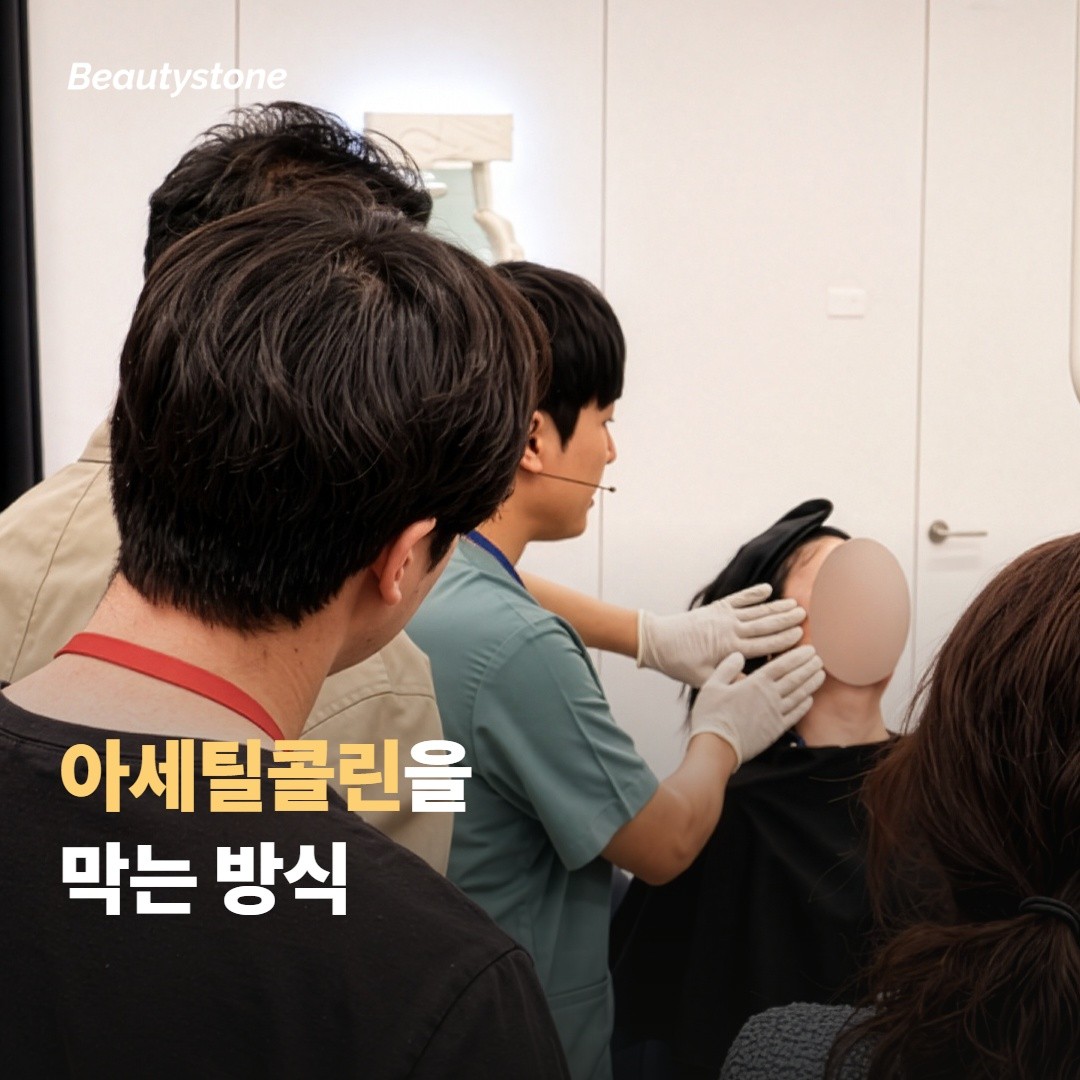
The muscles we consciously move rely on signals sent by our nerves to function. The signals starting from the brain travel down the motor nerves and release a substance called acetylcholine* at the neuromuscular junction*, the point where the nerve and muscle meet.
Neuromuscular Junction*: A microscopic gap where nerve endings and muscles meet to exchange signals. Chemical substances must travel across this gap for the muscle to move.
Acetylcholine*: A chemical used by nerve cells to deliver the "move" signal to muscles.
When acetylcholine binds to receptors on the muscle surface, the muscle contracts. Everything from furrowing your brows to clenching your jaw happens through this nerve-muscle pathway.
How Botox steps in
Botulinum toxin interferes with this acetylcholine release process. To be precise, it cleaves a protein (SNAP-25) required to release acetylcholine from nerve endings. When this protein is damaged, the nerve ending cannot release acetylcholine.
As a result, although the signal reaches the nerve ending, it cannot be transmitted to the muscle. The muscle itself is actually perfectly fine, but since it doesn't receive the command, it doesn't move. It is more accurate to think of it as "communication being locked" rather than paralysis.
Why do the effects wear off in 3 to 6 months?
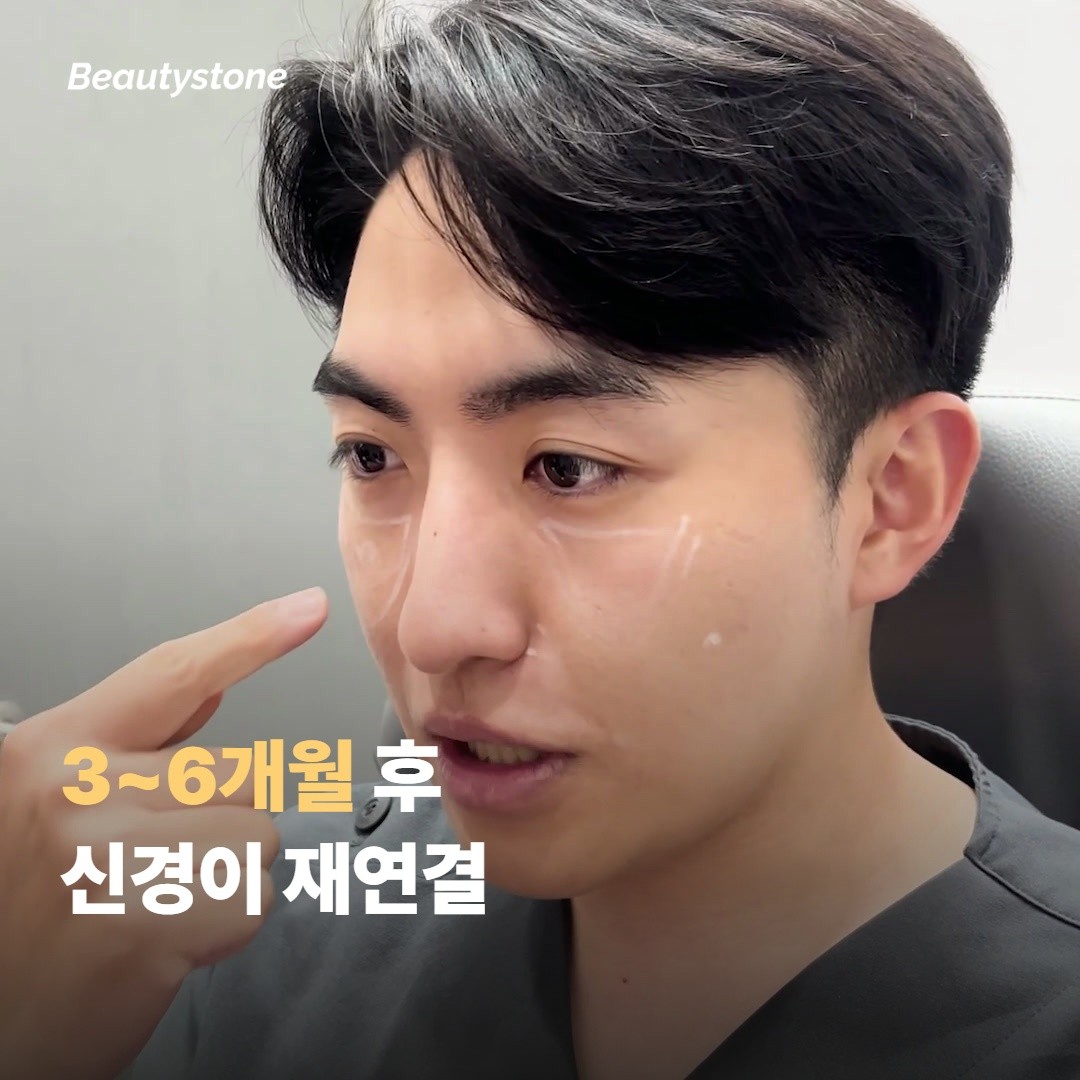
Nerve endings damaged by Botox injections (with cleaved SNAP-25 proteins) cannot recover. However, our bodies naturally sprout new nerve branches to reconnect with the muscle. It typically takes about 3 months for the nerves to grow new endings and reconnect with the muscle, and depending on the area and individual, it can take up to 6 months.
This is also why results vary from person to person. If you have a fast metabolism or high muscle activity, new nerve branches develop quicker, causing the Botox effect to wear off sooner. Conversely, you might find that the interval between treatments becomes gradually longer than your very first session. This is because repeated treatments keep the muscle in an unused state, weakening its overall ability to contract.

Why Botox doesn't spread throughout the body
Many people ask, "Since it's a toxin, won't it spread throughout my entire body?"
The reason botulism is dangerous when contracted from food poisoning is different. When ingested, the toxins travel through the bloodstream to reach the respiratory muscles (diaphragm and intercostal muscles), blocking signals and making it impossible to breathe. That is why foodborne botulism is fatal, but cosmetic procedures are safe due to the exact same mechanism. The micro-dose injected directly into the skin works only on the local muscle and has no pathway to reach the respiratory muscles.
However, if you massage the area vigorously right after the injection or inject too large a dose into a narrow area, it can spread to nearby unintended muscles, leading to side effects like drooping eyelids. This is where the term "diffusion radius" comes from. This is why it is essential for an experienced practitioner to precisely control the dose and injecting depth for a safe outcome.

Repeated treatments make the muscle itself smaller
While the signal block is temporary, muscles undergo longer-lasting changes. Muscles shrink when they aren't used, so muscles that haven't moved for several months due to Botox will gradually decrease in volume. This muscle atrophy* effect is exactly why jaw Botox is highly effective for teeth grinders, and why regular patients achieve the same great results with smaller doses over time.
Atrophy*: A state where unused muscles decrease in size and strength. It is not permanent damage; if you begin moving them again, they will recover over time.
Once nerve signals recover and muscles become active again, the atrophied state is resolved. However, since muscle recovery is slower than nerve reconnection, the muscles often remain slimmed down for about 6 months to a year even after you stop treatments.
However, please note that the diffusion radius varies by product. We will discuss this in detail in our next post where we compare the characteristics of each brand.
Frequently Asked Questions
Q. Will my face look frozen if I get Botox?
When injected in the right dose and location, it simply softens excessive expressions while keeping natural movements intact. If the dosage is too high or the placement is incorrect, expressions can look stiff, which comes down to the practitioner's skill and dose management.
Q. Does the muscle go back to normal once the Botox is absorbed?
Yes, once the nerves form new connections, muscle function is fully restored. The temporary nature is one of the key characteristics of Botox. If you are looking for permanent changes, surgical options should be considered.
Q. Do frequent injections lead to tolerance?
It's not that the muscle develops a tolerance, but rather that your immune system can build up antibodies against the toxin. The chances of this increase if you get high doses injected frequently. While this is rare with standard cosmetic doses, it is not entirely impossible.


![[Wi Young-jin Column] Botox droop: 19-min consult patterns](https://framerusercontent.com/images/0v9Uk6mK3YIdpWJqkstER6nDqM.jpg?width=1080&height=1080)


Lifting
XERF for a Thin Face: Depth vs. Hollowing?

Lifting
Thread Lift Swelling: What's Normal in 5 Days?

Lifting
Thermage Cost: 4 Lines to Check on a Quote

Contouring & Volume
Xeomin Cost: Why Do 50-Unit Quotes Differ?

skin
Back Acne That Won't Clear? It Might Be Fungal

Tattoo removal
Bad Brow Tattoo: Cover It Up or Fade It First?