

Why so many botulinum products? Brand differences, unit conversion, and best areas, simply.
Published
Updated

Author
Wi Young-jin · Chief director
Seoul National University College of Medicine · Seoul National University Hospital Specialist
→
🔗 Read more
What is Botox? — 1.1 The History of Botox · 1.2 How It Works
Treatment Areas — 3.1 Wrinkle Areas (Forehead, Between the Brows, Eyes, Around the Mouth) · 3.2 Contouring (Jaw, Calves, Salivary Gland)
Things to Know — 4.1 Duration of Results · 4.2 Side Effects · 4.3 8 Frequently Asked Questions
To put it simply, the core ingredient is the same. They are all purified proteins produced by Clostridium botulinum. However, because the manufacturers and purification methods differ, the unit conversion, diffusion range, and duration vary slightly. Understanding which product is best suited for your specific concerns is a wonderful way to make the most of your medical consultation.
Why do they have different names?
The very first pharmaceutical product made from botulinum toxin type A was developed by Allergan in the United States. Its brand name is Botox®. Since then, pharmaceutical companies in countries like France, Germany, and Korea have independently developed similar proteins, leading to a diverse range of products.
Currently, five major products are widely used in Korean clinics.
Botox®: Manufactured by Allergan (now AbbVie), the original. This is the most extensively researched botulinum product globally.
Dysport®: Manufactured by Ipsen, of European origin. It is known for having a relatively wide diffusion radius.
Nabota™: Manufactured by Daewoong Pharmaceutical, a high-quality Korean brand. It has received approval from both the US FDA and the Korean Ministry of Food and Drug Safety.
Xeomin®: Manufactured by Merz Aesthetics, of German origin. It is a highly purified toxin that does not contain any complexing proteins.
Coretox®: Manufactured by Medytox, a Korean brand. This product is designed to lower the risk of developing resistance or secondary infection by removing non-toxic accessory proteins to offer a pure neurotoxin, and completely avoiding the use of human serum albumin (HSA) as a stabilizer.
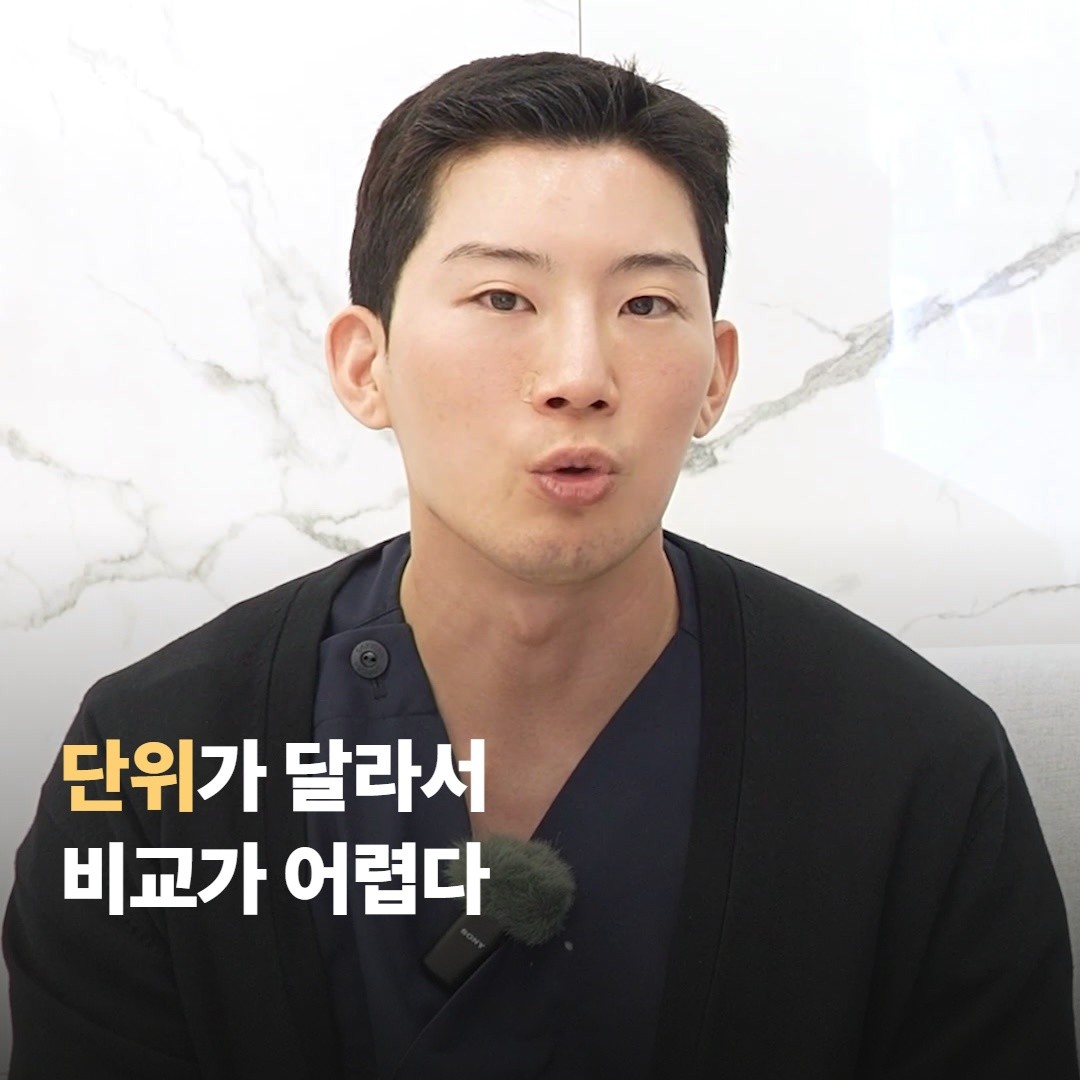
Comparing dosages can be tricky due to different units
Every botulinum product has its own way of measuring Units (U)*. For instance, 20U of Botox provides a comparable effect to about 60U of Dysport. While Dysport's number looks three times higher, the actual clinical effect is very similar.
*Unit (U): A measurement indicating the potency of the botulinum toxin. Because the definition of a unit varies by brand, you shouldn't compare them purely by the numbers on the label.
Since there is no single international standard unit, converting dosages between brands is highly necessary when switching treatments. Many specialists use a rough conversion ratio of 1U of Botox to roughly 2.5–3U of Dysport, while Botox and Xeomin can be converted almost 1:1. Because your required dosage changes automatically when you switch products, please let your doctor know "what you received during your last visit."
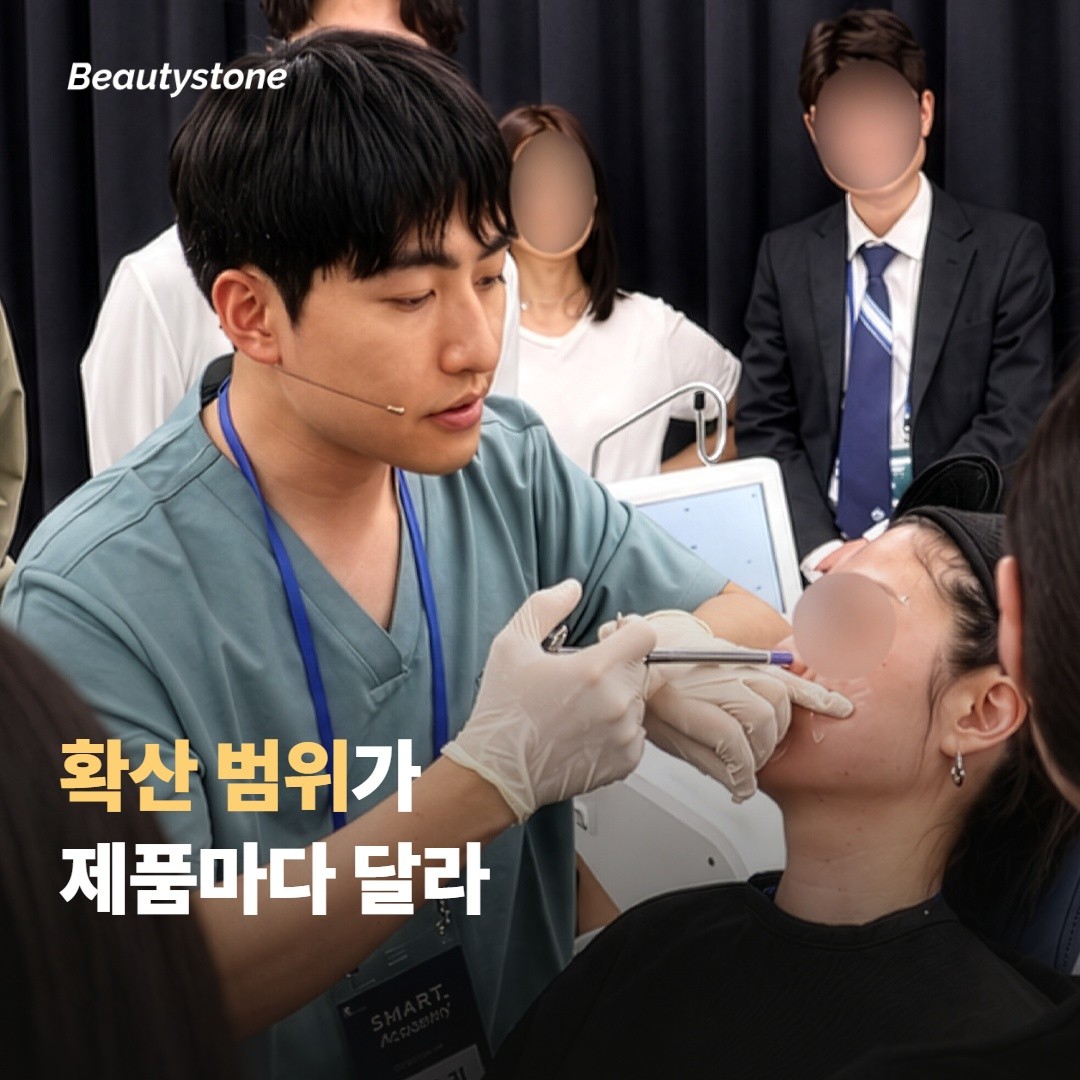
The diffusion range varies
Dysport tends to spread out a bit more. This property makes it highly effective for treating broader areas at once, such as forehead wrinkles or calf muscles. On the other hand, in delicate, narrow zones like the eye area where you want to prevent spreading, your doctor will need to adjust the dosage and injection points with extra precision.
Botox and Nabota have a relatively lower diffusion rate, making them preferred choices for precisely targeting localized areas.
Xeomin is a pure toxin formulation free of complexing proteins around the neurotoxin, and clinical reports suggest that this theoretically reduces the risk of antibody formation. If you have had regular treatments over a long period and feel your results are not as effective as before, trying Merz's Xeomin can be a very sensible alternative.
Korea's Coretox is also a "resistance-reducing toxin" based on a similar concept. It is the third botulinum product developed by Medytox, which purifies a 150kDa pure neurotoxin by removing non-toxic proteins from the 900kDa complex. By using alternative stabilizers instead of animal-derived albumin, it also minimizes risk. Since it offers a more budget-friendly price point than the original Botox or Xeomin, many patients looking at long-term, repeated touch-ups are choosing Coretox as an excellent option.

No single product is simply "the best"
The ideal product choice relies entirely on which area is being treated, your personal aesthetic goals, and how long you want the results to last. Every individual reacts slightly differently as well. Simple comparisons like "Nabota is better because it is more affordable than Botox" or "Botox is the original, so it must be better" do not capture the whole picture.
When comparing prices, it only makes sense when taking unit differences into account. For instance, when converting to the equivalent dosage needed for the same clinical result in a specific area, Botox tends to be the most premium, followed by Nabota and Xeomin, while Dysport’s price gap often narrows after proper unit conversion. The onset of results also varies slightly: reports show that Dysport typically starts working within 2 to 3 days, whereas Botox and Nabota generally take about 4 to 7 days.
The most important step is choosing a professional clinic where the doctor explains exactly why they have recommended a specific product for your treatment. A clinic that gives clear, medically sound reasons when you ask "how many units of which product will be used" is highly trustworthy.

Frequently Asked Questions
Q. Is Nabota less effective because it is a Korean brand?
Not at all. Nabota is a highly advanced product that has been approved by the US FDA. Rather than thinking of it as a generic versus an original, it is best to view each brand as having completed its own independent, rigorous clinical trials and approval processes.
Q. I've had botulinum treatments before, but I feel the effects have decreased. Will switching products help?
It certainly can help in many cases. If your body has developed antibodies from long-term, repeated procedures, switching to a pure toxin formulation can help restore your desired results. However, having a thorough consultation to identify the exact cause is always the best first step.
Q. Why does the price for the same product vary so much between clinics?
Even if clinics list the same brand name, the physical dosage (Units) they inject can differ. For example, a forehead treatment can vary significantly in price and effectiveness depending on whether they use 20U or 40U. We highly recommend confirming the exact units being used during your consultation before proceeding.


![[Wi Young-jin Column] Botox droop: 19-min consult patterns](https://framerusercontent.com/images/0v9Uk6mK3YIdpWJqkstER6nDqM.jpg?width=1080&height=1080)



Lifting
XERF for a Thin Face: Depth vs. Hollowing?

Lifting
Thread Lift Swelling: What's Normal in 5 Days?

Lifting
Thermage Cost: 4 Lines to Check on a Quote

Contouring & Volume
Xeomin Cost: Why Do 50-Unit Quotes Differ?

skin
Back Acne That Won't Clear? It Might Be Fungal

Tattoo removal
Bad Brow Tattoo: Cover It Up or Fade It First?