

Why brows droop after forehead Botox and why it suits frown lines: principles and cautions.
Published
Updated

Author
Wi Young-jin · Chief director
Seoul National University College of Medicine · Seoul National University Hospital Specialist
→
🔗 Jump to Other Sections
What is Botox? — 1.1 History of Botox · 1.2 How It Works
Types — 2.1 Brand Comparison (Botox, Dysport, Nabota, Coretox)
Treatment Areas — 3.2 Contouring Treatments (Square Jaw, Calves, Parotid Gland)
Good to Know — 4.1 Duration of Effects · 4.2 Side Effects · 4.3 8 Frequently Asked Questions
To get straight to the point, before getting Botox, "how much and how" it is administered is just as important as "where" it is injected. Even on the same forehead, everyone's height and muscle positions are different. A slight miscalculation in dosage or injection site can cause the eyebrows to droop or make facial expressions look unnatural. Knowing the differences between treatment areas will help you have a more detailed discussion during your consultation.
Forehead Wrinkles — Eyebrow Height Must Be Evaluated Together
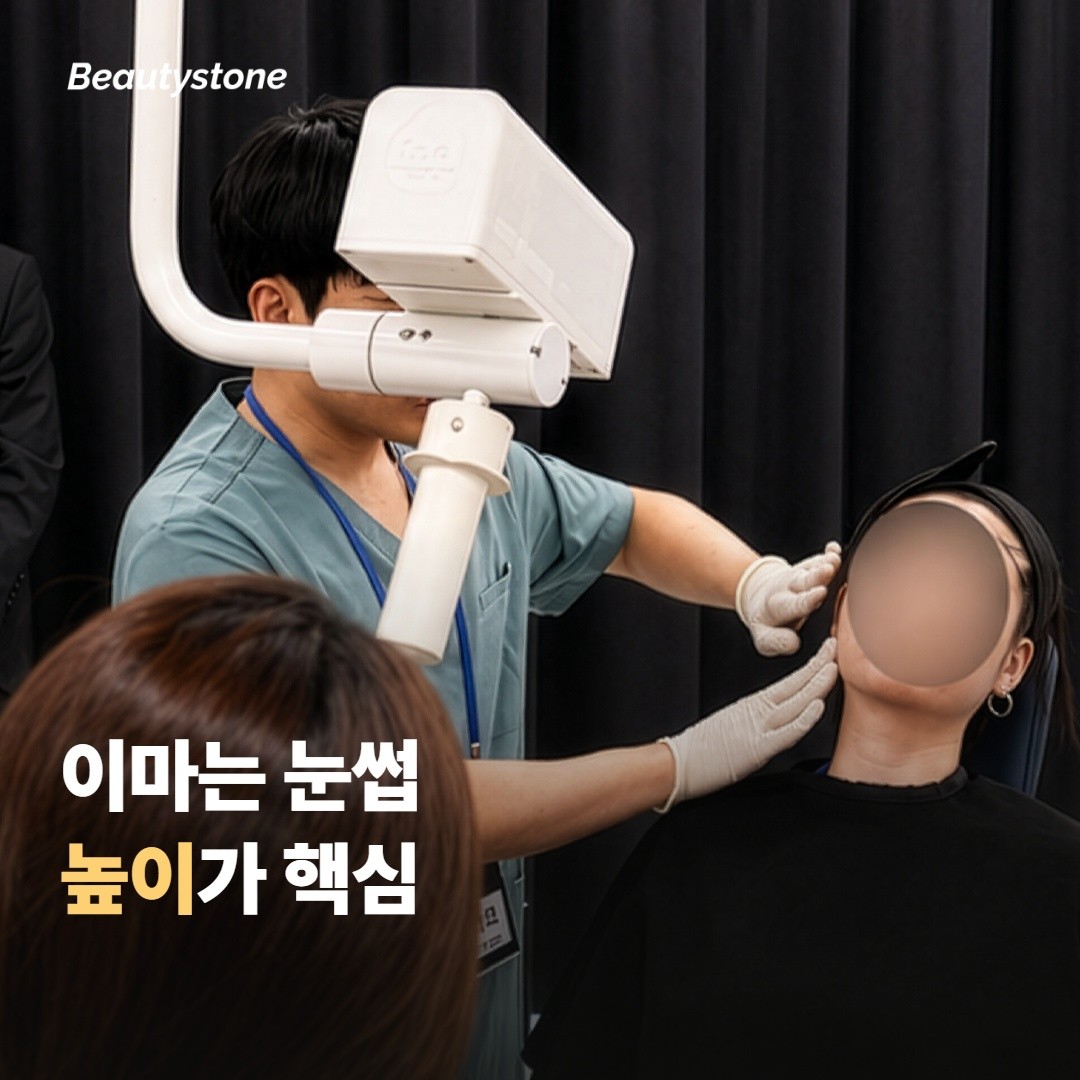
Horizontal forehead wrinkles are caused by the repeated contraction of the frontalis muscle*. Relaxing this muscle with Botox smooths out the wrinkles, but the catch is that this muscle is also responsible for raising your eyebrows.
*Frontalis: A thin muscle that covers the entire forehead. It is a facial expression muscle that raises the eyebrows or creates horizontal forehead wrinkles.
If too much Botox is injected, your eyebrows might droop, and your eyelids can feel heavy. This is why some people complain that "their eyes look smaller" after forehead Botox.
Doctors typically don't target the entire forehead; instead, they check the distance to the eyebrows and muscle activity to determine the injection points. If you naturally have lower eyebrows, it is standard practice to start with a conservative forehead Botox dose.
Glabellar (Frown) Lines — The First FDA-Approved Area
The vertical frown lines between the eyebrows (often looking like the number 11) were the very first cosmetic indication approved by the FDA. These wrinkles form when the corrugator and procerus muscles*—the muscles responsible for drawing the eyebrows together—become overactive, which can give off an angry or tired impression.
*Corrugator/Procerus: Two facial muscles that move together when you frown. The corrugator pulls the inner eyebrows inward, while the procerus pulls the area between the eyebrows downward.
This area is relatively easy to treat precisely, and because its impact on surrounding muscles is smaller than the forehead, the risk of side effects is low. However, if the distance between your eyebrows is narrow or the inner eyebrows are already drooping, careful placement is key.

Crow's Feet — For a Natural-Looking Result
Laugh lines on the outer corners of the eyes (crow's feet) are caused by the repeated contraction of the orbicularis oculi muscle. Botox works wonderfully in the early stages when these lines only appear and disappear when you laugh or squint.
Because the muscles around the eyes are densely clustered, injection placement and dosage must be very precise. Injecting too far inward can cause the eyelids to droop, and injecting too much can make the eye area look frozen when you smile, resulting in an awkward expression. If you desire a "natural" look, it is often recommended to start with a small amount and touch up later depending on the results.

Mouth Corners & Nasolabial Folds — The Balance of Lifting and Pulling Down
Mouth expressions are created by a combination of muscles that lift and pull down. When the depressor anguli oris (DAO) muscle is overactive, the corners of the mouth look downturned, giving a sad or angry appearance. Injecting a small dose of Botox into this muscle limits its action, allowing the levator anguli oris to naturally take over and gently lift the corners of the mouth—commonly known as "mouth corner Botox."
On the other hand, nasolabial folds—the deep lines running from the sides of the nose to the corners of the mouth—are difficult to treat effectively with Botox alone. Since these wrinkles are usually caused by sagging skin and fat rather than muscle contraction, they are typically addressed with a combination of fillers or lifting treatments. However, if your levator labii superioris alaeque nasi muscle acts too strongly, lifting the upper part of the nasolabial fold, a micro-dose of Botox into this muscle can offer a helpful supportive effect. This same muscle is also targeted to correct a "gummy smile."
Treatments around the mouth require far greater precision than those for frown lines or the forehead. Even a tiny excess in dose can lead to slurred pronunciation or an asymmetrical smile, so it is standard to start with minimal doses, such as 1 to 2 units per side.

Completely Freezing Facial Muscles is Not the Goal
For all three areas, the common goal is never to completely paralyze the muscles. The aim is to reduce excessive contraction, not to erase your facial expressions entirely.
For most areas, the effects begin to show gradually about 2 to 3 days post-treatment and reach their peak at around 2 weeks. So, it is entirely normal if you feel the effect is a bit subtle right after your session. Based on standard starter doses, doctors often consider around 20 units total for frown lines, 10 to 20 units for the forehead, and 8 to 12 units per side for crow's feet, though this varies depending on your muscle development and expression habits.
Beautifully done forehead, frown line, and crow's feet Botox aims for a look that makes people wonder if you've had anything done at all. Taking a moment to look in the mirror before your appointment to identify which expressions bother you the most will be incredibly helpful when discussing your goals with your doctor.
Frequently Asked Questions
Q. What happens if my eyebrows droop after forehead Botox?
They will naturally return to normal as the effects wear off, typically within 3 to 6 months. Adjusting the dosage or injection placement during your next session will prevent this from happening again.
Q. Can I get Botox for the frown lines, forehead, and crow's feet all at once?
Yes, it is very common to treat all three areas in a single session. However, if it is your first time, you may also choose to try one or two areas first, check the results, and add more later.
Q. Will getting Botox more frequently smooth out wrinkles even better?
Repeated treatments can gradually weaken overall muscle contraction, helping to slow down the formation of new wrinkles. However, if you feel the treatment has almost no effect, it is important to check whether the dosage or product details need adjusting, or if the concern stems from the skin's elasticity itself.
Further Reading
Can I Get Botox and Fillers on the Same Day?
From Toxin to Cosmetic Sensation: How Was Botox Created?

![[Wi Young-jin Column] Frontalis Design, Forehead Botox Without Heavy Eyes](https://framerusercontent.com/images/IIiy5UpcmLMDvtamZAhCafz9OuI.jpg?width=1080&height=1080)




Lifting
XERF for a Thin Face: Depth vs. Hollowing?

Lifting
Thread Lift Swelling: What's Normal in 5 Days?

Lifting
Thermage Cost: 4 Lines to Check on a Quote

Contouring & Volume
Xeomin Cost: Why Do 50-Unit Quotes Differ?

skin
Back Acne That Won't Clear? It Might Be Fungal

Tattoo removal
Bad Brow Tattoo: Cover It Up or Fade It First?