

Coarse hair clears fast, but does laser work on fine, light hair? Pigment & sessions explained.
Published -
Updated -

Author
Wi Young-jin · Chief director
Seoul National University College of Medicine · Seoul National University Hospital Specialist
→
When you start looking into laser hair removal, it's easy to wonder, "Coarse, dark hair clears up fine, but will it do anything for fine, light hair?" Upper-lip fuzz, soft facial hair, and the pale fine hairs on your arms and legs are the ones people second-guess most, so they keep putting off getting started.
The short answer: a laser like GentleMax Pro Plus* works by reacting to the pigment inside the hair, so darker, coarser hair responds well, while fine, light hair tends to need more sessions or respond more weakly. It's not that it does nothing, but you can't expect it to clear at the same pace as dark hair. Still, you'll hear all sorts of mixed claims out there, like "laser never touches fine hair" or "one session and you're done." Knowing how pigment and laser actually relate helps you set realistic expectations going in.
This article rounds up treatment information from Hapjeong Beautystone.
In this article, you'll learn
What part of the hair laser hair removal actually reacts to
How light hair and dark hair respond differently
Why fine hair takes more sessions to clear
How to approach fine-hair removal step by step
How laser hair removal works: melanin absorbs the heat
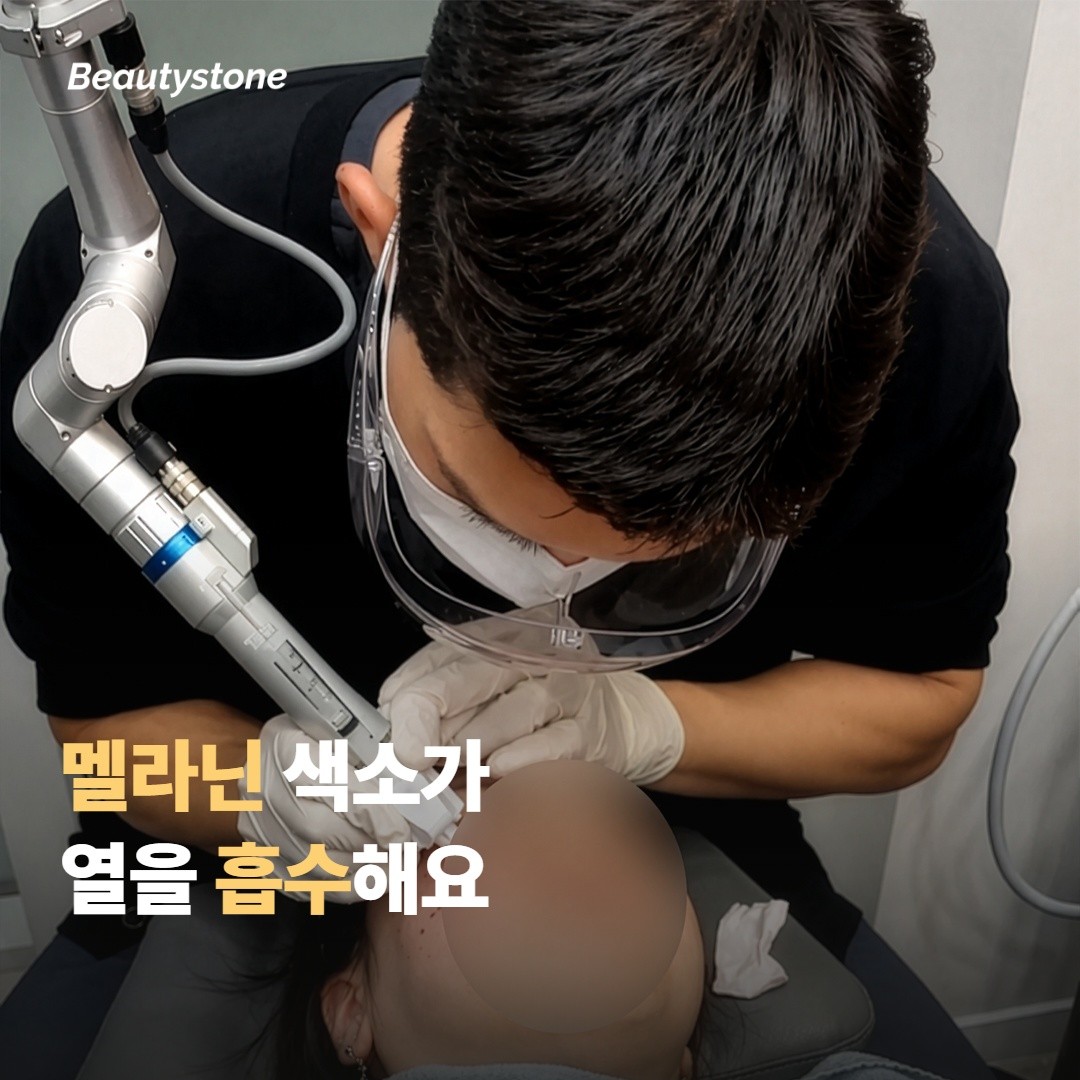
Laser hair removal doesn't burn the hair itself. Instead, the melanin pigment inside the hair absorbs the laser light and converts it into heat, which then targets the follicle. That's why darker, coarser hair, with more pigment, absorbs the light well and responds strongly, while light hair, with less pigment, has less light to absorb and reacts more weakly.
melanin*: the pigment that gives hair and skin their color. It's the target that absorbs laser light and turns it into heat, so the more pigment there is, the better the hair responds to removal.
In fact, the explanation that laser hair removal targets melanin pigment, responds best to dark, coarse hair, and usually requires several sessions makes it clear why fine hair needs more sessions than dark hair. GentleMax Pro Plus can use two different wavelengths together, which gives it more room to adjust for hair depth and color, but the basic principle of reacting to pigment is the same.
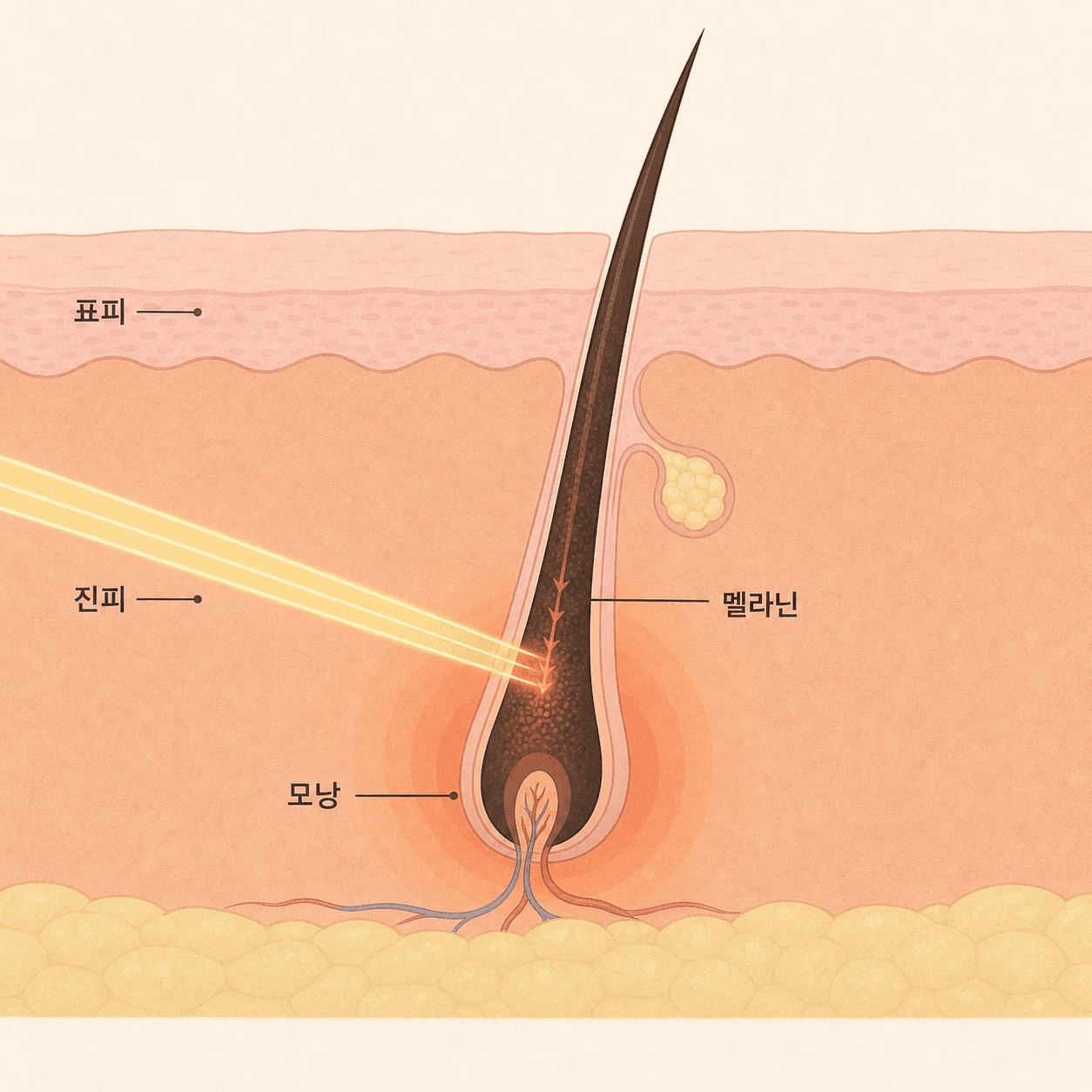
Once you understand this, it makes sense why coarse hair and fine hair in the same area clear at different speeds, and why fine hair needs more sessions to get there.
Light hair vs. dark hair: how does the response differ?
Even with the same laser, the response changes a lot depending on the color and thickness of the hair. Breaking it down by hair type, here's how it looks.
Hair type | Melanin level | Laser response |
|---|---|---|
Dark, coarse hair | High | Responds well |
Dark but fine hair | Medium | Responds over repeated sessions |
Light, fine hair | Low | Weak response, needs more sessions |
White hair, blond fuzz | Almost none | Hard to treat |
The table shows general tendencies, so the actual response can vary by area and skin tone. White hair with almost no color, or very pale fuzz, has little pigment for the laser to absorb, so results are hard to expect. On the other hand, fine hair that still holds some pigment, even if it looks light, can gradually become thinner and lighter with more sessions than dark hair requires. So with fine-hair removal, it's more realistic to think in terms of "how much, and over how many sessions" rather than simply "will it clear or not."
Why fine hair takes more sessions to clear
Fine hair rarely clears in one or two sessions; it thins out gradually as the sessions add up. If you map out how the hair decreases across sessions, the curve looks roughly like this.
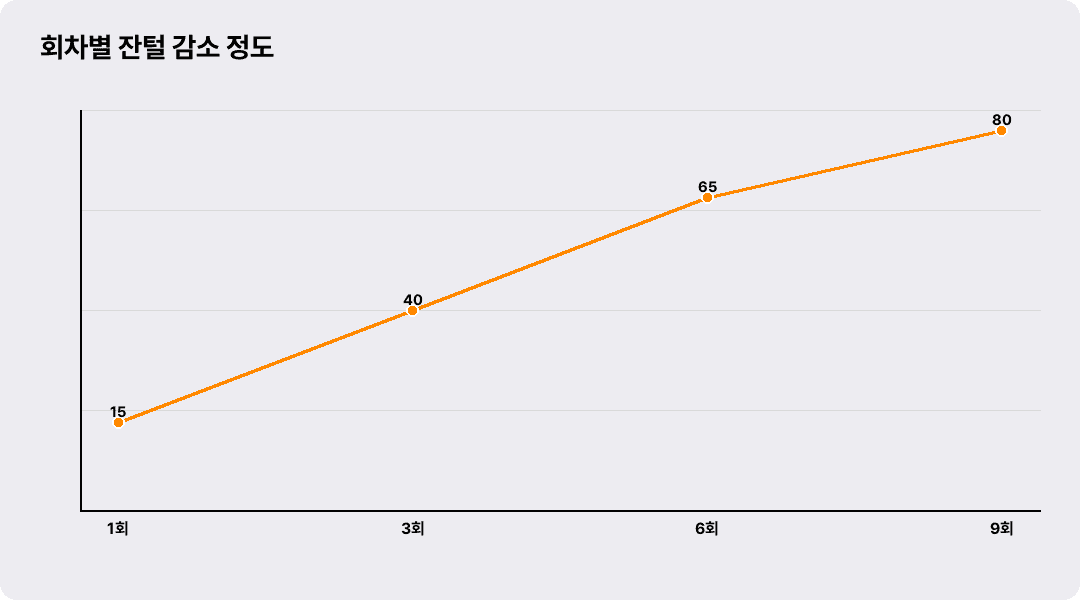
Hair grows and sheds in cycles, and the laser responds best to hair in its growth phase. Since not every hair is in the growth phase during a single session, you need several treatments spaced over time before the whole area gradually clears. Fine hair, with less pigment, responds at a lower rate per session, so it naturally takes more sessions than dark hair. If dark hair typically shows clear change in a handful of sessions, fine hair is usually approached with a higher count than that. If you see almost no change even after repeated sessions, the hair may simply have too little pigment, so it's worth talking with your medical provider about other options.

Why Hapjeong Beautystone?
Rather than running every fine-hair removal on the same fixed settings, Hapjeong Beautystone looks at the color and thickness of your hair first and takes a step-by-step approach. Because GentleMax Pro Plus has a wide range for adjusting wavelength and intensity, we set it differently for dark hair and light fine hair, even in the same area. Since fine hair needs more sessions, we're honest with you upfront about the change you can realistically expect and the number of sessions it's likely to take. As a small clinic within walking distance of Hapjeong Station, we can watch each person's hair condition and response speed and fine-tune the settings for the next session accordingly.
Approaching fine-hair removal step by step
Rather than trying to finish fine-hair removal in one go, you'll be happier with the results if you break it into stages. Here's how the flow tends to work best.
Stage 1: Check the response — the first few sessions are about seeing how much your fine hair reacts to the laser
Stage 2: Adjust the settings — based on that response, we fine-tune the wavelength and intensity to suit your hair
Stage 3: Build up the sessions — spaced to the growth cycle, we stack sessions to gradually make the fine hair thinner and lighter
Stage 4: Maintenance — once it's mostly cleared, we widen the intervals to keep it that way
Fine hair isn't something that disappears all at once; it's something you reduce through stages, so breaking the process into steps narrows the gap between what you expect and what you get. This article is general information, so whether the treatment suits you and how your sessions should be set are best decided in consultation with the medical provider who examines you directly.

Frequently asked questions
Q. Can GentleMax Pro Plus work on soft facial fuzz too?
A. Soft fuzz often has little pigment, so it responds more weakly than dark hair and tends to need more sessions. Fuzz that still holds some color gradually thins out with more sessions, but white fuzz with almost no color is hard to see results from. Checking the color and thickness of your own fuzz during a consultation lets us walk you through the change you can realistically expect.
Q. How many sessions does fine hair usually take?
A. Fine hair generally takes more sessions than dark hair. If dark hair typically shows clear change in a handful of sessions, fine hair is usually approached with a higher count than that. The exact number depends on the color, thickness, and area, so it's best to see the response over the first few sessions and decide together with your medical provider.
Q. Will a stronger laser clear light hair faster?
A. Cranking up the power doesn't automatically clear hair faster. Fine hair with little pigment has less light to absorb in the first place, so adjusting the wavelength and settings to suit your hair matters more than turning up the intensity. Excessive intensity can lead to skin irritation, so it's safer and more effective to dial it in step by step while watching the response.
Q. Does laser hair removal work on white hair?
A. White hair has almost no melanin pigment, so there isn't enough of a target for the laser to absorb, which makes standard laser hair removal hard to expect results from. It's an unavoidable limit given that the technique reacts to pigment. If white hair is a concern, it's worth discussing options beyond laser with your medical provider.
Related reading
GentleMax Pro hair removal*: is it true that your skin tone changes the results?
GentleMax Pro hair removal in summer*: is it fine, and how many sessions does it take?
Why someone who saw no results after 10 sessions changed after just 3
GentleMax Pro Plus*: using both wavelengths doesn't guarantee the same result


Hair Removal
레이저 제모 1회에도 남는 몫이 있어요 — 밀도를 모자이크로 보는 법

Tattoo removal
Why Extremity Tattoos Are Slower to Remove

Tattoo removal
Tattoo Removal Cost: Why Quotes Vary by Area

Tattoo removal
Unused Tattoo Removal Sessions: What Happens?

Lifting
Forehead Thread Lifting: How Far Can It Go?

skin
Skin Booster Prices: What to Check in a Quote