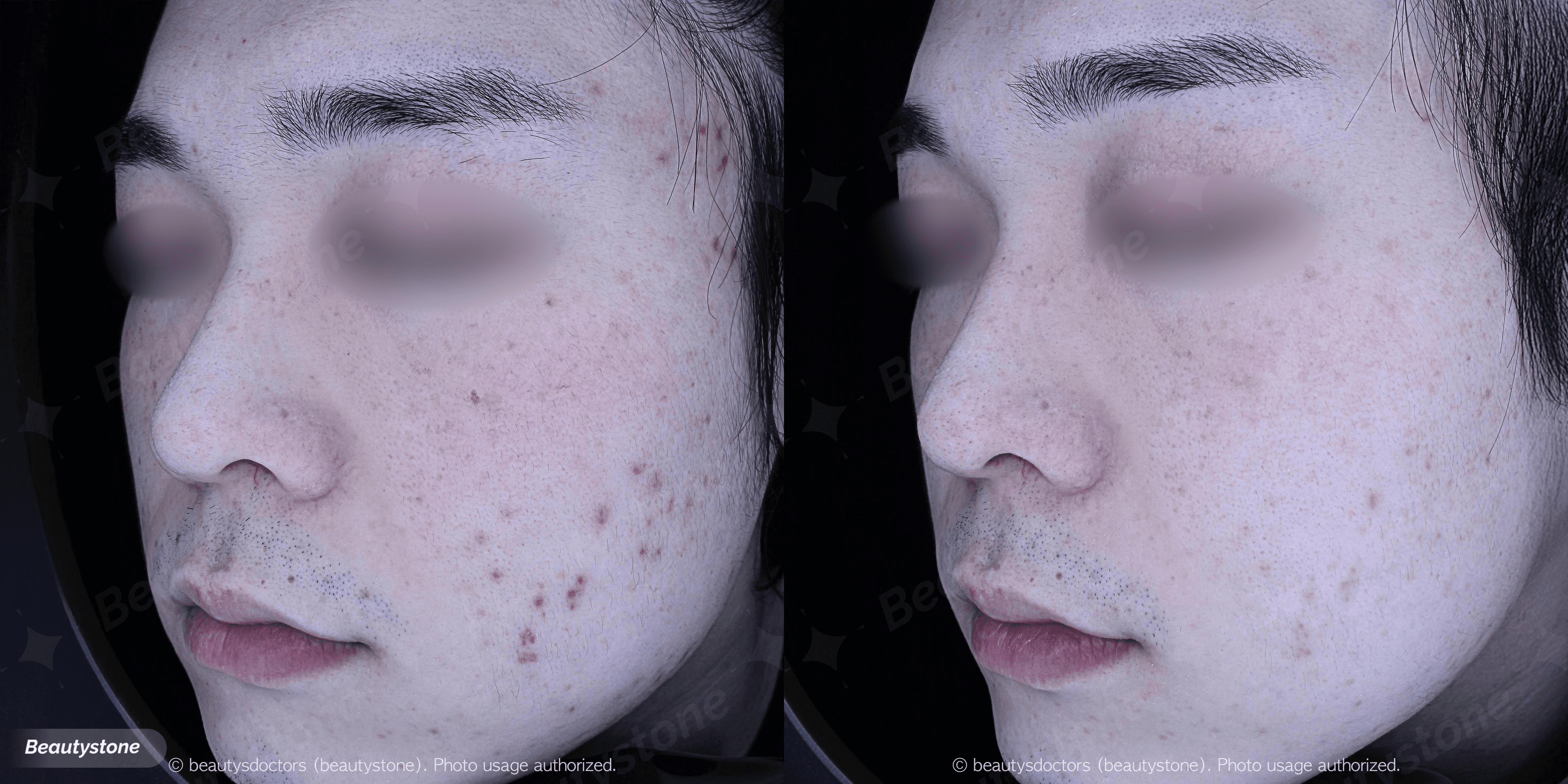
For rolling and boxcar scars, CureJet + Juvelook works well: pain VAS 5.4 to 2.9, little bruising.
Published
Updated
Author
Wi Young-jin · Chief director
Seoul National University College of Medicine · Seoul National University Hospital Specialist
→
🔗 Read Our Other Articles
What is Juvelook? — 1.1 The History of Juvelook · 1.2 Mechanism of Action (PDLLA + HA)
The Full Lineup — 2.1 Three Face Products (Juvelook, Volume, Skin) · 2.2 Area-Specific (Eye, Glam)
Treatment Combinations — 3.2 Microneedling Combination (For Deep Scars) · 3.3 Potenza Combination (RF + Pumping Tip)
Comparison and Choice — 4.1 Juvelook vs Rejuran · 4.2 Rejuran HB vs Juvelook Intradermal Injection
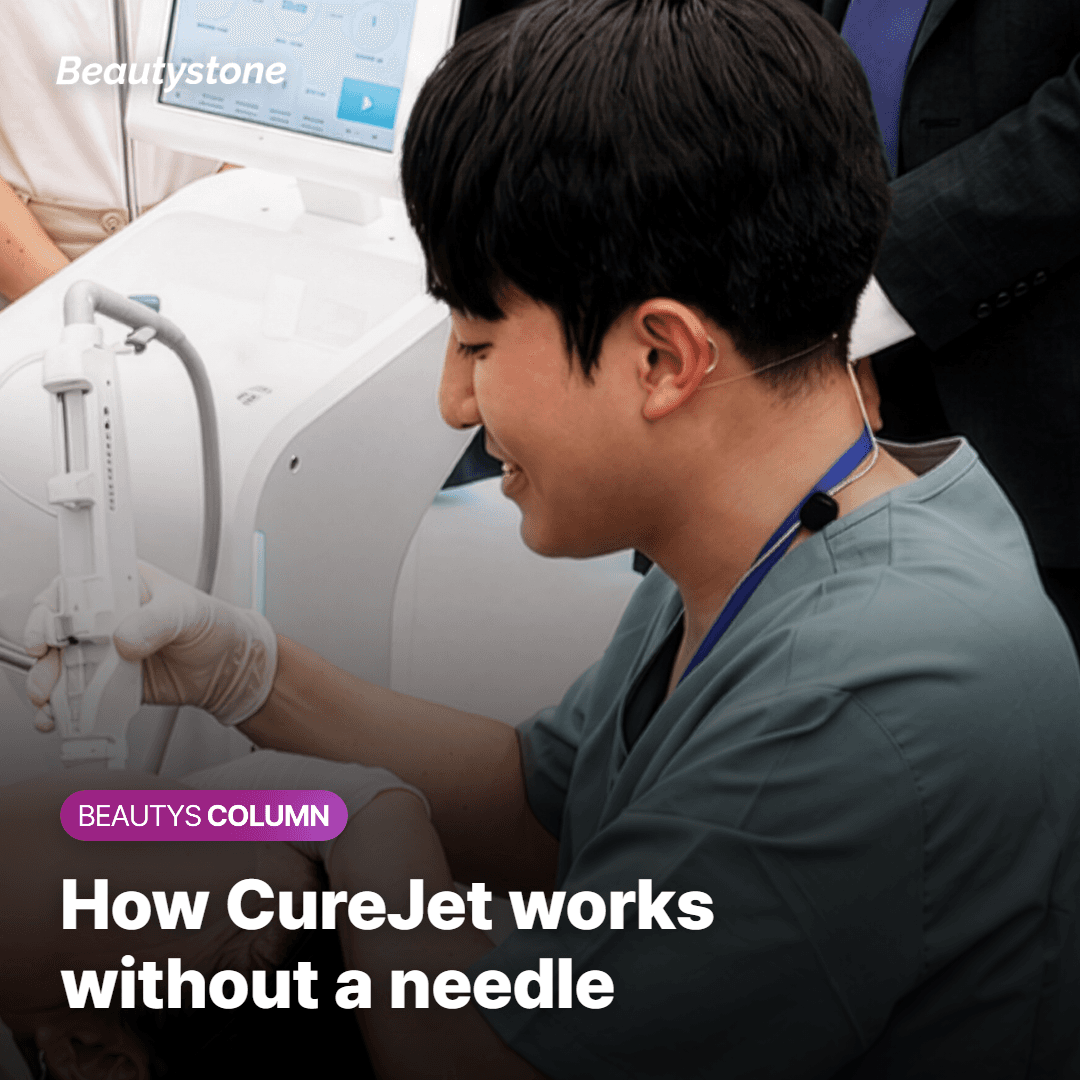
To get straight to the point, CureJet is a device that delivers Juvelook into the dermis without using needles. It sprays liquid at high pressure to create micro-channels in the skin, allowing the PDLLA + HA to penetrate. It is the same Juvelook, but because the delivery method is different, you will experience less pain, a simultaneous subcision* effect, and almost zero downtime. This approach is frequently used for broad areas such as acne scars.
Subcision*: This treatment releases depression by cutting the fibrous bands that bind the skin down to the deeper layers beneath the scar. Traditionally, a needle is used to scrape and sever these bands under the scar, but CureJet achieves the same effect non-contactfully using liquid pressure.
How Does the CureJet Device Work?
CureJet is a type of needle-free jet injector*. The liquid is sprayed from a tiny nozzle at a speed close to the speed of sound, penetrating the skin's stratum corneum to reach the dermis. This allows the active ingredients to enter the skin without a single needle touching you.
Needle-Free Jet Injector*: A device that uses compressed gas or spring force to spray liquid ingredients at extremely high speeds to penetrate the skin. Originally used in medical fields for vaccines and insulin, it has recently been adopted in the aesthetic field to administer skin boosters for scars, large pores, and fine lines.
According to a 2023 review of clinical cases using a needle-free jet injector to administer poly-D,L-lactic acid for atrophic acne scars, this method has a dual effect. It evenly distributes the collagen stimulator across the scarred area while simultaneously releasing the fibrous bands under the scar. In a single shot, both drug delivery and subcision occur together.
Why is It So Effective for Acne Scars?
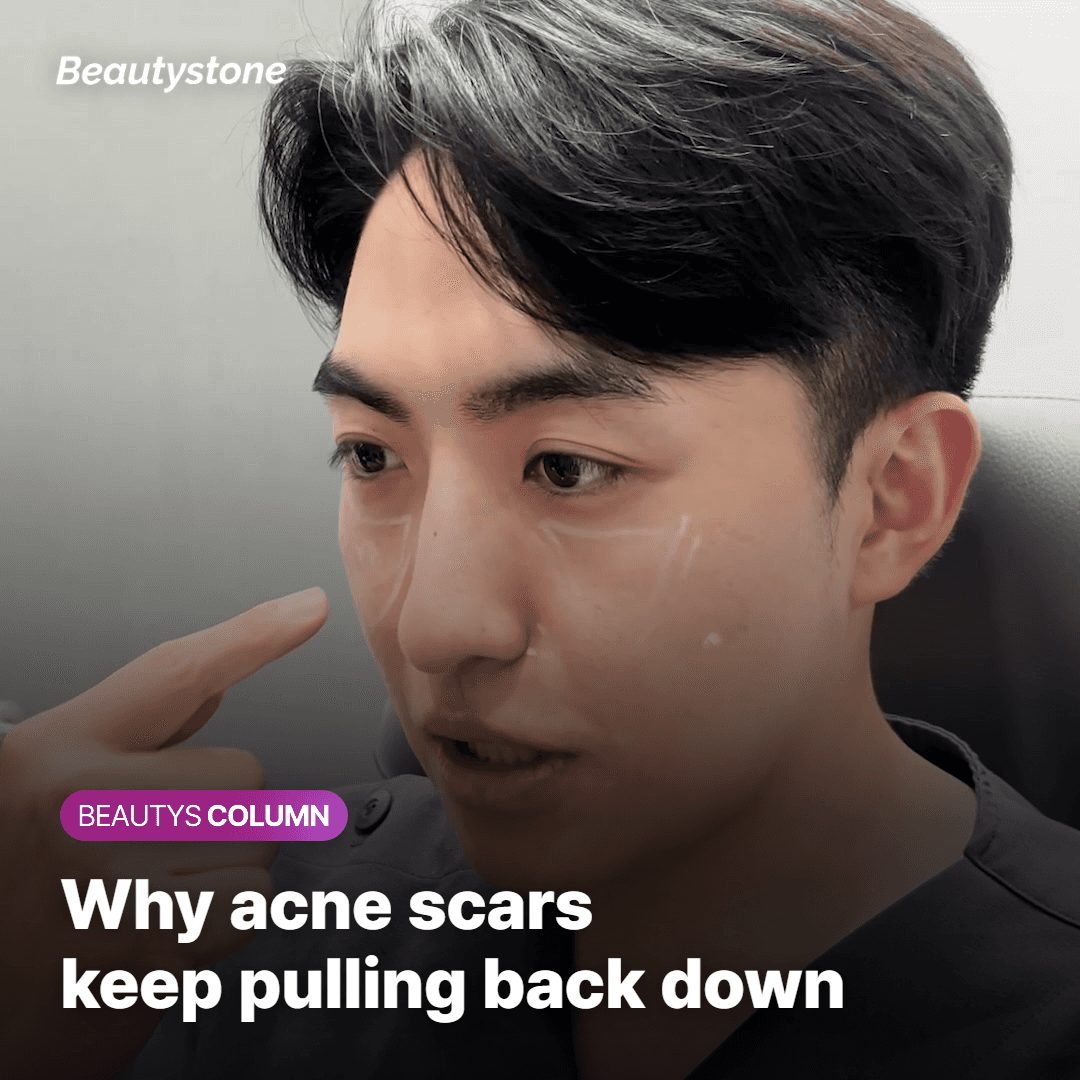
Acne scars, especially atrophic scars (rolling, boxcar, icepick scars), are areas of skin that have been pulled downward. The root cause of this pulling force is the fibrous bands underneath the scar. If these are not severed, the scar will continue to be pulled back down to the same spot, regardless of what other treatments you receive.
While traditional needle subcision is highly effective, it has its drawbacks. It must be done point-by-point, and bruising and swelling can last for several days. With CureJet, simply placing the nozzle over the scar and releasing a single burst takes care of both the delivery and the subcision. This makes it possible to treat a wide area of acne scars all at once.
Furthermore, once Juvelook's PDLLA settles into the newly freed space, it encourages new collagen to fill the gap. Rather than simply cutting the bands and leaving it at that, the core benefit lies in thickening the dermal layer right where the scar used to be.
The Reality of Pain and Downtime
The most noticeable difference you will feel with CureJet is the reduced pain. According to a systematic review on the efficacy and safety of needle-free jet injectors in dermatology, the needle-free jet method reports a significantly lower VAS pain score compared to traditional needle injections, along with fewer instances of bruising and swelling. It is very manageable with just standard numbing cream.
The downtime is also minimal. Because bruising and swelling rarely occur, you can return to your daily routine immediately after the session. You might notice tiny pin-sized marks (where the nozzle tip touched) for about a day, but these are easily covered up with light makeup.
While the recovery is quick, the results develop gradually. CureJet does not flatten the scars instantly; instead, progress occurs steadily over 1 to 3 months as the PDLLA settles and collagen premium builds up. The standard course of treatment is 3 to 5 sessions spaced 4 to 6 weeks apart.

Which Types of Scars Benefit the Most?
The CureJet + Juvelook combination is ideal for the following:
Rolling scars — Scars with gently sloping, undulating borders
Shallow boxcar scars — Scars with defined borders but relatively shallow depth
Fine texture irregularities associated with enlarged pores
Individuals who want to minimize pain and downtime
On the other hand, there are limitations. For very deep icepick scars or deep boxcar scars, CureJet alone might not be enough. In those cases, it is best to combine it with deeper treatments such as microneedling or CO2 lasers. We will discuss the microneedling + Juvelook combination in our next article.

Frequently Asked Questions
Q. Which is more effective: regular Juvelook injections or CureJet Juvelook?
The treated areas and goals are different. Regular needle injections excel in delivering precise, targeted depth to single spots, while CureJet is excellent for distributing the product evenly over a larger area. For acne scars, where coverage is broad and the overall surface texture needs to be treated together, CureJet is highly suitable.
Q. How many sessions will I need to see results?
A single session rarely brings a dramatic change. Typically, it is treated as a cumulative process with 3 to 5 sessions spaced 4 to 6 weeks apart to allow collagen to steadily build up. It is best to plan this as a series rather than expecting major changes after a single visit.
Q. Does CureJet really reach the dermis?
Yes, this has been verified through clinical data. The nozzle pressure is powerful enough to penetrate the stratum corneum and deliver the active ingredients to the upper dermis. However, it does not reach severe deep depressions or the subcutaneous fat layer beneath the dermis, so deep scars will benefit from combination treatments with other modalities.